Why Fragmented Data Breaks Cross-Platform Performance
Fragmented advertising data breaks cross-platform performance because platforms cannot measure, dedupe, or optimize against the same user.
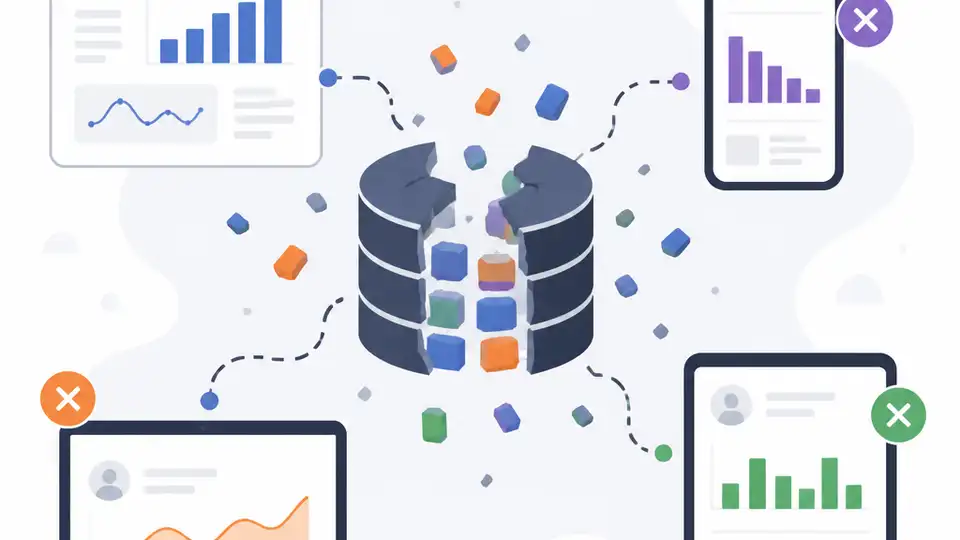
Fragmented advertising data breaks cross-platform performance because platforms cannot measure the same user consistently.
Every platform in a media mix tells a different story about the same campaign, and that is why fragmented data is not a reporting nuisance but a performance problem. When Meta, Google Ads, a DSP, and a CTV platform each define conversion, reach, and attribution differently, marketers do not get one view of demand; they get four competing versions of reality. The result is predictable: budgets move on the basis of dashboards, not outcomes, and the dashboards are built to flatter the platform that owns them.
First argument: fragmentation destroys measurement integrity
Get the latest AI news in your inbox
Weekly picks of model releases, tools, and deep dives — no spam, unsubscribe anytime.
No spam. Unsubscribe at any time.
The first failure is basic measurement. A “conversion” on Meta can mean a one-day view-through event, while Google may require a click within a seven-day window. Those are not minor reporting differences. They are different statistical claims about the same outcome, which means cross-platform comparison starts from a broken baseline. If one channel reports 100 conversions and another reports 80, the number that matters is not the higher figure; it is whether those numbers were produced by the same rules.

This is why fragmented data produces false confidence. Teams feel data-rich because they have multiple dashboards, but the data does not reconcile into a single decision framework. Forrester has repeatedly pointed to disconnected sources and inconsistent quality as barriers to effective measurement, and the point is obvious in practice: if the inputs are not aligned, the output cannot be trusted. A marketer can optimize within a silo, but cannot credibly compare silos against each other.
Second argument: fragmentation breaks optimization
Optimization depends on deduplication, frequency control, and audience suppression. Without shared identity, the same person appears as three different users across three channels, which means the brand keeps spending on people it has already reached. That is not just inefficient. It actively weakens performance by increasing waste and reducing message relevance. Sequential messaging also collapses, because the system cannot tell whether a user has already seen awareness creative, considered the offer, or converted.
The scale of the problem is not theoretical. The largest walled gardens, including Alphabet, Meta, Amazon, Apple, TikTok, and Microsoft, accounted for roughly 78% of global digital advertising revenue in 2022, with that share projected to rise to 83% by 2027. In the U.S., the top ten companies controlled 80.8% of digital ad revenue in 2024, according to the IAB and PwC. When most spend sits inside closed ecosystems, each platform has every incentive to preserve its own version of success. That is why optimization inside a single platform often looks strong while the cross-platform outcome underdelivers.
The third argument: attribution becomes propaganda
Attribution is supposed to answer a simple question: what drove the conversion? Fragmented data makes that question unanswerable at the platform level, because each system claims credit using its own logic. A DSP may count a view-through visit, Google may reward the last click, and a social platform may assign credit to an assisted conversion. Three platforms can therefore claim the same sale, while the checkout system records only one transaction. The issue is not a bad report. It is a structural mismatch between self-attributed platform data and actual business results.
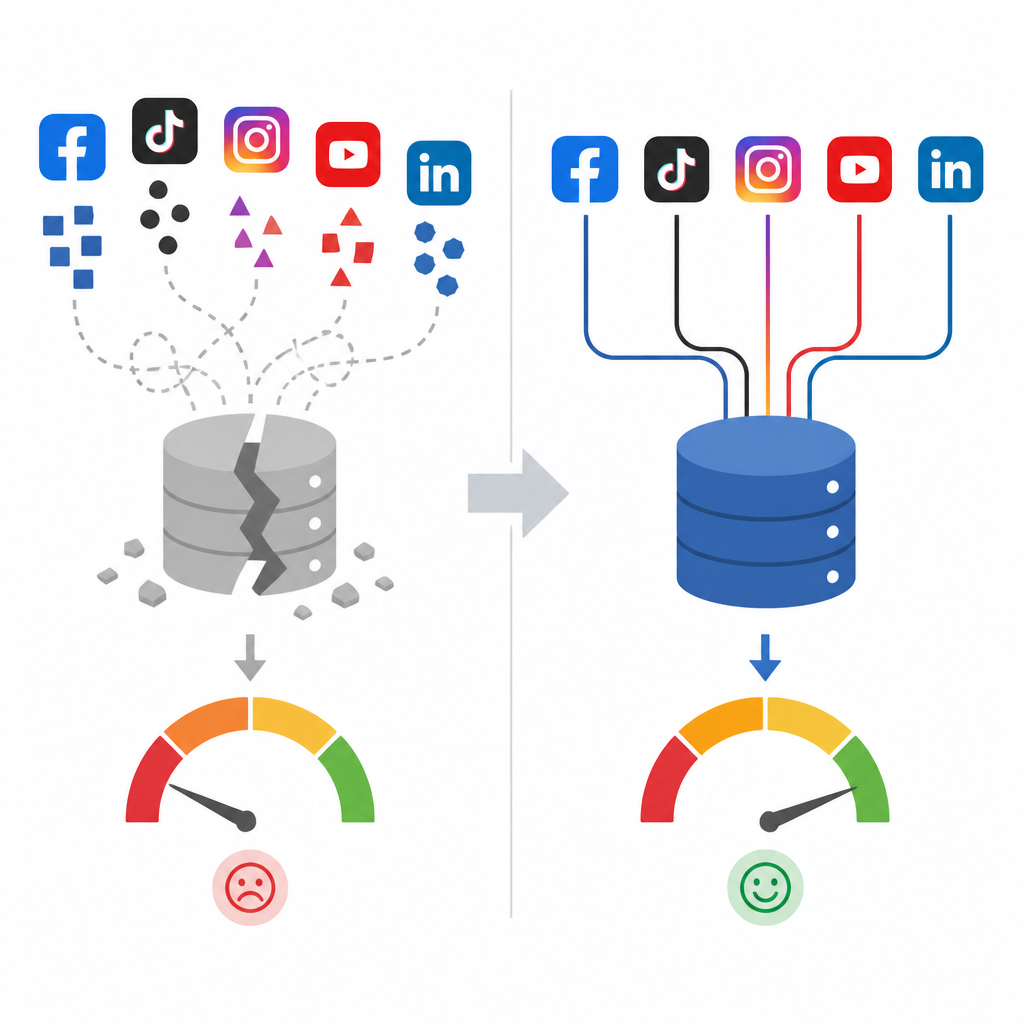
That mismatch distorts spend. The ANA’s Q2 2025 Programmatic Transparency Benchmark estimated $26.8 billion in annual global programmatic media value is lost to supply chain inefficiencies, and over-attribution is part of that waste because it pushes budgets toward channels that claim too much credit. Upper-funnel channels are often the first casualty. They create demand, but because they do not close the loop as neatly as search or retargeting, they look weaker inside fragmented reporting. Marketers then cut the very channels that made the lower-funnel channels work.
The counter-argument
The strongest defense of fragmentation is that platform-native reporting is good enough for most teams. It is faster, easier, and often directionally useful. A media buyer does not need a perfect identity graph to decide whether to pause a broken creative or shift budget away from a low-performing audience. In that sense, the silo is efficient: it gives local answers quickly, and local answers are often enough for day-to-day execution.
There is also a practical limit to unification. No marketer can stitch together every impression, click, and conversion across every device and environment with complete certainty. Privacy rules, signal loss, and platform restrictions make perfect cross-platform visibility impossible. Anyone promising total certainty is selling fantasy.
That limit is real, but it does not rescue fragmented data. The standard should not be perfection; it should be decision-quality measurement that can dedupe exposure, standardize definitions, and reconcile outcomes against business truth. Fragmented dashboards fail that test because they are optimized for platform persuasion, not cross-channel control. Accept the privacy and identity limits, but reject the idea that those limits justify making budget decisions on incompatible data.
What to do with this
If you are an engineer, PM, or founder, stop treating platform reports as the source of truth and build a measurement layer that sits above them. Standardize event definitions, dedupe conversions against downstream systems, and make cross-platform comparison possible before you scale spend. If you cannot answer which channel drives incremental value per dollar, you do not have a performance stack; you have a collection of vendor dashboards.
// Related Articles
- [IND]
OpenAI should not rush its IPO just to win the AI race
- [IND]
OpenAI updates its Europe privacy policy
- [IND]
OpenAI is right to keep ads out of sensitive chats
- [IND]
AI bootlegs are already draining streaming royalties
- [IND]
AMD and Microsoft push Windows ML on GPU and NPU
- [IND]
OpenAI’s IPO filing turns hype into scrutiny