Why Google Marketing Live 2026 proves search ads are becoming convers…
Google Marketing Live 2026 shows that search ads are moving into Gemini-powered conversational experiences, and marketers need to adapt now.

Google Marketing Live 2026 shows search ads moving into Gemini-powered conversational experiences.
Google Marketing Live 2026 makes one thing clear: search advertising is no longer built only for blue links and keyword triggers, but for AI Mode and conversational search flows. The new Gemini-powered ad formats are not a side experiment. They are the direction of travel for Google’s ad business, and anyone treating them as a minor UI tweak is already behind.
Search ads are being rebuilt for conversation, not just queries
Get the latest AI news in your inbox
Weekly picks of model releases, tools, and deep dives — no spam, unsubscribe anytime.
No spam. Unsubscribe at any time.
The biggest signal from the event is that Google is designing ads to appear inside a back-and-forth search experience. That matters because conversational search changes the unit of intent. Instead of a single query like “best running shoes,” a user may ask follow-ups about terrain, budget, and fit. Ads that can respond to that context will win more often than static placements tied to one keyword.

Google has spent years pushing advertisers toward automation, broad match, and responsive formats. Gemini-powered ad units are the next logical step. They move the ad closer to the assistant model, where the system interprets intent and assembles an answer in real time. That shifts value away from manual keyword control and toward creative, feed quality, and product data that can survive a dynamic environment.
Gemini-powered formats favor the advertisers who already invest in structure
The practical winner here is not the brand with the loudest media budget. It is the brand with clean product catalogs, strong landing pages, and disciplined message testing. In AI-driven placements, the system needs reliable inputs. If your titles, descriptions, and feeds are weak, the model has less to work with and your ad becomes easier to ignore or misrepresent.
We have already seen this pattern in shopping and performance campaigns: better data produces better automation outcomes. Google’s new formats extend that rule into conversational surfaces. The companies that treat content as machine-readable infrastructure will get more from these placements than the companies still optimizing only for keyword lists and manual bid tweaks.
This is also Google protecting its ad moat
Search is the core of Google’s business, and AI Mode threatens to change how people interact with it. If users spend more time in conversational answers, Google has to make sure monetization follows them there. The new ad formats do exactly that. They keep ads inside the experience instead of forcing a separate transition to traditional results pages.
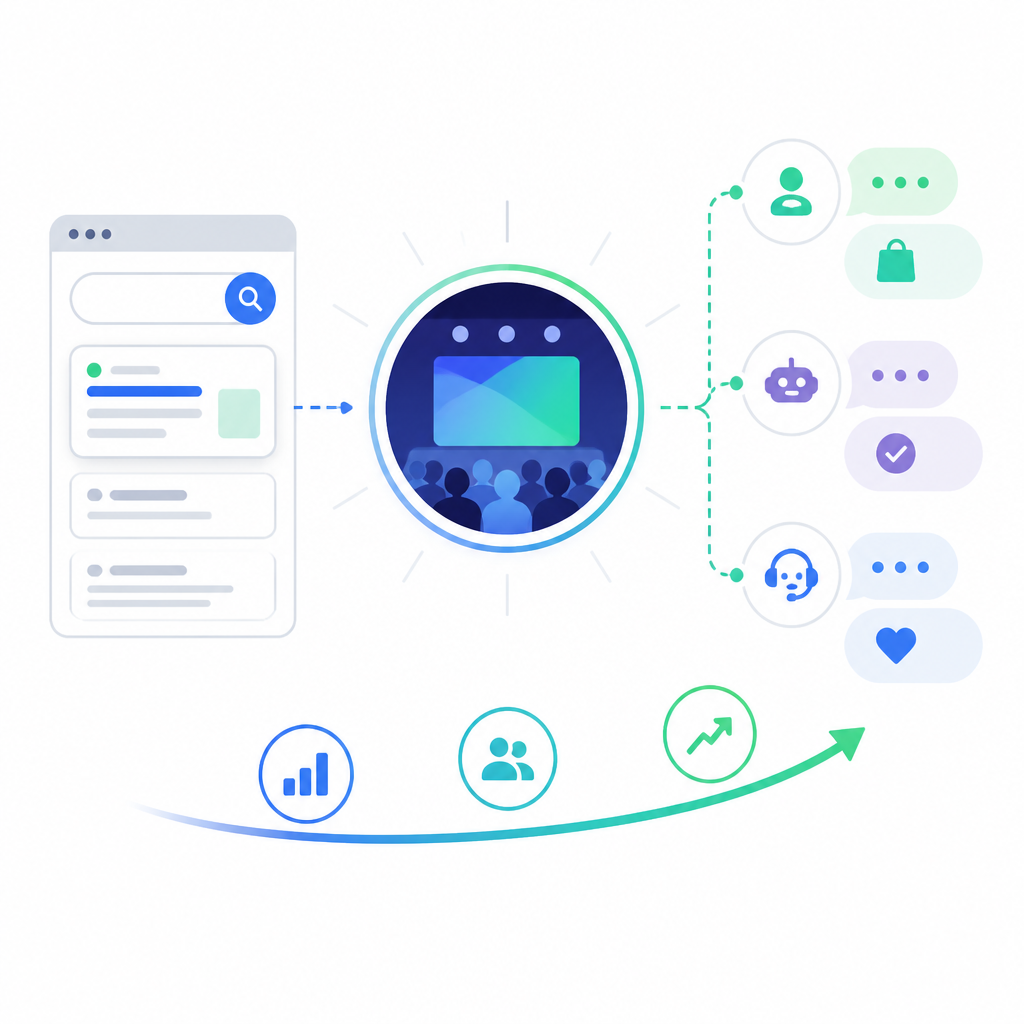
That is not just product evolution. It is platform defense. Google cannot allow AI-native search to become a place where users get answers but advertisers lose access. By embedding Gemini-powered ads into conversational search, Google preserves the revenue engine while changing the interface. That is why this announcement matters more than the usual annual feature rollup.
The counter-argument
The strongest objection is that conversational ads will frustrate users and damage trust. If AI Mode becomes too commercial, people may feel the answers are less neutral, and that could slow adoption. Marketers also worry that automation reduces transparency, making it harder to understand why a given ad appeared or how to improve performance.
That concern is real, and Google will have to manage it carefully. But it does not overturn the shift. Search has always been commercial, and users tolerate ads when the results remain useful. The limit is not whether ads exist in AI search. The limit is whether they are relevant, clearly labeled, and tightly matched to intent. If Google gets that wrong, trust suffers. If it gets it right, conversational ads become the new default.
What to do with this
If you are an engineer, PM, or founder building around search marketing, stop optimizing only for keywords and start optimizing for structured intent. Audit your feeds, titles, landing pages, and message variants so they can be reliably interpreted by Gemini-style systems. Build measurement around downstream conversion quality, not just CTR, because conversational placements will reward relevance and post-click performance more than raw traffic volume.
// Related Articles
- [IND]
OpenAI’s IPO will expose AI hype to Wall Street
- [IND]
Gemini lands inside Apple’s developer stack
- [IND]
Five AI coding IDEs that fit real workflows
- [IND]
Devin Desktop turns Windsurf into an agent hub
- [IND]
Korea’s Nvidia talks point to an AI factory push
- [IND]
OpenAI should not rush its IPO just to win the AI race