Why the tech page proves AI is now the real tech story
AI has become the dominant force shaping tech news, jobs, scams, and platform power.

AI now dominates tech news, from jobs and scams to search and platform power.
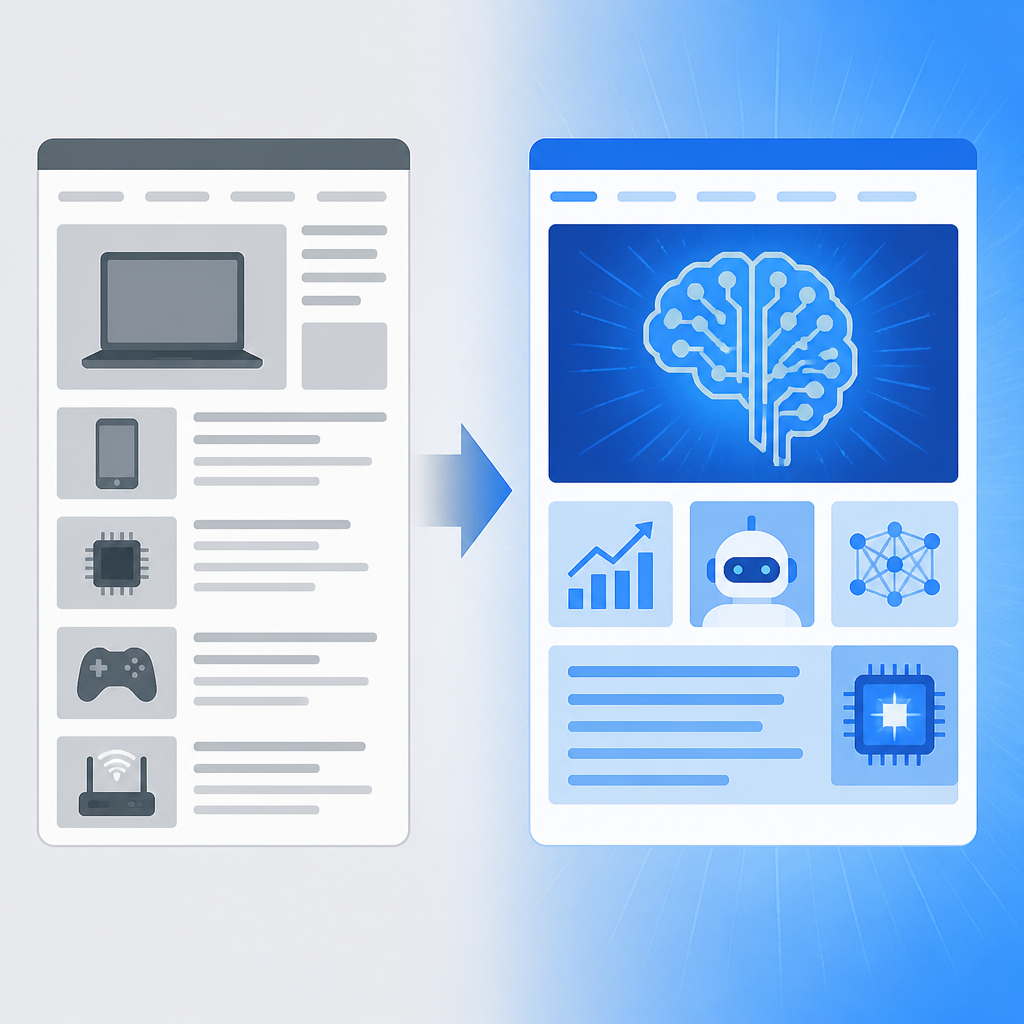
The technology beat is no longer a gadget beat, and CNN’s own tech page makes that plain: the biggest stories are about AI changing work, AI changing search, AI scams, AI safety, and AI reshaping the value of companies and platforms. That is not a temporary editorial fad. It is the market telling us what matters. When a single theme sits behind stories about TikTok’s future, voice-cloning fraud, deepfake takedowns, job interviews, Google search, and Meta’s youth safety push, the center of gravity has already moved.
AI has swallowed the old tech categories
Get the latest AI news in your inbox
Weekly picks of model releases, tools, and deep dives — no spam, unsubscribe anytime.
No spam. Unsubscribe at any time.
The first reason to stop treating “tech” as a broad, evenly balanced category is that AI now cuts across every subcategory that used to stand on its own. On CNN’s tech page, the same force shows up in labor, consumer protection, platform design, and corporate strategy. AI is no longer one vertical among many. It is the layer underneath them.

Look at the mix of headlines: “AI is changing this job so fast the interview process can’t keep up,” “AI is changing the internet forever,” and “How to AI-proof your job.” Those are not niche enterprise stories. They are labor-market stories, media stories, and consumer stories at once. The old taxonomy of tech coverage, where gadgets lived in one lane and software in another, no longer matches how technology affects people’s lives.
Tech now means power, not products
The second reason is that the most important tech stories are now about power: who controls distribution, who controls identity, and who controls trust. The page’s most consequential items are not new phones or faster chips. They are about Google changing search, Meta promoting youth safety features under scrutiny, and TikTok’s US future being tied to a spin-off deal and national security concerns. That is a power story, not a product story.
The evidence is in the market itself. A chip giant joining the $1 trillion club matters because capital is concentrating around the firms that own the AI stack. Meanwhile, a story about Samsung becoming a $1 trillion company because of AI, or Musk’s fight with OpenAI, is not just corporate drama. It is a contest over the infrastructure that will decide which companies set the rules for the next decade. When tech coverage follows the money and the regulatory pressure this closely, it is really covering industrial power.
The biggest consumer risk is now synthetic deception
The third reason is that the most immediate harm from tech is no longer buggy hardware or clunky apps. It is synthetic deception at scale. CNN highlights AI voice cloning scams, deepfake porn takedown rights, and family influencer campaigns around youth safety. These stories show a new reality: the most dangerous consumer tech is the kind that sounds human, looks real, and bypasses normal defenses.
That shift changes what responsible tech coverage should emphasize. A gadget review can tell you whether a device is worth buying, but it cannot tell you how to defend your identity when a fake voice imitates your child or boss. The public now needs coverage that treats verification, provenance, and platform accountability as core tech issues. Anything less is nostalgia for a simpler internet that no longer exists.
The counter-argument
There is a fair objection: tech pages should still cover a wide field because consumers care about many things at once. Phones, wearables, chips, space, and consumer software all matter, and a narrow AI-first frame can flatten the category into one overhyped story. Reporters also need room for hardware, design, and scientific innovation, not just platform drama and model releases.
That objection is right about breadth, but wrong about emphasis. A tech desk that treats AI as just another beat is misreading the moment. The page’s own story mix shows that AI is the connective tissue running through the rest. Hardware still matters, but it matters because of the software and inference stack behind it. Space still matters, but it does not define the daily tech agenda. The limit is real: not every tech story is an AI story. The editorial priority, however, is unmistakable.
What to do with this
If you are an engineer, PM, or founder, stop building and pitching as if your work lives in a clean product silo. Assume every roadmap now needs a trust layer, a provenance layer, and a policy layer. If your product touches identity, media, search, hiring, or communication, design for misuse first and utility second. If you want relevance, do not ask whether your company uses AI. Ask whether AI changes the rules of the market you serve. That is the only tech question that matters now.
// Related Articles
- [IND]
Korea’s Nvidia talks point to an AI factory push
- [IND]
OpenAI should not rush its IPO just to win the AI race
- [IND]
OpenAI updates its Europe privacy policy
- [IND]
OpenAI is right to keep ads out of sensitive chats
- [IND]
AI bootlegs are already draining streaming royalties
- [IND]
AMD and Microsoft push Windows ML on GPU and NPU