Guzman y Gomez’s U.S. exit shows market fit first
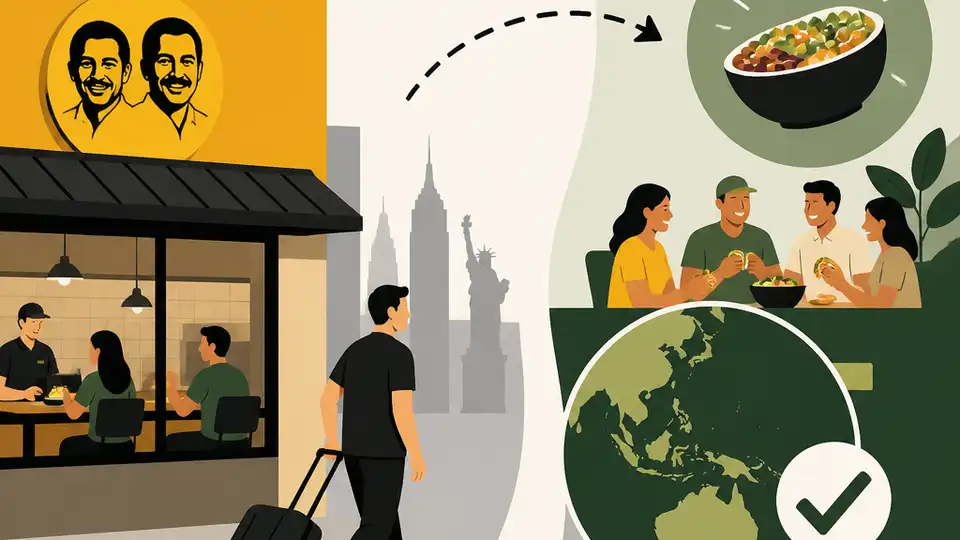
I break down why Guzman y Gomez shut all U.S. stores and what the move says about market fit, capital, and timing.
I break down why Guzman y Gomez shut all U.S. stores and what the move says about market fit, capital, and timing.
I've been watching fast-casual chains try to crack the U.S. for years, and the pattern keeps annoying me. The pitch is always the same: we’ve got better food, a cleaner brand, a smarter format, and a huge addressable market. Then they open a few stores, burn cash, and start explaining why the problem is “execution.” Usually it isn’t. Usually the market just doesn’t care enough.
This Guzman y Gomez story hit that nerve for me because it’s not some tiny local test that quietly fizzled. It’s a chain that had already made a U.S. bet and then pulled the plug on all of it. That’s the part people should pay attention to. Not the brand language, not the optimism, not the “we’re still committed” boilerplate. The hard truth is that a restaurant concept can be real, loved, and still not be right for the U.S. at that moment.
And honestly, I respect the reset more than the denial phase. I’ve seen too many teams keep feeding a bad geography because they don’t want to admit the unit economics are wrong. If you’re building anything that has to cross borders, whether it’s restaurants, software, or an AI product, this is the same lesson in a different wrapper: being good is not the same as being fit.
The trigger for this breakdown is TheStreet’s report on Guzman y Gomez closing all U.S. restaurants. The article says the decision was an abrupt reversal from assurances as recently as February, when the company said it would stick with the U.S. market of 350 million people, where Chipotle has about 4,000 stores. That’s the only hard number in the source, so I’m sticking to it.
This wasn’t a brand problem. It was a market-fit problem.
Get the latest AI news in your inbox
Weekly picks of model releases, tools, and deep dives — no spam, unsubscribe anytime.
No spam. Unsubscribe at any time.
The decision is an abrupt reversal from the company’s assurances as recently as February that it would stick with the market of 350 million people, where rival Chipotle has some 4,000 stores.
What this actually means is simple: Guzman y Gomez didn’t just decide to “close some stores.” It walked away from the entire U.S. play. That tells me the issue wasn’t one bad location or one weak manager. The company likely looked at the full picture and decided the economics, demand, or operating complexity weren’t worth the grind.
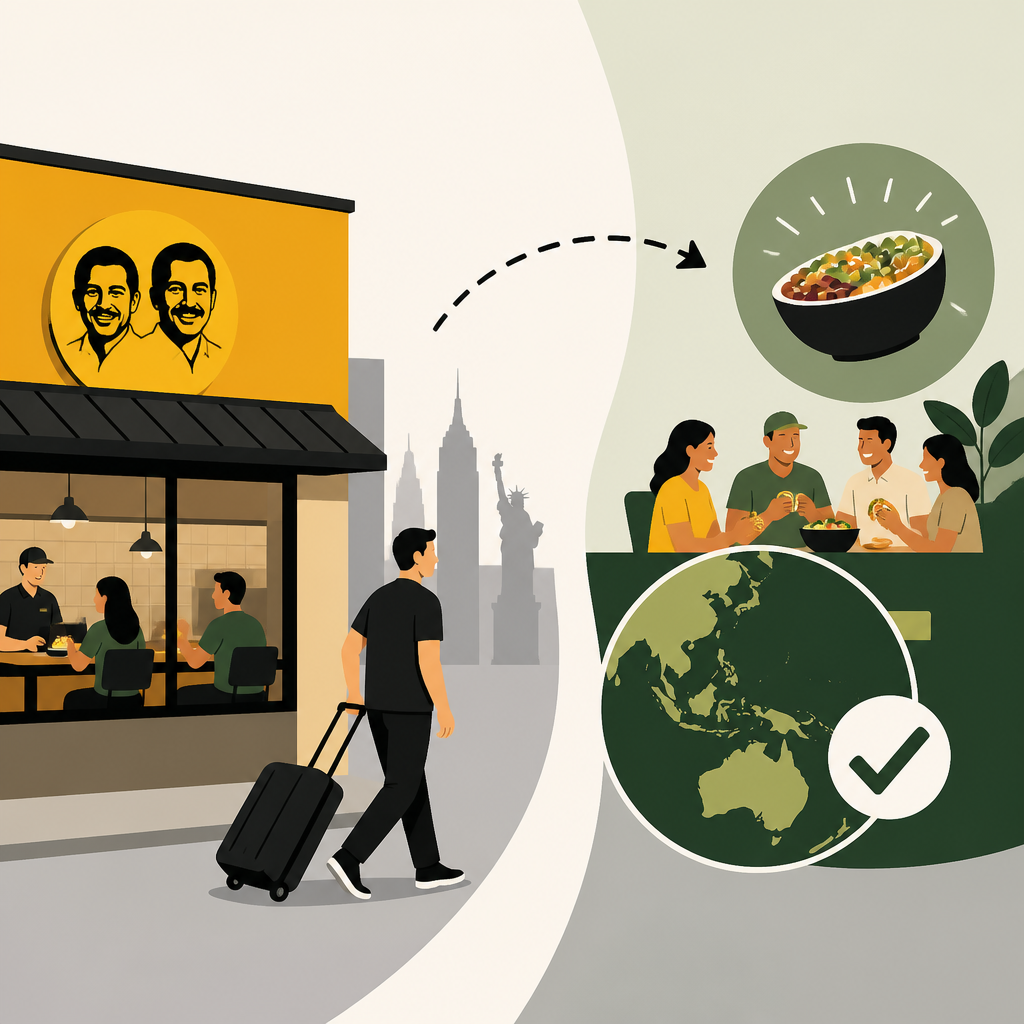
I’ve seen this in product teams too. A company launches in a giant market, sees some early interest, and assumes scale will fix the rest. It usually doesn’t. If the customer acquisition cost is ugly, if the menu or product needs too much explanation, or if the local habits don’t match your format, growth just makes the pain louder.
How to apply it: when you test a new market, don’t ask only whether people like the product. Ask whether the product can survive the market’s default behavior. In restaurants that means traffic patterns, price sensitivity, and repeat visits. In software that means onboarding, retention, and how much hand-holding the user needs before they get value.
The first mistake companies make is treating initial curiosity like proof. Curiosity is cheap. Repeat behavior is expensive. If you can’t get repeat behavior, the market is telling you something very specific, and I’d rather hear that early than after a chain of sunk costs.
The U.S. is not one market, and that matters more than people admit
That “350 million people” line sounds seductive because it makes the U.S. look like one giant open field. It isn’t. It’s a pile of regional habits, price expectations, delivery behavior, and competition levels. A concept that works in one city can get wrecked in another without changing a single recipe.
This is where I think a lot of founders and operators get sloppy. They see the total population and mentally convert it into demand. That’s not how this works. Population is potential, not proof. The real question is whether your format matches the way people in that market already buy lunch, dinner, and convenience.
Chipotle is the obvious comparison because it already owns a huge chunk of the U.S. burrito-mindshare. TheStreet notes Chipotle has about 4,000 stores, which matters because it shows the scale of the incumbent. You are not walking into an empty room. You are walking into a room where someone already trained the customer on what “fast-casual Mexican” means.
I ran into this exact problem when a team I worked with tried to enter a market where the local player had already normalized the price point and portion size. Our product wasn’t worse. It was just late. That’s the ugly part of competition people skip over in pitch decks.
- Population tells you the size of the pool, not the depth of demand.
- Incumbents train the customer before you arrive.
- Late entry usually means you need a sharper reason to exist, not just a decent one.
How to apply it: before you expand, map the local default option. Ask who already owns the category in the customer’s head. If you can’t explain why you win against that default in one sentence, your expansion plan is probably a wish with a spreadsheet attached.
“We’ll stick with it” is not a strategy
The most interesting detail in the source is the reversal itself. In February, the company was still signaling commitment. By the time this story landed, it had shut everything down. That gap matters because it’s where a lot of bad decisions hide: public confidence on the outside, private doubt on the inside.

I don’t blame companies for trying to stay optimistic. I do blame them when optimism replaces a real operating plan. “We’re committed” is not the same thing as “we have a path to profitable scale.” One is a tone. The other is a model.
When I see a company defend a weak market for too long, I usually assume one of three things: leadership is emotionally attached, the team has too much sunk cost to walk away, or nobody wants to be the person who says the obvious thing out loud. All three are normal. None of them are good business reasons.
How to apply it: set exit criteria before you enter a new market. Not vibes. Not hope. Actual thresholds. If you’re a restaurant chain, define what underperformance looks like after a fixed number of stores or months. If you’re shipping software, define the retention, conversion, or support burden that would make you stop pouring money into a segment.
- Pre-commit to the metrics that will make you leave.
- Separate public messaging from internal decision rules.
- Don’t confuse patience with denial.
I’ve learned that the healthiest teams are not the ones that never quit. They’re the ones that know when quitting is discipline instead of failure.
Expansion punishes weak unit economics fast
Restaurant expansion is brutally simple in a way that software people sometimes underestimate. Every location has rent, labor, supply chain friction, and local demand risk. If the first few units don’t show a credible path to profit, scaling just multiplies the loss.
That’s why this story feels less like a branding issue and more like a math issue. If the chain had a strong enough formula, it would have kept going. The fact that it didn’t suggests the economics never got comfortable enough to justify the fight.
I’ve watched teams try to “buy learning” by opening more locations or adding more markets. Sometimes that works. More often, it just gives you more places to fail. The trick is knowing whether you’re gathering signal or just paying tuition to a market that already rejected you.
How to apply it: model the unit before you model the footprint. One store, one neighborhood, one customer segment. Then stress-test the ugly stuff: lower traffic, higher wages, slower repeat rates, and stronger competition. If the unit doesn’t hold under pressure, the chain won’t either.
For software builders, this is the same as asking whether one customer can become a repeatable account before you build a sales team around the segment. If the answer is no, scaling is just a more expensive way to learn the same lesson.
Competitive gravity is real, and Chipotle matters here
TheStreet’s comparison to Chipotle is doing a lot of work, and it should. Chipotle isn’t just another chain. It set the customer expectation for the category in the U.S. That means any rival has to beat not just the food, but the habit.
That’s the part I think people miss when they say “there’s room for more than one winner.” Sure, there can be multiple winners. But if one player already owns the mental shortcut, the second player needs a very sharp edge. Better ingredients alone rarely do it. Better service alone rarely does it. A slightly nicer brand definitely doesn’t do it.
I’m not saying Guzman y Gomez had no chance. I’m saying the burden was higher than a lot of teams like to admit. Once a category gets anchored, every new entrant has to justify switching costs, trial effort, and repeat behavior. That is a nasty combination.
How to apply it: study the incumbent like it’s your real competitor, because it is. Look at what the customer already expects, what they tolerate, and what they won’t trade away. Then ask whether your difference is actually meaningful or just something your team thinks is meaningful because you built it.
If you can’t win on a real wedge, don’t confuse “we’re different” with “we’re better enough to matter.” Those are not the same sentence.
When to pull the plug without pretending it’s a pivot
I actually think this story is useful because it shows a company choosing a hard stop instead of dragging a dead expansion around for another year. That’s rare. A lot of teams call it a pivot when they really mean retreat, and call it patience when they really mean fear.
Pulling the plug is not glamorous, but it can be the cleanest move. If the market fit isn’t there, the brand is better off preserving capital and focus than chasing a fantasy. That doesn’t mean the company is broken. It means the geography was wrong.
How to apply it: write the postmortem as if you’re advising a friend. What failed? Demand, pricing, competition, operations, or timing? Then separate fixable issues from structural ones. If the structure is wrong, stop trying to polish the symptoms.
I’d rather see a company exit cleanly than spend two more years pretending the next quarter will magically change the math. That fantasy is expensive, and it teaches the team all the wrong habits.
The template you can copy
# Market expansion postmortem template

## 1) The bet
- Market:
- Customer segment:
- Why we thought it would work:
- What we expected to learn in the first 90 days:

## 2) What actually happened
- Demand signal:
- Repeat behavior:
- Acquisition cost:
- Operating issues:
- Competitive pressure:

## 3) What we got wrong
- Assumption 1:
- Assumption 2:
- Assumption 3:

## 4) Exit criteria
We will exit this market if:
- Metric 1 falls below:
- Metric 2 stays below:
- Metric 3 exceeds:

## 5) Decision
- Continue:
- Pause:
- Exit:

## 6) Next move
- What we keep:
- What we stop:
- What we learn for the next market:

## 7) Short public explanation
"We are ending this market test because the economics and repeat demand do not support scale. We learned a lot, and we’re redirecting focus to the opportunities where we can win more clearly."
This template is mine, but the underlying lesson comes from the Guzman y Gomez U.S. exit reported by TheStreet. The article is here: https://www.thestreet.com/restaurants/chipotle-rival-mexican-chain-guzman-gomez-closes-all-us-restaurants. For context on the category, I also checked Chipotle, Guzman y Gomez, and the broader market framing at the SEC only as reference points, not as sources for any facts beyond what the article stated.
// Related Articles
- [IND]
Gemini lands inside Apple’s developer stack
- [IND]
Five AI coding IDEs that fit real workflows
- [IND]
Devin Desktop turns Windsurf into an agent hub
- [IND]
Korea’s Nvidia talks point to an AI factory push
- [IND]
OpenAI should not rush its IPO just to win the AI race
- [IND]
OpenAI updates its Europe privacy policy