4 takeaways from OpenAI’s Musk lawsuit win
4 takeaways from OpenAI’s jury win over Elon Musk, including what it means for IPO plans, governance, and the road ahead.
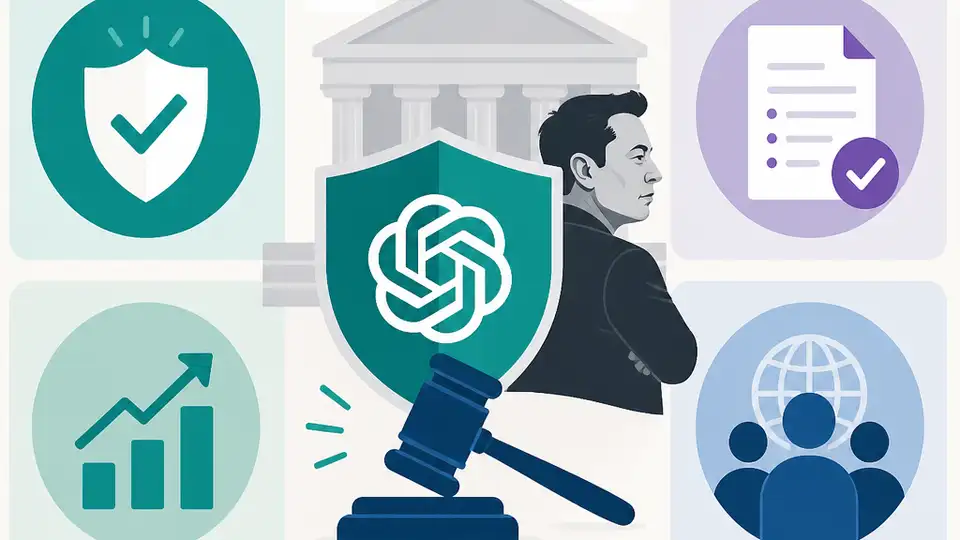
A U.S. jury ruled for OpenAI in Elon Musk’s lawsuit, clearing a major legal hurdle.
OpenAI’s courtroom win matters because it removes one high-profile obstacle as the company weighs its next corporate steps. The jury verdict came on May 18 in Oakland, California, after Musk argued the company had strayed from its founding aims.
1. The verdict clears a legal cloud
Get the latest AI news in your inbox
Weekly picks of model releases, tools, and deep dives — no spam, unsubscribe anytime.
No spam. Unsubscribe at any time.
The biggest immediate effect is simple: OpenAI is no longer facing liability to Musk in this case. That does not end every dispute around the company, but it does close a major chapter in a fight that had become a public test of OpenAI’s direction and governance.
For readers tracking the company’s future, the verdict matters less for the courtroom drama than for what it removes from the checklist. A legal loss here could have added pressure on leadership and complicated any capital markets plan.
- Case: Musk v. OpenAI
- Result: jury found OpenAI not liable
- Date: May 18
- Venue: Oakland, California
2. It reduces friction around an IPO path
Reuters reported that the ruling removes an obstacle to a potential initial public offering. That does not mean an IPO is imminent, but it does mean one less lawsuit is hanging over the company as it considers how to structure itself for growth and fundraising.
Public-market investors tend to look closely at governance disputes, especially when a company’s mission, ownership, and profit model are under debate. A clean verdict can help narrow that scrutiny, even if broader questions remain.
- Potential benefit: fewer legal overhangs
- Investor focus: governance and mission alignment
- Next question: whether and when OpenAI pursues an IPO
3. Musk’s challenge was about the company’s direction
The lawsuit centered on Musk’s claim that OpenAI had drifted away from the mission it once described. That argument resonated because OpenAI sits at the intersection of research, product development, and commercial scale, which makes its structure unusually visible to outsiders.
The jury’s decision does not settle the broader debate about what OpenAI should be. It only settles this dispute in OpenAI’s favor. The company still has to explain how it balances mission claims, safety concerns, and commercial demands.
Core issue: nonprofit-style mission vs. commercial expansion4. The ruling strengthens OpenAI’s near-term position
Even when a lawsuit ends, its effects can linger. A win like this can make it easier for a company to negotiate, recruit, and plan without the same level of legal distraction. It also gives management more room to present its strategy on its own terms.
That said, the verdict is not a blank check. OpenAI still faces scrutiny from regulators, competitors, customers, and critics who want clearer answers about safety, control, and long-term ownership.
- Short-term effect: less litigation pressure
- Business effect: more room for strategic planning
- Ongoing issue: public and regulatory scrutiny
How to decide what this means
If you are following OpenAI as a business story, the key takeaway is that the company has cleared a significant legal hurdle and may find it easier to move toward a public-market strategy. If you are following it as a governance story, the larger debate is still alive, because the verdict did not resolve every question about how the company should be run.
For most readers, the practical answer is this: the lawsuit is over, but the discussion about OpenAI’s structure and future is not.
// Related Articles
- [IND]
WebX 2026 turns speaker hype into a conference brief
- [IND]
AI Weekly: 2026-07-06 ~ 2026-07-13
- [IND]
The AI Act should be treated as Europe’s operating system for AI
- [IND]
Booz Allen’s OpenAI Deal Is Real Advantage, Not Hype
- [IND]
OpenSearch’s vector search benchmark in 5 parts
- [IND]
Vector Databases That Work in Production