How AI and Web3 Are Converging in Practice
AI and Web3 are merging through verifiable compute, autonomous agents, and decentralized infrastructure that make on-chain systems smarter.
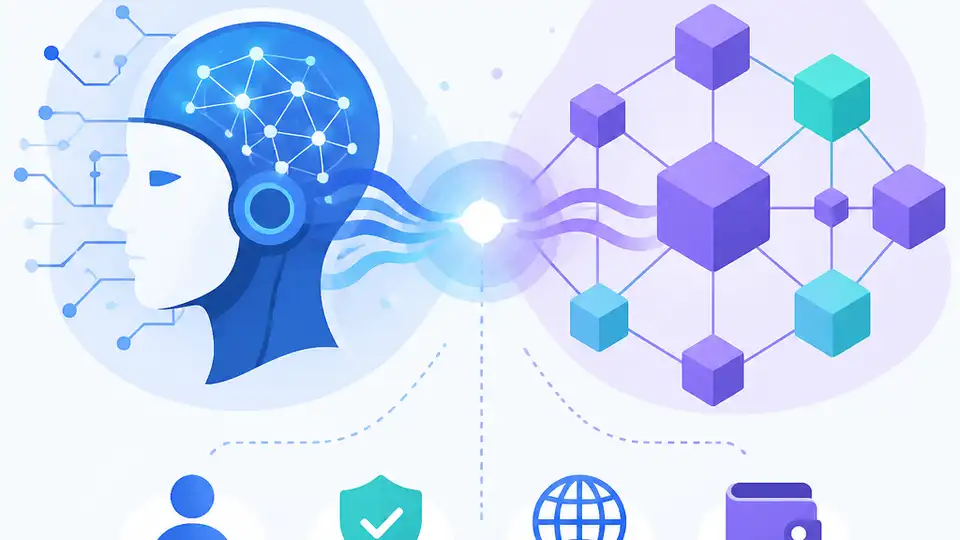
AI and Web3 are joining into a single stack built around verifiable automation.
Artificial intelligence and Web3 used to sit in separate corners of the tech world, but the overlap is getting harder to ignore. The article points to a shift where decentralized systems stop being simple ledgers and start acting like software that can reason, verify, and act on behalf of users.
That matters because the numbers behind the trend are no longer theoretical. The piece cites $1.39 billion in investment for AI agents in the first half of 2025, 6,000 NVIDIA H100 GPUs worth of compute amassed by Gonka in three months, and $70 billion in cumulative contracts for firms like Hut 8 and IREN.
| Metric | Figure | Why it matters |
|---|---|---|
| AI agent investment, H1 2025 | $1.39 billion | Signals strong capital interest in autonomous software |
| Gonka compute in 3 months | 6,000 NVIDIA H100 GPUs | Shows decentralized AI compute can attract real supply |
| Hut 8 and IREN contracts | $70 billion+ | Shows crypto infrastructure is shifting toward AI hosting |
| Updated publication date | May 19, 2026 | Places the article in a live market context |
Why AI and Web3 fit together
Get the latest AI news in your inbox
Weekly picks of model releases, tools, and deep dives — no spam, unsubscribe anytime.
No spam. Unsubscribe at any time.
The core argument is simple: AI needs trust, and Web3 needs intelligence. AI systems are powerful, but their training data, model behavior, and compute pipelines are often hidden inside corporate infrastructure. Web3, by contrast, is built around verification, ownership, and public rules, but most decentralized apps still feel limited to basic transfers and rigid workflows.
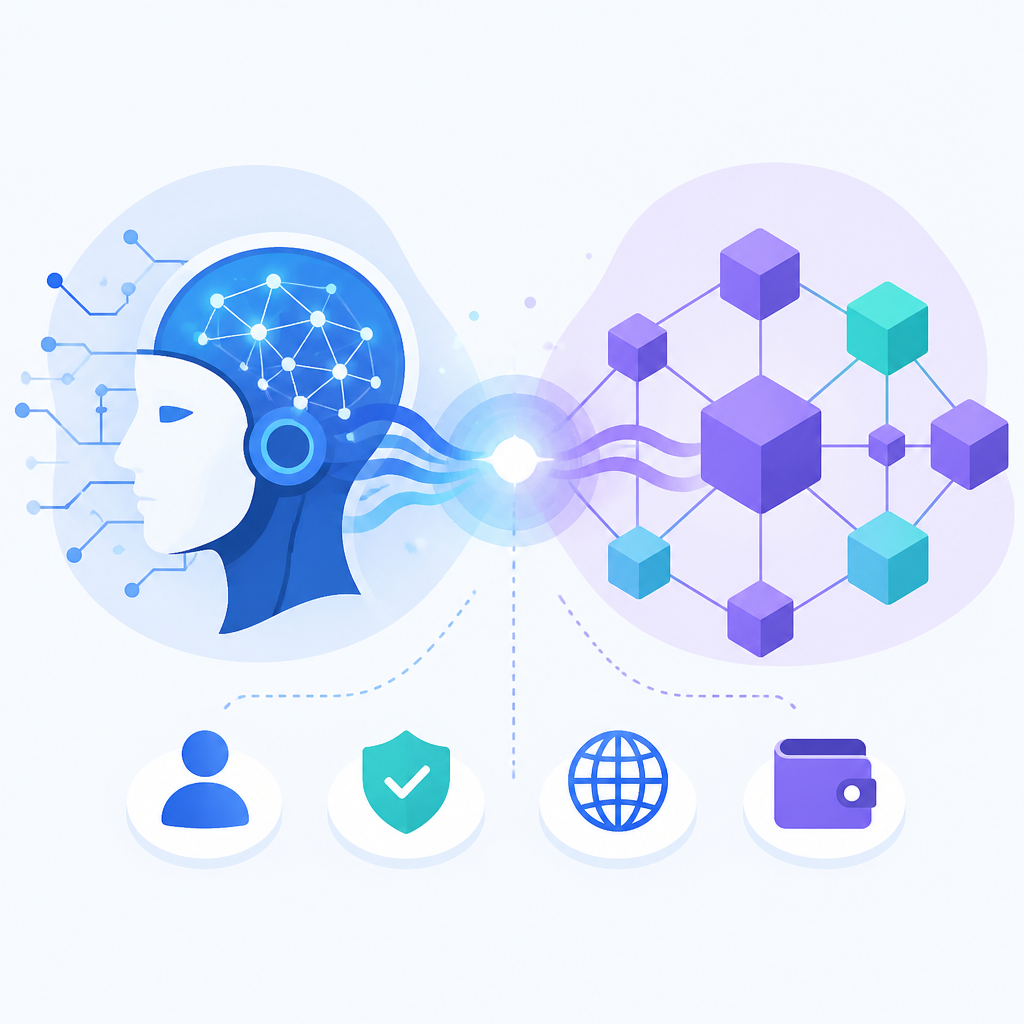
Put those together and each side fills a missing piece. AI can interpret intent and make decisions in context. Web3 can record what happened, who owned what, and whether a computation followed the rules. That combination is why the article frames the merger as infrastructure, not just product design.
- AI adds reasoning, context, and automation to on-chain systems.
- Web3 adds provenance, auditability, and user control to AI workflows.
- The result is software that can act and prove what it did.
- That matters most when money, identity, or regulation are involved.
Compute is becoming decentralized
The first concrete meeting point is compute. Training and inference eat enormous amounts of GPU capacity, and that demand is pushing projects toward distributed supply rather than a few giant data centers. The article highlights Render and Akash as examples of networks connecting idle hardware with AI workloads.
It also points to Gonka, which used a Proof-of-Work model for AI computation and reportedly gathered compute equivalent to more than 6,000 NVIDIA H100 GPUs in just three months. That is a useful signal: demand for distributed AI compute is no longer a niche hobby for crypto people.
“The most powerful models are controlled by a handful of corporations.”
That line from the article captures the tension well. If AI is going to sit inside financial systems, identity systems, or public services, people will demand more than a black box and a promise. They will want proof about where the model ran, what data it saw, and whether the output was altered.
Verifiable AI is the real technical prize
The more interesting part of the story is not raw compute. It is verifiable computing, where an AI model can process data and then cryptographically prove that the computation happened correctly. The article mentions zero-knowledge machine learning and trusted execution environments as the two main tools making that possible.
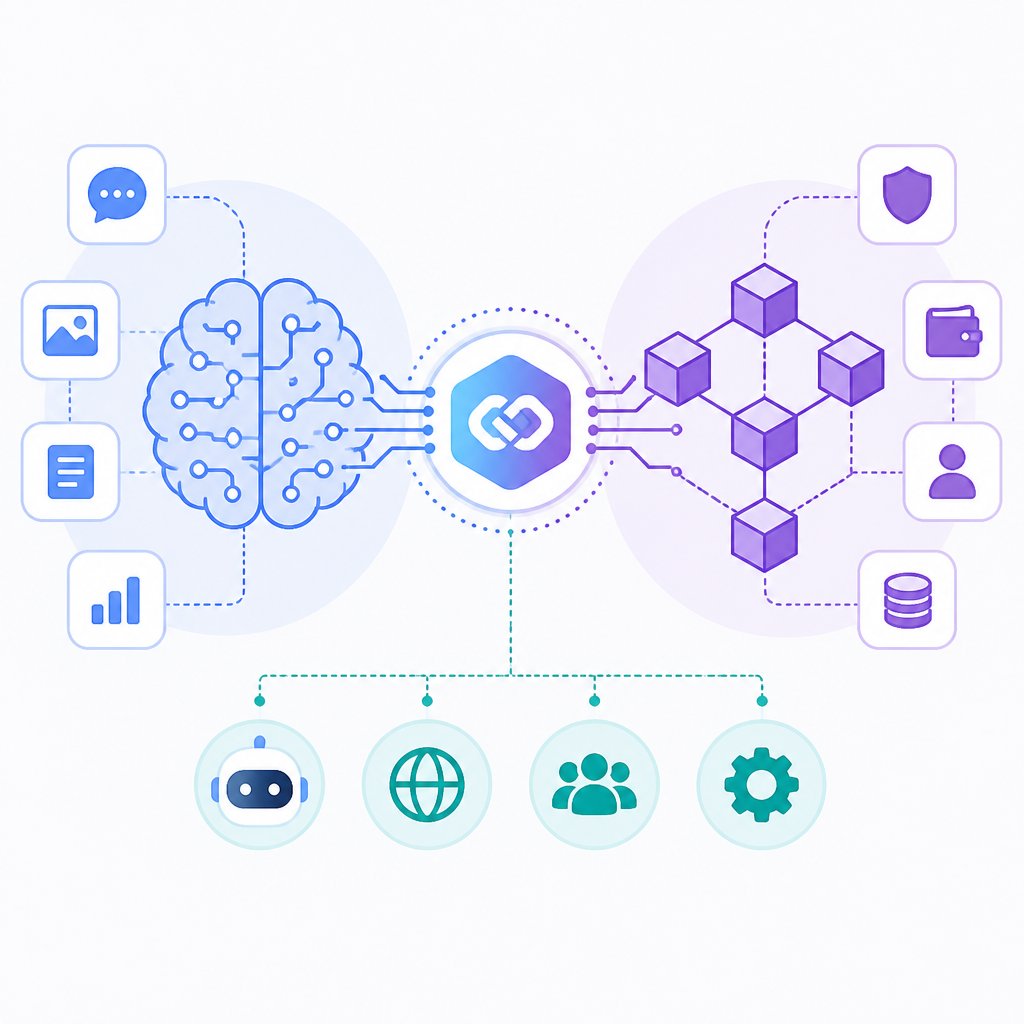
This is where Ritual enters the picture. The network acts as middleware between AI models and on-chain applications, which means smart contracts can call inference and still keep a mathematical record of what happened. That is a serious upgrade over the usual “trust the API” approach.
- Zero-knowledge techniques can prove a model ran without exposing the underlying data.
- Trusted execution environments keep sensitive computation isolated from the host system.
- Verifiable inference gives smart contracts a way to depend on AI without blind trust.
- That matters for finance, identity checks, and compliance-heavy workflows.
There is also a privacy angle here that gets less attention than it should. If an AI agent can prove it meets a rule without revealing the private data behind that proof, then privacy and compliance stop being enemies. That is a big deal for regulated industries that want automation without handing over everything to a central operator.
Agents are the most visible layer
The most visible expression of the merger is the autonomous agent. These are not chatbots with a wallet attached. They are software systems that can hold crypto, negotiate with other agents, move funds, and execute strategies with little or no human intervention.
The article says investment in AI agents reached $1.39 billion in the first half of 2025, which is more than a hype spike. It suggests investors are betting that machine-to-machine commerce will become a real market, with agents paying each other in stablecoins for data, inference, storage, and other services.
- Agents can own wallets and manage assets.
- Agents can buy services from other agents.
- Agents can prove credentials with zero-knowledge tools.
- Agents can operate inside DeFAI workflows with less user friction.
This is also where the article’s point about DeFAI lands. In a DeFAI system, a user does not need to think in terms of liquidity ranges, bonding curves, or protocol-specific steps. The user states a goal in plain language, and an agent builds and adjusts the strategy. That is a real product shift, because it removes the steep learning curve that has kept many people away from DeFi.
The idea is already bleeding into broader crypto infrastructure too. Mining firms such as Hut 8 and IREN are redirecting energy and cooling assets toward AI hosting, with cumulative contracts above $70 billion. That tells you the physical layer is changing alongside the software layer.
What still gets in the way
The article does not pretend this merger is free of problems. AI-washing is a real risk, especially in crypto, where weak projects can slap “AI” onto a token and call it strategy. Smart contract bugs can still drain funds. Governance can fracture when communities disagree. And the speed gap is ugly: AI inference happens in milliseconds, while public blockchains often settle in seconds or minutes.
Regulation is another mismatch. Current legal systems were built for human actors and corporate entities, not for autonomous software agents that can trade, sign, or coordinate across wallets without a clear legal person behind them. That gap will matter more as these systems move from demos into production.
Still, the direction is clear enough to name. Fetch.ai, SingularityNET, and Ocean Protocol now sit under the Artificial Superintelligence Alliance, while Vana is pushing user-owned data monetization. Those projects are testing the same thesis from different angles: intelligence, ownership, and verification can live in the same stack.
What this actually means for builders
If you are building in crypto or AI, the practical takeaway is to stop treating the two fields as separate bets. The useful products will probably combine verifiable compute, user-owned data, and agent-based automation. That could mean wallets that act on intent, markets where agents buy services from one another, or financial tools that translate plain language into on-chain execution.
The bigger question is who controls those systems. If the answer is still a handful of cloud vendors and closed model providers, then the promise of decentralization fades fast. If more compute, data, and execution can be proven on-chain or through cryptographic checks, then AI and Web3 may end up sharing a common operating layer.
The next thing to watch is whether agent-based products can clear the gap between prototype and regulated deployment. If they can, the conversation will move from “can AI work with Web3?” to “which parts of digital commerce should still require humans at all?”
// Related Articles
- [CHAIN]
UAE Web3 setup turns crypto rules into a checklist
- [CHAIN]
Five AI Futurist features shaping Futurist 2026
- [CHAIN]
Regulation Now Moves Bitcoin and Ethereum More Than War
- [CHAIN]
The SEC Crypto Rule Proposal Will Clean Up Crypto, Not Kill It
- [CHAIN]
Web3 platforms need fee discipline, not token theatrics, to make money
- [CHAIN]
Riyadh’s blockchain show proves Web3 is now infrastructure