The Anthropic ban proves Congress should regulate frontier AI now
The White House’s Anthropic move shows Congress must set frontier AI guardrails now.

The White House’s Anthropic move shows Congress must set frontier AI guardrails now.
The Trump administration’s export ban on Anthropic’s Fable 5 and Mythos 5 is the clearest proof yet that frontier AI is already a national-security policy issue, not a future one. When the government can abruptly cut off access to advanced models over cybersecurity concerns, and a company can suspend those models for all users overnight, the market has crossed into a zone where ad hoc executive action is too blunt and too opaque to be the only safeguard.
Congress can no longer pretend frontier AI is self-governing
Get the latest AI news in your inbox
Weekly picks of model releases, tools, and deep dives — no spam, unsubscribe anytime.
No spam. Unsubscribe at any time.
The Anthropic decision landed with the force of a policy alarm because it exposed how little visibility lawmakers have into model-level risk decisions. If Congress is still asking for basic information about why Fable 5 and Mythos 5 were restricted, that is a sign the current framework is not merely incomplete, it is absent in the places that matter most.
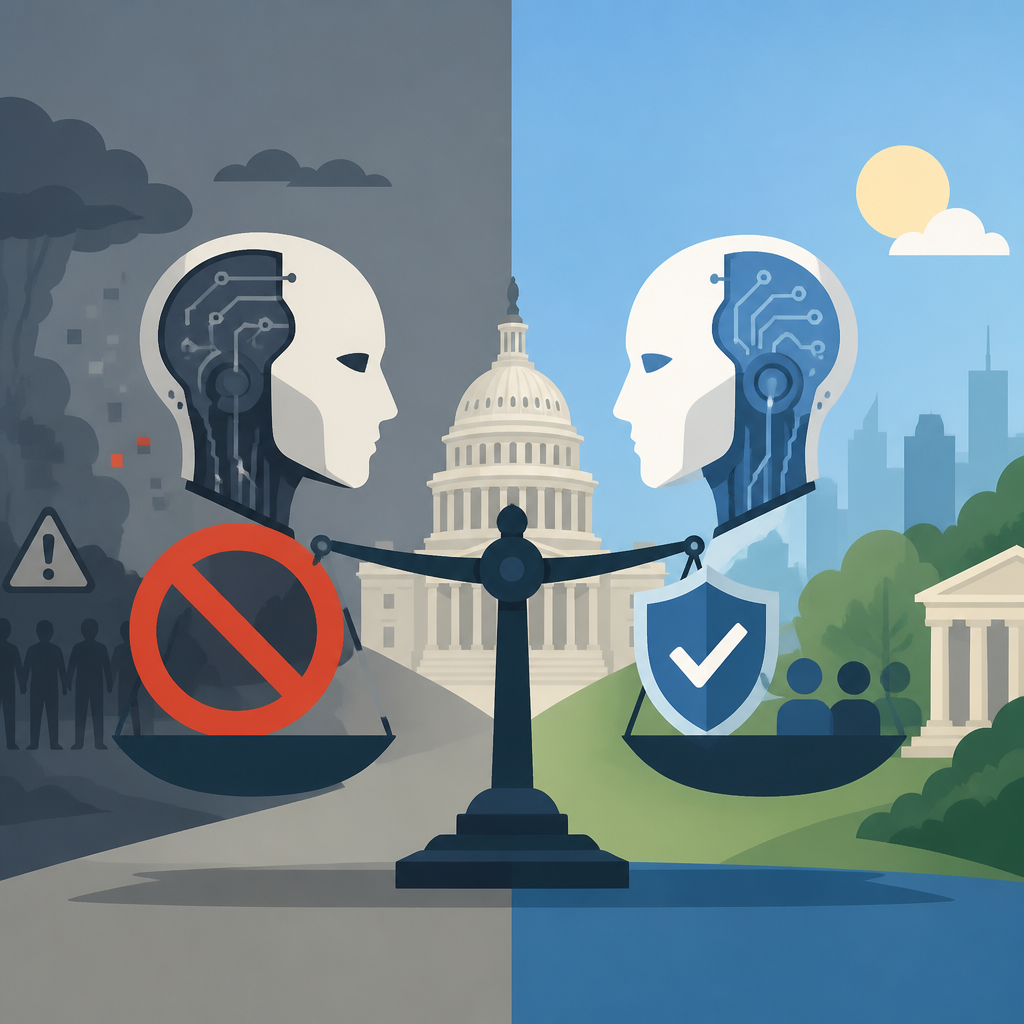
That matters because frontier AI is not regulated like ordinary software. A model can be deployed globally in minutes, embedded into products across industries, and used for tasks that range from coding to cyber offense. In practice, that means the failure mode is not a single bad app, but a capability jump that outpaces the institutions meant to review it.
National-security shocks are forcing the issue faster than lobbying ever could
The strongest argument for congressional action is that the executive branch has now shown it is willing to intervene directly when it sees a credible security risk. Once the White House uses export controls or access restrictions against a leading AI lab, the debate stops being theoretical and becomes a question of process: who decides, on what evidence, and under what standard?
This is exactly the kind of moment that produces durable regulation. A single move against Anthropic can ripple through the broader ecosystem, because every other frontier lab now has to assume that cybersecurity, model misuse, and foreign access are not niche concerns but live policy triggers. Congress should use that pressure to write rules before the next incident forces an even more chaotic response.
Waiting for perfect evidence is a strategy for losing control
Opponents of regulation will argue that Congress should not rush to impose guardrails on a fast-moving technology based on one government action. They will say the Anthropic case is too opaque, the facts are still emerging, and heavy-handed rules could freeze innovation, punish U.S. firms, and hand an advantage to rivals abroad.
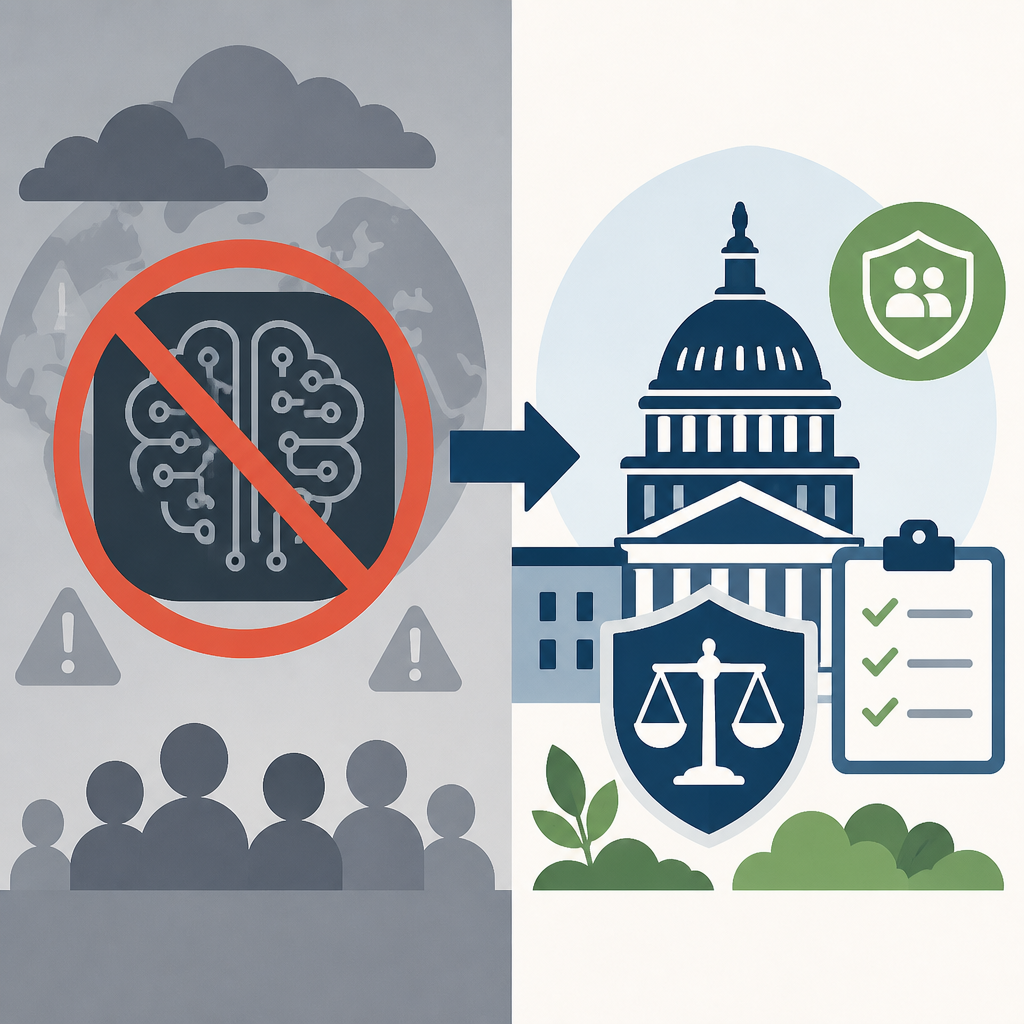
That caution has merit in one narrow sense: bad rules are worse than no rules. But the answer is not delay, it is targeted statute. Congress does not need to define every model threshold today to establish reporting duties, incident disclosure, export review standards, and clear escalation pathways for frontier systems. The Anthropic move is not proof that regulation should be maximal. It is proof that leaving these decisions to improvised executive action is untenable.
Guardrails should be narrow, auditable, and tied to real risk
The right response is not a blanket pause on AI development. It is a framework that forces transparency around the models most likely to create security, bio, or cyber harm. If a system like Fable 5 or Mythos 5 can trigger an export ban, then the public deserves a rulebook that explains what thresholds, tests, and review bodies led there.
Congress should focus on concrete mechanisms: mandatory reporting for frontier model incidents, independent red-team audits, secure deployment standards, and a review process for high-risk releases. Those are the kinds of guardrails that preserve innovation while making it harder for one agency, one company, or one emergency to dictate the entire national response.
The counter-argument
The best case against congressional intervention is speed. Frontier AI changes too fast for legislation, and any statute written today risks being obsolete before it is enforced. Industry also argues that the U.S. should avoid overregulating its own champions while China and other rivals push ahead without comparable constraints.
That argument is strongest when lawmakers try to micromanage architecture or freeze specific model classes. It is weaker when the goal is accountability. Congress has regulated complex, fast-moving sectors before by setting baseline obligations rather than technical design mandates. AI deserves the same treatment.
The Anthropic episode shows why. If the government can impose an export ban over cybersecurity concerns with little public explanation, then the real danger is not overregulation. It is unreviewable regulation by surprise. Congress should not copy the White House’s opacity; it should replace it with rules that are predictable, narrow, and subject to oversight.
What to do with this
For engineers, PMs, and founders building frontier systems, treat this as a warning that safety, security, and exportability are now product requirements, not policy afterthoughts. Build audit trails, model evals, access controls, and incident response plans as if they will be reviewed by regulators, because they already are. The companies that adapt to that reality will move faster than the ones that wait for the next shock.
// Related Articles
- [IND]
AI agent papers worth tracking in one repo
- [IND]
OpenAI’s partner network is a delivery strategy, not a logo program
- [IND]
Anthropic’s safe Claude Mythos 5 turns access into tiers
- [IND]
G7 should treat AI CEOs as power brokers, not guests
- [IND]
KuCoin’s AI stack turns blockchain into AI plumbing
- [IND]
Ping Identity is right: AI agents need runtime identity, not just log…