Anthropic’s safe Claude Mythos 5 turns access into tiers
I break down how Anthropic split Claude Mythos 5 into public and restricted tiers, plus a copy-ready policy template.

Anthropic split Claude Mythos 5 into public and restricted tiers.
I've been watching model launches get weirder for a while now. Not better. Weirder. Every company wants to say, “here’s the most powerful thing we’ve built,” and then in the same breath explain why you can’t actually use it for the parts of work that scare them. That’s exactly what rubbed me the wrong way here. Anthropic didn’t just ship a model; it shipped a permission structure. One version for the public, another for organizations it already trusts, and a routing layer that quietly says, “no, not that query, try the smaller model instead.”
And honestly, that’s the interesting part. Not the branding. Not the “safe” label. The useful thing is the pattern: if a model can be dangerous in some contexts, you don’t have to pretend it’s uniformly safe or uniformly blocked. You can tier access, route sensitive prompts, red-team the edges, and make the rules visible enough that operators can actually work with them. I’ve had enough of product pages that promise magic and then leave the policy mess to legal after launch.
What Anthropic did with The Guardian’s report on Claude Mythos 5 is a lot more operational than it sounds. If you build with AI, this is the part worth stealing.
Anthropic’s own framing is the anchor here: it released Fable 5 to the public while keeping Claude Mythos 5 for select organizations, and it routes some cybersecurity, biology, chemistry, and extraction requests down to a weaker model. The Guardian also says Anthropic used outside experts for more than 1,000 hours of red-teaming and ran a bug bounty program, which matters because this wasn’t just a PR checkbox.
They didn’t launch one model. They launched a policy stack.
Get the latest AI news in your inbox
Weekly picks of model releases, tools, and deep dives — no spam, unsubscribe anytime.
No spam. Unsubscribe at any time.
“Anthropic is offering an unrestricted version, Claude Mythos 5, to companies and organizations that already have access to this model family… Anthropic says most queries about cybersecurity or biology and chemistry to Fable 5 will be routed instead to the lower-tier model, Opus 4.8.”
What this actually means is simple: the model is no longer the product by itself. The access policy is part of the product. If a request touches a sensitive area, the system doesn’t just answer it harder or smarter. It decides which model is allowed to answer at all.

I ran into this same design problem when I helped wire up an internal assistant for a team that kept asking for “just one model.” That always sounds clean until someone asks for exploit analysis, or dual-use chemistry, or internal infrastructure debugging. Then you’re stuck with a binary choice that’s too blunt: either overblock useful work or let everything through and hope nobody gets clever.
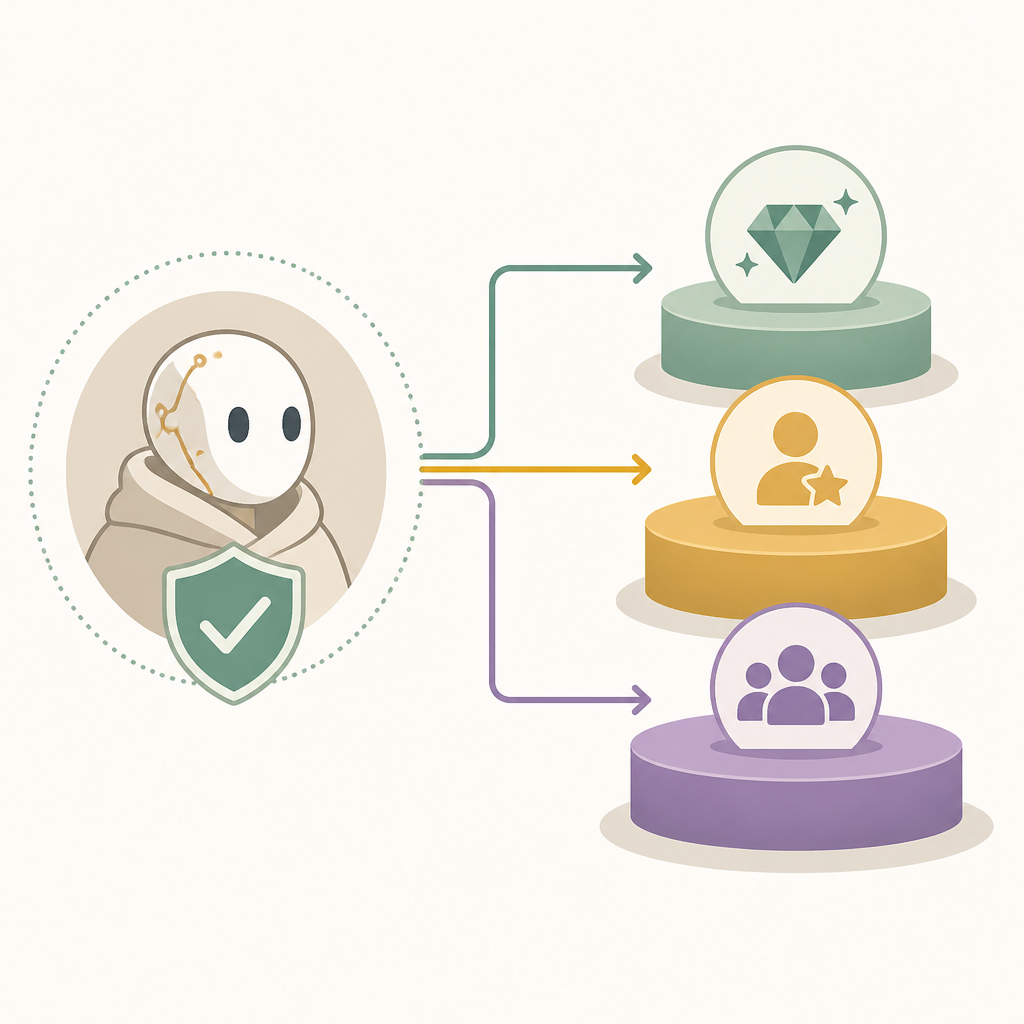
Anthropic’s setup is the middle path, and I think that’s the real lesson. Public users get Fable 5 with guardrails. Trusted organizations get Mythos 5. Sensitive prompts get downgraded to Opus 4.8. That’s not a model launch. That’s a traffic system.
How to apply it: stop treating “allowed vs not allowed” as your only control. Build a router with at least three lanes: public-safe, trusted-advanced, and fallback-low-risk. Then make the routing decision explicit in logs so you can audit what happened later. If you’re using Anthropic, that might sit above the model call. If you’re building on your own stack, the same idea works with any classifier or policy engine.
- Public lane: lower-risk, broadly available prompts.
- Trusted lane: higher-capability access for vetted orgs.
- Fallback lane: route risky requests to a less capable model or refuse them.
The “safe” version is really a narrower version
“Dubbed Fable 5, the model is the first to be made widely available from the company’s new Mythos class… Anthropic promoted Fable 5 as useful for writing and debugging software code, answering complex research questions and analyzing images.”
What this actually means is that “safe” doesn’t mean harmless. It means the public-facing model is constrained enough that Anthropic is willing to expose it broadly. That’s a very different claim. It’s less about moral purity and more about risk management.
I like that distinction because it cuts through the usual AI marketing fog. Too many teams call a model “safe” when they really mean “we put a moderation layer on it and crossed our fingers.” Anthropic is saying something more concrete here: the public version is the version they’re comfortable shipping at scale, while the more capable version stays behind the door for vetted users.
That matters for developers because it changes how you should think about capability planning. If you’re building a product on top of a model family, don’t assume every tier will stay equally available. The vendor may expose a public tier, keep a partner tier, and reserve a third tier for internal or government testing. If your architecture depends on the top tier being universally available, you’re building on sand.
How to apply it: design your app so each model tier has a clear job. Public tier for common tasks, premium tier for trusted customers, fallback tier for risky or costly requests. Don’t let product copy blur those lines. Users can handle tradeoffs. They hate surprise downgrades.
- Document what each tier can and cannot do.
- Set expectations in the UI before the request is sent.
- Keep a visible reason code for every downgrade.
Red-teaming is not theater when the model can map infrastructure
“The company also said it had hired outside experts to spend more than 1,000 hours trying to find ways to bypass these restrictions – a process known as red-teaming. The company ran a bug bounty program, which pays people to find security flaws.”
What this actually means is Anthropic assumed people would try to break the guardrails, then paid for that pressure instead of waiting for an incident report. That’s the right instinct. If your model can identify vulnerabilities in banking systems or power grids, you do not get to rely on vibes and a content policy doc.
I’ve seen teams skip this step because it feels expensive or embarrassing. It is both. But it’s cheaper than discovering your “safe” model can be nudged into giving away the exact thing you said it wouldn’t. Red-teaming is where your policy gets reality-checked. Bug bounties are where the public finds the holes before your attackers do.
Anthropic’s note about more than 1,000 hours matters because it tells me they didn’t treat this as a weekend exercise. They paid outside specialists to push on the edges. That’s the kind of number I trust more than a vague “we tested extensively” line, because it gives me a sense of actual effort.
How to apply it: if you’re shipping a restricted model or agent, budget for adversarial testing before launch and after every major policy change. Don’t just test “can it answer the bad question.” Test prompt chaining, role-play attacks, translation attacks, and tool-usage abuse. Then keep a standing bounty or internal red-team loop so the guardrails don’t calcify.
Useful places to read up on this approach: Anthropic research, OpenAI’s model safety framing, and the NIST AI Risk Management Framework.
Fallback routing is the part I’d steal first
“Anthropic says most queries about cybersecurity or biology and chemistry to Fable 5 will be routed instead to the lower-tier model, Opus 4.8… queries will also fall back to the less powerful model.”
What this actually means is the system is not trying to answer every prompt with maximum power. It’s trying to answer with the minimum power that still fits the request. That is a much saner default.
I ran into this when a team I worked with kept escalating every question to the biggest model we had. It looked smart in demos. In production, it was a mess: higher cost, slower responses, and more risk on prompts that didn’t need it. Once we added routing rules, the whole thing got calmer. Not glamorous. Just calmer. And calmer systems are easier to trust.
Anthropic’s fallback approach is especially interesting because it doesn’t just block. It redirects. That’s a better user experience than a dead end, and it’s a better security posture than pretending all requests deserve equal treatment. If the prompt is about a sensitive domain, the system can still be useful, just less capable.
How to apply it: add a policy router before your model call. Give it a few outcomes: full model, fallback model, refuse, or human review. Keep the rules narrow and observable. If you’re building a coding assistant, for example, a request about debugging a web app should go to the strong model. A request about exploiting a bank login flow should get downgraded or blocked. That distinction is not subtle in practice.
- Use intent classification, not just keyword matching.
- Log the route chosen and the reason.
- Review downgrade rates weekly so the policy doesn’t drift.
Security partners are a distribution channel now
“That select group was expanded in early June to about 200 organizations in more than 15 countries and is expected to grow further.”
What this actually means is access itself is becoming a product tier. If you’re in the right partner program, you get the bigger model. If you’re not, you get the public one. That’s not unusual in enterprise software, but it feels new when the thing being sold is a model with obvious dual-use risk.
I think this is where a lot of startups are going to get tripped up. They’ll assume model access is like API access: pay money, get tokens, ship features. But once vendors start segmenting by trust, geography, and use case, your procurement story matters as much as your prompt design. If you’re a developer building for customers in regulated sectors, you need to know which tier they can actually buy.
Anthropic’s mention of cybersecurity partners and Project Glasswing is a signal that distribution is now tied to governance. The model is not just sold. It is placed. That means partner programs, vetting, and use-case review are not side quests anymore. They’re part of the go-to-market motion.
How to apply it: if you sell AI features into enterprise accounts, build a tiering sheet that maps customer class to model class. Include region, industry, and use-case restrictions. Then make sure sales, legal, and engineering are looking at the same sheet. Otherwise you’ll promise the wrong thing and your launch will become a cleanup project.
For more context on the companies and programs involved, see Anthropic, the White House, and the original Guardian report.
The pricing tells you what Anthropic thinks this is worth
“The launch of Fable 5 comes with a steep price tag – $10 per million input tokens and $50 per million output tokens, which amounts to double the cost of Opus 4.8.”
What this actually means is the company is charging a premium for capability and for the risk-management overhead around that capability. That’s not subtle. If a model costs double, you should assume the vendor sees it as either more powerful, more expensive to run, or both.
I don’t love token pricing because it hides real usage costs until you’ve already burned through a budget. But it does tell you something important here: Anthropic is not pretending this is a commodity release. It is pricing the model like an elite tier.
That matters when you’re deciding which model to route to which task. If your team is using the expensive model for routine summarization, you’re wasting money. If you’re using the cheaper model for sensitive analysis it can’t handle, you’re wasting time and maybe creating risk. The right answer is usually a routing policy, not a single default model.
How to apply it: build cost-aware routing into your app from day one. Set thresholds for high-cost models, and make sure your observability stack shows spend per task type. If you can’t explain why a request went to the expensive tier, you probably shouldn’t be using that tier by default.
The template you can copy
# AI model access policy template

## Model tiers
- Public tier: [model name]
- Trusted tier: [model name]
- Fallback tier: [model name]

## Routing rules
1. Route general-purpose requests to the public tier.
2. Route verified customer or partner requests to the trusted tier.
3. Route requests involving cybersecurity, biology, chemistry, infrastructure, or extraction of model internals to the fallback tier or refuse them.
4. If a request is ambiguous, downgrade to the fallback tier and log the reason.

## Allowed uses
- Writing and editing
- Code debugging
- Research summaries
- Image analysis

## Restricted uses
- Vulnerability discovery against real systems
- Dual-use biology or chemistry guidance
- Attempts to extract model weights, system prompts, or policy logic
- Mass surveillance or autonomous weaponization

## Review process
- Run adversarial tests before launch.
- Re-test after every policy or model update.
- Keep a standing bug bounty or external red-team program.
- Review downgrade and refusal logs weekly.

## Operational notes
- Expose the route decision in logs.
- Tell users when a request is downgraded.
- Keep legal, security, and engineering aligned on the same policy sheet.
- Revisit pricing and routing together; expensive models should not be the default for routine work.

## Escalation
- If a request is high-risk but legitimate, send it to human review.
- If a request appears to target real-world harm, refuse and preserve the audit trail.
- If the policy is unclear, default to the safer tier.
That template is my version of what Anthropic is doing here, not a copy of their internal policy. The original reporting is from The Guardian; everything in the template above is my own operational rewrite for teams that need something they can actually use.
// Related Articles
- [IND]
The Anthropic ban proves Congress should regulate frontier AI now
- [IND]
G7 should treat AI CEOs as power brokers, not guests
- [IND]
KuCoin’s AI stack turns blockchain into AI plumbing
- [IND]
Ping Identity is right: AI agents need runtime identity, not just log…
- [IND]
Cloudflare’s design partner program is a smart security wedge
- [IND]
Claude 5双模型上线,代码与科学任务全面领跑