Anthropic’s $400M Bet on Biotech AI
Anthropic reportedly paid $400M for Coefficient Bio, adding a small biotech AI team to its push into life sciences.
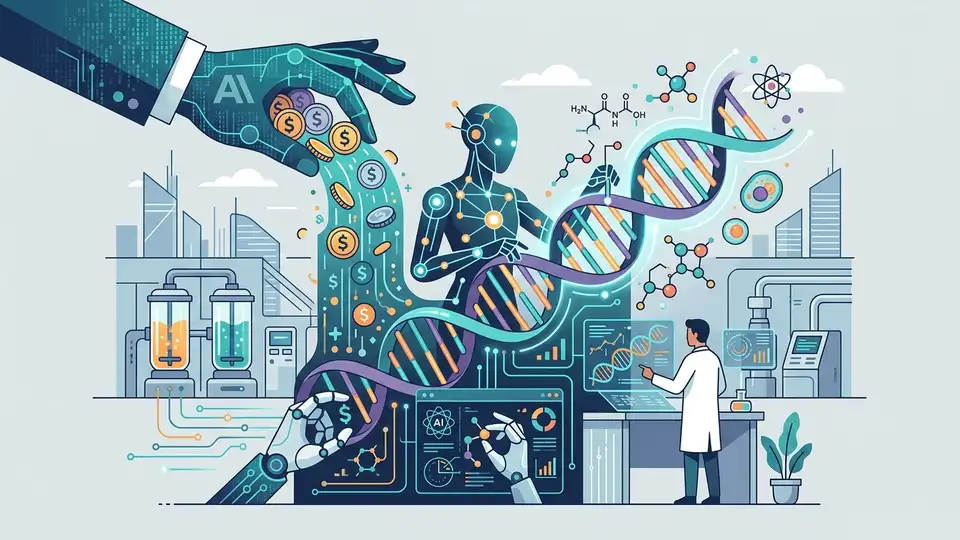
Anthropic has reportedly spent $400 million in stock to buy Coefficient Bio, a stealth biotech AI startup with about 10 people. That is a big check for a team this small, and it tells you where Anthropic thinks the next useful AI products may come from: scientific work that needs speed, precision, and fewer dead ends.
The deal, first reported by The Information and Eric Newcomer, also fits a pattern. Anthropic has been pushing deeper into life sciences since it introduced Claude for Life Sciences in October, and this acquisition looks like the next step in that plan.
Why Anthropic is buying biotech talent
Get the latest AI news in your inbox
Weekly picks of model releases, tools, and deep dives — no spam, unsubscribe anytime.
No spam. Unsubscribe at any time.
Coefficient Bio was founded just eight months ago by Samuel Stanton and Nathan C. Frey, both of whom worked in computational drug discovery at Genentech’s Prescient Design. That background matters. This is not a random AI startup trying to attach itself to biotech buzz. It is a team that already knew the pain points in drug discovery and built software around them.
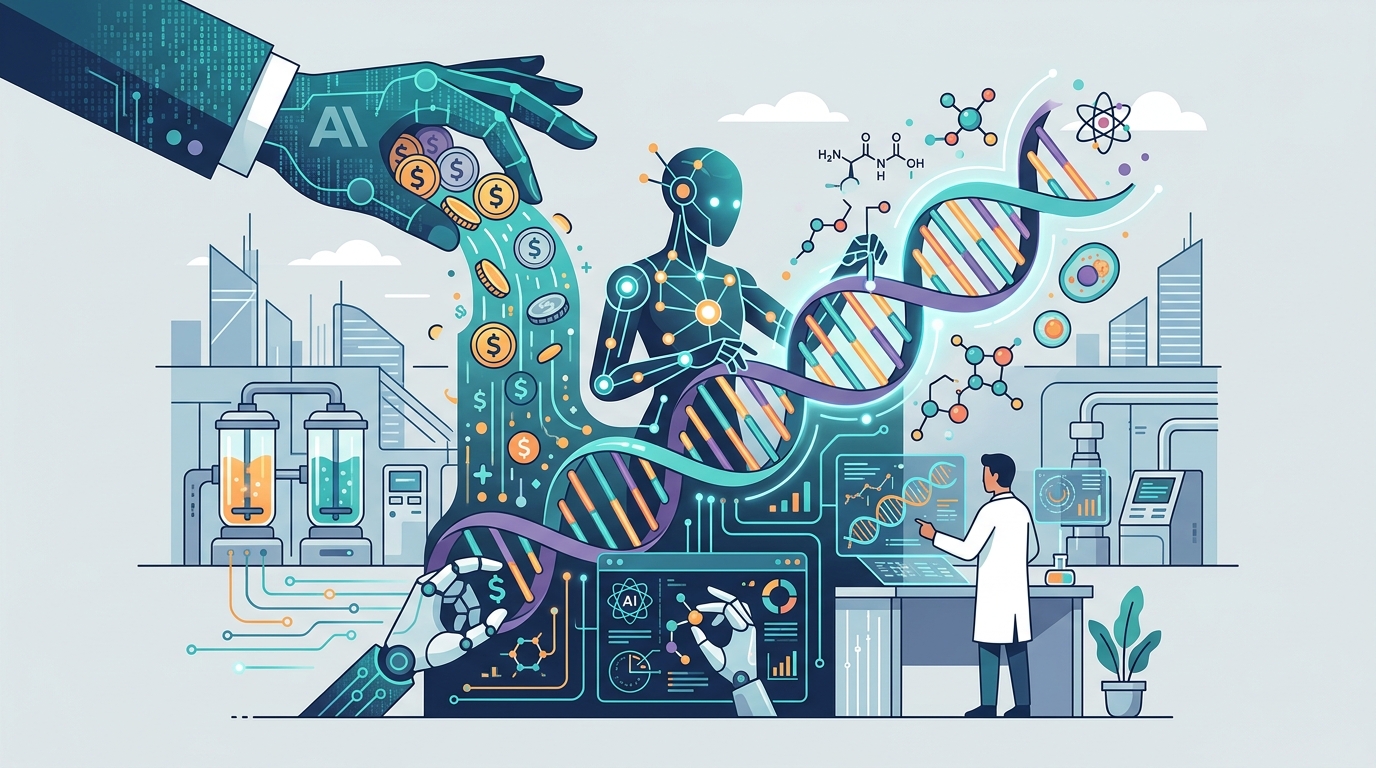
Anthropic is also making a sensible bet on where enterprise AI adoption can become sticky. In consumer chat, users can switch products fast. In biotech, workflows are slower, validation is expensive, and once a tool gets embedded into research, it can be hard to replace. If Claude can help scientists move from literature review to hypothesis generation to experiment planning, Anthropic gets a much deeper relationship with the customer.
The reported price also says something about how much Anthropic values domain expertise. A 10-person startup with no public product and no obvious revenue stream would not usually command a $400 million headline unless the buyers cared about the people, the know-how, or both.
- Reported deal size: $400 million in stock
- Team size: about 10 people
- Startup age: about 8 months
- Founders’ background: computational drug discovery at Genentech Prescient Design
- Buyer focus area: healthcare and life sciences
Anthropic already laid the groundwork
This acquisition did not come out of nowhere. Anthropic has been building a story around scientific and professional use cases for Claude, and life sciences is one of the clearest places to apply a general-purpose model to a high-value workflow. The company’s pitch is simple: if Claude can help researchers read papers faster, summarize experiments better, and reason through messy biology data, then it becomes more than a chatbot.
That matters because biotech is full of tasks that are expensive in human time, even before any lab work begins. Researchers spend hours scanning papers, comparing prior art, writing protocols, and checking whether a promising idea has already failed in a different form. AI cannot replace wet labs, but it can reduce the amount of time scientists waste before they ever get to the bench.
It is also worth noting that Anthropic is not the only AI company sniffing around science. OpenAI has pushed its models into research workflows, and Google has spent years on protein and biology research through DeepMind. Anthropic’s move says it wants a real seat at that table, not just a marketing slide about enterprise AI.
“The future of AI is not about replacing people, it’s about augmenting human capabilities.” — Dario Amodei
What the deal says about the biotech AI market
A $400 million acquisition for a tiny stealth company is not normal, but it is easier to understand if you compare it with the broader AI market. In consumer AI, distribution often wins. In biotech AI, expertise and trust can matter more, because the buyer is often a scientist, a lab director, or a pharma executive who cares about measurable research gains.
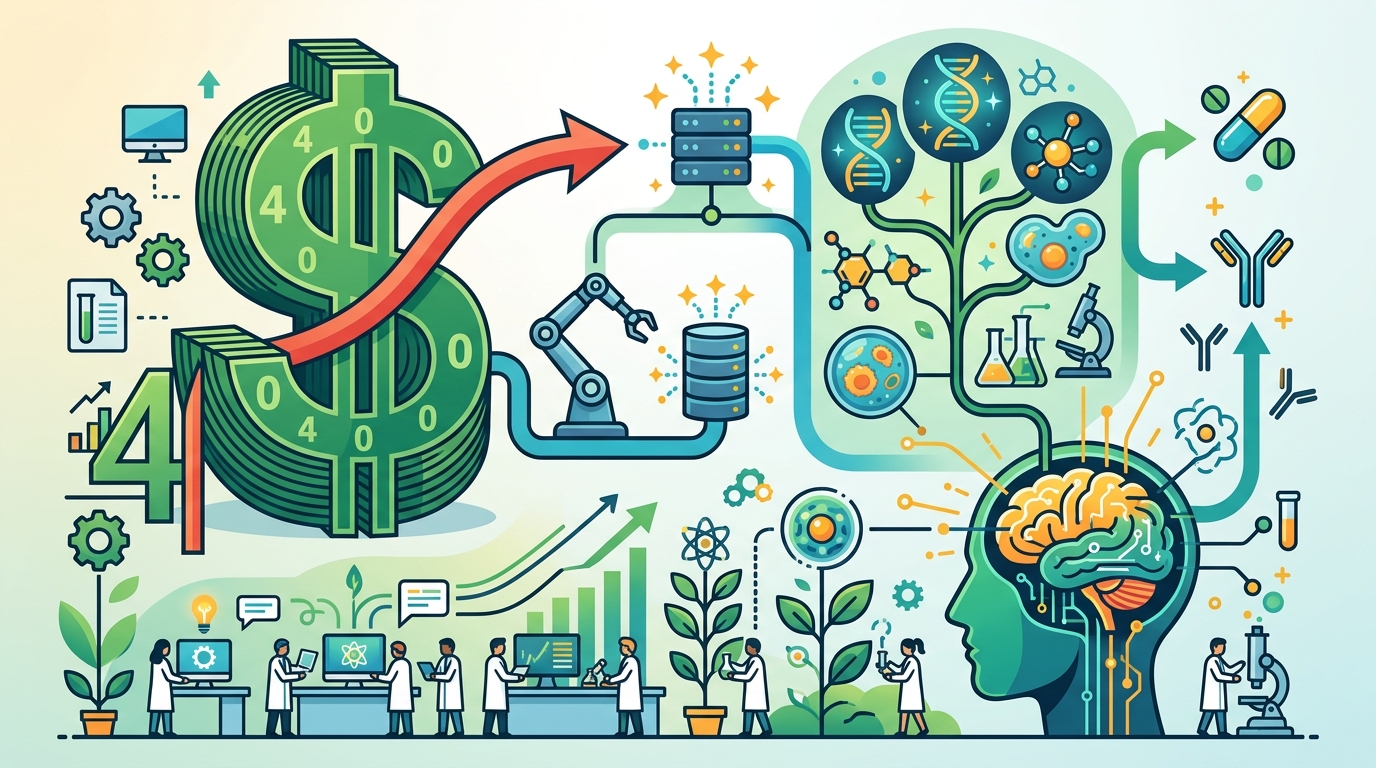
That makes biotech AI feel less like a winner-take-all app market and more like a talent market. If a startup team has already built strong workflows around computational drug discovery, a large model company may decide it is cheaper to buy the team than to recreate that expertise internally.
- OpenAI has focused on general-purpose models and enterprise tools
- Google DeepMind has invested heavily in biology research, including protein modeling
- Anthropic is now pairing Claude with specialized life-science talent
- Genentech trained the founders in real-world drug discovery workflows
There is also a practical reason Anthropic may want this team inside the company instead of outside it. Life-science products are hard to tune with generic prompt engineering alone. They need domain-specific data handling, careful evaluation, and a lot of attention to how outputs are used in regulated settings. Bringing in a small team that already knows those constraints can shorten the path from demo to something researchers actually trust.
For Anthropic, this looks less like a flashy acquisition and more like a hiring strategy with a very expensive price tag. It is buying a few things at once: people, domain knowledge, and a head start in a market where credibility matters more than hype.
What to watch next
If this deal is real and the team joins Anthropic’s health and life science group, the next question is whether the company turns this into a product researchers can use every day. The most interesting version of that future is not a generic science chatbot. It is a workflow tool that helps a lab move from unstructured information to testable ideas much faster than before.
The more important signal is whether other model companies follow the same playbook. If one startup can be bought for $400 million because it brings biotech expertise and a small but capable team, then the AI race may start to look less like a model benchmark contest and more like a series of targeted talent grabs across high-value industries.
My bet: we will see more AI companies buy small, specialized teams in medicine, chemistry, and materials science over the next year, especially when those teams already know how to turn model outputs into actual research workflows. The real question is whether Anthropic can turn Coefficient Bio’s know-how into products scientists use weekly, or whether this becomes another expensive proof that talent is easier to buy than product-market fit.
For more on Anthropic’s enterprise push, see our coverage of Claude for Life Sciences and how AI vendors are chasing regulated industries.
// Related Articles
- [IND]
WebX 2026 turns speaker hype into a conference brief
- [IND]
AI Weekly: 2026-07-06 ~ 2026-07-13
- [IND]
The AI Act should be treated as Europe’s operating system for AI
- [IND]
Booz Allen’s OpenAI Deal Is Real Advantage, Not Hype
- [IND]
OpenSearch’s vector search benchmark in 5 parts
- [IND]
Vector Databases That Work in Production