Why Anthropic’s financial agents are a serious Wall Street bet
Anthropic’s new financial services agents are a serious product move, and Wall Street should treat them as infrastructure, not a demo.
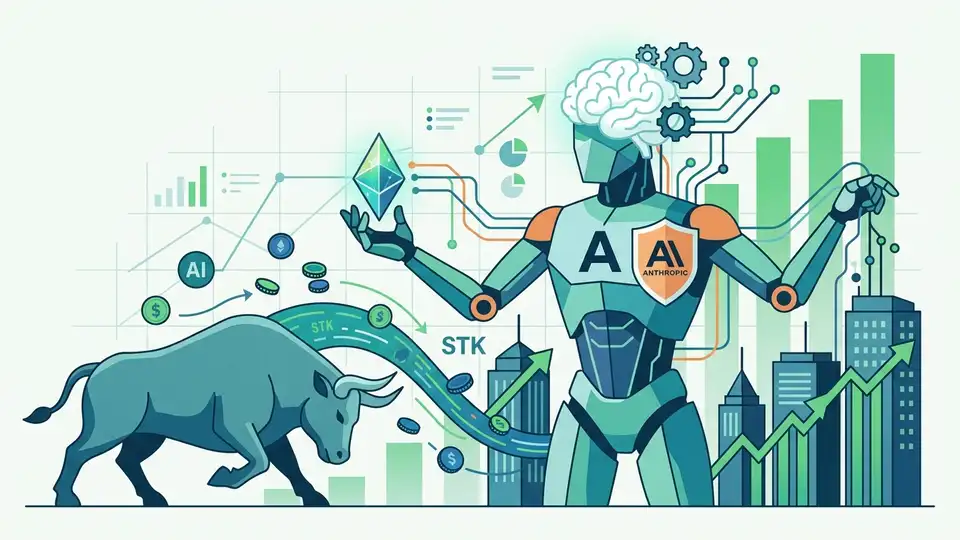
Anthropic’s financial agents are a serious product move for Wall Street automation.
Anthropic’s new financial-services agents are not a novelty feature; they are a direct attempt to turn frontier models into workflow infrastructure for banks, asset managers, and insurers. That matters because financial firms do not buy AI for novelty. They buy it when it can reduce time spent on repetitive analysis, document handling, and client support without breaking compliance or introducing operational risk. Anthropic is aiming at exactly that seam, and it is the right target.
Financial services is where AI becomes valuable fast
Get the latest AI news in your inbox
Weekly picks of model releases, tools, and deep dives — no spam, unsubscribe anytime.
No spam. Unsubscribe at any time.
The strongest case for Anthropic’s move is simple: finance is full of standardized, text-heavy work that is expensive to staff and easy to measure. Research summaries, policy comparisons, onboarding packets, KYC reviews, internal knowledge search, and first-pass client responses all fit the same pattern. If an agent can complete even part of those tasks reliably, the savings show up immediately in throughput and headcount pressure. That is why financial institutions have been among the earliest serious buyers of enterprise AI.
There is also a better reason to focus on finance than on generic productivity. In financial services, every workflow has an owner, a review process, and an audit trail. That makes it easier to define success and harder for vendors to hide behind vague “copilot” claims. If Anthropic can prove that its agents can move work from intake to draft to human approval with clear controls, it earns a category position that general-purpose chatbots never will.
Anthropic is selling trust, not just capability
Anthropic’s real product here is trust wrapped around capability. Financial firms do not need a model that sounds smart; they need one that behaves predictably under policy constraints, access controls, and supervision. That is why the company’s emphasis on agents matters. An agent is not just a response generator. It is a system that can take actions across tools, which means the vendor must prove guardrails, permissions, and traceability, not just benchmark scores.
The example that matters is procurement behavior. A bank can tolerate a flashy demo from a startup. It cannot tolerate one if the model leaks data, invents citations, or takes unauthorized steps in a live workflow. Anthropic’s advantage is that it has spent its brand equity on safety and controlled deployment, and that positioning fits finance better than the louder, consumer-first AI pitch. In this market, restraint is a feature. It is not a weakness.
Agents fit the economics of financial labor
Financial services has a labor structure that makes agents especially attractive. Much of the work is high-value but fragmented across teams, systems, and formats. A single analyst may need to scan filings, compare them with internal memos, summarize the delta, and hand the result to a manager. An agent can compress that sequence into a guided workflow, which matters more than raw model intelligence. The win is not magical autonomy. The win is fewer handoffs.
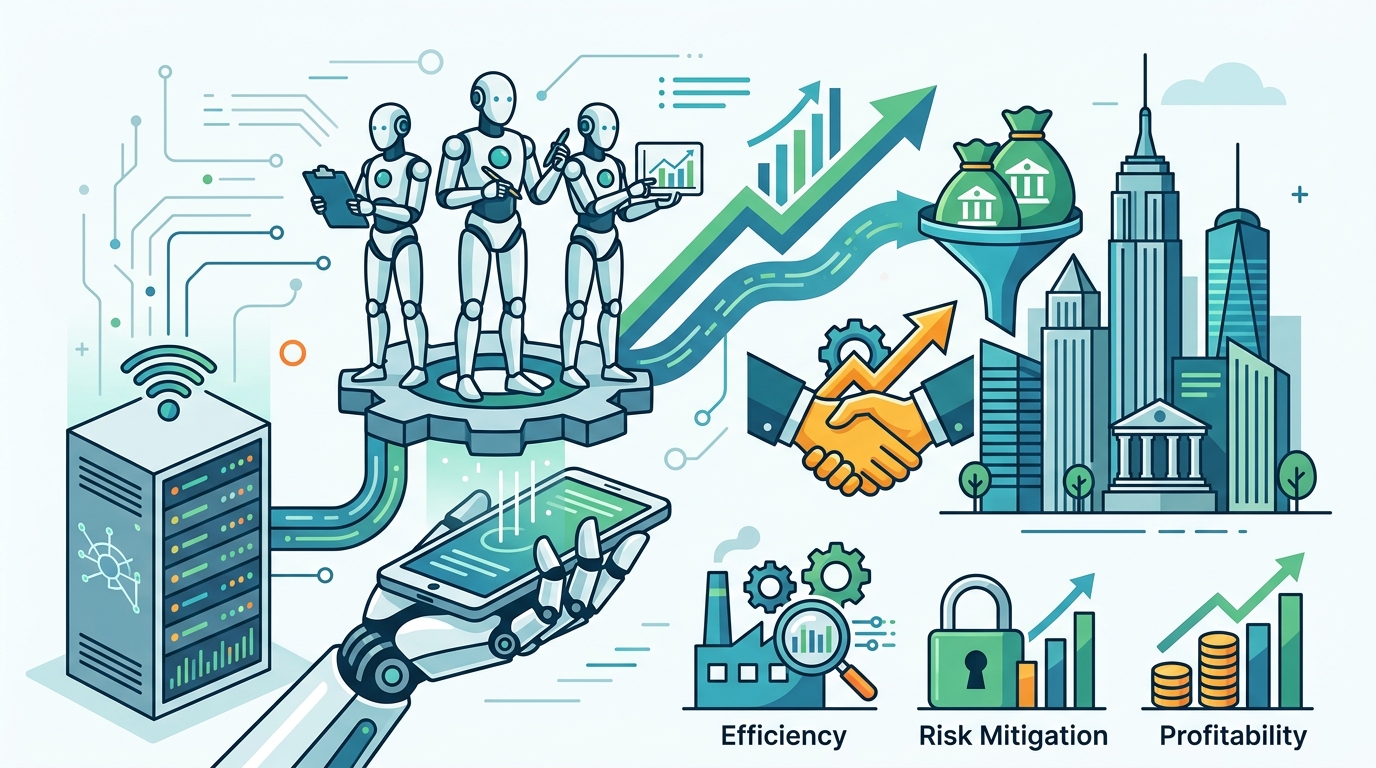
There is a second economic reason this move is smart. Finance firms spend heavily on people to do work that is repetitive but too important to fully automate with brittle rules. Agents sit in the middle. They are more flexible than templates and cheaper than large teams of junior staff. If Anthropic can make that middle layer dependable, it can become embedded in core operations rather than parked in an innovation sandbox.
The counter-argument
The best objection is that financial services is exactly where agents are most dangerous. Hallucinations, unauthorized actions, and weak provenance are not minor bugs in this sector. They are incident reports. Critics will say that a broader mix of tasks only increases the surface area for failure, and that regulated buyers should wait until the industry has stronger standards for testing, logging, and human oversight.
That objection is serious because finance punishes error more than almost any other enterprise category. A bad draft in marketing is embarrassing. A bad draft in finance can trigger compliance issues, mispriced risk, or a broken client process. So yes, the bar is high, and any vendor claiming agentic automation in this space must prove control at the workflow level, not just the model level.
But that is exactly why Anthropic’s move is credible rather than reckless. The sector will not adopt fully autonomous agents first. It will adopt constrained agents that draft, retrieve, classify, route, and recommend under human approval. That is a narrow but very valuable lane, and it is the one Anthropic is targeting. The counter-argument does not defeat the strategy. It defines the boundaries of the product.
What to do with this
If you are an engineer, build for auditability before autonomy: log every tool call, make permission boundaries explicit, and design the workflow so a human can inspect, override, and approve each meaningful step. If you are a PM, stop framing financial AI as a general assistant and map it to one measurable process with a clear owner, a clear error budget, and a clear ROI. If you are a founder, do not chase broad enterprise chat. Pick one regulated workflow, win trust there, and use that credibility to expand. In finance, the agent that survives review is the one that gets bought.
// Related Articles
- [IND]
WebX 2026 turns speaker hype into a conference brief
- [IND]
AI Weekly: 2026-07-06 ~ 2026-07-13
- [IND]
The AI Act should be treated as Europe’s operating system for AI
- [IND]
Booz Allen’s OpenAI Deal Is Real Advantage, Not Hype
- [IND]
OpenSearch’s vector search benchmark in 5 parts
- [IND]
Vector Databases That Work in Production