Data Center World 2026: AI Pushes Infra Limits
At Data Center World 2026, OCI, Nvidia, and Google said AI is forcing data centers to redesign power, cooling, and networks.

AI is forcing data centers to redesign power, cooling, and networking at once.
At Data Center World 2026 in Washington, leaders from Oracle Cloud Infrastructure, Nvidia, and Google described a problem that data center teams can no longer treat as a tuning exercise. AI workloads are pushing racks from the 30–40 kW range into the hundreds of kilowatts, with some designs moving toward megawatt territory.
The bigger story is that AI does not stress one subsystem. It changes the shape of the whole facility, from layout and power delivery to cooling, commissioning, and the way campuses are built.
| Metric | What it means | Source detail |
|---|---|---|
| 30–40 kW | Legacy rack density level now being left behind | Varun Sakalkar, Google |
| Hundreds of kW | Common AI-era rack density | Varun Sakalkar, Google |
| Megawatt range | Upper end of new rack design targets | Varun Sakalkar, Google |
| 220+ properties | TechTarget and Informa Tech digital network size | Publisher disclosure |
| 50+ million professionals | Audience reach claimed by the publisher | Publisher disclosure |
AI workloads split the data center in two
Get the latest AI news in your inbox
Weekly picks of model releases, tools, and deep dives — no spam, unsubscribe anytime.
No spam. Unsubscribe at any time.
The cleanest way to understand the shift is to separate AI training from AI inference. Ram Nagappan, vice president of AI infrastructure at Oracle Cloud Infrastructure, said operators now have to design for two very different patterns at the same time.
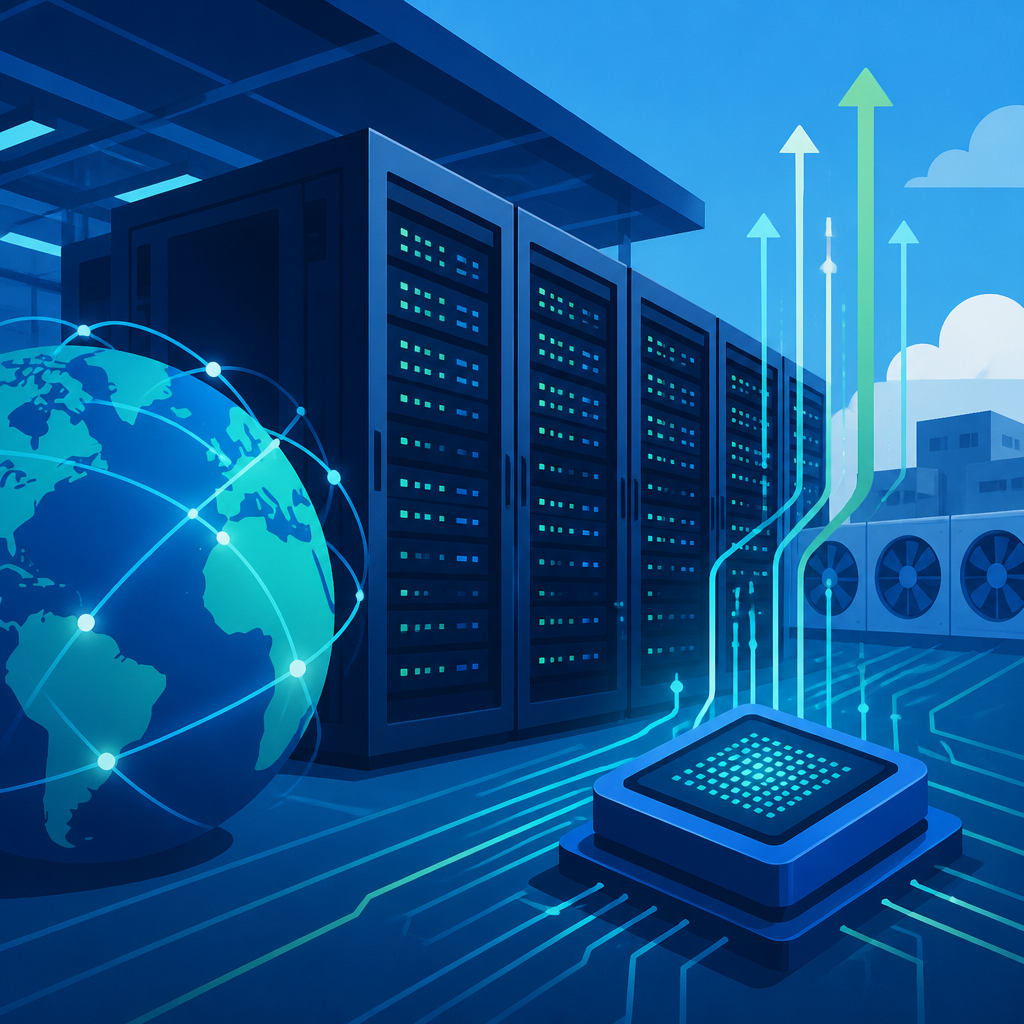
Training clusters can link tens of thousands of GPUs in tightly coupled systems where latency and physical proximity matter a lot. Inference workloads care more about availability, response time, and scale across many users. Those are different engineering problems, and they push facilities in different directions.
Nagappan put it plainly: “You have to take both into account when you build the data center.”
That matters because the old data center model assumed a fairly stable mix of compute, storage, and networking. AI breaks that assumption. One part of the facility may need ultra-dense, low-latency compute blocks, while another part needs broad distribution and high uptime for user-facing services.
- Training favors tight GPU clustering and low latency.
- Inference favors responsiveness and availability.
- Both patterns now live inside the same facility.
- That forces more careful layout, resilience planning, and network design.
Rack density is climbing faster than the old playbook
Varun Sakalkar, distinguished engineer in Google’s datacenter technology and systems group, said the industry has moved far beyond the rack densities that defined the last decade. The numbers are stark: what used to be a 30–40 kW rack is now often measured in hundreds of kilowatts.
That jump is more than a capacity increase. It changes how power enters the building, how heat leaves the rack, and how much coordination is needed between compute and network teams. Sakalkar described the current state as a bimodal environment, with traditional compute and storage on one density curve and AI systems on another, much steeper one.
His line was memorable because it captures the shift in one sentence: “We’re not designing a rack anymore – we’re designing a system.”
That is the right mental model. Once rack density climbs this high, the rack stops being the unit of planning. The system becomes the unit, and that system stretches from the utility feed to the application layer.
- Traditional racks: 30–40 kW
- AI racks: hundreds of kilowatts
- Target designs: approaching megawatt scale
- Planning unit: system, not rack
Power is now the bottleneck
Sean James, distinguished engineer for energy systems at Nvidia, said power availability is becoming the limiting factor faster than compute itself. That is a big shift for an industry that used to talk mostly about CPUs, GPUs, and storage economics.
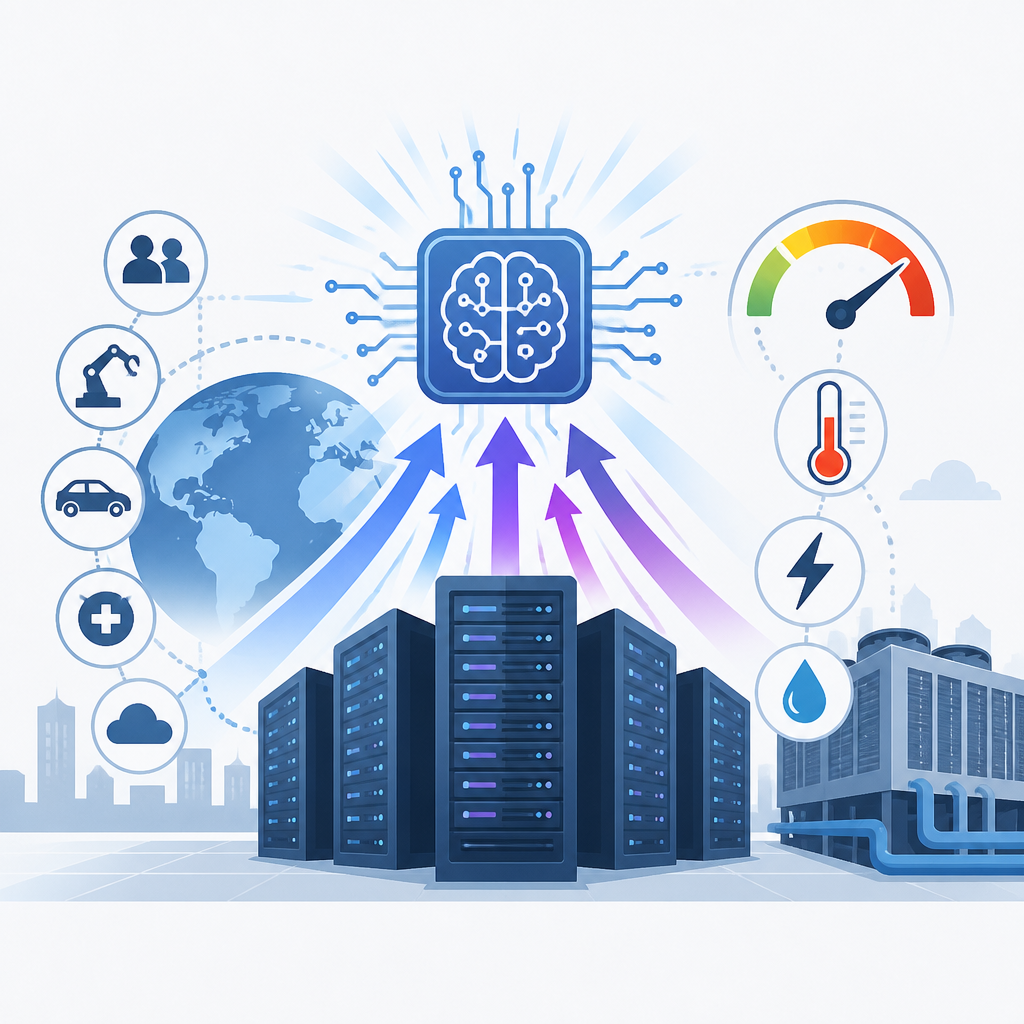
Operators are using behind-the-meter generation to move faster, but James called that a temporary answer. “Behind-the-meter power is a good stopgap,” he said. “It’s not the preferred long-term solution.”
That comment gets to the heart of the deployment problem. AI clusters do not just need more power. They need power that can be delivered, ramped, and stabilized in ways utilities were not always built to support. James said the load swings from training can ripple all the way back to the power plant.
That is why energy storage is getting more attention. It can smooth fluctuations, support ride-through during voltage events, and help operators meet grid requirements that are becoming stricter as AI demand grows.
“Behind-the-meter power is a good stopgap. It’s not the preferred long-term solution.” — Sean James, Nvidia
Cooling is settling on liquid by default
Cooling used to be the part of AI infrastructure people debated. That debate is fading. Sakalkar said, “Liquid cooling is here,” and the remaining question is standardization.
That sounds simple, but it is a major operational shift. Liquid cooling changes rack design, service procedures, supply chains, and commissioning steps. It also creates hybrid facilities where liquid-cooled AI zones sit alongside air-cooled legacy systems.
James added another wrinkle: scaling liquid systems brings its own complexity, from the number of internal connections to the parts pipeline needed to keep those systems buildable at volume. Water use is also under more scrutiny, especially where evaporative cooling creates operational and sustainability pressure.
For operators, the practical takeaway is clear. Liquid cooling is no longer an experimental add-on for the hottest deployments. It is becoming the default for high-density AI infrastructure, and teams that still treat it like a side project will fall behind on design schedules.
- Liquid cooling is now baseline for high-density AI systems.
- Hybrid facilities must support both liquid and air cooling.
- Water use is becoming a design and policy issue.
- Standardization matters more than proving the concept.
Speed now shapes the design itself
The final pressure point is time. AI buildouts are moving so fast that developers cannot rely on traditional, slow-burn construction sequences. James said teams are shifting work off-site, using prefabrication, and front-loading design so future GPU generations do not force a full redesign.
That is why modular architectures keep showing up in AI data center plans. They let operators ship capacity faster while preserving some flexibility as hardware changes. In a market where GPU demand and power requirements can change before a campus is fully commissioned, that flexibility is worth real money.
At the largest scale, Sakalkar said hyperscalers are starting to treat the campus itself as the product. That is a useful way to think about it. The building is no longer the main unit of value; the integrated campus is.
That shift changes procurement, supply-chain coordination, installation sequencing, and the way teams think about phased deployment. Large AI campuses are increasingly being brought online in bigger chunks, with infrastructure and compute arriving together instead of years apart.
For operators, the implication is blunt: incremental upgrades will not keep up. If AI keeps pushing rack density, power demand, and deployment speed in the same direction, the next competitive edge will go to teams that can redesign the whole system instead of patching old assumptions. The question now is which facilities can make that jump before their current power and cooling plans run out of room.
// Related Articles
- [IND]
WebX 2026 turns speaker hype into a conference brief
- [IND]
AI Weekly: 2026-07-06 ~ 2026-07-13
- [IND]
The AI Act should be treated as Europe’s operating system for AI
- [IND]
Booz Allen’s OpenAI Deal Is Real Advantage, Not Hype
- [IND]
OpenSearch’s vector search benchmark in 5 parts
- [IND]
Vector Databases That Work in Production