Why Adam Levine’s business empire matters more than his fame
Adam Levine is best understood as a musician who turned celebrity into a durable business platform.
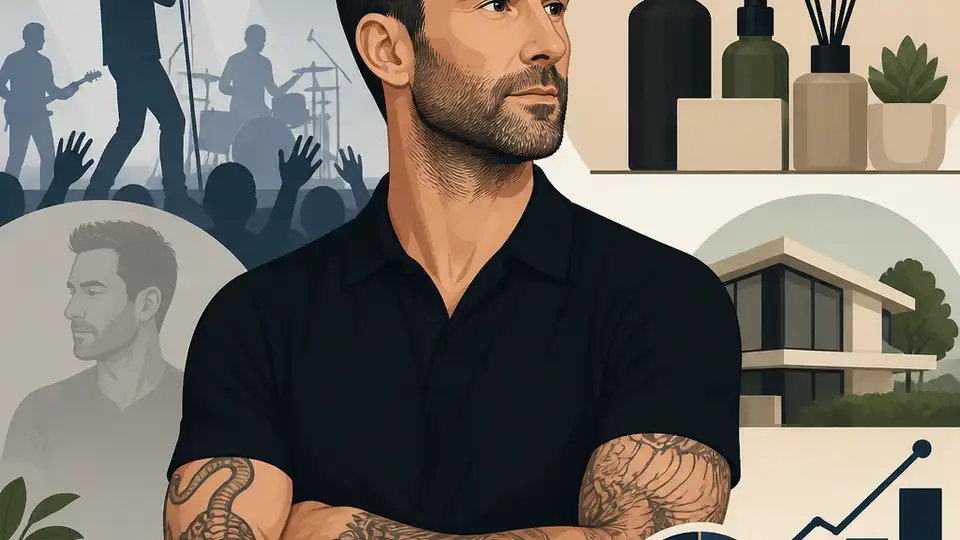
Adam Levine turned pop fame into a business platform beyond music.
Adam Levine is not just a singer who happened to branch out; he is a case study in how modern pop stardom becomes an operating system for products, media, and ownership. The evidence is plain in his Wikipedia record: by 2013 he had launched a fragrance line, co-developed menswear with Kmart and ShopYourWay.com, and already controlled both 222 Records and 222 Productions. That is not side hustle behavior. That is a deliberate shift from being paid for attention to owning the machinery that captures it.
His real power comes from ownership, not performance alone
Get the latest AI news in your inbox
Weekly picks of model releases, tools, and deep dives — no spam, unsubscribe anytime.
No spam. Unsubscribe at any time.
Levine’s most durable advantage is that he built assets that keep working after the spotlight moves on. Maroon 5 made him famous, but 222 Records and 222 Productions gave him a way to convert fame into recurring leverage. The production company matters because it produced Sugar and Songland, which means he was not only appearing on television, he was helping create the content pipeline behind it. That is a different class of celebrity business: less endorsement, more infrastructure.
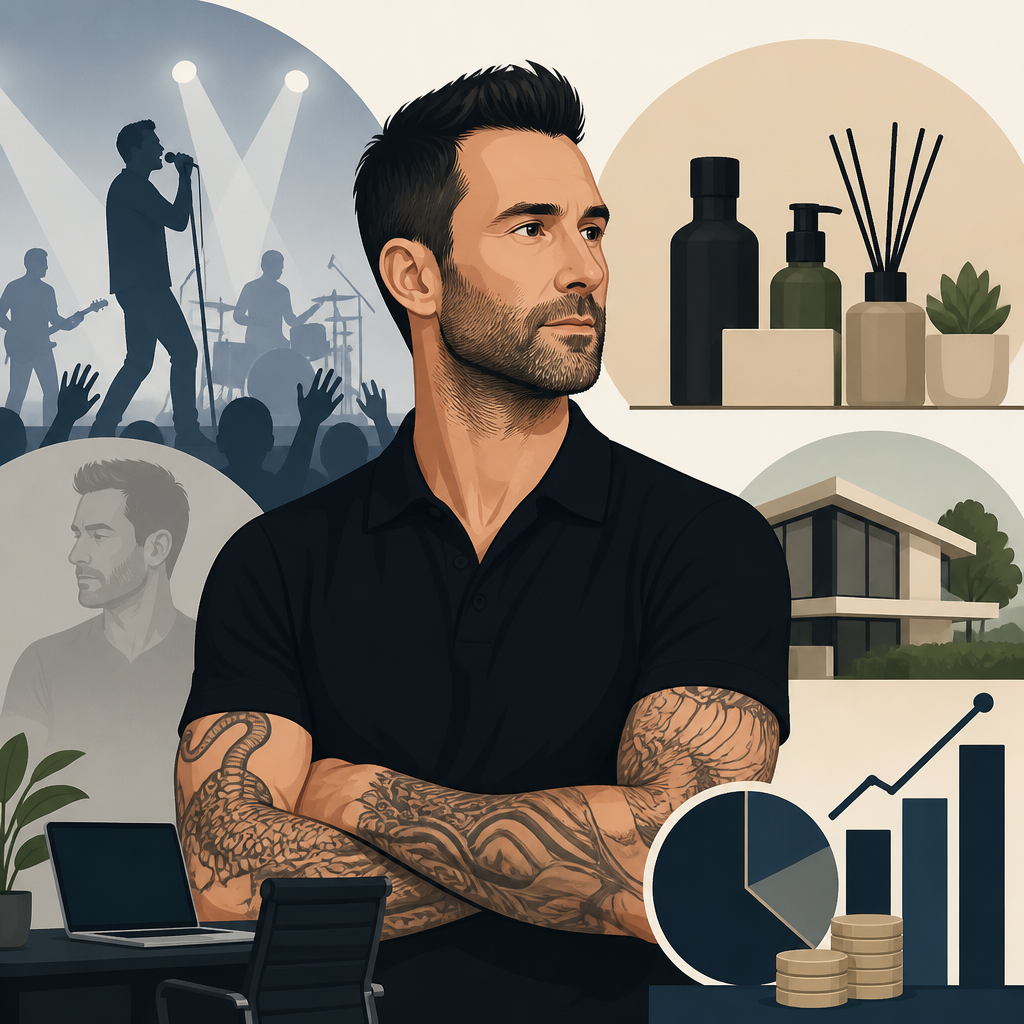
The same logic applies to his 2013 fragrance launch and menswear collaboration. A fragrance line is not just a vanity product; it is a licensing engine that monetizes image, taste, and mass distribution. Pair that with a retail partnership through Kmart and ShopYourWay.com, and you get a model built for scale rather than exclusivity. He was not selling a rare artifact to superfans. He was placing his name on products designed to move through ordinary consumer channels.
His television work amplified the brand more than any single album cycle
Levine’s long run on The Voice is the clearest proof that his celebrity strategy worked. From 2011 to 2019, and again in 2025 and 2026, he served as a coach for eighteen seasons. That kind of visibility is not a cameo; it is institutional presence. It kept him in living rooms even when radio trends changed, and it linked his name to mentorship, taste, and authority rather than just a catalog of hits.
There is also a practical business effect here. Television exposure extends the commercial life of a performer far beyond touring or album release cycles. Levine’s acting work in American Horror Story and films such as Begin Again and Popstar: Never Stop Never Stopping reinforced the same pattern: each appearance widened the funnel. The point was never to become a full-time actor. The point was to remain culturally unavoidable, which in turn makes every product, label, and media venture more valuable.
The counter-argument
The strongest objection is simple: Levine is still primarily known as the frontman of Maroon 5, and that is where the money and recognition began. The band’s success, including multiple Grammy wins and a string of hit albums, created the platform that made the rest possible. From this view, the business ventures are accessories to the music career, not the other way around. Without Songs About Jane, there is no fragrance line, no menswear deal, and no easy access to prime-time television.

That argument is true as far as it goes, but it stops too early. Plenty of musicians get famous; far fewer convert fame into a repeatable commercial architecture. Levine did. He moved from band frontman to television fixture to product collaborator to media owner. The reason that matters is not that he abandoned music, but that he used music as the first asset in a larger portfolio. Fame was the entry point. Ownership became the moat.
What to do with this
If you are an engineer, PM, or founder, the lesson is to treat attention as a starting asset, not the product itself. Build the thing that keeps paying after the first wave of interest fades: a platform, a label, a media channel, a distribution deal, or a product line with real margin. Levine’s career shows that celebrity is most valuable when it is converted into owned systems. The same rule applies in tech: if all you have is visibility, you have rented influence. If you own the rails, you have a business.
// Related Articles
- [IND]
WebX 2026 turns speaker hype into a conference brief
- [IND]
AI Weekly: 2026-07-06 ~ 2026-07-13
- [IND]
The AI Act should be treated as Europe’s operating system for AI
- [IND]
Booz Allen’s OpenAI Deal Is Real Advantage, Not Hype
- [IND]
OpenSearch’s vector search benchmark in 5 parts
- [IND]
Vector Databases That Work in Production