Why Devin Vassell’s chase-down block matters more than the highlight
Devin Vassell’s block on Jalen Williams is proof that playoff defense still swings series.

Devin Vassell’s chase-down block shows why playoff defense still swings series.
Devin Vassell’s chase-down block on Jalen Williams was not just a great play; it was the kind of defensive event that changes the temperature of a playoff series and says more about San Antonio’s identity than any hot shooting stretch ever could.
The first argument: playoff defense is still the fastest way to seize control
Get the latest AI news in your inbox
Weekly picks of model releases, tools, and deep dives — no spam, unsubscribe anytime.
No spam. Unsubscribe at any time.
In the first quarter, Williams had the lane, the angle, and what looked like an easy fast-break finish. Vassell erased it anyway. That matters because playoff basketball is built on moments that break rhythm, and a block like that does more than kill two points. It tells the opponent that clean looks will be contested all night, even after a turnover or long rebound has created a supposed advantage.

There is a reason coaches still obsess over transition defense in the postseason. One chase-down block can produce the same emotional effect as a run of made threes, only in reverse. The Spurs were not just protecting the rim. They were announcing that Oklahoma City would have to earn every inch, and that message landed before the game had even settled.
The second argument: Vassell’s play reveals the value of effort players on contender teams
Superstars usually get the headlines, but championship teams need a second tier of players who turn effort into possessions. Vassell is that kind of player. He does not need the offense built around him to influence a game. On this play, he read the break, refused to concede the possession, and made a star-level defensive recovery that fit perfectly beside Victor Wembanyama’s gravity at the other end.
The broader point is simple: teams with title ambitions cannot survive on talent alone. They need players who make the hard, unglamorous plays that keep a game from slipping away. San Antonio’s early lead was not built on one block, but Vassell’s rejection helped define the opening tone. That is what contenders do. They stack effort plays until the game tilts.
The counter-argument
There is a fair case that one block is just one block. Oklahoma City still answered, the game remained close, and a single highlight never decides a series by itself. Basketball is full of viral defensive moments that look larger in isolation than they do in the final box score. If the Thunder keep generating quality looks, then Vassell’s rejection becomes a memorable clip rather than a turning point.
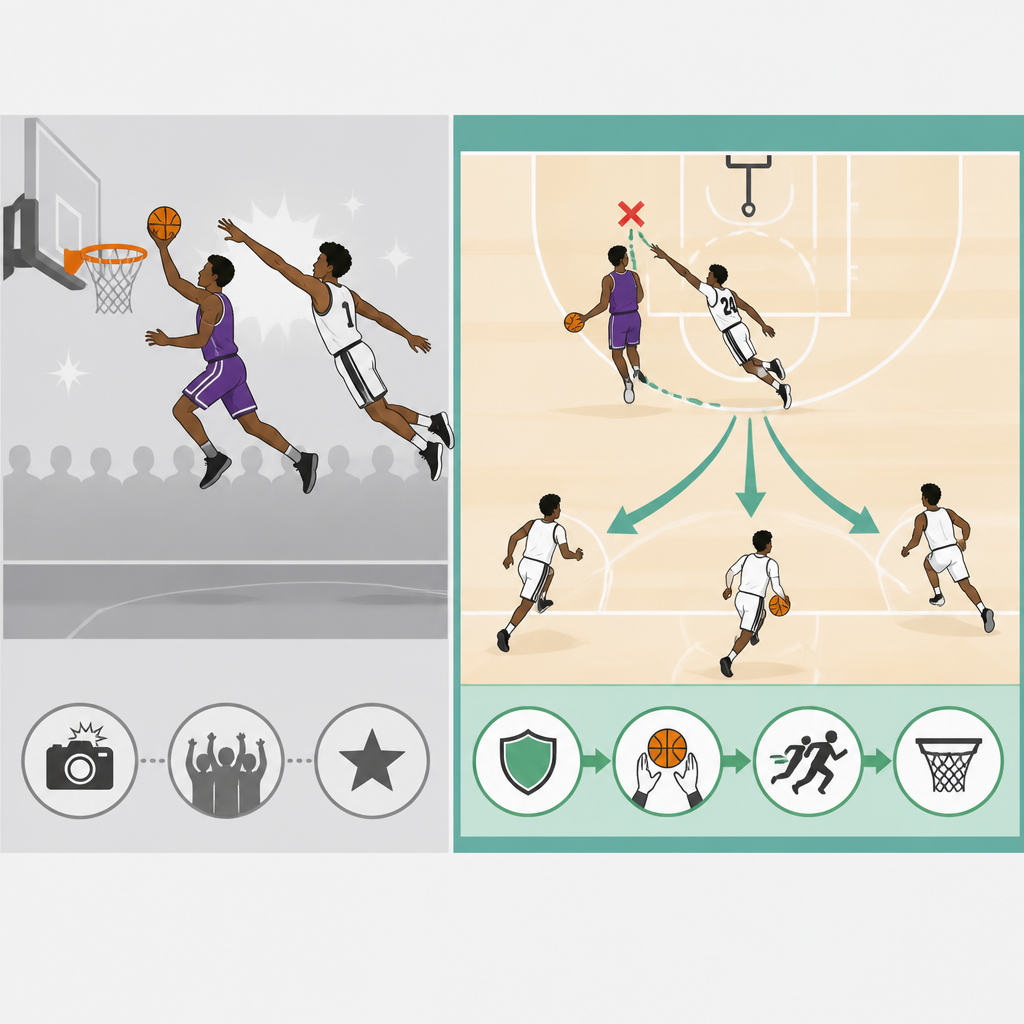
That objection is true in the narrowest sense, but it misses how playoff games actually change. A block like this is not valuable because it appears on social media. It is valuable because it compresses risk. It forces the offense to think twice in transition, it energizes the defense behind it, and it gives a team that is still building postseason credibility a visible standard. Even if the scoreboard does not freeze around one play, the series narrative does.
What to do with this
If you are an engineer, PM, or founder, treat Vassell’s block as a model for leverage: do the unglamorous work that prevents expensive failures before they happen. In a product org, that means instrumenting edge cases, fixing the brittle handoff, and rewarding people who kill bad states early. In a startup, it means valuing the teammate who closes the gap when the plan breaks. Highlight plays win attention, but repeatable effort wins series, products, and companies.
// Related Articles
- [IND]
Why the Starmer arson trial matters beyond one case
- [IND]
Darren Bailey vs JB Pritzker: Illinois governor race
- [IND]
Why Devin Booker’s shoes now matter beyond Phoenix
- [IND]
Analog Devices buys Empower for $1.5B cash
- [IND]
Anthropic, DOD clash in DC court over blacklisting
- [IND]
Why the LA County Fair guide still matters in 2026