Why the Starmer arson trial matters beyond one case
The Old Bailey trial shows how attacks on politicians' homes test public safety, not just criminal law.

The Old Bailey trial tests how Britain handles attacks on a prime minister’s homes and safety.
The Old Bailey trial over the alleged arson attacks linked to Sir Keir Starmer is not just another violent-crime case. It is a test of how the state responds when political targeting crosses into physical intimidation, and when the line between ordinary criminality and threats to democratic life becomes uncomfortably thin. Three men, all of whom deny the charges, are accused of coordinated fires involving a vehicle, a former residence, and a private home. That is a pattern, not an isolated incident, and the legal system is right to treat it with maximum seriousness.
The first argument: this is about protecting democratic participation
Get the latest AI news in your inbox
Weekly picks of model releases, tools, and deep dives — no spam, unsubscribe anytime.
No spam. Unsubscribe at any time.
Political leaders cannot do their jobs if their families, homes, and private movements become fair game. A prime minister is not a symbolic target only; he is a person whose security posture affects staff, neighbors, and the practical ability to govern. When an alleged attack reaches a private residence, the harm extends beyond property damage. It is meant to communicate vulnerability and to force a public figure to live under threat.
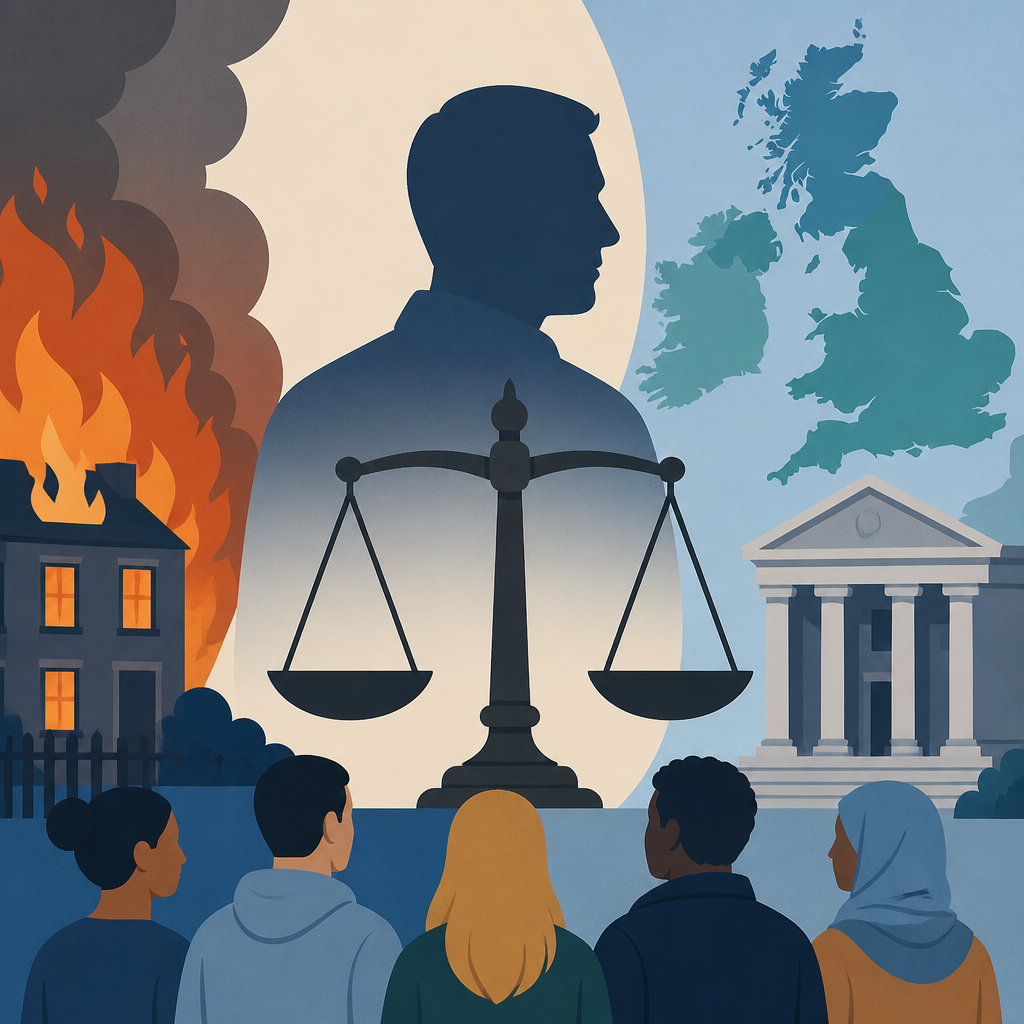
That is why the prosecution’s choice to charge conspiracy to commit arson with intent to endanger life matters. It recognizes that the offense is not merely about fire damage. It is about the foreseeable risk to people inside or nearby, and about the broader chilling effect on political life. If the legal response reduced this to vandalism, it would miss the point entirely.
The second argument: the facts alleged point to coordination, not random violence
According to the report, prosecutors say the incidents in May 2025 included a vehicle fire in Kentish Town plus fires at both a former residence and the current private home. That sequence matters. Separate locations, linked by the same political target, suggest planning and intent. Courts should be careful not to assume motive before trial, but they should also not pretend that three related fires are the same as an impulsive act.
The decision to involve Counter Terrorism Command reflects that reality. Even if the case is not being treated as terrorism, the investigative posture shows that the state understands the possible implications of coordinated attacks on a national leader’s property. That is the correct threshold for attention. The label is less important than the operational fact: this kind of conduct requires specialist scrutiny because it can escalate quickly and create public fear far beyond the immediate damage.
The counter-argument
The strongest objection is that we should not inflate every attack on a politician into a constitutional drama. There is a real risk in over-reading motive, especially when prosecutors themselves say the official motive is unexplained and opaque. The criminal justice system should avoid turning unproven allegations into political theater. It is also true that not every case involving a public figure is terrorism, and not every serious crime against a politician is an attack on democracy itself.

That caution is valid, but it does not weaken the need for seriousness. The proper response is not to downgrade the case; it is to reserve final judgment on motive while still recognizing the distinct danger of coordinated attacks on private property tied to a sitting prime minister. The state can avoid speculative language and still act as though the risk is real, because the risk is real even before motive is proven.
What to do with this
For readers, the practical lesson is straightforward: treat politically linked violence as a security and civic issue, not just a crime story. Engineers building civic, media, or public-sector systems should design for abuse reporting, threat escalation, and rapid coordination with security teams. PMs and founders should assume that visibility increases attack surface and plan accordingly, with layered physical security, staff protocols, and clear incident-response ownership. The point is not paranoia. It is recognizing that public leadership now includes managing real-world threat models, and that preparation is part of the job.
// Related Articles
- [IND]
WebX 2026 turns speaker hype into a conference brief
- [IND]
AI Weekly: 2026-07-06 ~ 2026-07-13
- [IND]
The AI Act should be treated as Europe’s operating system for AI
- [IND]
Booz Allen’s OpenAI Deal Is Real Advantage, Not Hype
- [IND]
OpenSearch’s vector search benchmark in 5 parts
- [IND]
Vector Databases That Work in Production