DOE should turn its land into AI infrastructure fast
DOE should open its land to AI data centers and power buildout without delay.

DOE should open its land to AI data centers and power buildout without delay.
The Department of Energy is right to treat its land as a launchpad for AI infrastructure, not a museum of unused federal acreage. The agency says it has identified 16 sites with existing energy infrastructure and a path to faster permitting, and it wants operations underway by the end of 2027. That is the right response to a market that is already straining under data center demand, grid bottlenecks, and a shortage of sites where power, land, and federal process can move together instead of in sequence.
Federal land is the rare place where power and permitting can move together
Get the latest AI news in your inbox
Weekly picks of model releases, tools, and deep dives — no spam, unsubscribe anytime.
No spam. Unsubscribe at any time.
Most data center projects die in the gap between real estate and electricity. A site can be cheap, flat, and close to fiber, but if the utility queue is years long, the project is dead on arrival. DOE’s pitch matters because it starts from the opposite premise: land with energy infrastructure already in place, plus the possibility of fast-tracking new generation, including nuclear. That combination is not a minor convenience. It is the bottleneck.
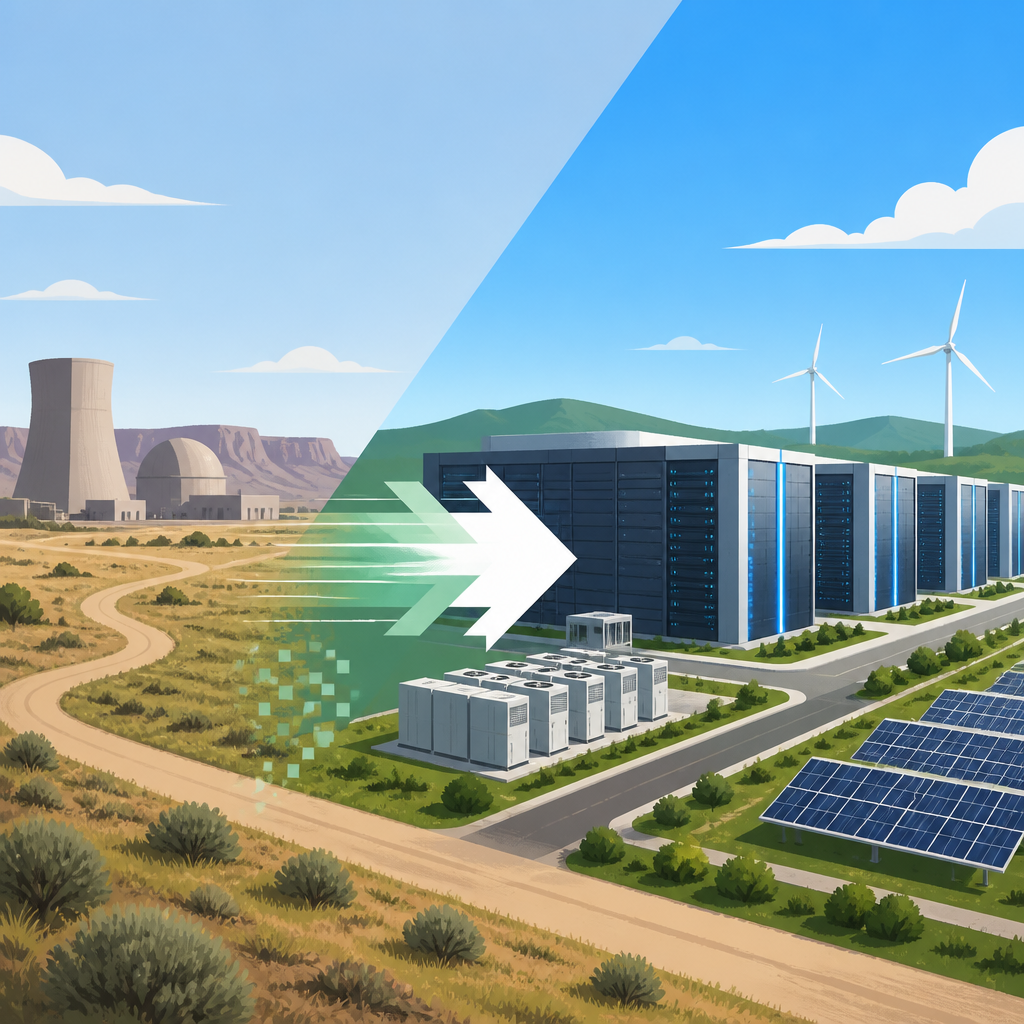
We have seen this movie across the country. Hyperscale operators and colocation developers are racing to secure megawatts, not just parcels. The result is a market where the limiting factor is increasingly power availability rather than compute demand. DOE’s 16 sites are valuable precisely because they compress the two hardest parts of the deal into one federal process. If the government wants AI capacity to grow on American soil, it should use the assets it already controls to remove the slowest steps.
DOE can lower strategic risk by anchoring AI buildout at known sites
AI infrastructure is not just another commercial real estate category. It is a national capacity question, and capacity questions reward institutions that can plan beyond one election cycle. DOE sites come with public information on acreage, location, and site characteristics, which gives developers a clearer starting point than the usual land speculation and utility guesswork. When the federal government can offer a known site portfolio, it reduces the risk premium that often inflates timelines and financing costs.
There is also a deeper strategic benefit. Co-locating data centers with DOE research facilities creates a feedback loop between compute demand, power systems design, and next-generation hardware. That is not a vanity project. It is how the United States keeps the AI stack tied to domestic energy and scientific capacity instead of outsourcing the whole thing to regions that can promise cheap power today and constraints tomorrow. If AI is infrastructure, then the institutions that control infrastructure should shape where it gets built.
The private sector needs a faster path than the current grid can offer
The RFI is not pretending government should run data centers. It is asking for input from developers, energy firms, and the public so private capital can do what it does best: build and operate. That is the correct division of labor. DOE does not need to become a cloud provider. It needs to become a land and energy platform that makes serious projects easier to finance and faster to execute. The target of beginning operations by the end of 2027 is aggressive, and that is exactly why it matters.
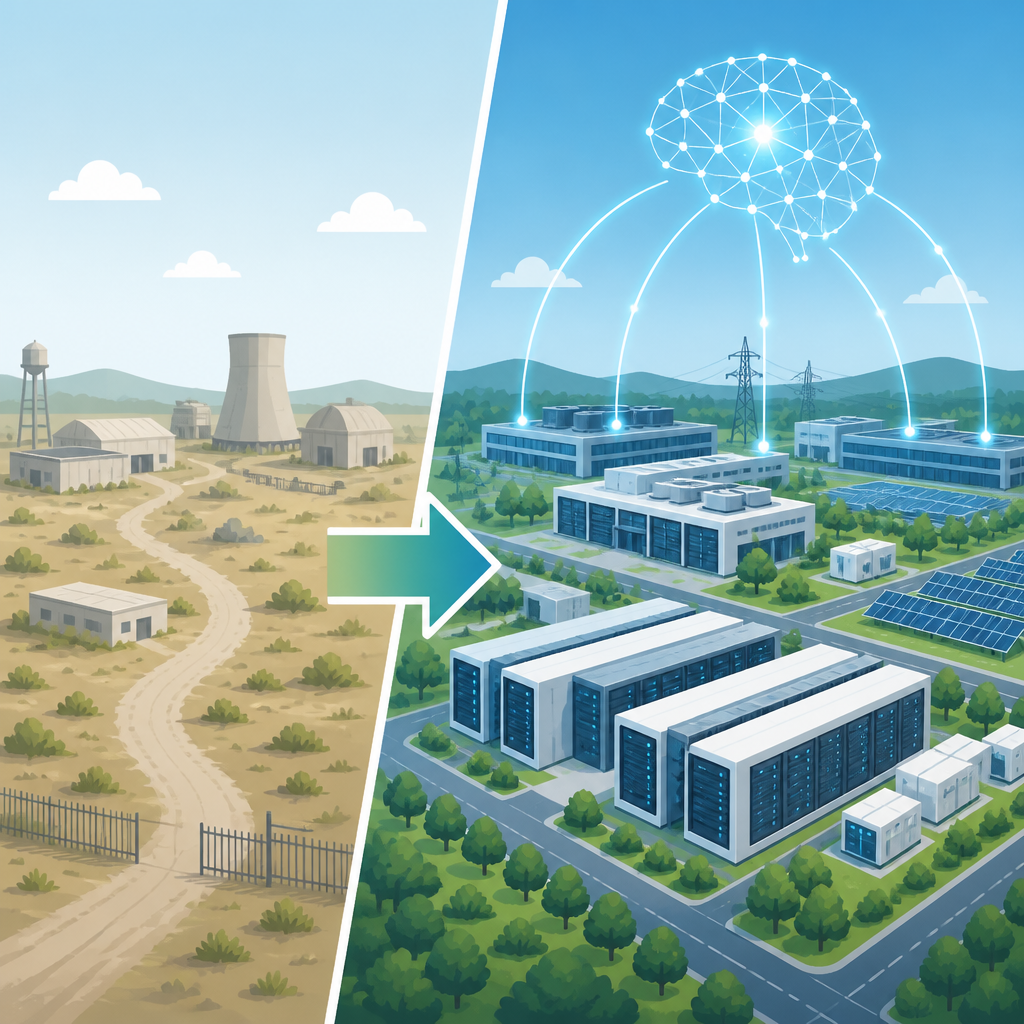
Speed matters because the AI buildout is already colliding with the pace of the existing grid. Transmission, interconnection, and generation are all slow in the places where demand is rising fastest. A federal site with existing infrastructure and a clearer permitting path changes the economics. It gives developers a place to build where the government can coordinate land use, power supply, and research access instead of forcing each piece through a separate maze. That is how you get from announcement to steel in the ground.
The counter-argument
The strongest critique is that DOE should not hand scarce federal land to data centers when that land could support labs, conservation, or other public uses. Critics will also say that AI buildout is already energy hungry, and putting it on federal sites risks subsidizing private demand with public resources. That concern is legitimate. If the government is careless, it can end up socializing the hardest parts of the project while privatizing the upside.
There is also a local objection. Communities near DOE sites may worry about water use, noise, visual impact, and the risk that promised jobs will not justify the footprint. Those are not imaginary harms. Large data centers can consume significant resources and can create resentment if they arrive as sealed-off campuses with little local benefit.
But that critique does not defeat the proposal. It sets the terms for making it credible. DOE is not being asked to give away land blindly. It is running an RFI, which is the right first step because it tests development models, operational structures, and economic terms before anything is built. The answer is not to reject AI infrastructure on federal land. The answer is to attach strict conditions: transparent site selection, clear community benefits, power sourcing that adds capacity rather than merely reallocating scarcity, and public accountability for any partnership that uses federal assets.
What to do with this
If you are a founder, engineer, or infrastructure PM, treat DOE’s RFI as a signal that the next wave of AI buildout will favor teams that can coordinate power, permitting, and hardware as one system. Start modeling projects around energy availability first, not afterthought interconnection. If you can design for co-location, rapid permitting, and phased generation, you will be speaking the language this market now rewards.
// Related Articles
- [IND]
A vibe coding workflow keeps AI builds on track
- [IND]
Anthropic’s suspension turns AI release into policy
- [IND]
Helix brings $10B to AI infrastructure buildouts
- [IND]
Xiaomi MiMo Code tops Claude Code on 200-step tasks
- [IND]
OpenAI’s Ona buy adds more reach to Codex
- [IND]
The US should set tokenization rules now, or lose the market