MetaMask turns agent wallets into guarded automation
MetaMask’s Agent Wallet gives AI agents onchain access with policy checks, simulation, and up to $10K coverage.

MetaMask’s Agent Wallet gives AI agents onchain access with policy checks, simulation, and up to $10K coverage.
I've been poking at agent wallets for a while, and the thing that kept bothering me was simple: every demo looked great right up until the moment it had to touch money. The agent would happily draft the transaction, maybe even explain itself with a confident little paragraph, and then I'd be the one staring at the screen wondering if I really wanted to let it sign. That gap between “autonomous” and “I still have to babysit this” is where most of these tools fall apart.
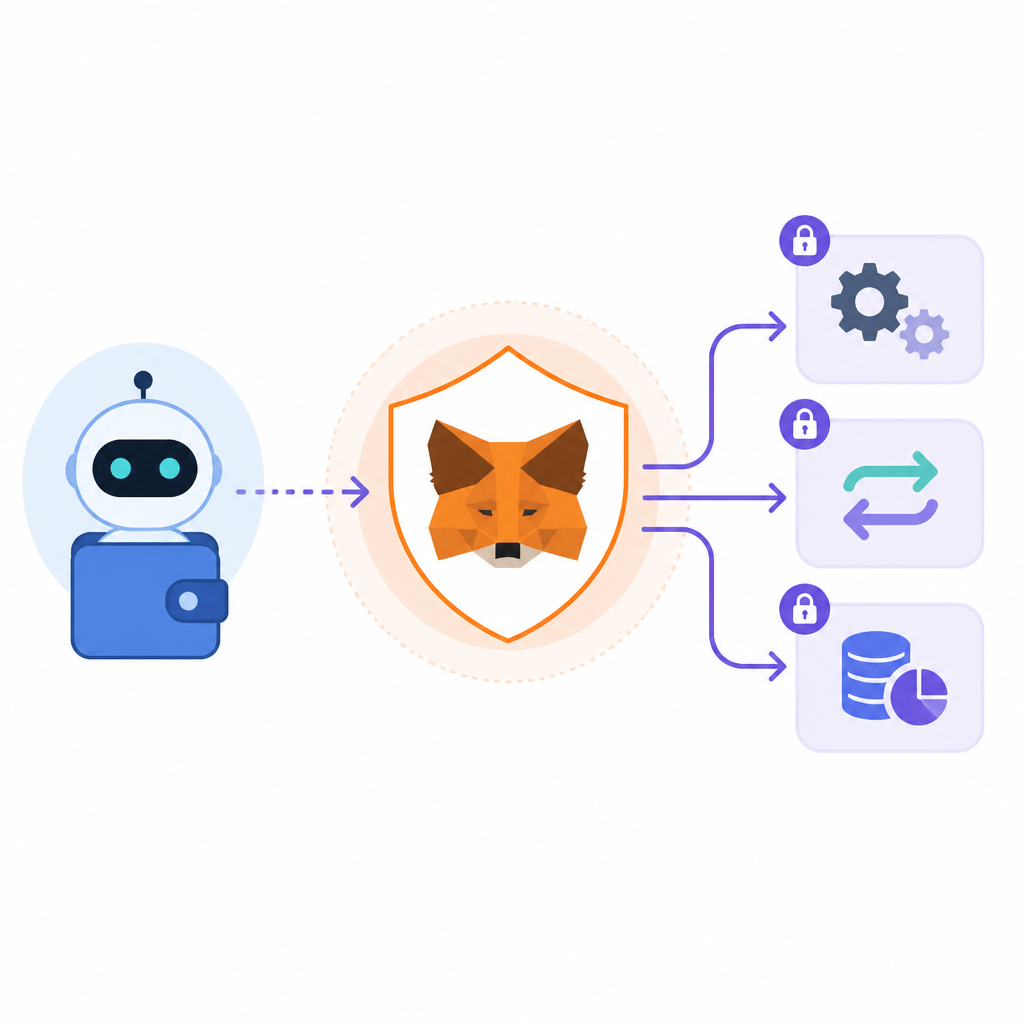
MetaMask's new Agent Wallet finally reads like someone spent time inside that mess instead of just naming it. It doesn't try to pretend the risk goes away. It puts policy in front, approval in the loop, and actual protection around the transaction path. That matters, because crypto automation is only useful if I can keep control when the agent gets clever, lazy, or flat-out wrong.
The source that kicked this off is CryptoBriefing's report on MetaMask Agent Wallet. MetaMask says the wallet is in limited early access now, with broader public availability planned for later this summer. The interesting part isn't the launch timing. It's the way they stitched together guardrails, simulations, threat detection, and insurance-style coverage into one workflow instead of leaving developers to duct-tape it themselves.
MetaMask stopped pretending agents should be trusted by default
Get the latest AI news in your inbox
Weekly picks of model releases, tools, and deep dives — no spam, unsubscribe anytime.
No spam. Unsubscribe at any time.
“The wallet provides agents with dedicated transaction accounts while enabling users to define spending limits, approved protocols, and operating policies before execution begins. Any transaction that exceeds those parameters or is flagged as potentially malicious requires human approval through 2FA before proceeding.”
What this actually means is MetaMask is treating the agent like an employee with a badge, not a contractor with root access. The agent can work, but only inside a box I draw first. That box includes spending limits, protocol allowlists, and policy rules. If the agent wants to step outside the box, it has to ask me.

I like that framing because it matches how I already think about production systems. I don't give a cron job free rein over everything. I scope it, log it, and put failure paths in place. Agent wallets should be the same. The mistake a lot of teams make is assuming the intelligence layer also solves the trust problem. It doesn't. It just makes the bad decision faster if you don't constrain it.
How to apply it: define your agent's authority before you connect it to any wallet. Start with a small list of allowed contracts, a hard per-transaction cap, and a second approval step for anything that moves outside normal behavior. If your workflow can't survive that level of friction, it wasn't ready for autonomy anyway.
- Set spending caps by route, not just by wallet.
- Allow specific protocols instead of “all DeFi.”
- Make escalation to human approval the default, not the exception.
This is the part that developers tend to skip because it feels boring. It isn't. It's the only reason the rest of the stack can exist without turning into a liability.
Simulation is the difference between automation and self-sabotage
“MetaMask Agent Wallet incorporates multiple layers of protection, including transaction simulation, Blockaid-powered threat detection, Smart Transactions MEV protection, and Transaction Protection coverage of up to $10,000 per month for eligible transactions.”
What this actually means is the wallet is trying to answer “what happens if I do this?” before anything gets signed. Transaction simulation sounds unglamorous, but I trust it more than any agent's explanation. An agent can say a swap looks fine. A simulation can show me the actual token flow, slippage, approvals, and weird edge cases that only show up when the chain is involved.
I've run into this exact problem when testing trading bots and protocol automations. The logic looks clean in code review, then the first live route hits a token with a nasty transfer tax, or an approval pattern that opens more surface area than expected. Simulation catches the stuff that reads fine and behaves badly. That is the whole job.
MetaMask also says it is using Blockaid-powered threat detection. That matters because simulation alone doesn't tell me whether the destination is malicious. Blockaid has been building wallet security tooling for phishing, scam, and transaction risk detection, and MetaMask plugging that into the agent flow is the right move. It means the wallet isn't just checking math. It's checking intent.
How to apply it: never let an agent submit a transaction it hasn't simulated locally or through a trusted preflight service. If you're building your own stack, log the simulation output, compare expected and actual deltas, and block execution when the route changes in any material way. If possible, store the simulation result alongside the agent's decision so you can audit why it thought the move was acceptable.
- Simulate before sign, not after broadcast.
- Diff expected token balances against actual route output.
- Block execution if the call data changes between review and send.
The annoying truth here is that most “AI wallet” demos are really just fancy signing UIs. MetaMask is at least trying to make the wallet behave like a control system.
Coverage is useful, but only because it changes behavior
MetaMask says eligible transactions can come with up to $10,000 per month in Transaction Protection coverage. I don't treat that like magic money. I treat it like a signal that the team expects real users to make real mistakes, and they want a backstop in place when the guardrails still miss something.
That said, insurance-like coverage changes product behavior in a way teams often underestimate. Once users know there is a ceiling on loss, they are more willing to test automation. Once developers know there's a protection layer, they are more willing to wire agents into live workflows. That doesn't remove risk. It lowers the psychological barrier to adopting the workflow at all.
In practice, though, I would never design around coverage as the primary defense. Coverage is the last line, not the first. If you're building agentic crypto tooling, your real stack should still be policy, simulation, threat detection, and approvals. The payout only matters after everything else has already gone wrong.
How to apply it: if you're evaluating a product with protection coverage, read the eligibility rules like you're reading a contract, because you are. Ask what counts as eligible, what chain activity is covered, whether the coverage applies to the exact transaction type you care about, and what the claim process looks like. If you're building your own product, don't promise coverage unless you can document the trigger conditions cleanly.
For developers, the lesson is simpler: make your safety net visible. If a user has to dig through three menus to understand what happens when an agent misfires, you already lost them.
Guard Mode and Beast Mode are really two different trust models
“The launch introduces two operating modes. Guard Mode emphasizes oversight through policy enforcement and approval workflows, while Beast Mode offers a more streamlined experience for users seeking greater automation.”
What this actually means is MetaMask is admitting that one size doesn't fit every operator. Some people want the wallet to nag them. Some people want it to get out of the way. By naming the modes, they avoid pretending those are the same product.
I appreciate that because I hate when tools blur “safer” and “slower” into one mushy setting. They are related, but not identical. Guard Mode is for the person who wants a tighter ring around every action. Beast Mode is for the person who already knows the workflow and wants fewer stops. The important part is that the product doesn't force me to pick one philosophy forever.
I can imagine using Guard Mode for new strategies, new contracts, or anything involving a fresh agent prompt. Then, once the workflow is stable and the failure modes are boring, I'd move to Beast Mode for repetitive execution. That's a sane progression. That's how I already work with deploy permissions, signing keys, and CI access.
How to apply it: build your own agent workflows with at least two trust levels. One should require review, simulation, and explicit approval. The other can reduce friction, but only after the first mode has proven itself. If you can't express that difference in your tooling, you're probably mixing experimentation and production in the same bucket, which is how people end up with stories they regret.
- Use a strict mode for new agents and new contracts.
- Use a faster mode only after repeated successful runs.
- Keep the mode switch visible in logs and audit trails.
That split is not cosmetic. It's how you keep automation from becoming a permanent leap of faith.
Framework support is where this gets practical
“Built for crypto-native traders, developers, and automators, the wallet supports leading agent frameworks including OpenClaw, OpenAI Codex, Claude Code, Nous Research Hermes Agent, Cursor, and related environments.”
What this actually means is MetaMask is trying to meet developers where they already are instead of forcing a brand-new stack. That is the right move. If a wallet only works inside a bespoke agent runtime, adoption gets weird fast. But if it can plug into tools people already use, then the wallet becomes part of the workflow instead of a separate project.
I especially care about this because agent tooling is already fragmented. You've got coding assistants, autonomous task runners, prompt-based orchestrators, and custom scripts all pretending to be “the agent layer.” Supporting OpenAI Codex, Claude Code, Nous Research Hermes Agent, and editor-native tools like Cursor means MetaMask is betting on interoperability instead of lock-in.
That matters for me because the wallet is only half the story. The other half is the agent runtime that decides when to move funds, call contracts, or rebalance positions. If the wallet can sit underneath multiple frameworks, I can keep my orchestration layer flexible while standardizing the security layer.
How to apply it: choose your wallet integration boundary carefully. Let the agent decide intent, but force the wallet to own signing policy and transaction validation. Keep your framework layer replaceable. If you ever want to swap Codex for Cursor, or a local agent for a hosted one, you should not have to rewrite your security model from scratch.
That separation is boring in the best possible way. Boring is what you want when the thing in question can move assets.
Self-custody only matters if it survives the automation layer
MetaMask says users keep self-custody at all times, with full control over private keys and the ability to export their Secret Recovery Phrase whenever they want. That's the line I care about most, because a lot of “AI wallet” ideas quietly sneak in custody tradeoffs and hope nobody notices.
Here's the part developers need to hear: if the agent owns the keys, you don't have self-custody. You have delegated custody with branding. MetaMask is at least drawing the line in the right place. The agent gets a dedicated transaction account and operating rules, but the person still owns the keys and can pull the ripcord.
I ran into this tension while sketching out wallet automation for a trading tool. The moment you make the agent too powerful, recovery becomes the real product. That's a terrible place to be. Recovery should be the escape hatch, not the main feature. Keeping the user's key control intact means the automation can fail without taking the whole identity layer with it.
How to apply it: keep signing authority separate from action planning. If you are building an agent wallet or a wallet-adjacent automation layer, make sure the user can revoke permissions, export credentials, and inspect all pending actions without asking the agent for permission. That sounds obvious until you look at a lot of products and realize they quietly made it impossible.
And honestly, that's why this launch is worth paying attention to. It isn't because MetaMask added AI. It's because they tried to keep the old promise of self-custody intact while letting software do more of the repetitive work.
The template you can copy
# Agent wallet policy template

## Purpose
Use this wallet only for agent-driven onchain actions that have been simulated, policy-checked, and reviewed under the rules below.

## Allowed environments
- Frameworks: [list your approved agent frameworks]
- Chains: [list supported chains]
- Wallet scope: [trading / rebalancing / contract interaction / testnet only]

## Spending policy
- Max spend per transaction: [amount]
- Max spend per day: [amount]
- Max spend per month: [amount]
- Allowed tokens: [list tokens]
- Disallowed tokens: [list tokens]

## Protocol policy
- Approved protocols: [list protocols]
- Approved contract addresses: [list addresses]
- Block all unknown contracts unless explicitly approved

## Execution policy
1. Simulate the transaction.
2. Run threat detection.
3. Compare expected vs actual route.
4. If any rule is violated, stop and request human approval.
5. Require 2FA for any transaction outside normal parameters.

## Protection policy
- Enable transaction simulation before signing
- Enable phishing / scam detection
- Enable MEV protection where available
- Define coverage eligibility and claim steps in writing

## Operating modes
### Guard Mode
Use for:
- New strategies
- New contracts
- High-value transfers
- Any workflow with uncertain behavior

Requirements:
- Human approval required
- Full audit logging
- Strict allowlist enforcement

### Beast Mode
Use for:
- Repeated, proven workflows
- Low-risk automation
- Narrow, well-tested execution paths

Requirements:
- Same policy engine
- Reduced approval friction only after successful prior runs
- Mode switch must be logged

## Emergency controls
- Revoke all active permissions immediately
- Export recovery credentials only through the owner's approved process
- Pause automation on suspicious simulation output
- Escalate to human review on any malicious flag

## Audit log fields
- Timestamp
- Agent name
- Framework used
- Chain
- Contract address
- Transaction hash
- Simulation result
- Threat detection result
- Approval status
- Final execution mode

## Copy-ready approval prompt
Approve this transaction only if:
- It matches the allowed chain and protocol list
- It stays within spending limits
- Simulation output matches expected behavior
- Threat detection is clean
- I have confirmed the action is intentional

If any condition fails, reject it and request a manual review.
That's the version I'd actually start with. It's not fancy, but it forces the questions that matter before an agent touches a wallet.
Source: CryptoBriefing. My breakdown is original commentary on MetaMask's launch, but the product details, protection claims, and framework support list come from the source article and MetaMask's own announcement as reported there.
// Related Articles
- [CHAIN]
MetaMask’s AI Agent Wallet Adds New ETH Demand
- [CHAIN]
Crypto agents should not get wallet access without hard containment
- [CHAIN]
x402 and agent wallets are moving crypto agents on-chain
- [CHAIN]
7 Solana APIs that cut weeks off integration
- [CHAIN]
Solana Unchained token sale nears Phase 1 close at $0.05
- [CHAIN]
June 2026 Web3 Signals Founders Should Use Now