MiniMax M3’s real edge is agentic work, not broad excellence
MiniMax M3 is a mid-tier model overall, but it stands out for agentic tasks and long context.

MiniMax M3 is a mid-tier model overall, but it stands out for agentic tasks and long context.
MiniMax M3 is not a top general-purpose model, and pretending otherwise misses what the benchmark data actually says. On BenchLM.ai, it sits at #23 of 123 on the provisional leaderboard with a 79/100 overall score, and #14 of 32 on the verified leaderboard. That is solid, not dominant. The real story is narrower and more useful: it scores far better in agentic work than in multimodal tasks, and that makes it a specialized tool, not a universal default.
Its benchmark shape rewards workflow automation, not broad intelligence
Get the latest AI news in your inbox
Weekly picks of model releases, tools, and deep dives — no spam, unsubscribe anytime.
No spam. Unsubscribe at any time.
MiniMax M3’s strongest visible category is Agentic, where it ranks #10 with an average score of 85.3. That is the kind of result that matters for browser research, tool use, and computer-use workflows. If your product depends on a model taking steps, checking outputs, and operating across interfaces, this is the part of the leaderboard that should get your attention.
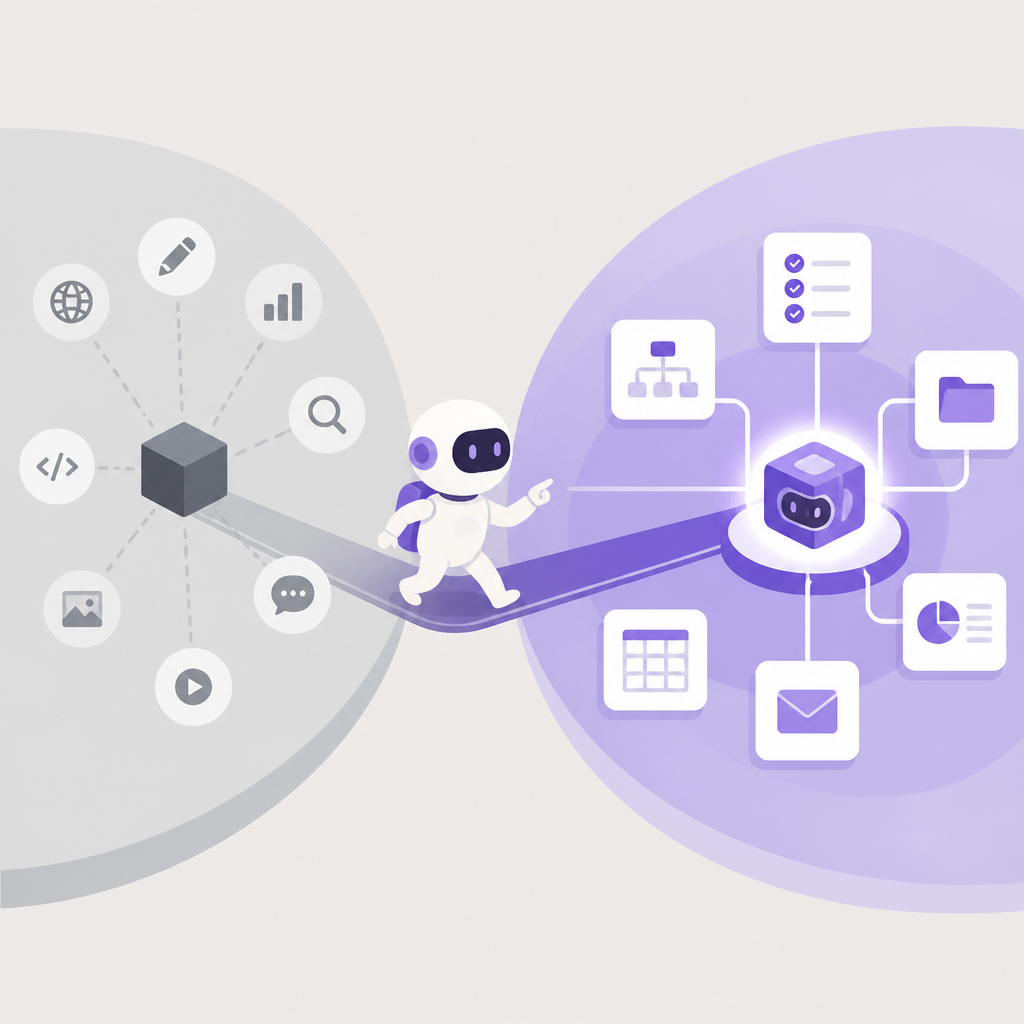
The same profile shows a clear weakness in multimodal and grounded tasks, where it ranks #70 with a 48.1 score. That gap is not a footnote. It tells you the model is much more reliable when the work is structured around actions and text-heavy reasoning than when it has to fuse visual or grounded inputs. For teams choosing a model for an agent loop, that asymmetry is the whole point.
The 1M context window changes how you should evaluate it
MiniMax M3 ships with a 1M token context window, and that is a practical advantage in real applications. Large-context models are not just about bragging rights; they let teams keep more documents, logs, or conversation history inside a single working session. For code review, long research threads, and document processing, that capacity can reduce orchestration overhead and cut down on retrieval complexity.
BenchLM also identifies MiniMax M3 as open weight, which matters for deployment strategy. Open weight models give teams more control over hosting, tuning, and cost structure than closed APIs do. Combined with the listed price of $0.3 per million input tokens and $1.2 output tokens, M3 becomes a credible option for teams that care about scale economics and self-hosting flexibility, not just leaderboard vanity.
Its middling overall rank is the right warning label
The overall ranking matters because it keeps the model in perspective. A #23 provisional position means MiniMax M3 is competitive, but not elite across the full benchmark spread. BenchLM shows only 38 published benchmark scores out of 247 tracked, so the public profile is incomplete. That incompleteness cuts both ways: it prevents overclaiming, but it also means the visible strengths and weaknesses are the safest signals available.

The verified leaderboard rank, #14 out of 32, is better than the provisional one, but it still does not turn M3 into a category leader. This is the kind of model you choose for fit, not fame. If your workload is agentic, long-context, and cost-sensitive, the ranking is good enough. If you want broad excellence across reasoning, multimodal understanding, and instruction following, the current data does not support that bet.
The counter-argument
The strongest case against this view is simple: leaderboard slices are incomplete, and a model with a 79/100 overall score may still outperform expectations in production. BenchLM itself hides unverified or generated rows, and M3’s public coverage is partial. A team might reasonably argue that the visible agentic strength plus the 1M context window outweigh the missing categories, especially if its actual workload is narrow.
That argument is valid, but it does not change the conclusion. Partial data is not a license to assume hidden excellence. It is a reason to test the model against your own tasks. If a model ranks #70 in multimodal and only #23 overall, the burden is on the buyer to prove it solves a specific problem better than alternatives. The sensible reading is not “M3 is underrated”; it is “M3 is specialized, so evaluate it on the exact workflow you plan to automate.”
What to do with this
If you are an engineer, benchmark MiniMax M3 on one agentic workflow end to end: tool calls, retries, context retention, and failure recovery. If you are a PM, treat it as a candidate for browser agents, coding assistants, and document-heavy automation, not as a default multimodal model. If you are a founder, use the 1M context and open-weight setup as a cost and control advantage, but only after proving the model beats your current stack on the task that matters.
// Related Articles
- [AGENT]
Build an Agentic RAG system with LangGraph
- [AGENT]
Manus AI proves agents are ready for real work, but pricing will deci…
- [AGENT]
Coinbase is right to let AI agents trade and spend, with strict limits
- [AGENT]
PEFT for LLM Fine-Tuning Without Full Retraining
- [AGENT]
LLM research engineers turn post-training into services
- [AGENT]
Fine-Tuning SLMs Turns Enterprise AI Practical