NVIDIA Says AGI Is Here: What It Means Now
Jensen Huang says AGI has arrived, but his definition is narrower than most researchers'. Here’s what that means for teams, budgets, and builders.
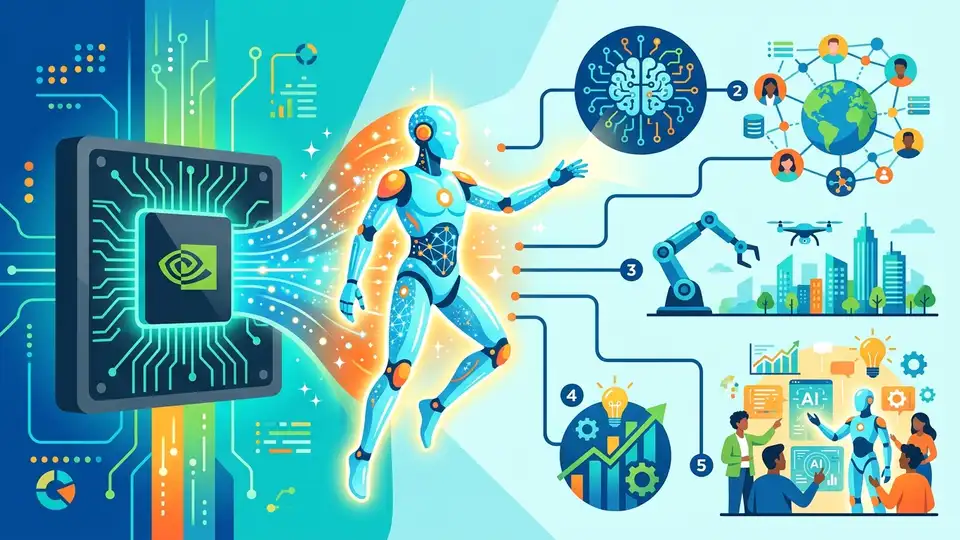
NVIDIA CEO Jensen Huang told Lex Fridman in March 2026 that he thinks AGI is already here. That claim matters because NVIDIA’s market value was reported above $3 trillion, and its chips sit under a huge share of modern AI workloads.
The catch is that Huang is using a narrower definition than most AI researchers. He is talking about systems that can do economically valuable work, especially agentic software that plans, calls tools, writes code, and completes workflows with limited supervision.
So the real question is not whether the headline is dramatic. It is whether enterprises should treat this as a signal to speed up automation, or as a branding move wrapped around a very powerful product strategy.
What Huang actually said
Get the latest AI news in your inbox
Weekly picks of model releases, tools, and deep dives — no spam, unsubscribe anytime.
No spam. Unsubscribe at any time.
Huang’s March 23 interview made the claim very directly: “I think it’s now. I think we’ve achieved AGI.” He had also said in 2024 that AGI was about five years away, which would have pointed to roughly 2029. That shift alone is enough to make people sit up.
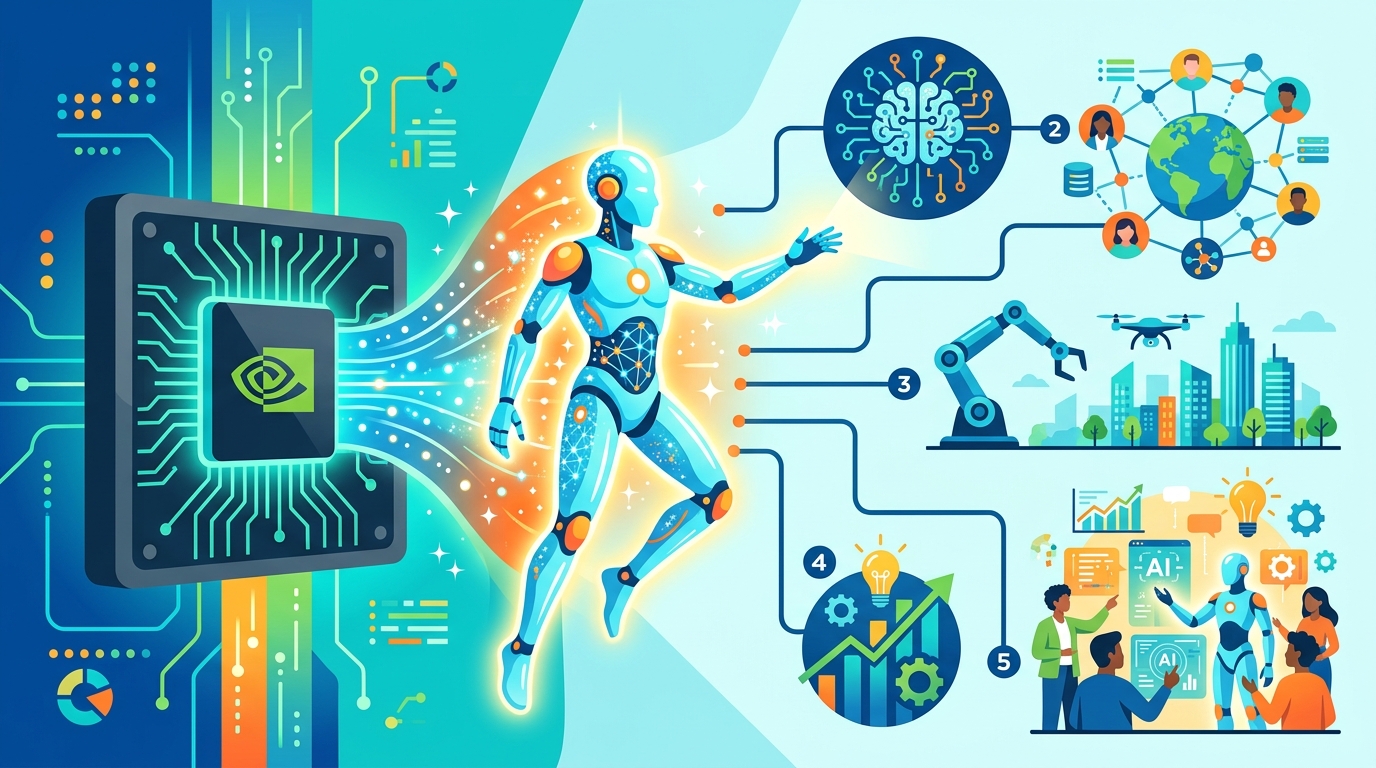
But the context matters. Huang was not saying machines have reached full human-level intelligence across every domain. He was pointing to systems that can already do a lot of the work people pay for today, especially in software, analytics, support, and operations.
That is why the reaction split so fast. Some people heard “AGI has arrived” and thought of a universal intelligence that can reason like a person. Others heard “the next wave of enterprise automation is already here.” Those are very different claims.
- Huang’s public stance in 2024: AGI in about 5 years
- Huang’s March 2026 claim: AGI is here now
- NVIDIA market cap reported above $3 trillion by 2026
Why his definition is controversial
In AI research, AGI usually means something much broader than passing tests or completing a workflow. It implies general problem-solving across unfamiliar tasks, strong transfer learning, long-horizon planning, and reliable performance in open-ended settings.
Huang’s version is much more practical. If an AI system can operate like a capable assistant inside a company, write code, summarize information, route tasks, and use software tools well enough to create value, then he is willing to call that AGI. That is a useful business definition, but it is not the same as a scientific consensus.
He also admitted the limits. Huang said current agents are nowhere near ready to run a company as complex as NVIDIA on their own. That is an important detail, because it shows the claim is less about total autonomy and more about a threshold of useful competence.
“I think it’s now. I think we’ve achieved AGI.” — Jensen Huang, NVIDIA CEO, on the Lex Fridman Podcast
That distinction matters for anyone building or buying AI systems. A model that can pass a benchmark or complete a coding task is impressive. A model that can keep working safely for days, resist drift, and handle messy real-world exceptions is a much harder problem.
Why GTC 2026 gives the claim more weight
The timing of Huang’s statement is not random. It came right after NVIDIA GTC 2026, where the company laid out a very aggressive hardware and platform roadmap. The message was simple: AI is becoming a core computing layer, and NVIDIA wants to power most of it.
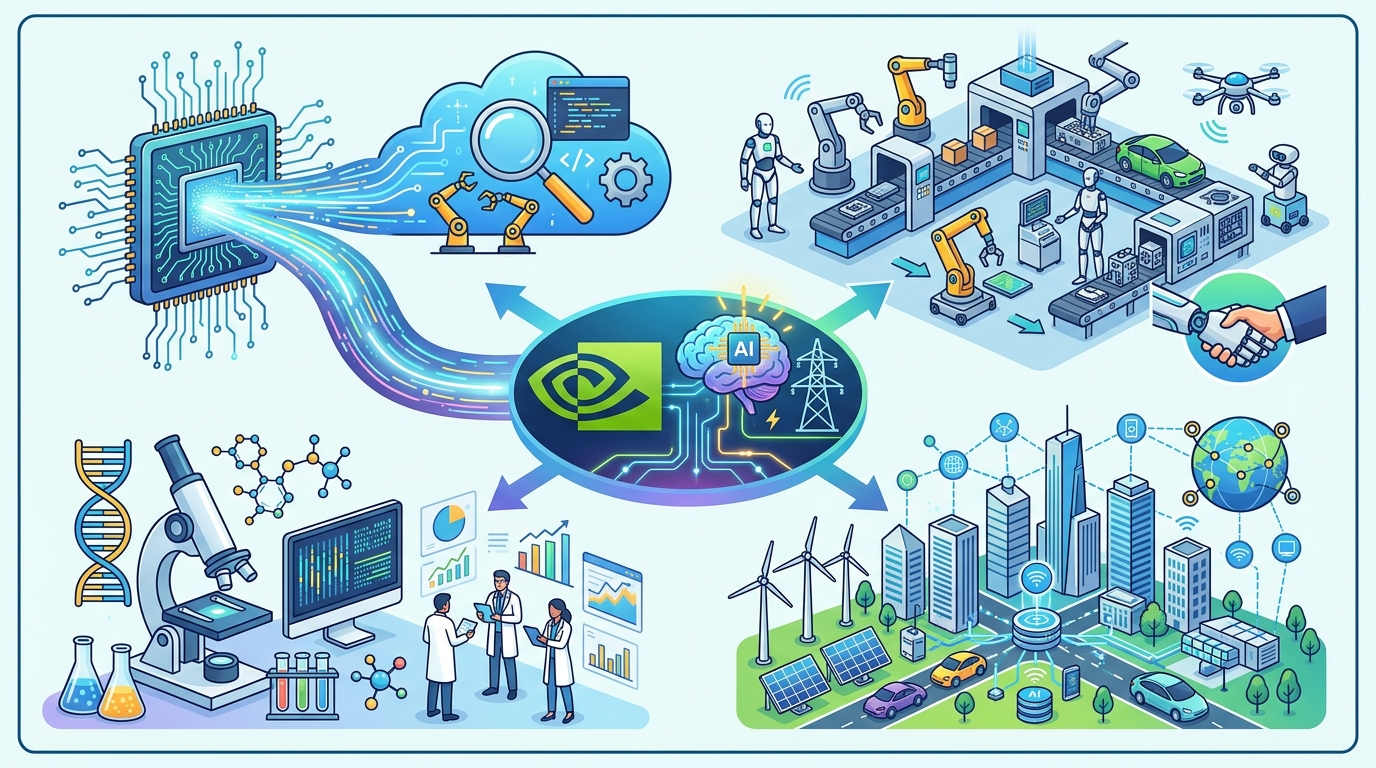
Among the announcements tied to that event were the Vera Rubin GPU platform, Kyber rack architecture, and DLSS 5 for neural rendering. NVIDIA also kept pushing the idea that the next few years will be defined by huge compute demand, not incremental model tweaks.
That is why Huang’s AGI framing is so useful for NVIDIA. If customers believe AI has crossed into practical generality, they are more likely to buy more infrastructure, more inference capacity, and more software tied to agentic workflows.
- GTC 2026 ran March 16-19, 2026
- Vera Rubin shipments were expected in 2027
- Kyber rack plans targeted dense 144-GPU configurations per tray
- DLSS 5 pushed neural rendering and real-time 4K graphics
What this means for enterprises and developers
For companies, the headline should not be “AGI arrived.” The useful takeaway is that agentic AI is now good enough to matter in real workflows. That means teams can automate more than chat. They can automate parts of ticket triage, internal research, report generation, code maintenance, and controlled operations.
But the economics only work if the system is measured like software, not marketed like magic. If an agent saves time but introduces silent errors, it is a liability. If it reduces cycle time and stays inside guardrails, it becomes a force multiplier.
For developers, this changes the job. Prompting still matters, but evaluation matters more. The best teams will spend less time chasing clever demos and more time building permissions, test suites, structured outputs, and observability into every agent loop.
Here is the practical checklist I would use:
- Pick 2 to 4 workflows with high volume and clear success metrics
- Scope tool access tightly with least-privilege credentials
- Measure pass rates, rollback rates, and defect rates
- Keep a human approval step for money movement, customer-impacting changes, and compliance actions
If you want a useful mental model, think of these systems as junior operators that work fast but need supervision. They are already valuable in that role. They are not yet reliable enough to run the whole shop alone.
That is also why NVIDIA’s claim matters beyond one interview. It pushes enterprises to stop asking whether AI is “real” and start asking which workflow gets automated first. If you want a deeper developer angle, our related analysis on agentic AI workflows in enterprise automation covers the implementation side.
How the market is reading the signal
NVIDIA is not speaking from the sidelines. Its chips power training and inference for many of the world’s largest AI systems, and the company’s business is tied directly to how fast AI adoption grows. When Huang talks about AGI, investors hear a roadmap for more compute demand.
That is part of why the statement spilled into adjacent markets. Reporting after GTC 2026 pointed to AI-linked crypto tokens moving by roughly 8% to 20% in some cases, especially names tied to decentralized compute and agent narratives. Those price moves may or may not last, but they show how fast one company’s messaging can ripple outward.
The bigger point is simpler: if enterprise buyers accept Huang’s framing, budgets will shift. More money goes to AI infrastructure, more teams get assigned to agent design, and more products get built around software that can act rather than just answer.
For developers, the comparison is useful because it gives a concrete benchmark for where the market is headed.
- Claude Code is built around coding workflows and tool use
- ChatGPT is still strongest as a general assistant, but agents are pushing it toward task execution
- NVIDIA’s AI data platform ties model work to enterprise infrastructure
- Claude Code on GitHub shows how fast the agentic developer tool stack is maturing
The bottom line for teams building now
Huang’s statement is best read as a business signal, not a scientific verdict. He is saying that AI has reached a point where it can do meaningful work at scale, and that companies should act like this is already true.
For enterprises, that means the next year or two should focus on controlled adoption: one workflow at a time, clear metrics, tight permissions, and human review where the stakes are high. For developers, it means the winning skill set is shifting toward evaluation, orchestration, and safety, not just prompt writing.
If you are making a roadmap today, the question is simple: which process in your organization is expensive, repetitive, and easy to measure? That is the best place to test agentic AI before the rest of the company catches up.
// Related Articles
- [IND]
WebX 2026 turns speaker hype into a conference brief
- [IND]
AI Weekly: 2026-07-06 ~ 2026-07-13
- [IND]
The AI Act should be treated as Europe’s operating system for AI
- [IND]
Booz Allen’s OpenAI Deal Is Real Advantage, Not Hype
- [IND]
OpenSearch’s vector search benchmark in 5 parts
- [IND]
Vector Databases That Work in Production