OpenAI’s 2026 Cash Crunch Is Getting Hard to Ignore
OpenAI may post huge revenue in 2026, but rising compute costs, ad plans, and tougher competition could define its next year.
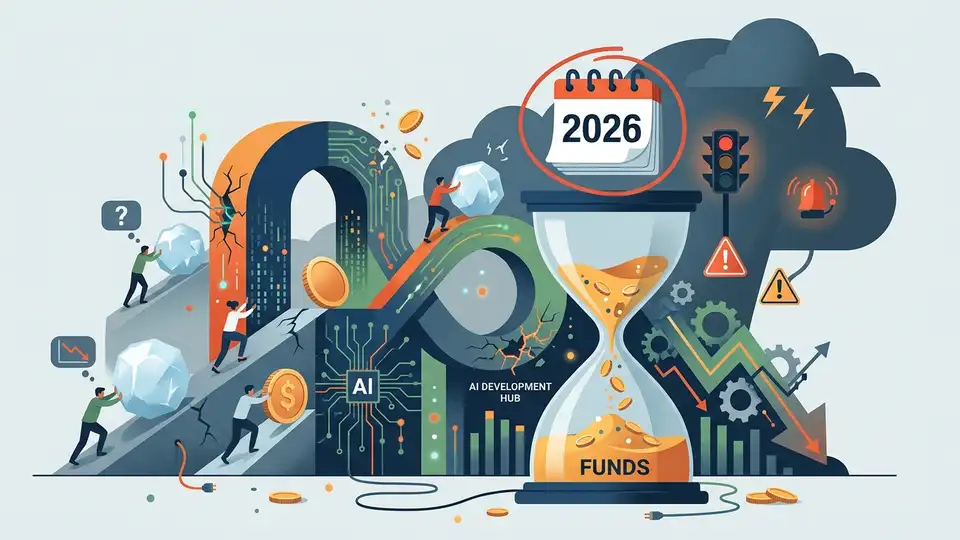
OpenAI reportedly expects to burn as much as $17 billion in 2026, up from about $9 billion in 2025. That number matters because the company is still growing at a speed most software firms never reach, yet the bill for training and running its models appears to be growing even faster.
This is the tension hanging over OpenAI’s next chapter. ChatGPT remains the best-known AI product on the market, but brand recognition does not pay for GPUs, data centers, custom chips, and enterprise sales teams on its own.
OpenAI is growing fast, but the spending curve looks brutal
Get the latest AI news in your inbox
Weekly picks of model releases, tools, and deep dives — no spam, unsubscribe anytime.
No spam. Unsubscribe at any time.
The raw numbers behind OpenAI’s business tell two stories at once. One is obvious: demand for generative AI is real, and OpenAI turned that demand into one of the fastest revenue ramps the tech industry has seen. The other is less flattering: the company may still be stuck in a model where usage growth pushes costs up almost as quickly as revenue.
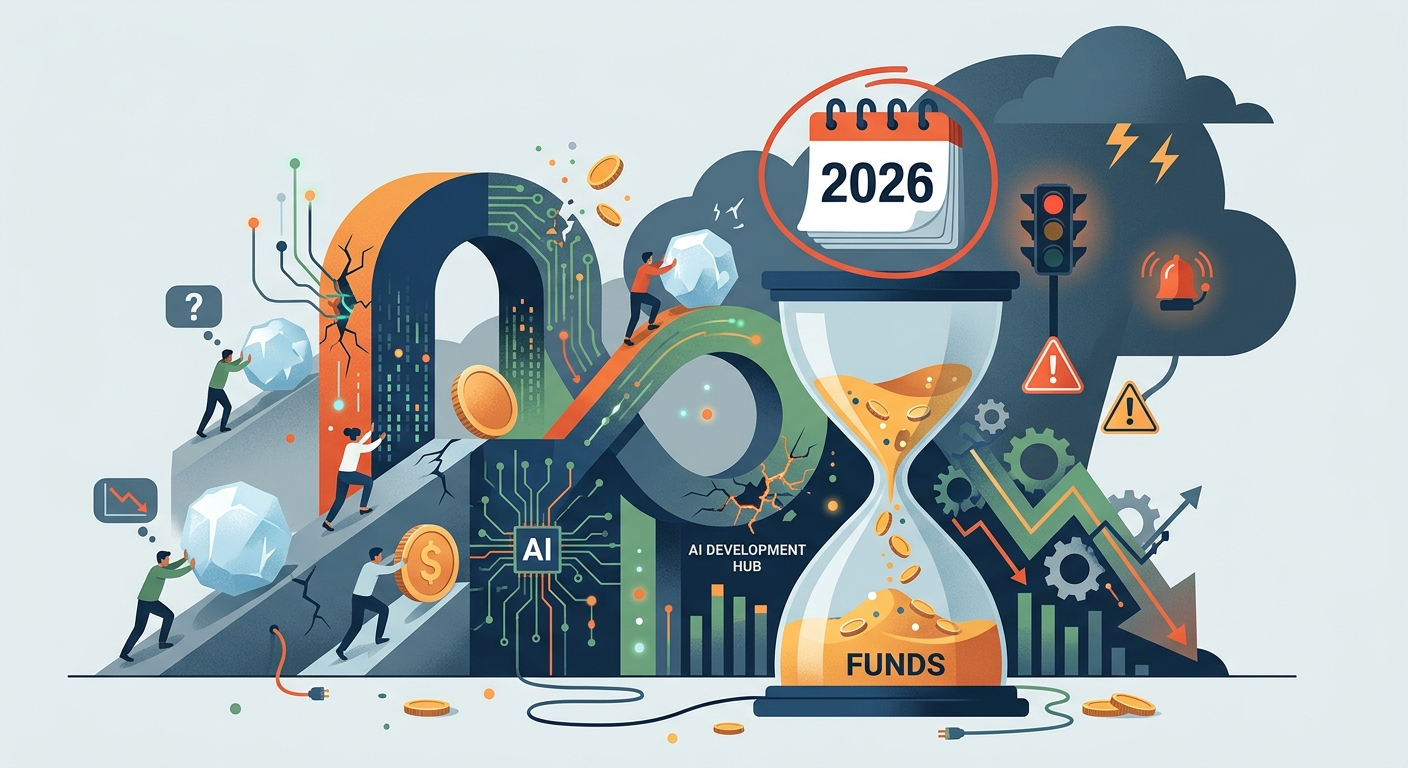
The article’s cited figures line up with a broader pattern seen across AI infrastructure. Training flagship models is expensive, and inference, the cost of answering user prompts at scale, can stay painfully high when hundreds of millions of people keep using the product every day. That makes consumer success a mixed blessing if pricing does not fully cover compute.
- Projected 2026 cash burn: about $17 billion
- Reported 2025 revenue: roughly $13 billion, with annualized revenue near $20 billion by year end
- Capital raised to date: more than $60 billion, according to the source article
- Compute demand cited in the article: from 200 megawatts in 2023 to 1.9 gigawatts in 2025
Even if some of these figures shift, the direction is clear. OpenAI is trying to build a company that looks part software platform, part infrastructure buyer, part research lab, and part consumer internet giant. Each of those businesses can eat cash. Combining them multiplies the pressure.
This also helps explain why OpenAI keeps expanding beyond a simple chatbot pitch. The company has discussed custom silicon work with Broadcom, deeper commerce integrations, enterprise tooling, and new hardware efforts linked to former Apple design chief Jony Ive. Those are not side quests. They look like attempts to find margins, distribution, and product lock-in wherever they can be found.
Competition is making the economics harder, not easier
OpenAI is not operating in a quiet market where one strong model can coast for years. Google Gemini, Anthropic, Meta, and open-weight model groups are all pushing quality up while putting pressure on pricing. When benchmark gaps shrink, customers get less willing to pay a premium for one provider.
That matters because OpenAI’s cost structure still appears heavy. If a rival model is close enough on coding, search, reasoning, or multimodal tasks, buyers can split workloads across vendors or negotiate harder. Consumer users can also drift between products much faster than enterprise contracts suggest.
“We love our current products, but we are here for the glorious future. With superintelligence, we can do anything else.”
— Sam Altman
That quote captures the ambition behind OpenAI’s spending. Altman is selling a very large story: short-term losses are acceptable if they buy a path to systems with much larger economic value. Investors may agree with that logic, but they still need evidence that the company can keep raising capital without giving up too much control or hitting a wall on monetization.
The pressure is visible in product decisions. Reports that OpenAI is exploring ads inside ChatGPT in 2026 make sense in this context. Ads would bring new revenue, but they would also change how users think about the product. If ChatGPT starts to feel more like a search engine monetized by placement and sponsorships, OpenAI will need to protect trust very carefully.
Why ads, commerce, and enterprise tools are back on the table
For a long time, OpenAI looked like a company that could avoid the old internet playbook. It had premium subscriptions, API sales, and a strong enterprise story. Now the math may be forcing a broader approach.
Commerce is one obvious path. If ChatGPT can recommend products and close transactions inside the chat flow, OpenAI can take referral fees or transaction revenue. That is why partnerships with retailers such as Walmart and marketplaces such as Etsy matter. The chat box becomes a shopping surface, not only an answer engine.
Enterprise is the other major path. OpenAI has been adding more business-facing products, including agent tooling and workflow features, while competing more directly with Anthropic and Google for larger corporate accounts. Business customers usually bring better retention and higher contract values, though they also demand reliability, security reviews, support, and integration work.
- Consumer AI subscriptions can scale quickly, but they often face churn and pricing ceilings
- API revenue grows with developer adoption, yet margins depend heavily on inference efficiency
- Enterprise contracts can be larger and stickier, though sales cycles are slower and service costs are higher
- Ads and commerce can add revenue on top of usage, but they risk damaging product trust if pushed too far
If OpenAI adds all of these layers at once, the company could look less like a pure model lab and more like a full-stack internet platform with an infrastructure bill attached. That may be the only way the economics work. It also makes execution much more demanding.
How OpenAI compares with rivals on scale and pressure
OpenAI still has huge advantages. ChatGPT remains one of the few AI products with mainstream consumer reach, and its brand has become shorthand for generative AI in many markets. But scale cuts both ways when every extra query has a cost.
Compared with rivals, OpenAI appears to face a sharper public contradiction: it has the strongest consumer mindshare, but that same popularity may be amplifying the cost problem. Google can spread AI costs across a much larger ad machine and cloud business. Anthropic has a narrower consumer footprint and can stay more focused on enterprise and API use cases. Meta can subsidize open models through its ad business and device ecosystem.
- OpenAI reportedly reached about $13 billion in revenue in 2025
- The article cites ChatGPT monthly active users at 910 million versus 345 million for Gemini by mid-December
- OpenAI’s projected 2026 burn of $17 billion would exceed the annual revenue of many public software companies
- The source article claims cumulative burn could hit $115 billion by 2029 if current trends continue
Those comparisons do not prove OpenAI is in trouble tomorrow. They do show why 2026 matters so much. A company can outrun losses for a while if investors believe the next product cycle will improve margins. It gets harder when rivals catch up on quality and infrastructure stays expensive.
If OpenAI can lower inference costs, expand enterprise revenue, and introduce commerce or ad products without hurting user trust, the company could justify another huge funding round. If it cannot, then 2026 may be the year investors stop treating scale alone as proof of eventual profits.
The real test in 2026
The simplest way to read OpenAI’s next year is this: the company needs to prove that usage growth can turn into durable cash flow, not only larger bills. Watch for four signals: whether inference costs fall materially, whether enterprise revenue grows faster than consumer subscriptions, whether ChatGPT ads actually launch, and whether OpenAI can raise fresh capital without stretching valuation logic past credibility.
My bet is that OpenAI will get the money it needs, but on stricter terms than the market has tolerated so far. If ChatGPT starts showing ads in 2026, that will be the clearest sign that AI’s most famous company is no longer selling only intelligence. It will be selling attention too.
// Related Articles
- [IND]
WebX 2026 turns speaker hype into a conference brief
- [IND]
AI Weekly: 2026-07-06 ~ 2026-07-13
- [IND]
The AI Act should be treated as Europe’s operating system for AI
- [IND]
Booz Allen’s OpenAI Deal Is Real Advantage, Not Hype
- [IND]
OpenSearch’s vector search benchmark in 5 parts
- [IND]
Vector Databases That Work in Production