OpenAI Puts $1B Into Its Nonprofit Arm
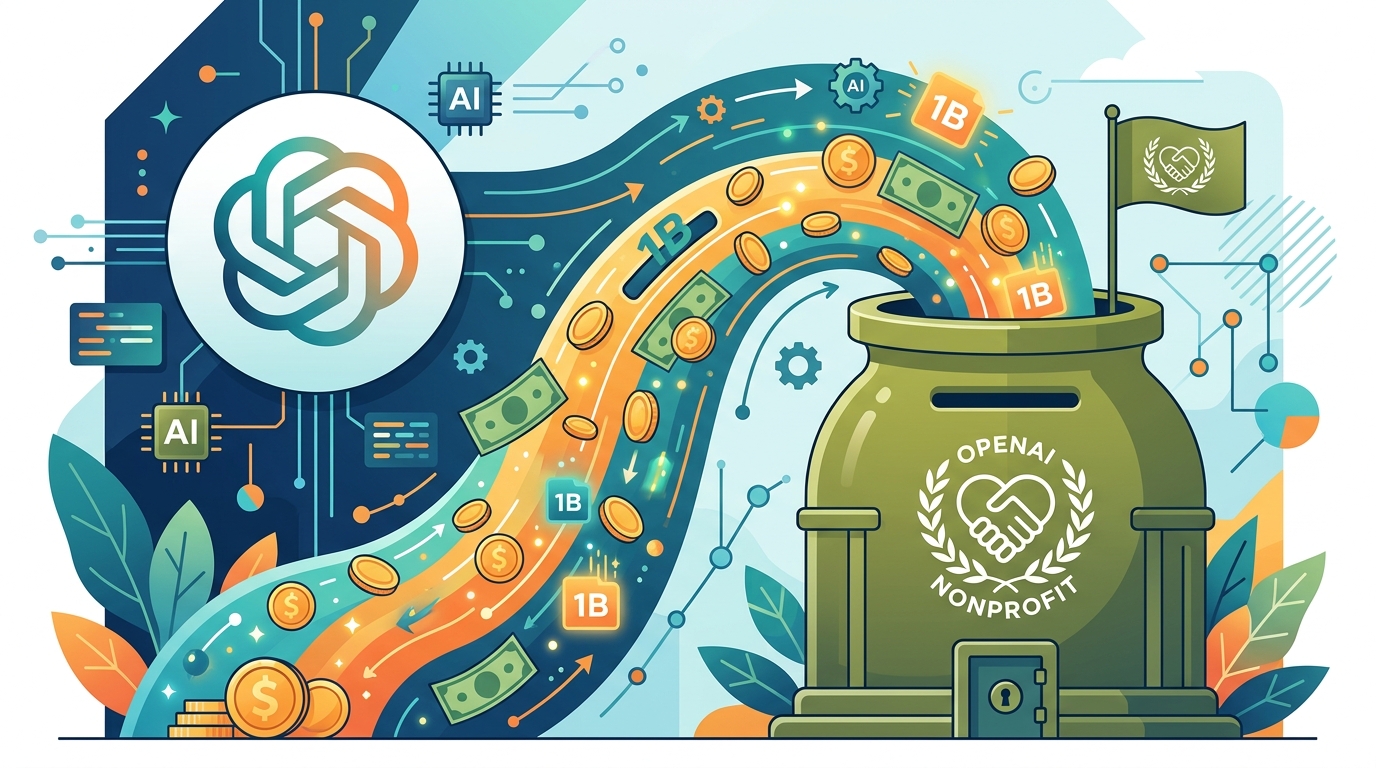
OpenAI named new nonprofit leaders and pledged at least $1 billion in AI projects through the arm over the next year.

OpenAI just put a hard number on its nonprofit ambitions: at least $1 billion in AI-related projects over the next year. The company also announced new leadership for the nonprofit arm, a move that follows a major restructuring and raises a simple question: how much control will the nonprofit really have over OpenAI’s direction?
The timing matters. OpenAI now sits between two worlds at once: a fast-growing commercial AI business and a nonprofit that is supposed to keep the mission in view. When a company with that much influence changes its internal wiring, the details matter as much as the headline.
What OpenAI actually announced
Get the latest AI news in your inbox
Weekly picks of model releases, tools, and deep dives — no spam, unsubscribe anytime.
No spam. Unsubscribe at any time.
OpenAI said the nonprofit side will receive key leadership appointments and at least $1 billion in funding for AI-related work over the next 12 months. That money is meant to support projects tied to the organization’s broader mission, though OpenAI has not laid out a full public list of recipients or programs yet.
The announcement comes after months of scrutiny around OpenAI’s structure, governance, and long-term incentives. The company has been trying to balance product growth, capital needs, and the original nonprofit mission that helped give it credibility in the first place.
For developers and AI watchers, the important part is less the press release language and more the governance signal. OpenAI is telling the market that the nonprofit arm will still have a real budget, real leadership, and a role in shaping what gets built next.
- Funding commitment: at least $1 billion over the next year
- Focus: AI-related projects through the nonprofit division
- Change: new leadership appointments for the nonprofit arm
- Context: follows a major restructuring at OpenAI
Why this structure matters
OpenAI’s setup has always been unusual. The company began as a nonprofit, then created a capped-profit structure to attract the capital needed for large-scale model training and deployment. That compromise let it raise enormous sums while keeping a nonprofit parent in the picture.
Now the nonprofit arm is getting fresh leadership and a large funding commitment at the same time. That suggests OpenAI wants to show that the mission side is not decorative. It has budget, authority, and a reason to exist beyond branding.
There is also a practical angle here. AI safety, public-interest research, education, and policy work all cost money, and they do not always fit neatly into a product roadmap. A billion dollars gives OpenAI room to support those efforts without asking the commercial business to justify every dollar through near-term revenue.
“We believe the benefits of AI should be broadly shared as widely as possible.” — Sam Altman, OpenAI, in a 2015 statement announcing the company’s founding mission.
That quote is old, but it still explains why this announcement matters. OpenAI is trying to prove that the mission statement survives contact with scale, investor pressure, and a much larger user base.
How this compares with other AI players
OpenAI is not the only AI company funding mission-driven work, but the size and visibility of this move are unusual. Most major AI labs keep their public-interest efforts smaller, more fragmented, or less central to the company story.
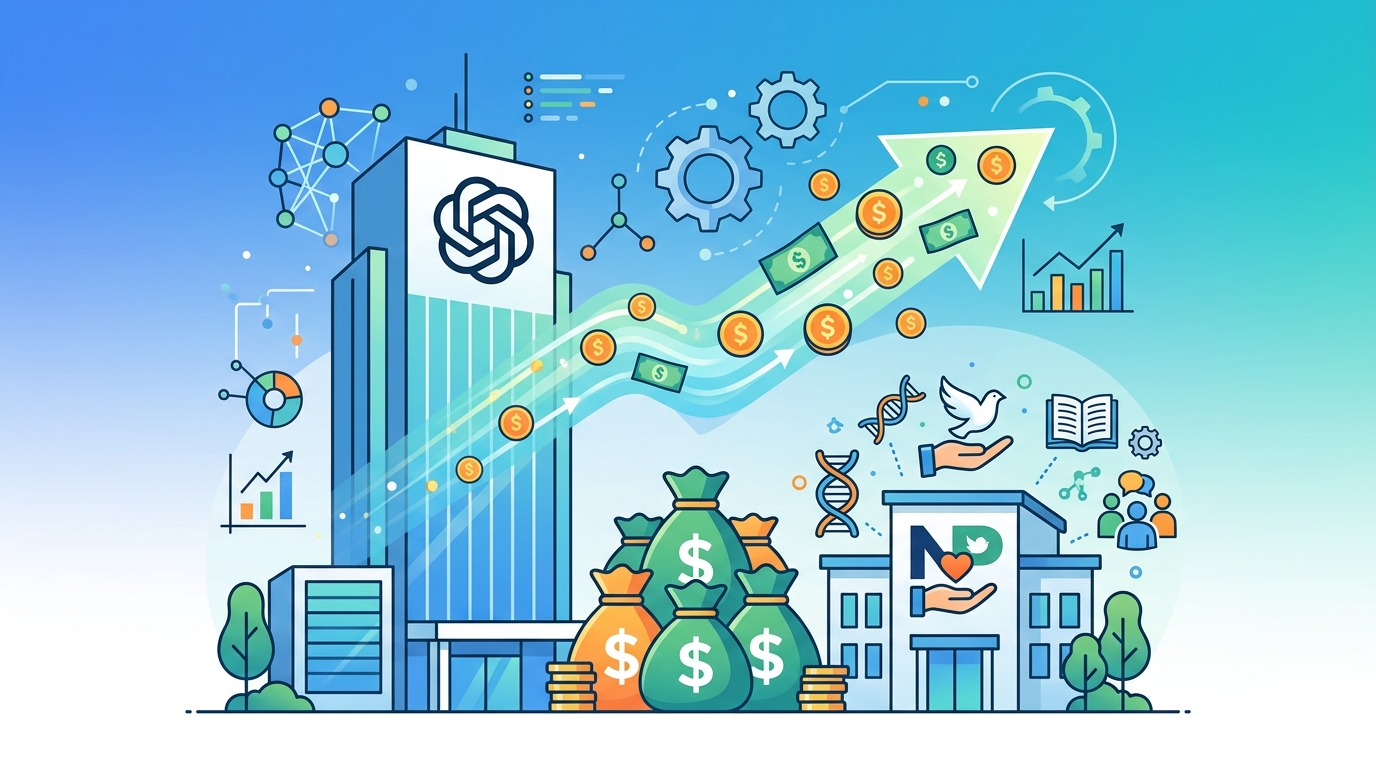
Here is the part that jumps out when you compare it with other large AI organizations:
- Anthropic focuses heavily on safety research and policy work, but it does not have a nonprofit parent with a billion-dollar annual commitment announced in this way.
- Google DeepMind operates inside a much larger corporate structure, where public-interest work is funded through the parent company rather than a separate nonprofit arm.
- Microsoft AI backs model development and deployment through a traditional corporate model, with philanthropy handled separately from product governance.
That difference matters because governance shapes incentives. A nonprofit arm with a billion-dollar budget can fund work that does not immediately pay off in product growth, and it can also pressure the commercial side when there is a conflict between speed and caution.
OpenAI’s structure is still difficult to read from the outside, but the signal is clear: the nonprofit is being positioned as more than a legacy artifact. It is being given money, leadership, and a public role in the company’s future.
What developers and AI builders should watch
If you build with OpenAI tools, this announcement could affect more than governance headlines. A stronger nonprofit arm may shape how OpenAI talks about safety, access, research grants, and partnerships over the next year.
That could show up in a few concrete ways. OpenAI may increase support for external research, fund education programs, or back public-interest AI work that influences policy and model behavior. It could also tighten the company’s messaging around responsible deployment, especially if the nonprofit leadership has more sway than before.
For a quick comparison, here are the numbers that matter most right now:
- OpenAI: at least $1 billion pledged through the nonprofit arm over the next year
- OpenAI founding mission: launched as a nonprofit in 2015 before moving to a capped-profit model
- OpenAI blog: the company has used major structural updates to explain shifts in governance and product strategy
The real test is whether the nonprofit gets to influence decisions that matter, or whether it mostly funds side projects. If OpenAI publishes more detail about the new leaders and the funded programs, that will tell us a lot about how serious this shift is.
For readers tracking AI governance, this is worth watching alongside broader reporting on model safety, regulation, and corporate control. Related coverage on OraCore.dev may help: OpenAI model updates and AI governance policy.
What happens next
OpenAI’s pledge puts a number on a question that has followed the company for years: how much of its power will stay tied to public-interest goals? A billion dollars is enough to matter, but the bigger story is whether the nonprofit arm can shape outcomes instead of simply funding them.
Over the next year, watch for two things: who gets appointed to the nonprofit leadership team, and where the money actually goes. If OpenAI is serious about this structure, the next announcements should include specific programs, partners, and measurable goals. If they do not, this will look more like governance theater than a real shift.
My bet: the money will buy OpenAI time and credibility, but the leadership appointments will tell us whether the nonprofit still has teeth.
// Related Articles
- [IND]
WebX 2026 turns speaker hype into a conference brief
- [IND]
AI Weekly: 2026-07-06 ~ 2026-07-13
- [IND]
The AI Act should be treated as Europe’s operating system for AI
- [IND]
Booz Allen’s OpenAI Deal Is Real Advantage, Not Hype
- [IND]
OpenSearch’s vector search benchmark in 5 parts
- [IND]
Vector Databases That Work in Production