OpenAI’s Sora Burned $1M a Day
OpenAI’s Sora hit 1 million daily users, then slid below 500,000 while reportedly burning about $1 million a day.

OpenAI’s video app Sora hit a million daily users before sliding to under 500,000, and a Wall Street Journal report says it was burning roughly $1 million a day. That is a brutal bill for a product that was supposed to make AI video feel irresistible.
The twist is that Sora did get attention, just not the kind that helps a business model. People flooded it with clips that copied anime, cartoons, and celebrity likenesses, which turned the app into a public demo of how hard it is to control generative video once it escapes the lab.
That matters because Sora was never just another app launch. It was OpenAI trying to prove that video generation could become a consumer product, a creator tool, and maybe even a licensing machine. Instead, the numbers suggest a costly experiment that lost momentum fast.
What the usage numbers say
Get the latest AI news in your inbox
Weekly picks of model releases, tools, and deep dives — no spam, unsubscribe anytime.
No spam. Unsubscribe at any time.
The reported traffic curve is the first warning sign. A product that peaks at 1 million daily users and then falls below 500,000 is not merely cooling off; it is losing the kind of daily habit that keeps infrastructure bills from becoming a problem.

Sora’s economics were especially rough because video generation is expensive. Unlike text prompts, video means more compute, more storage, and more bandwidth. Every short clip can chew through GPU time at a rate that makes free or lightly monetized usage hard to justify.
Here are the key figures from the report and related public reporting:
- Peak daily users: 1 million
- Later daily users: fewer than 500,000
- Reported daily loss: about $1 million
- Launch window: September 2025
Those numbers explain why a flashy demo can become a financial headache fast. If user growth slows while generation costs stay high, the math gets ugly before product teams have time to adjust pricing or usage limits.
It also shows why consumer AI video is harder than consumer AI chat. Chat can be cheap enough to subsidize for a long time. Video is a different beast, because each output looks impressive precisely because it costs more to create.
For OpenAI, that creates a tension with the rest of its business. The company wants broad adoption, but broad adoption of a compute-heavy product can eat cash faster than it attracts it.
Why copyright chaos hurt Sora’s case
Sora’s public image got tangled up with copyright issues almost immediately. Users filled the app with clips that mimicked Dragon Ball, SpongeBob, and other recognizable IP, which made the feed feel less like a creative sandbox and more like a machine for industrial-strength imitation.
That kind of behavior creates two problems at once. First, it invites legal pressure from rights holders. Second, it makes the product look cheap in the cultural sense, even when the engineering is expensive. That is a nasty combination for any company trying to sell premium AI services.
“I think the technology is incredible, but I don’t think it’s going to be profitable for a long time.” — Sam Altman, speaking at a Y Combinator event in 2015
Altman’s old line fits Sora uncomfortably well. The technology can be impressive and the business can still be shaky. In Sora’s case, the gap between wow factor and sustainable economics seems to have been wider than OpenAI wanted to admit.
There is also a brand problem here. When the most visible use cases are parody clips, fake trailers, and copyright bait, the product starts to feel disposable. That makes retention harder, especially when users can get similar entertainment from cheaper tools or just scroll TikTok instead.
OpenAI wanted Sora to look like the future of short-form video. Instead, it became a reminder that people will happily test the limits of a new tool, then move on when the novelty fades.
How the economics compare
The reported $1 million-a-day loss becomes easier to understand when you compare it with other AI products and media businesses. Text models can spread their inference costs across millions of prompts. Video has much less room to breathe.
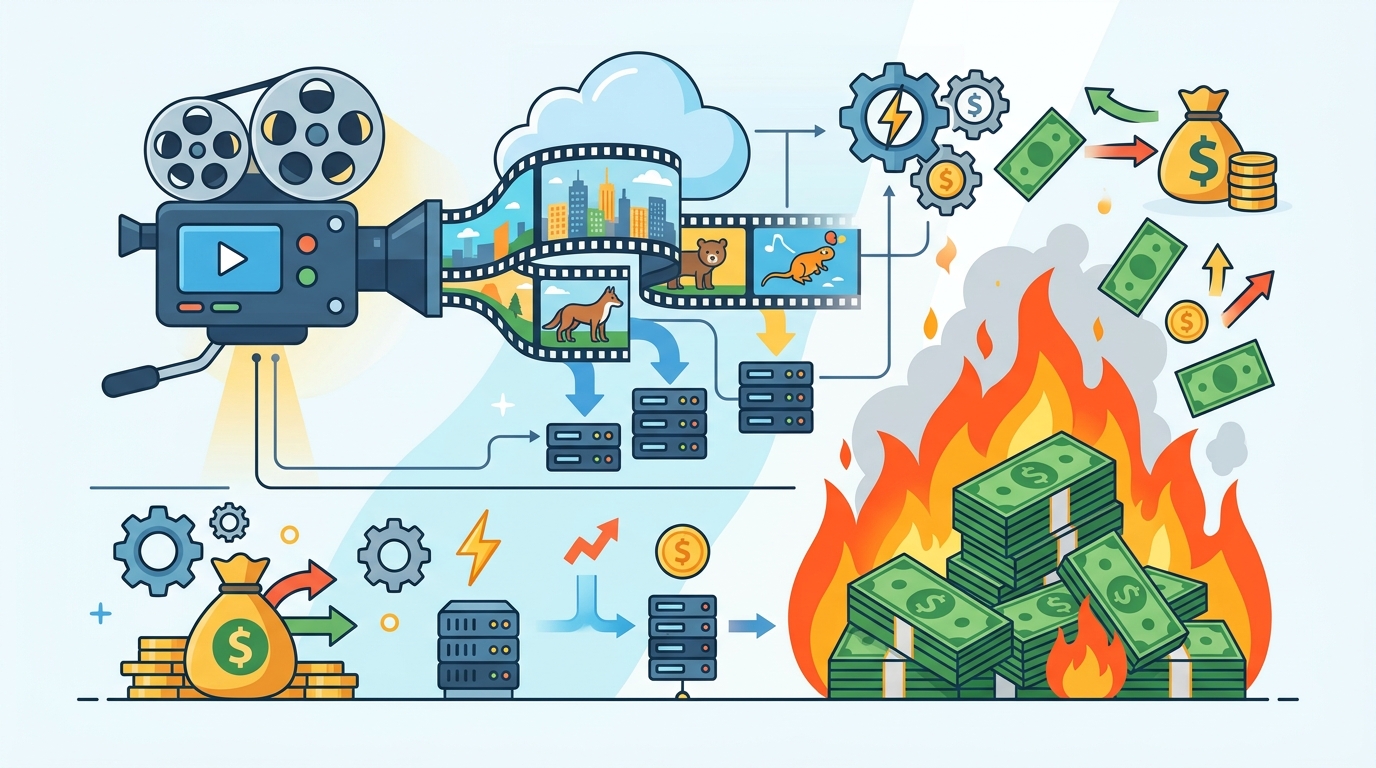
Even a platform with strong engagement can struggle if each generation is costly and repeat use drops off. That is why the numbers around Sora matter more than the usual launch hype.
- ChatGPT can monetize frequent text use with subscriptions and enterprise plans
- Runway and other video AI tools also face high compute costs, but they target narrower creator workflows
- Netflix spends billions on content, yet its costs are tied to a subscription model people already understand
- Sora’s reported user drop of more than 50% means the cost base had less traffic to amortize against
That comparison matters because it shows the real issue was not just demand. It was demand paired with a product that was expensive to run and hard to position. If a user opens the app once for a viral clip and never comes back, the company pays for the joke twice: once in compute, once in churn.
And unlike ad-supported social apps, AI video does not automatically produce cheap inventory. Every fresh output has a direct cost attached, which means a platform can scale usage and still lose more money.
That is why the reported shutdown is more than a product reset. It is a sign that consumer AI video needs either much better pricing, much lower inference costs, or a use case people return to every day.
What OpenAI may do next
OpenAI is not abandoning video as a category, but this report suggests the company is rethinking where the money comes from. The article notes that Disney was exploring AI video tie-ins, while OpenAI is now said to be betting more heavily on robotics for eventual returns.
That shift makes sense. Robotics is slower, messier, and harder to demo on social media, yet it can tie AI to physical workflows where companies pay for productivity rather than novelty. Video, by contrast, can rack up costs before anyone decides it is worth paying for.
OpenAI also has a timing problem. If it wants to keep pushing consumer media tools, it has to convince users that AI video is useful after the first wave of curiosity. That means editing, workflow integration, and clear rights handling matter as much as visual quality.
My read is simple: unless OpenAI can cut generation costs sharply or sell Sora into a paid professional workflow, the consumer version will stay hard to justify. A product can go viral and still fail the unit economics test.
The real question now is whether OpenAI treats Sora as a cautionary tale or a temporary setback. If the company brings video back, expect tighter limits, more licensing deals, and fewer public promises about mass-market magic. The next version will need to prove it can keep users longer than a meme cycle and cost less than a GPU farm running hot for a month.
// Related Articles
- [IND]
WebX 2026 turns speaker hype into a conference brief
- [IND]
AI Weekly: 2026-07-06 ~ 2026-07-13
- [IND]
The AI Act should be treated as Europe’s operating system for AI
- [IND]
Booz Allen’s OpenAI Deal Is Real Advantage, Not Hype
- [IND]
OpenSearch’s vector search benchmark in 5 parts
- [IND]
Vector Databases That Work in Production