OpenClaw and the AI agent boom, explained
OpenClaw turned local AI agents into a fast-moving trend, but its access to files, email, and chats brings real security tradeoffs.

In just three months, OpenClaw helped push AI agents from a niche developer idea into a mainstream talking point. The pitch is simple: run an assistant locally, connect it to your apps, and let it act on your behalf.
That convenience is exactly why people are paying attention. It is also why security teams are uneasy, because the same setup that can book flights or sort messages can also expose files, passwords, and account sessions if something goes wrong.
What OpenClaw actually does
Get the latest AI news in your inbox
Weekly picks of model releases, tools, and deep dives — no spam, unsubscribe anytime.
No spam. Unsubscribe at any time.
OpenClaw is open-source software for building personal AI agents that live on a user’s machine and connect to messaging and productivity apps. In practice, that means a developer can wire it into WhatsApp, Telegram, Discord, Microsoft Teams, and web chat tools so the agent can carry out tasks without a human clicking every button.

The appeal is obvious. A local agent can watch for messages, draft replies, trigger browser actions, and interact with services over time instead of waiting for a prompt every few minutes. That persistent access is what makes it feel closer to a digital assistant than a chatbot.
OpenClaw also matters because it is open-source. Once the code is public, developers anywhere can inspect it, modify it, and build their own versions. That has helped create a fast-moving ecosystem around autonomous bots, agent wrappers, and task-specific assistants.
- OpenClaw was first released in November 2025.
- By late January 2026, it had become one of GitHub’s fastest-growing projects.
- By mid-February, major tech companies were reportedly competing for its creator.
- By mid-March, Nvidia CEO Jensen Huang called it “the next ChatGPT.”
Why developers rushed toward it
The speed of adoption makes more sense when you look at what OpenClaw promises: local control, persistent memory, and direct access to the tools people already use every day. That combination is attractive for developers who want agents that feel useful instead of gimmicky.
Bruce Barcott’s Transparency Coalition guide quotes several observers who captured the mood well. Turing Post described OpenClaw as “the clearest embodiment of the practical, context-aware automation people have wanted for years.”
That line gets at the core of the hype. A lot of AI products can answer questions. Far fewer can act continuously in the background, remember preferences, and work across services with very little friction.
“What makes OpenClaw different from Claude or ChatGPT or Gemini is that it runs locally on your computer. You can give it access to everything that’s there: your files, your email, your calendar, your messages.” — Ezra Klein, The New York Times
That quote is useful because it explains both sides of the story. Local execution gives users more control over data flow, but it also means the agent may sit much closer to the most sensitive parts of a person’s digital life.
In other words, OpenClaw is appealing because it feels practical. It is also unsettling because practical tools are the ones people actually trust with real work.
The security bill comes due fast
OpenClaw’s risk profile is not hypothetical. The TCAI guide cites a mid-February incident detected by Hudson Rock, where an infostealer reportedly exfiltrated a victim’s OpenClaw configuration environment. That is a nasty phrase, but the meaning is straightforward: the attacker stole the agent’s identity and the setup that made it useful.
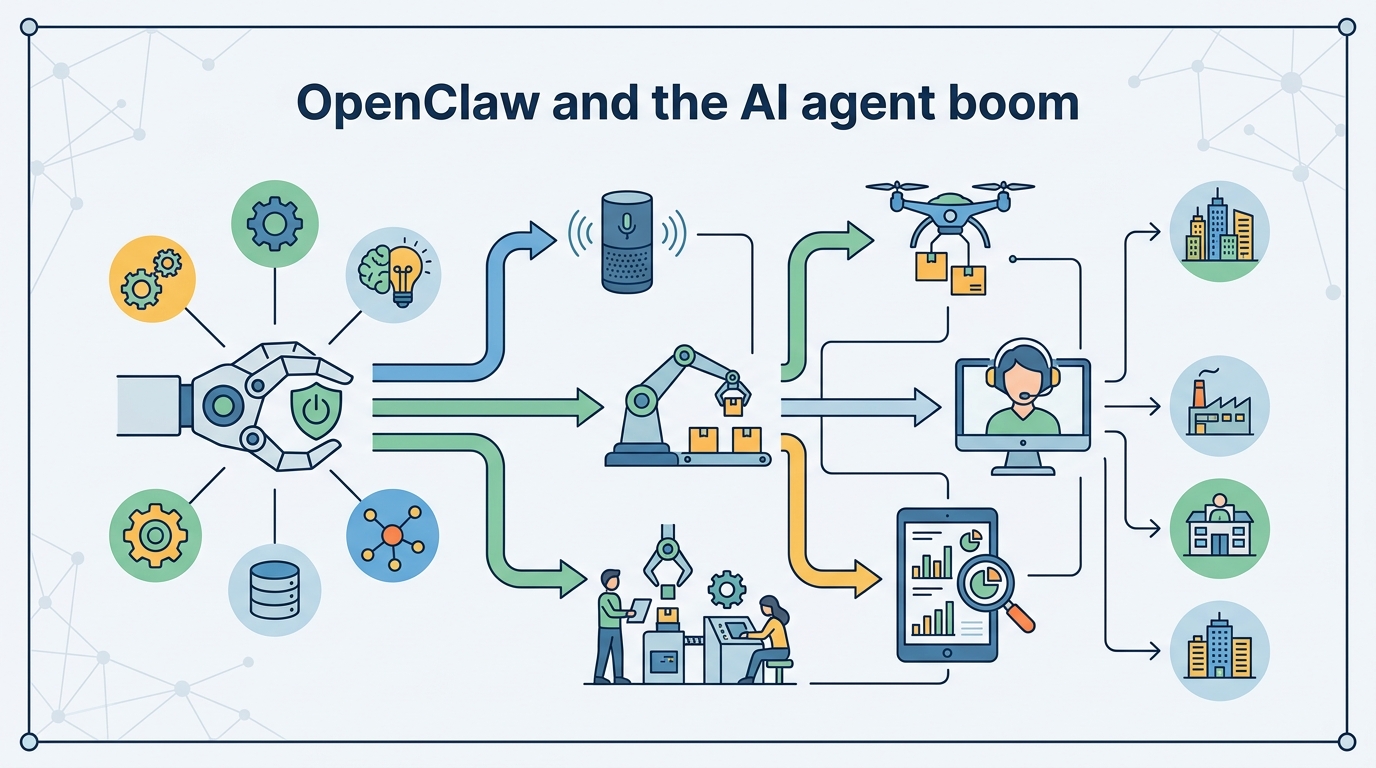
Malwarebytes Labs put the danger in plain English. Infostealers are no longer just grabbing passwords. They are starting to collect AI personas and the cryptographic keys that let agents keep working across sessions.
That changes the stakes. If a laptop compromise can reveal a saved password, that is bad. If it can also reveal an agent that can read mail, interact with services, and remember context over time, the blast radius gets much bigger.
- OpenClaw agents may have access to email, calendars, files, passwords, and payment details.
- Infostealers can target configuration files and tokens, not just login credentials.
- A compromised agent can become a long-lived access point instead of a one-time breach.
- Local execution reduces some cloud exposure, but it does not remove endpoint risk.
There is a deeper issue here too: agent design assumes trust in ways older software did not. A normal app can be sandboxed, audited, and limited by explicit user clicks. An autonomous agent blurs those boundaries and makes every integration a potential liability.
How OpenClaw compares with older assistants
OpenClaw is often compared with consumer assistants such as Siri, Google Assistant, and ChatGPT, but the differences are more practical than marketing teams tend to admit. Traditional assistants answer requests or trigger narrow actions. OpenClaw-like agents can persist, coordinate across apps, and keep state.
That persistent state is the whole point. It lets the agent learn habits, remember unfinished tasks, and keep working even when the user is not actively prompting it. It also means the system accumulates more sensitive context than a one-off chatbot exchange ever would.
Here is the comparison that matters most:
- Siri is mostly reactive and tied to predefined commands.
- ChatGPT is powerful for text and reasoning, but it usually needs explicit user prompts and external tooling to act.
- OpenClaw is built to stay resident on a computer and operate across apps with long-lived access.
- Enterprise automation tools often have stricter admin controls, while OpenClaw-style setups can be assembled by individual users with far less oversight.
That does not make OpenClaw inherently bad. It does mean the product category is moving faster than most users’ security habits. When a tool becomes more capable, the burden shifts to the person installing it to understand what permissions it has and how those permissions are stored.
What the timeline says about where this is heading
The pace of OpenClaw’s rise is almost the story by itself. Peter Steinberger, an Austrian programmer, released it in November 2025. Within a few months, the project had become a magnet for developers, media attention, and corporate interest.
That kind of acceleration usually means one of two things. Either the tool fills a real need, or the market is chasing a story before the product matures. OpenClaw looks like a little of both. It clearly solves a problem people care about, but it also exposes how little the industry has settled on agent safety norms.
For readers trying to judge the category, the right question is not whether agents will matter. They already do. The question is whether the next wave of agent builders will treat identity, permissions, and token storage as first-class design problems instead of afterthoughts.
If that does not happen, the next big AI agent story may be less about productivity and more about account recovery, credential theft, and who gets blamed when an assistant does exactly what it was allowed to do.
My bet: the next six months will bring a split. Consumer-friendly agents will keep growing, while security-conscious teams move toward stricter permission models, shorter-lived tokens, and more visible audit trails. The real test for OpenClaw is whether its ecosystem can keep the convenience without turning every desktop into a high-value target.
// Related Articles
- [IND]
WebX 2026 turns speaker hype into a conference brief
- [IND]
AI Weekly: 2026-07-06 ~ 2026-07-13
- [IND]
The AI Act should be treated as Europe’s operating system for AI
- [IND]
Booz Allen’s OpenAI Deal Is Real Advantage, Not Hype
- [IND]
OpenSearch’s vector search benchmark in 5 parts
- [IND]
Vector Databases That Work in Production