Small Language Models: Llama 3.2 and Phi-3 Transform AI
Llama 3.2 and Phi-3 redefine AI, shifting focus from cloud-heavy solutions to efficient, privacy-focused on-device applications.
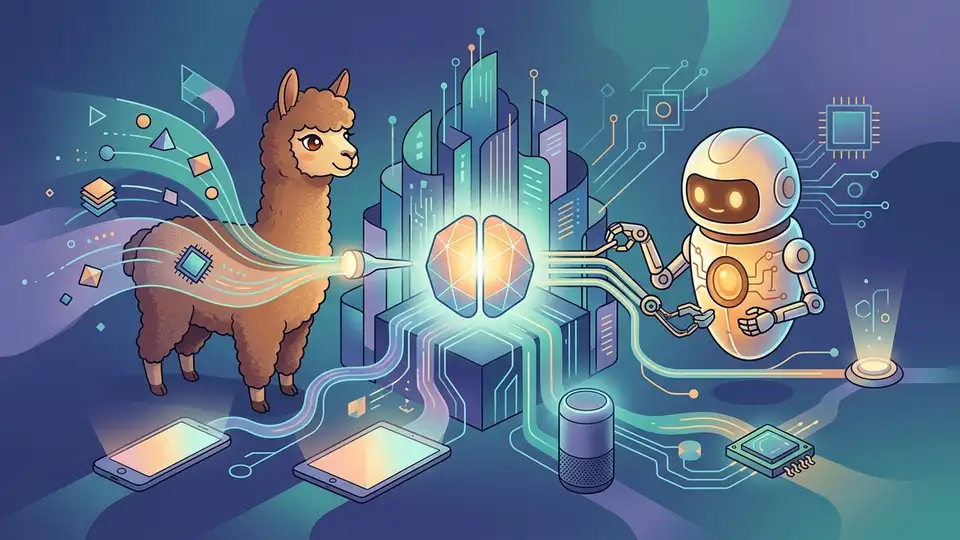
As we step into 2026, the artificial intelligence (AI) world is witnessing a significant shift from relying on massive, centralized data centers to harnessing the power of compact, efficient Small Language Models (SLMs) on personal devices. The recent releases of Llama 3.2 by Meta and Phi-3 by Microsoft have challenged the earlier notion that bigger models equate to better performance. These models, each with fewer than 4 billion parameters, have demonstrated their capability to handle complex tasks efficiently without the need for constant cloud connectivity.
The Engineering of Efficiency
Get the latest AI news in your inbox
Weekly picks of model releases, tools, and deep dives — no spam, unsubscribe anytime.
No spam. Unsubscribe at any time.
The success of SLMs like Llama 3.2 and Phi-3 is rooted in advanced engineering techniques. Meta's models, Llama 3.2 1B and 3B, use structured pruning and knowledge distillation to retain core reasoning abilities in a much smaller footprint. This means they can perform well on standard mobile hardware without compromising on speed or privacy. By utilizing Grouped-Query Attention (GQA), these models reduce memory bandwidth needs, making real-time, on-device AI a reality.
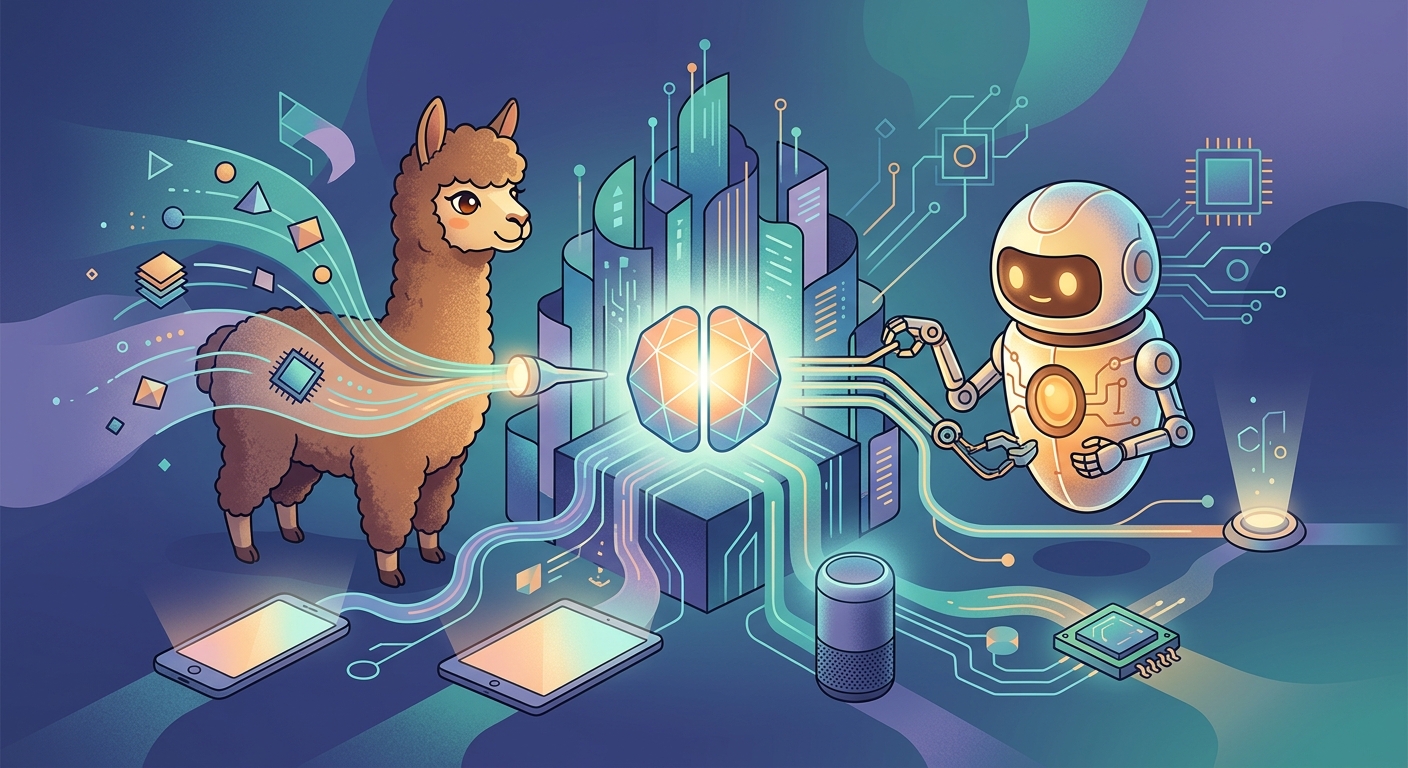
On the other hand, Microsoft’s Phi-3 series employs a unique approach by using carefully curated synthetic data for training, focusing on quality over quantity. The subsequent Phi-4 models introduce hybrid architectures like SambaY, combining State Space Models with traditional attention mechanisms, which boosts throughput by 10 times and eliminates latency issues common in cloud-based models.
- Llama 3.2 models utilize structured pruning and knowledge distillation.
- Phi-3 uses curated synthetic data for high-quality training.
- SambaY architecture combines different models for higher throughput.
- BitNet 1.58-bit technology reduces computational demands significantly.
A New Competitive Battlefield
SLMs have redefined the competitive landscape for tech giants. Hardware manufacturers like Qualcomm have benefited immensely, with their Snapdragon 8 Elite chipsets supporting these models effectively. Apple, by integrating a 3B-parameter model into its A19 Pro chip, offers capabilities such as advanced voice assistant functions without relying on the cloud, enhancing user privacy.
"The shift to on-device AI is as much about privacy as it is about performance," said Cristiano Amon, CEO of Qualcomm, highlighting the strategic advantages of SLMs.
This shift has also opened opportunities for startups, allowing them to integrate AI directly into applications without the prohibitive costs of cloud services. The ability to run AI locally makes these models highly attractive for sectors with stringent privacy requirements, such as healthcare and legal industries.
Privacy and Environmental Benefits
The move towards on-device AI addresses significant privacy concerns and reduces environmental impacts. By processing data locally, SLMs ensure that personal information remains secure, addressing key criticisms of cloud-based AI systems that often face data breaches and excessive energy consumption.
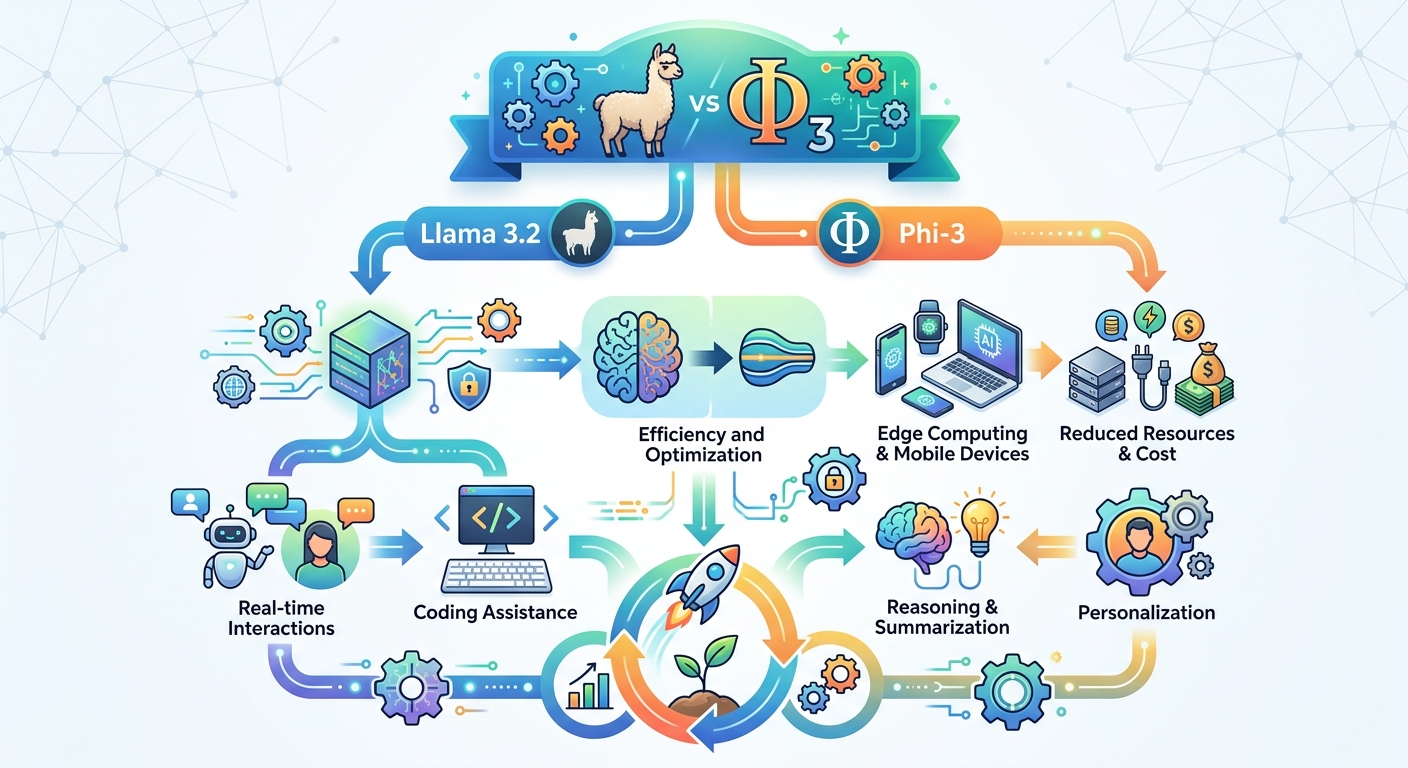
- On-device AI enhances user privacy by keeping data local.
- Reduces environmental impact compared to data-heavy cloud centers.
- Facilitates AI use in privacy-sensitive sectors.
- Challenges include content moderation and safety filtering.
The Road Ahead
Looking towards the future, AI's focus will likely shift from conversational to action-oriented tasks. Upcoming models like Llama 4 Scout may introduce "screen awareness," enabling devices to interact with multiple applications for complex task execution. This evolution will further transform smartphones into proactive digital agents, capable of handling multi-step operations independently.
Furthermore, personalized SLMs, tailored to individual user's data, promise to enhance user interaction by adapting to personal writing styles and preferences. However, balancing continuous learning with device limitations remains a challenge.
By 2028, the line between small and large models might blur, with federated systems allowing a blend of local and cloud-based AI processing. This approach could optimize both speed and depth, creating a more versatile AI landscape.
Final Reflections
The emergence of Small Language Models marks a transformative moment in the AI domain. By proving that compact models like Llama 3.2 and Phi-3 can provide substantial intelligence on consumer devices, Meta and Microsoft have shifted the focus away from cloud-reliant AI. This transition empowers users with greater privacy and efficiency, reshaping the role of smartphones into dynamic personal assistants.
As Android 16 and iOS 26 prepare to integrate these agentic models, the industry will continue to innovate within this decentralized framework, ensuring that AI remains not just powerful but also personal and secure.
// Related Articles
- [MODEL]
GPT-5.6 turns OpenAI into a model menu
- [MODEL]
Seedream 5.0 Pro Is the Right Choice for Editable AI Images
- [MODEL]
Midjourney v8.2 release is close
- [MODEL]
Rust KRAID enters Mesa for Arm Mali GPUs
- [MODEL]
OpenAI Opens GPT-5.6 and Launches Live Voice AI
- [MODEL]
Mistral is right to push Leanstral into proof engineering