The Consortium DC Is Rewriting Urban Health
The Consortium DC links data, clinics, and community groups to cut gaps in D.C. health care, from diabetes control to maternal health.
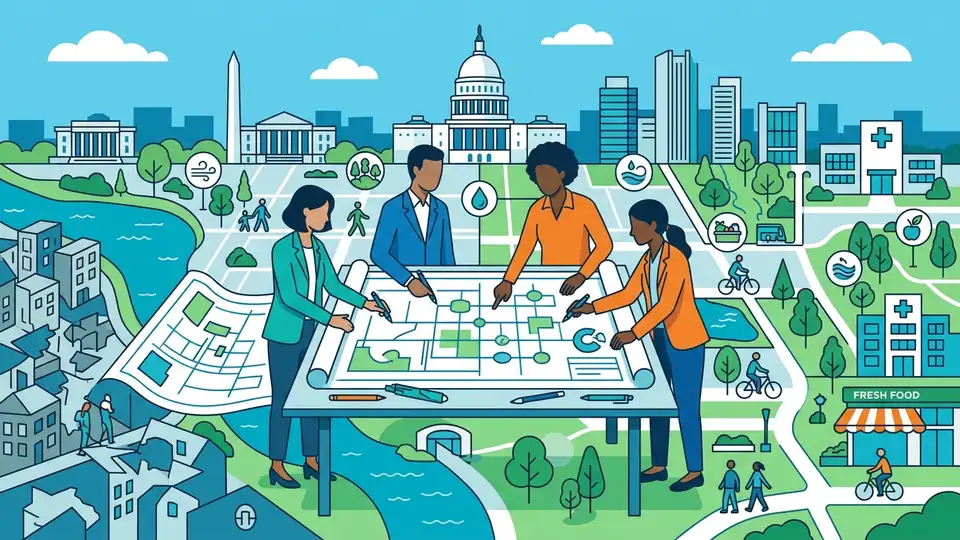
Washington, D.C. has a population of about 700,000, but the city’s health challenges look far larger than a single metro area. The Consortium DC is trying to close that gap with data, neighborhood partnerships, and a very practical idea: public health works better when residents help design it.
That matters in a city where access to care can change block by block. The Consortium’s model mixes government, academia, nonprofits, and providers into one operating system for health, and the results are starting to show up in measurable ways.
What the Consortium DC actually does
Get the latest AI news in your inbox
Weekly picks of model releases, tools, and deep dives — no spam, unsubscribe anytime.
No spam. Unsubscribe at any time.
The Consortium DC is a cross-sector public health initiative based in Washington, D.C. It brings together agencies, universities, community organizations, and health providers to spot risks earlier and respond faster. Instead of treating public health as a series of isolated programs, it treats the city like a connected system.
Its work spans infectious disease response, chronic illness management, maternal health, and access to primary care. That mix matters because the same neighborhoods often face all of those problems at once, and a single clinic or grant program cannot fix them alone.
One of the strongest parts of the model is its use of data. The group uses predictive modeling, surveillance tools, and geospatial analysis to identify where risks are rising. That means it can direct staff and services before a problem turns into a citywide emergency.
- Population served: more than 700,000 residents in Washington, D.C.
- Coverage reported: all 8 neighborhoods of the city
- Child vaccination rates: up 19% over five years
- Free screening access: doubled over five years
- Public health alert response times: down 25%
Why this model matters in public health
Public health systems often fail in the same place: information arrives too late, or it arrives without local context. The Consortium DC tries to solve both problems at once. It does that by combining city data with lived experience from residents who know where barriers actually exist.
That sounds simple, but it changes the shape of decision-making. A maternal health intervention looks different when it is built with neighborhood groups in Anacostia than when it is designed from a downtown office. The Consortium’s approach makes room for that difference.
It also fits a broader lesson from pandemic-era planning. Cities that can move quickly with trusted local partners do better when conditions shift. D.C. has seen that in practice through targeted outreach, mobile services, and faster alerting when risks spike.
“We don’t just monitor health trends—we translate them into precise, timely actions. Our models incorporate social determinants of health, ensuring no population is overlooked.” — Dr. Elena Torres, Director of Public Health Analytics at the Consortium
That quote captures the project’s real bet. Data is useful, but only if it leads to action. And action is more credible when the people affected by it helped shape it.
Partners, programs, and the numbers behind the effort
The Consortium DC is built around named partners with different strengths. CareFirst BlueCross BlueShield brings payer and care access expertise, George Washington University’s Milken Institute School of Public Health adds research capacity, and local community-based organizations keep the work connected to neighborhoods that are often missed by traditional systems.
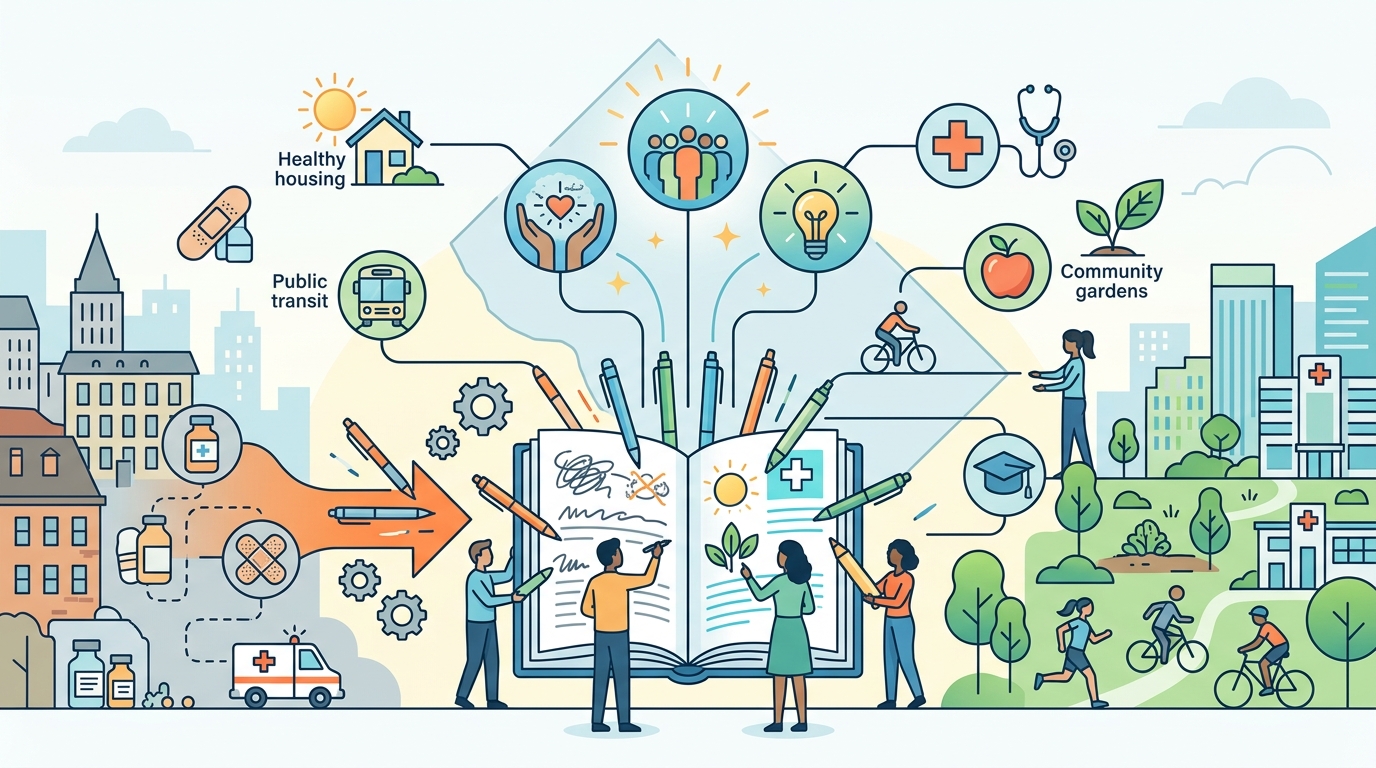
That mix shows up in the projects themselves. The article points to joint research on maternal mortality disparities among Black and Latinx communities, mobile health clinics designed for food deserts, and public forums where residents help set priorities. Those are very different tools, but they solve the same problem: public health fails when it ignores access, trust, and local context.
The reported outcomes are worth paying attention to because they are concrete, not vague. A Health Accelerator Program improved blood sugar control among high-risk diabetes patients by 37%. A virtual health station reached more than 100,000 underserved residents through telehealth. Those are the kinds of numbers that turn a civic initiative into something policymakers can defend.
- Blood sugar control success among high-risk diabetes patients: up 37%
- Telehealth reach: more than 100,000 underserved residents
- Maternal mortality work: focused on Black and Latinx communities
- Service model: mobile clinics, telehealth, resident forums, and local outreach
For comparison, a lot of city health programs still report success in softer terms like awareness raised or partnerships formed. The Consortium DC reports outcomes that can be tracked over time, which makes it easier to tell whether a program is actually changing care.
What makes it different from a typical city program
Many public health efforts are built around a top-down rollout: a grant arrives, a program launches, and residents are asked to participate after the design is already done. The Consortium DC flips that order. Community health ambassadors, schools, faith groups, and small businesses all help shape how services are delivered.
That matters because trust is a resource. If a neighborhood does not trust the messenger, even a well-funded intervention can stall. The Consortium’s local ambassadors are trained in data literacy and outreach, which helps translate health goals into messages that people actually use.
The funding model also gives the project room to move. It draws from federal grants, private philanthropy, and public investment, which reduces dependence on a single source. That kind of mix is harder to manage, but it can keep a program alive when one funding stream slows down.
For readers following similar work, our coverage of city health data tools shows how local governments are using analytics to shorten response times. The Consortium DC is a stronger example because it pairs those tools with neighborhood ownership.
The takeaway is straightforward: public health programs get better when they measure more than outputs. They need to measure trust, access, and whether residents can actually use the services on offer.
What to watch next
The Consortium DC has already expanded across all eight D.C. neighborhoods, and that gives it a useful test case for other cities. The next question is whether its model can scale without losing the community input that makes it work in the first place.
If it can keep its data discipline while staying close to residents, the most interesting result may not be a single program. It may be a repeatable way to run urban health systems that other cities copy piece by piece.
My prediction: the next round of public health funding in cities like D.C. will favor projects that can show two things at once, measurable outcomes and local trust. Which is exactly why the Consortium DC is worth watching now, before more cities decide they want the same playbook.
// Related Articles
- [IND]
WebX 2026 turns speaker hype into a conference brief
- [IND]
AI Weekly: 2026-07-06 ~ 2026-07-13
- [IND]
The AI Act should be treated as Europe’s operating system for AI
- [IND]
Booz Allen’s OpenAI Deal Is Real Advantage, Not Hype
- [IND]
OpenSearch’s vector search benchmark in 5 parts
- [IND]
Vector Databases That Work in Production