Vibe-Coded Apps Are Slowing iOS Review
AI-made iPhone apps are flooding Apple’s review queue, with some developers waiting days or weeks while Apple says 90% clear in 48 hours.
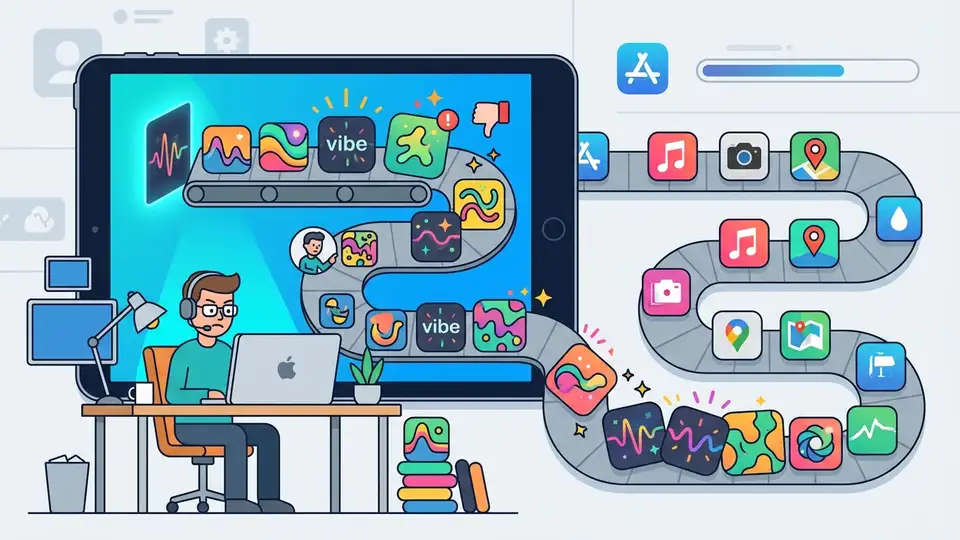
Apple says about 90% of App Store submissions get approved within 48 hours. That sounds fast until you hear developers describing waits that stretch into days or even weeks, especially as AI-generated “vibe-coded” apps pile into the queue.
The new friction is a side effect of how easy it has become to ship an app. Tools like OpenAI, Anthropic, and Replit can turn plain-English prompts into working code fast, which means the bottleneck is shifting from building software to getting it approved.
Why the App Store queue is getting crowded
Get the latest AI news in your inbox
Weekly picks of model releases, tools, and deep dives — no spam, unsubscribe anytime.
No spam. Unsubscribe at any time.
The basic story is simple: AI coding tools have lowered the cost and time needed to produce a basic app, and that has changed submission volume. ExtremeTech cites Business Insider reporting that new iOS app releases are growing at the fastest pace in about four years, which lines up with what indie developers are saying on Reddit and in interviews.
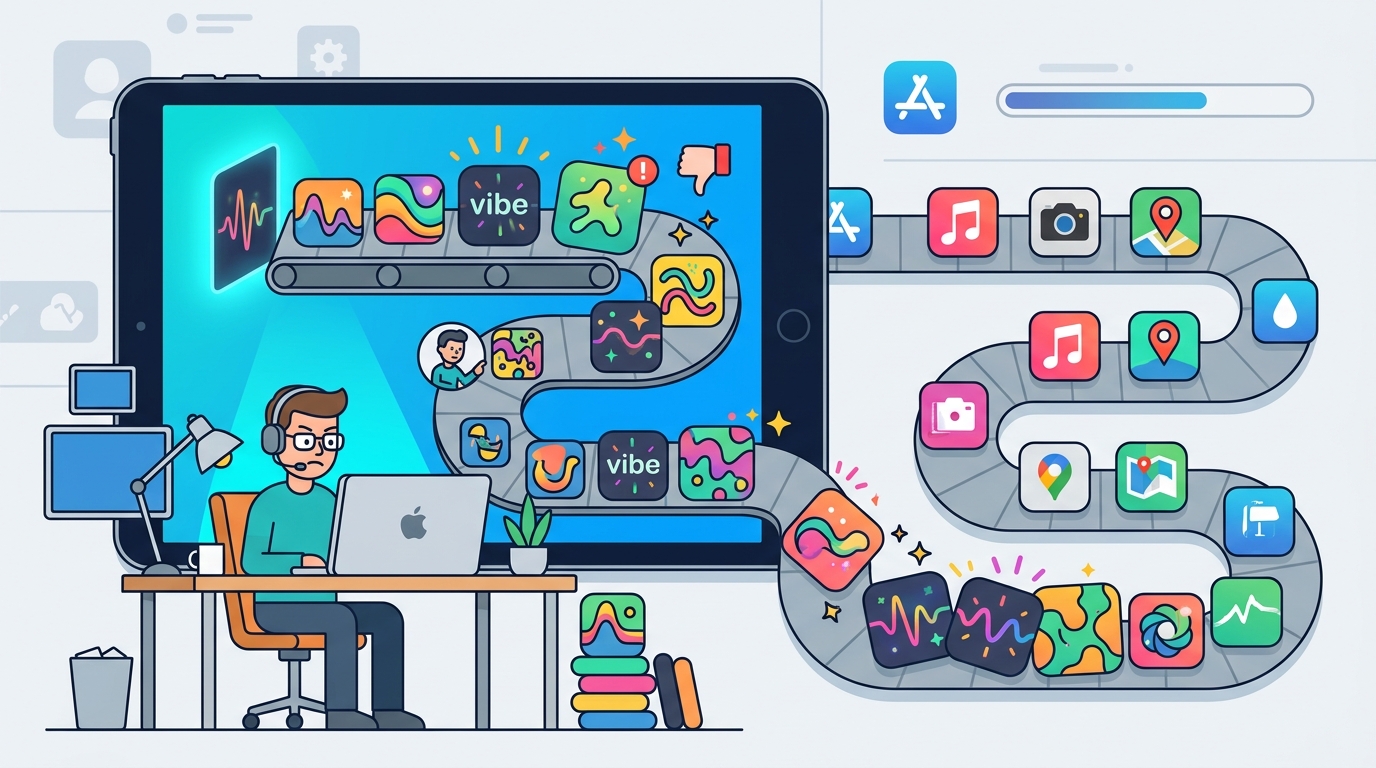
That flood matters because Apple still uses a mix of automated checks and human review. If a wave of low-effort submissions lands at the same time, the system has to sort through them before approving the better ones. For developers shipping legitimate updates, that can mean a delay that feels random even when the app itself is perfectly fine.
- Apple says about 90% of apps are approved within 48 hours.
- Some developers report waits of several days or a few weeks.
- Business Insider says new iOS releases are growing at the fastest rate in about four years.
- AI coding tools can produce a working app from plain-language prompts in minutes.
This is why “vibe-coded” has become a loaded term. It describes apps assembled by prompting an AI model rather than writing code by hand, and the output can range from impressively useful to barely functional. Apple has to treat both cases seriously because a sloppy app can still expose user data, break payment flows, or violate platform rules.
There is also a quality problem hidden inside the volume problem. When submission counts rise, reviewers spend more time on borderline cases, and the backlog grows. If Apple wants to keep the store usable, it has to separate high-volume AI-generated filler from apps that actually do something new.
Apple’s review system is under pressure
Apple has not published a detailed breakdown of where the delays happen, which makes the long waits hard to measure from the outside. What it has said is that most apps are processed quickly, and that longer review times are the exception rather than the rule.
That may be true in aggregate and still frustrating in practice. A developer waiting for approval on a time-sensitive update does not care much that the company’s average looks good if their own app is stuck in limbo. The tension here is between a platform that wants to keep quality high and an ecosystem that now produces far more submissions than it did a few years ago.
“Our goal is to give users a great experience and to help developers succeed.” — Tim Cook, Apple shareholder meeting, 2016
Cook’s line is old, but it fits the current situation well. Apple’s challenge is that “great experience” now includes keeping the store from filling up with low-effort AI apps while still moving legitimate software through quickly.
There is another wrinkle: Apple has also reportedly blocked updates for some popular vibe-coding tools because they download or run code in ways that violate App Store rules. Apple says it is applying existing rules, not writing a special anti-AI policy. That distinction matters because it tells developers the company is policing behavior, not the use of AI itself.
For app makers, the practical lesson is clear. If your tool relies on dynamic code loading, hidden execution paths, or anything that looks like remote app mutation, expect trouble. If your app is built with AI assistance but ships as a normal, self-contained iOS product, the path is much safer.
What the numbers say about speed and quality
The App Store debate is easier to understand when you put the numbers next to each other. Apple’s 48-hour approval claim sounds efficient, but a small share of slow reviews can still create a big pain point for developers who are trying to ship on a schedule.
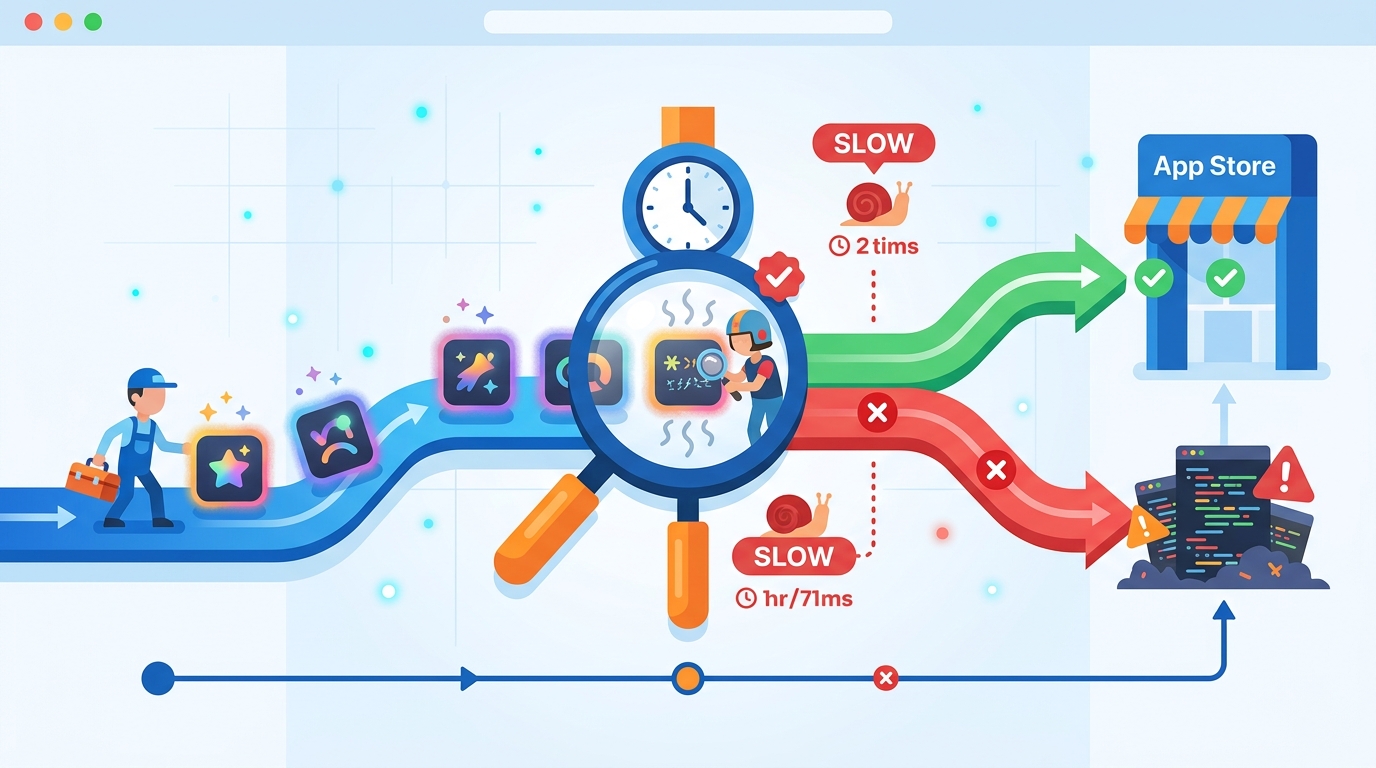
The comparison also shows why automated screening matters more now than it did before. Human reviewers are good at spotting policy violations and misleading UX patterns, but they are expensive to scale when submission volume rises quickly. Automated tools can catch obvious spam and broken builds sooner, which frees reviewers to focus on apps that need judgment calls.
- Apple’s App Store Review Guidelines lay out the rules developers must follow.
- App Store approval remains mandatory for iPhone app distribution outside special enterprise and test channels.
- Reddit’s iOS programming community has become a place where developers compare review times and rejection reasons.
- Business Insider reported the surge in new iOS releases tied to AI-assisted app creation.
The comparison with Android is also worth keeping in mind, even if this story is about iOS. Google has been tightening developer verification and account controls in Android distribution too, because store quality is now a platform-wide problem, not an Apple-only one.
What makes Apple different is the degree of central control. That gives the company more power to keep bad apps out, but it also means developers feel every delay personally. If the review pipeline slows, there is no alternate route to the same audience.
What developers should do next
If you are shipping an AI-assisted iPhone app, the safest move is to assume that review will take longer than Apple’s average and plan around that. Submit earlier, avoid code-loading tricks, keep your binaries self-contained, and make sure your metadata matches what the app actually does.
The bigger takeaway is that AI coding has changed the economics of app creation faster than platform governance has adapted. Apple does not need a new slogan here. It needs better screening, clearer enforcement, and faster handling for legitimate updates so good apps do not get stuck behind a pile of disposable ones.
My bet: the next App Store fight will not be about whether AI can build apps. It will be about how Apple proves an app is safe, real, and worth a reviewer’s time. If you are a developer, the question to ask now is simple: can your submission survive a stricter queue without depending on hidden behavior or rushed polish?
// Related Articles
- [IND]
WebX 2026 turns speaker hype into a conference brief
- [IND]
AI Weekly: 2026-07-06 ~ 2026-07-13
- [IND]
The AI Act should be treated as Europe’s operating system for AI
- [IND]
Booz Allen’s OpenAI Deal Is Real Advantage, Not Hype
- [IND]
OpenSearch’s vector search benchmark in 5 parts
- [IND]
Vector Databases That Work in Production