Why AI Leaders Are Changing Their Jobs Message
AI leaders are pivoting from job-killer rhetoric to a jobs-creation pitch because the old message is politically toxic and economically incomplete.
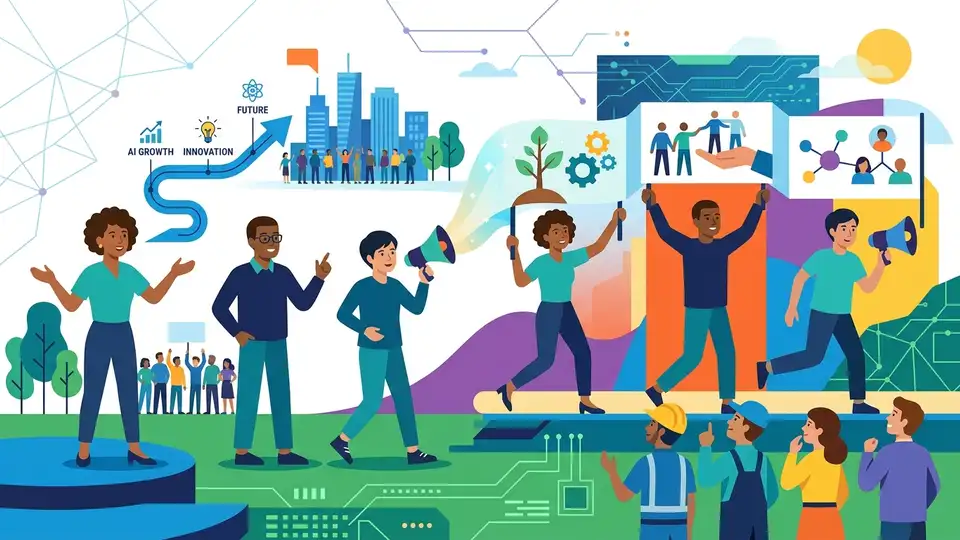
AI leaders are shifting from job-killer rhetoric to a jobs-creation pitch.
AI’s new messaging is not a moral awakening; it is a defensive repositioning, and the public should treat it that way. Sam Altman, Jensen Huang, and other industry figures are now stressing augmentation, new tasks, and human usefulness after years of language that made AI sound like a replacement machine. That shift tracks a simple reality: when a technology is sold as a system that can make people economically obsolete, voters, regulators, and politicians start planning to restrain it.
The first reason is political survival, not philosophical conversion
Get the latest AI news in your inbox
Weekly picks of model releases, tools, and deep dives — no spam, unsubscribe anytime.
No spam. Unsubscribe at any time.
The industry’s old pitch was disastrous. If the face of AI sounds like it is promising a future of mass unemployment, welfare dependency, and social upheaval, then the public will not hear innovation. They will hear threat. Polling has already moved hard against AI, with Pew and other surveys showing Americans growing more negative, and independents turning especially sour. That is not a branding problem. It is a legitimacy problem.

The response from leaders like Altman is telling. He has not suddenly become a labor romantic. He is adapting to a world where AI is becoming a political target. When Bernie Sanders starts framing AI through catastrophic risk and Donald Trump’s orbit talks about pre-release vetting of models, the industry has to stop advertising itself as a machine for replacing workers. A company that wants room to operate cannot keep chanting “we will obsolete you” and expect a friendly regulatory climate.
The second reason is that the jobs story is more credible than the doomsday story
The strongest pro-AI argument is not that AI will preserve every current occupation. It is that technology usually reshapes labor by creating new tasks, new demand, and new markets. Aaron Levie’s example is the right one: if AI makes code cheaper, firms do not simply stop needing people. They find more places to use software, which expands demand for security, compliance, analytics, governance, marketing, and product work. That is the classic induced-demand pattern, and history gives it a lot of support.
There is also a basic economic reason this matters. Most people do not live in an abstract model where “labor” is a fungible input. They live in a world of specific services, trust, taste, and coordination. If AI makes knowledge work cheaper, firms will not only cut costs. They will try to do more. That means more software, more content, more legal review, more oversight, and more human judgment around the edges. The claim that AI only destroys work ignores how businesses actually behave when a bottleneck gets cheaper.
The counter-argument
The best objection is that this time really is different. If AI becomes broadly capable across most economically valuable tasks, then the old “new tasks will appear” pattern breaks down. At some point, comparative advantage shrinks if machines dominate more domains, and the human share of value could collapse. That is why some critics hear the jobs-creation pitch as wishful thinking. They do not think the industry is wrong about the next five years. They think it is lying about the long run.
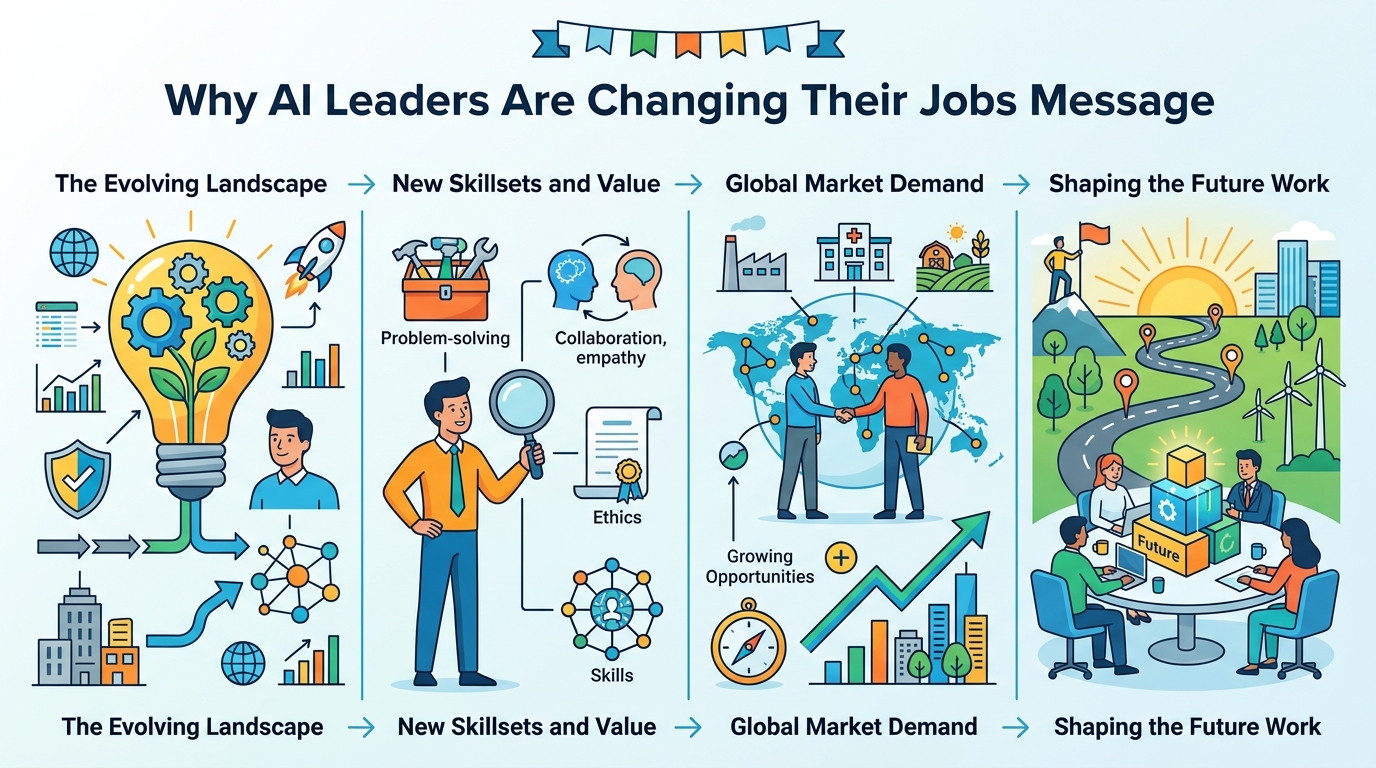
That objection deserves respect, but it does not excuse the current rhetoric from AI leaders. The public is not being asked to vote on a sci-fi end state. It is being asked to judge real products, real labor markets, and real corporate power. On those questions, the doomsday framing is both unnecessary and self-defeating. Even if long-run automation risk is real, leading with “we will replace you” is a terrible way to build consent for deployment. The honest position is narrower: AI will displace some work, create other work, and remain politically acceptable only if it is presented as a tool for augmentation, not a declaration of human redundancy.
What to do with this
If you are an engineer, PM, or founder, stop pitching AI as a replacement for people and start shipping it as a multiplier for specific workflows. Show the task it removes, the task it creates, and the human role that remains essential. If you cannot explain the labor market effect of your product without sounding like a threat, you are not ready for broad adoption. The winning message is not “we make humans unnecessary.” It is “we make humans more capable, and we can prove it.”
// Related Articles
- [IND]
WebX 2026 turns speaker hype into a conference brief
- [IND]
AI Weekly: 2026-07-06 ~ 2026-07-13
- [IND]
The AI Act should be treated as Europe’s operating system for AI
- [IND]
Booz Allen’s OpenAI Deal Is Real Advantage, Not Hype
- [IND]
OpenSearch’s vector search benchmark in 5 parts
- [IND]
Vector Databases That Work in Production