Why AI music is flooding streaming platforms, but listeners are rejec…
AI music is gaining distribution fast, but listener trust and demand are falling.
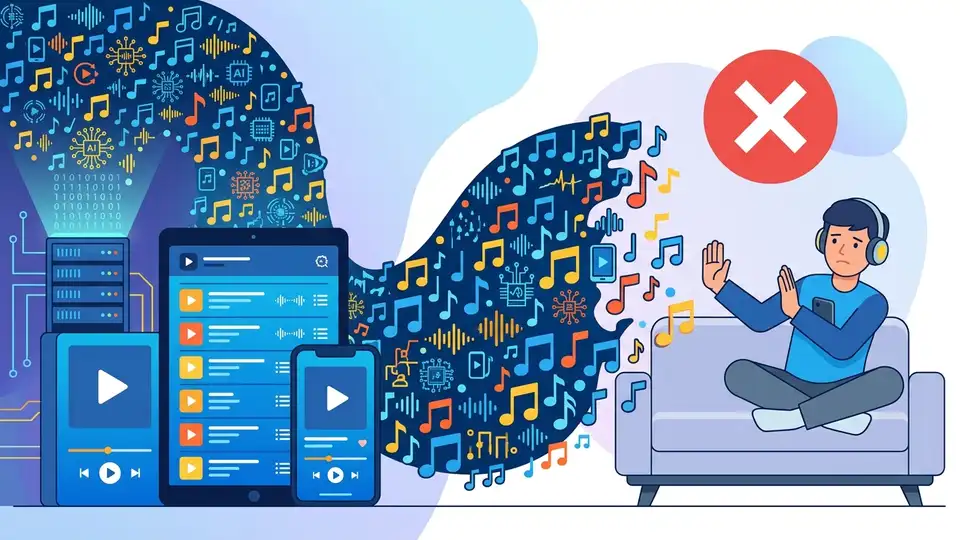
AI music is spreading across streaming services, and listeners are liking it less.
AI-generated songs are no longer a novelty tucked into niche corners of the internet. They are landing on mainstream streaming platforms, moving through recommendation systems, and showing up beside human-made tracks with the same cover art, metadata, and playlist placement. That distribution advantage is real. But the audience response is moving in the opposite direction: the more listeners encounter AI music, the less they want it. That is the important story here, because streaming is not won by upload volume alone. It is won by repeat listening, saves, shares, and trust.
First, scale does not equal acceptance
Get the latest AI news in your inbox
Weekly picks of model releases, tools, and deep dives — no spam, unsubscribe anytime.
No spam. Unsubscribe at any time.
Streaming platforms reward supply. If a tool can generate hundreds of tracks in a day, the catalog fills up fast, and that creates the illusion of momentum. Suno and Udio have become the clearest symbols of this shift: they can turn prompts into polished songs quickly enough to flood the market with near-instant content. But a bigger catalog does not mean a better listener experience. It means more noise unless the audience decides those tracks are worth keeping in rotation.
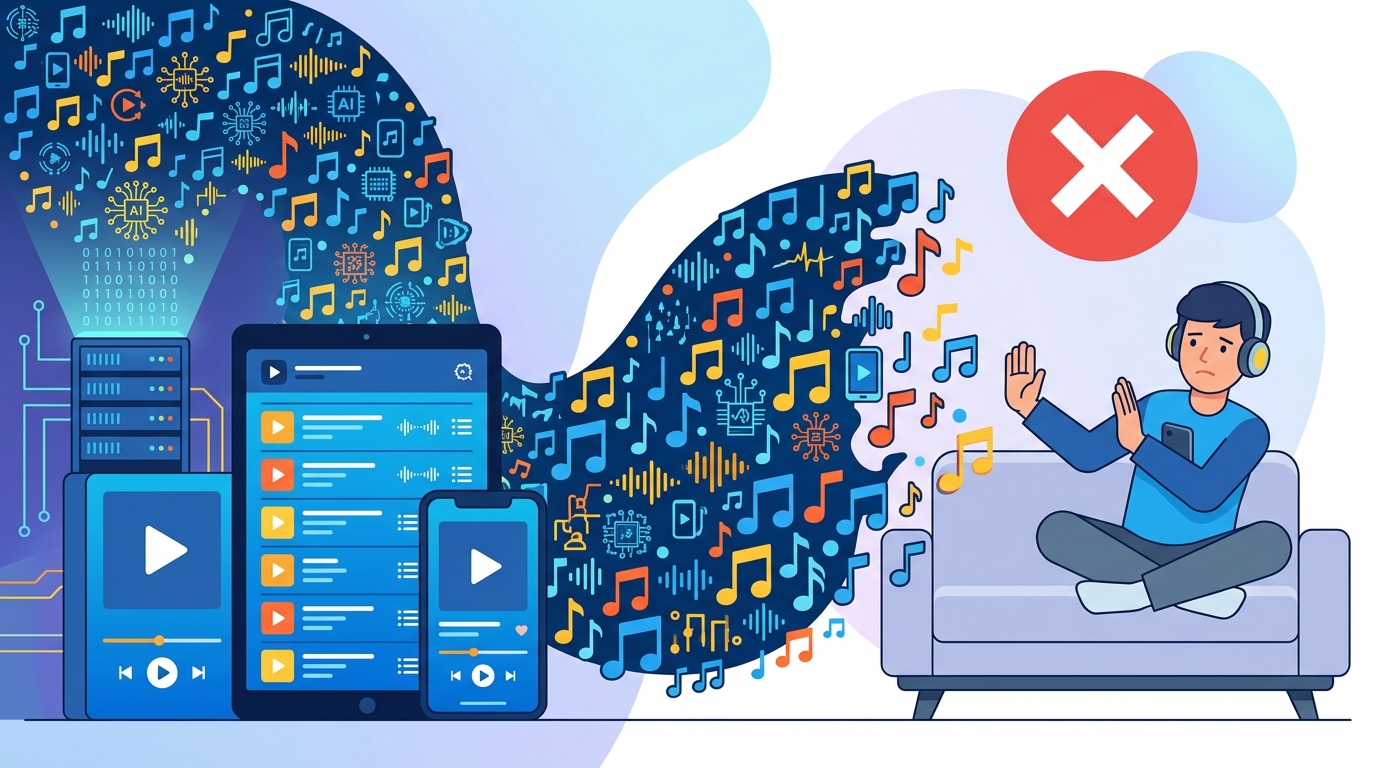
The NPR report points to a study showing listeners dislike AI music more as they understand what it is. That matters because the platform mechanics are blind to provenance until the user notices. A track can be technically competent and still fail the most basic test in music: people do not want to hear it again. When the audience’s judgment hardens against the category itself, scale becomes a liability, not a moat.
Second, copyright conflict is not just a legal issue, it is a product problem
Major AI song generators have already been hit with copyright lawsuits over training on artists’ music without authorization. That is not background noise. It shapes how listeners interpret the product. When a service is associated with taking from artists without consent, the music it produces arrives with a trust deficit before the first note plays. For a consumer product, that is poison.
The labels and publishers lining up around the issue, including Warner Music Group and Universal Music Group, reinforce the same point: the industry is treating unauthorized training as a structural threat, not a temporary dispute. If the music ecosystem’s biggest rights holders are fighting the model at the source, users hear a simple message. This is not an authentic new creative lane. It is extraction dressed up as convenience. That perception lowers tolerance fast, especially in a medium where emotional connection is the whole business.
The counter-argument
Supporters of AI music make a serious case. They argue that listeners do not care how a song is made if it sounds good, and that every new format starts with skepticism before becoming normal. They also point out that streaming already overproduces mediocre human music, so AI is not uniquely guilty of flooding platforms. In that view, the market will sort the winners from the rest, and the best AI songs will survive on merit alone.
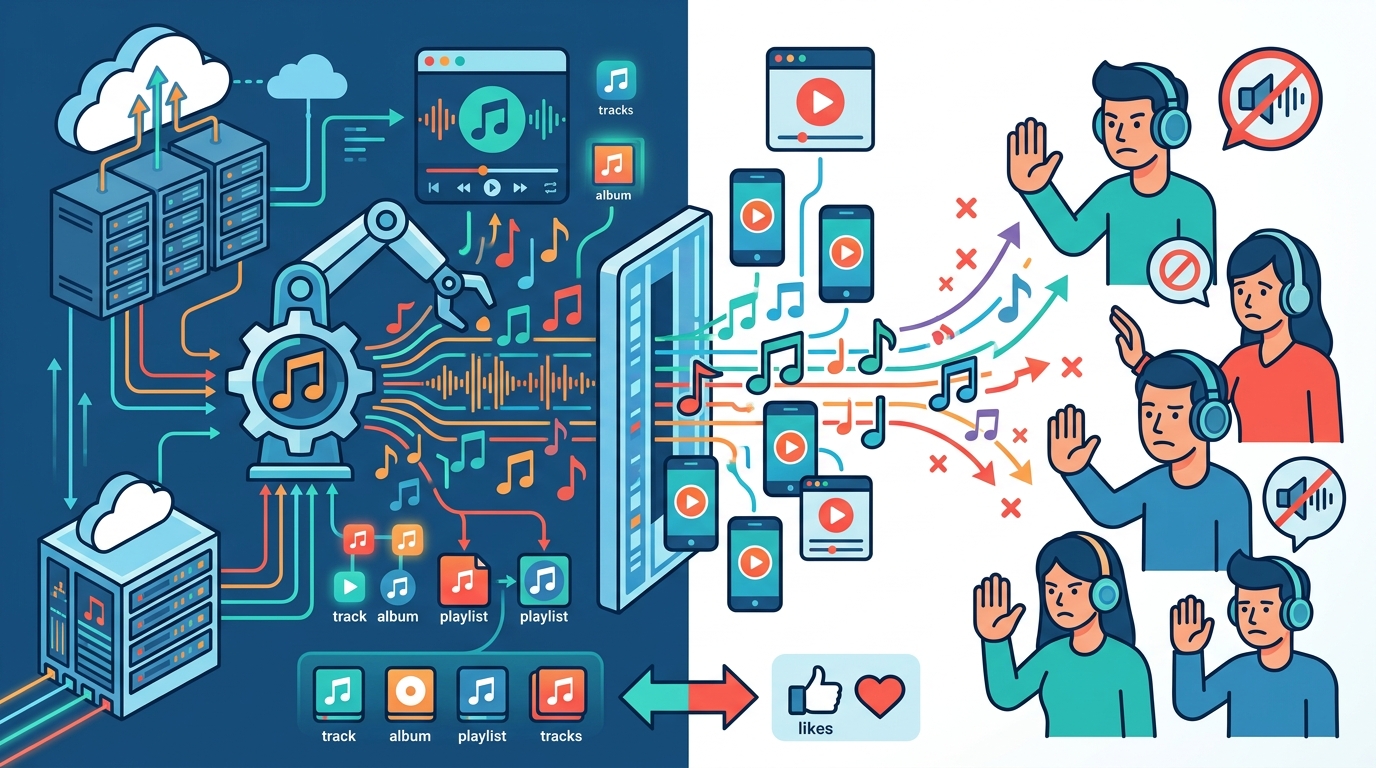
That argument is strongest when AI is used as a tool inside human-led creation, not as a replacement for it. The problem is that the current wave is not arriving as a subtle assistive layer. It is arriving as mass generation at industrial scale, often with unresolved rights questions attached. The listener backlash is therefore rational, not nostalgic. People are not rejecting software. They are rejecting a content model that looks cheap, impersonal, and ethically compromised. If AI music wants broad acceptance, it has to earn trust first. Right now it is losing it.
What to do with this
If you are an engineer, PM, or founder building in music, stop optimizing for output volume and start optimizing for provenance, consent, and listener value. Make training data auditable. Make human contribution visible. Build products that help artists create faster without erasing authorship. If you are shipping an AI music feature, treat trust as a core metric alongside retention. In this market, the fastest path to adoption is not more songs. It is clearer rights, stronger identity, and a reason for listeners to believe the music belongs there.
// Related Articles
- [IND]
WebX 2026 turns speaker hype into a conference brief
- [IND]
AI Weekly: 2026-07-06 ~ 2026-07-13
- [IND]
The AI Act should be treated as Europe’s operating system for AI
- [IND]
Booz Allen’s OpenAI Deal Is Real Advantage, Not Hype
- [IND]
OpenSearch’s vector search benchmark in 5 parts
- [IND]
Vector Databases That Work in Production