Why Anthropic’s safety-first brand is no longer enough
Anthropic’s safety-first posture no longer matches its scale, customers, or political exposure.
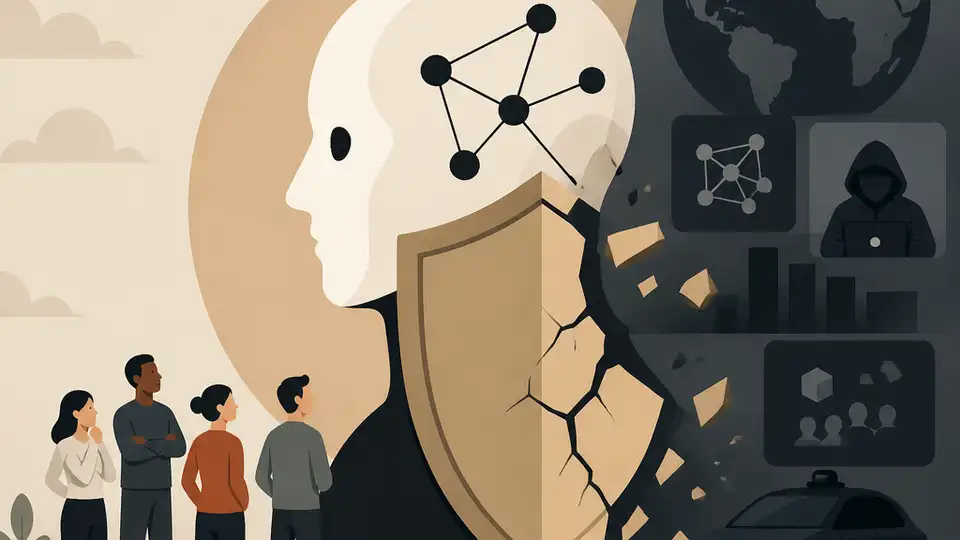
Anthropic’s safety-first posture no longer matches its scale, customers, or political exposure.
Anthropic should stop selling itself as the clean alternative to big AI, because its business now looks like the same power concentration with a better moral story. The company is valued at an estimated $380 billion, runs a 2,500-person operation, and has moved from a cautious Claude launch to a product line that spans chat, coding, desktop apps, cloud partnerships, and government use. By 2026, Claude was not just a research artifact with safety language around it; it was embedded in national security work, tied to major cloud infrastructure, and central to a company that openly competes on capability as much as restraint.
Anthropic’s safety pitch has been overtaken by its own growth
Get the latest AI news in your inbox
Weekly picks of model releases, tools, and deep dives — no spam, unsubscribe anytime.
No spam. Unsubscribe at any time.
In 2022, Anthropic delayed the release of the first Claude model because it wanted more internal safety testing and feared triggering a dangerous race. That story mattered then because it showed a company willing to trade speed for caution. But the company that exists now is not the same one. It has shipped Claude 4, launched web search, pushed Claude Code to general availability, introduced desktop apps, and expanded into products that are clearly built for broad adoption, not narrow lab use. The safety narrative still appears in the branding, but the operational reality is scale, speed, and market capture.
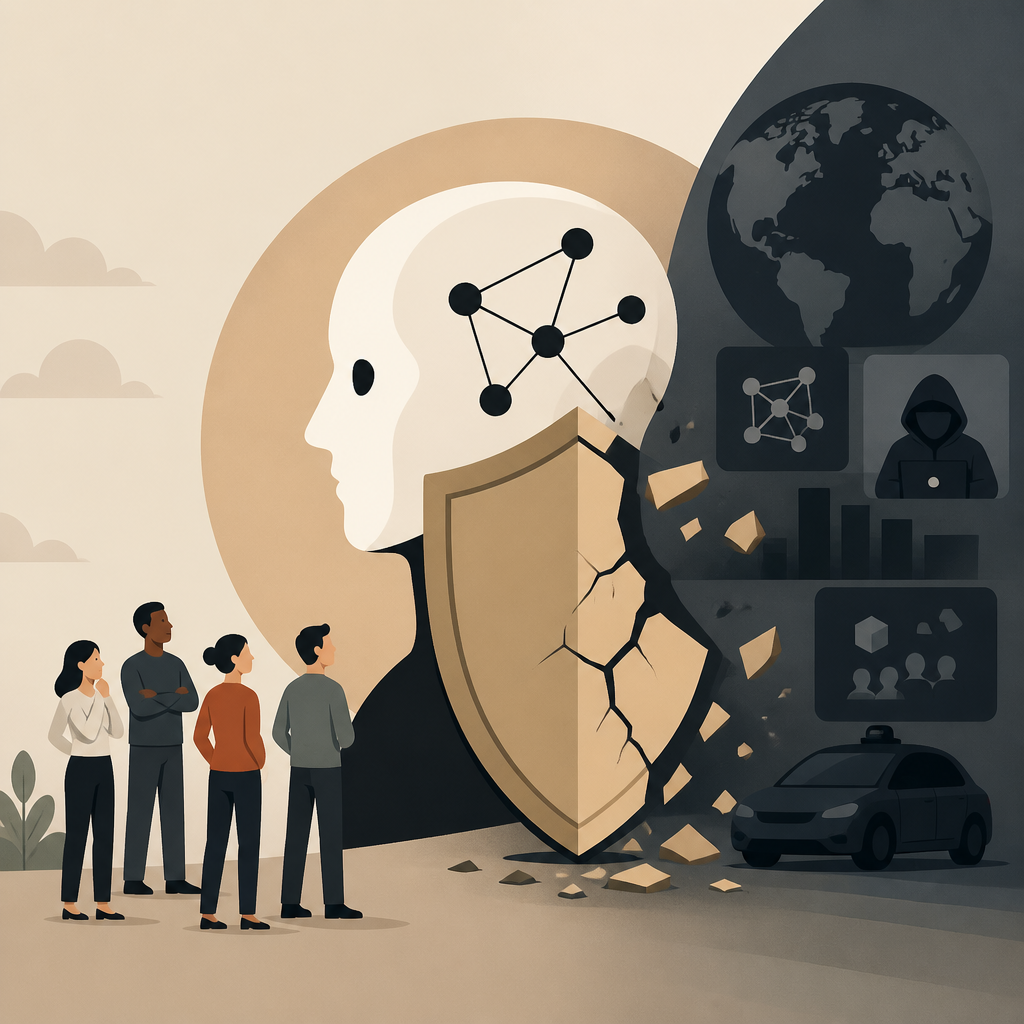
The clearest sign is that Anthropic now behaves like a platform company with a full-stack go-to-market machine. It runs a public benefit corporation, yes, but it also has a board, a long-term benefit trust, major cloud dependencies, and a growing list of commercial partnerships. Amazon, Google, Microsoft, Nvidia, Snowflake, and others have all become part of the story. That is not a criticism of the business model by itself. It is a criticism of the mismatch between the company’s self-description and its actual role. Safety remains a real concern, but it is no longer the company’s defining constraint. Growth is.
Its government and defense work makes the moral branding ring hollow
Anthropic’s national security footprint is now too large to dismiss as incidental. In June 2025, it announced Claude Gov, and reporting at the time said it was already in use at multiple U.S. national security agencies. By February 2026, its partnership with Palantir made Claude the only AI model used in classified missions. That is a major shift in what the company is. A firm that markets itself on caution and alignment is now directly inside the machinery of state power, where the stakes are not abstract prompts and chatbot guardrails but intelligence, surveillance, and operational decision-making.
The company’s 2026 dispute with the U.S. Department of Defense sharpened the contradiction rather than resolving it. Anthropic refused a demand to remove contractual restrictions against domestic surveillance and fully autonomous weapons, and the DoD responded by labeling it a supply chain risk. On one level, that refusal deserves credit. On another, it shows the company is already deep enough in defense work to be arguing over the terms of military deployment, not whether it should be there at all. Once a company is negotiating the boundaries of classified use, it is no longer credible to present itself as operating outside the power structure.
Anthropic’s product strategy is now capability-first in practice
Claude Code, Claude Cowork, Model Context Protocol connectors, web search, and the broader Claude family all point in the same direction: Anthropic is building tools that increase agentic autonomy and workflow automation. That is commercially rational. It is also a departure from the old safety-first framing. The company is not merely making a model that answers questions more carefully than rivals. It is building systems that read files, edit code, connect to external services, and act across tasks. The more useful these products become, the more they resemble infrastructure. Infrastructure changes incentives. Once users depend on it, restraint becomes harder to preserve.
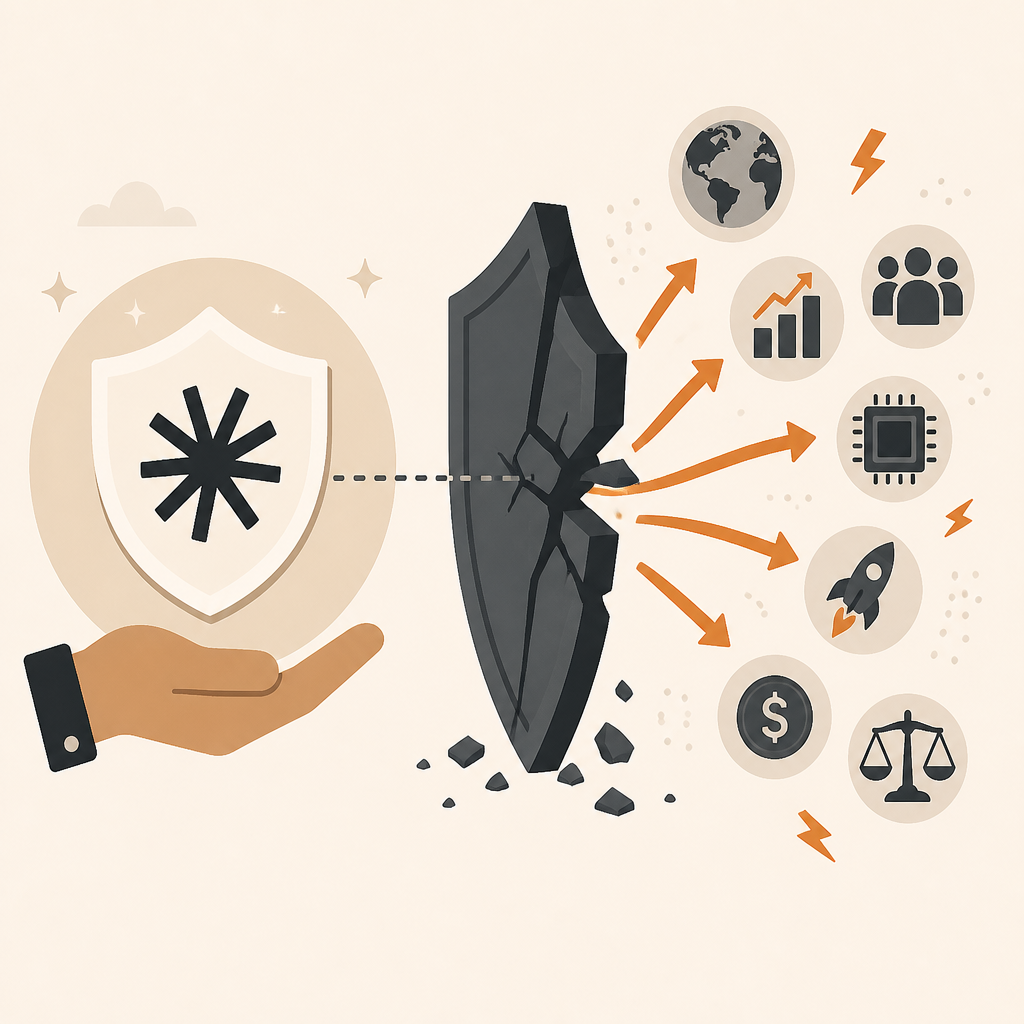
Anthropic’s own history shows how quickly capability pressure wins. It hired high-profile OpenAI researchers, released Claude 4 in 2025, and kept adding features that make the model more embedded in daily work. It also faced a November 2025 incident in which hackers allegedly used Claude for automated cyberattacks against around 30 organizations by pretending the activity was defensive testing. That matters because it demonstrates the central problem with frontier AI companies: every safety improvement expands trust, and every trust improvement expands deployment. The company can say it wants responsible use, but the product roadmap keeps pushing toward deeper integration, broader access, and higher leverage.
The counter-argument
Steelman the other side: Anthropic is still the best case for responsible frontier AI. It is a public benefit corporation. It has a Long-Term Benefit Trust designed to protect long-horizon public interest. It refused to relax military restrictions when pressured. It has invested heavily in interpretability, Constitutional AI, and safety research. Compared with rivals that chase hype or ad-driven engagement, Anthropic looks serious, disciplined, and unusually willing to impose limits on itself.
That argument is not trivial. In an industry where many firms treat guardrails as public relations, Anthropic has done more than most to build institutional checks. It has also taken real commercial risks by saying no to some uses and by keeping Claude ad-free. If the standard is “which frontier lab is least reckless,” Anthropic is near the top.
But that is a narrow standard, and it is not the one the company invites. Anthropic does not merely claim to be less reckless; it presents itself as the AI company that understands the stakes better than everyone else. That claim fails once the company is deeply embedded in defense, classified missions, hyperscaler supply chains, and mass-market agent tooling. Safety work can coexist with scale, but it does not erase the fact that the company is now part of the same concentration of power it once warned against. The limit is simple: Anthropic can be the most responsible frontier lab and still be a frontier lab whose growth has outrun its moral framing.
What to do with this
If you are an engineer, stop treating Anthropic as a proxy for “safe by default” and evaluate Claude the way you would any high-leverage platform: by deployment context, data access, failure modes, and who controls the keys. If you are a PM, assume that every integration with Claude Code, MCP, or enterprise Claude will increase dependency faster than governance can catch up, and design for exit paths, auditability, and human override from day one. If you are a founder, do not copy Anthropic’s branding without copying its discipline; the real lesson is that safety claims only matter when they stay credible after scale, contracts, and customers start pulling in the opposite direction.
// Related Articles
- [IND]
WebX 2026 turns speaker hype into a conference brief
- [IND]
AI Weekly: 2026-07-06 ~ 2026-07-13
- [IND]
The AI Act should be treated as Europe’s operating system for AI
- [IND]
Booz Allen’s OpenAI Deal Is Real Advantage, Not Hype
- [IND]
OpenSearch’s vector search benchmark in 5 parts
- [IND]
Vector Databases That Work in Production