Why Caitlin Clark’s Morgan Wallen walkout was a bad look
Caitlin Clark’s Morgan Wallen walkout was a bad look because it handed critics an avoidable distraction after a Fever loss.
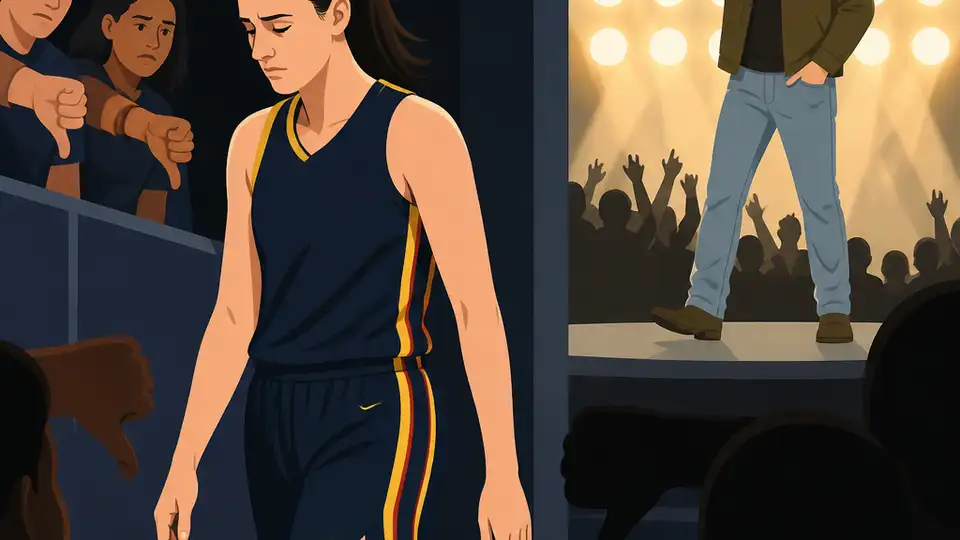
Caitlin Clark’s Morgan Wallen walkout was an avoidable distraction after a Fever loss.
Caitlin Clark should not have joined Morgan Wallen’s signature walkout after the Fever’s season-opening loss.
The reaction was predictable for a reason: Clark had just missed a chance to tie the game, Indiana had lost 107-104, and social media instantly turned the concert cameo into a referendum on judgment, optics, and priorities. That is the problem with star athletes in the modern attention economy. Every public move gets folded into the game narrative, and this one made the loss feel bigger, not smaller.
First, the timing made the whole thing look careless
Get the latest AI news in your inbox
Weekly picks of model releases, tools, and deep dives — no spam, unsubscribe anytime.
No spam. Unsubscribe at any time.
Clark posted 20 points, seven assists, and five rebounds, which should have been the headline from a hard-fought opener. Instead, the walkout became the image people shared. When a player leaves the court narrative to appear in a celebrity entrance right after a defeat, the story stops being about basketball and becomes about what the player values in the moment.
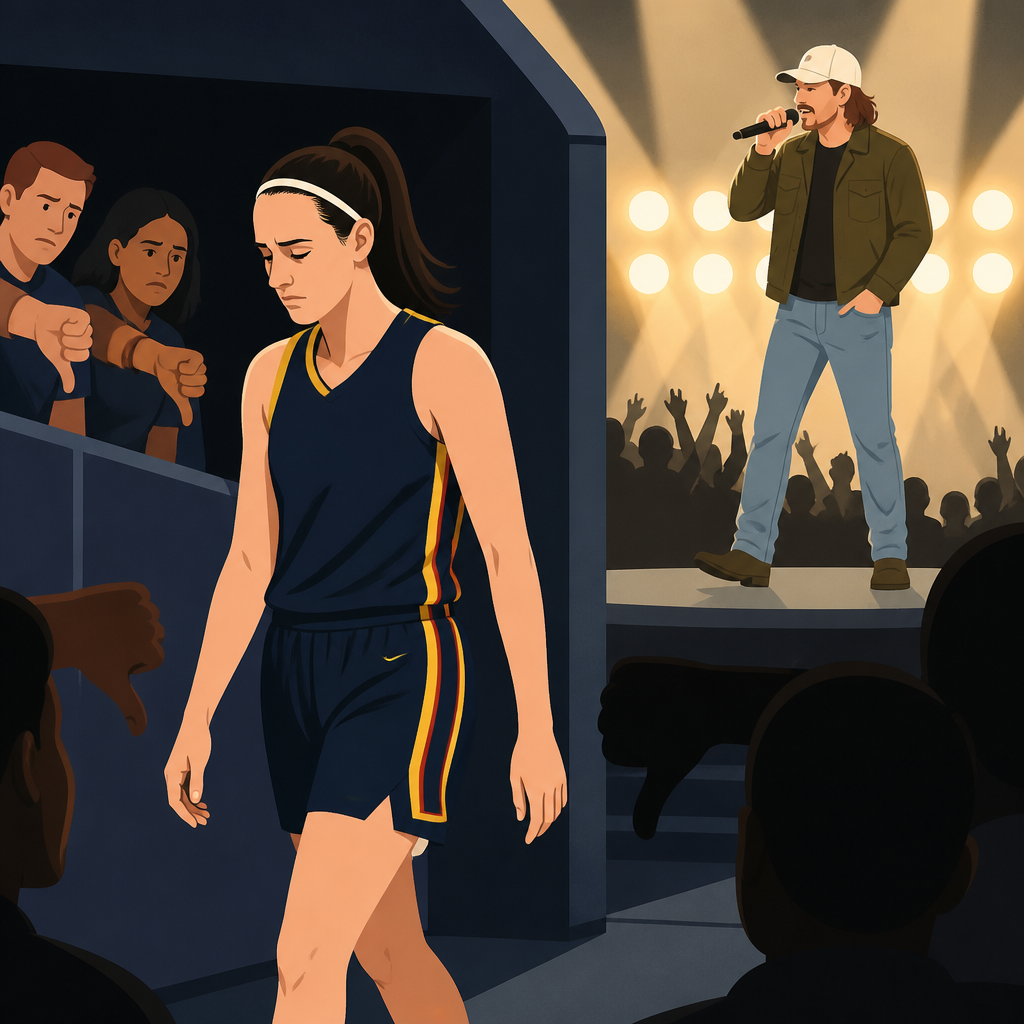
The timing matters even more because Clark had just returned from injury issues that limited her to 13 games the prior season. Fans were watching her health, her minutes, and her team’s start closely. In that context, a flashy public appearance reads as tone-deaf, even if the player feels fine and the appearance was brief. The point is not that athletes must disappear after losses. The point is that they should not volunteer for a distraction when the team is already under a microscope.
Second, the Wallen connection was always going to dominate the discussion
Morgan Wallen is not a neutral celebrity cameo. He has carried baggage since a 2021 video captured him using a racial slur, and that history guarantees scrutiny whenever he is placed next to another high-profile figure. Clark did not create that controversy, but she chose to step into it, and that choice invited an unnecessary debate about endorsement by association.
The defense that this was just a concert entrance misses how celebrity ecosystems work. Fans do not separate the moment from the person. They read symbolism into it, and in this case the symbolism was obvious: a league face of the WNBA standing beside a singer whose name still triggers controversy. Even teammates praising the moment does not fix the larger issue. It only proves how quickly sports culture normalizes what should have stayed off the court.
The counter-argument
The strongest defense is simple: Clark is not a mascot for moral purity, and she has no obligation to manage every outsider’s outrage. She is allowed to attend a concert, support a performer, and enjoy a night off. Fans who want her to live under a permanent PR lockdown are asking for something impossible and unfair.
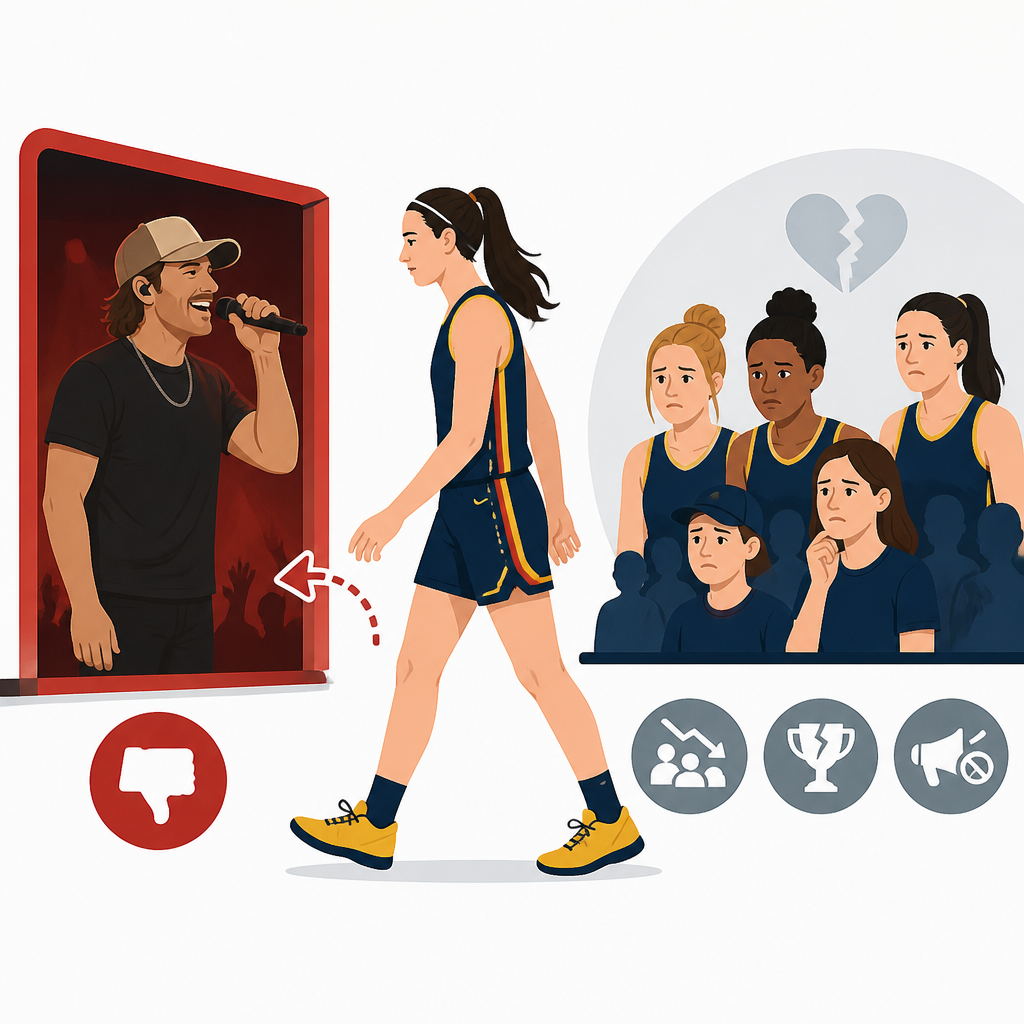
That argument is real, and it deserves respect. Athletes are people, not corporate press releases, and constant self-censorship drains the personality that makes them compelling. Clark also did not say anything offensive, did not endorse Wallen’s past conduct, and did not break any rule by walking out for a concert intro.
But the rebuttal is stronger: freedom of movement is not freedom from consequence. Clark is not an average player with a normal profile; she is one of the most watched athletes in America. When a superstar with that level of attention chooses a moment that predictably pulls focus from a team loss and a polarizing celebrity, the backlash is not unfair. It is the cost of the choice. She had every right to do it, and the public had every right to judge it as a mistake.
What to do with this
If you are an athlete, coach, or team executive, treat optics as part of performance, not an afterthought. The rule is simple: after a loss, avoid any public appearance that can be framed as celebration, especially one tied to a controversial figure. If you are Caitlin Clark’s camp, the better move is to keep the focus on health, recovery, and the next game. Stars do not need to live cautiously, but they do need to understand that every extra spotlight compounds the last one. In this case, the spotlight was unnecessary, and the reaction proved it.
// Related Articles
- [IND]
Rust Hiring Spikes in HN’s May 2026 Roundup
- [IND]
Why Anthropic’s safety-first brand is no longer enough
- [IND]
Caitlin Clark misses WNBA All-Star Game with injury
- [IND]
Clark’s late 3 forces OT, but Fever fall to Mystics
- [IND]
Why Caitlin Clark Is Bigger Than a Box Score
- [IND]
Why Anthropic’s legal plugins matter more than another chatbot launch