Why Bitcoin Regulation Should Be Treated as a National Security Issue
Bitcoin regulation should be treated as a national security issue, not just a consumer protection problem, because vague rules push innovation offshore, weaken U.S. influence, and leave strategic ground open to China.

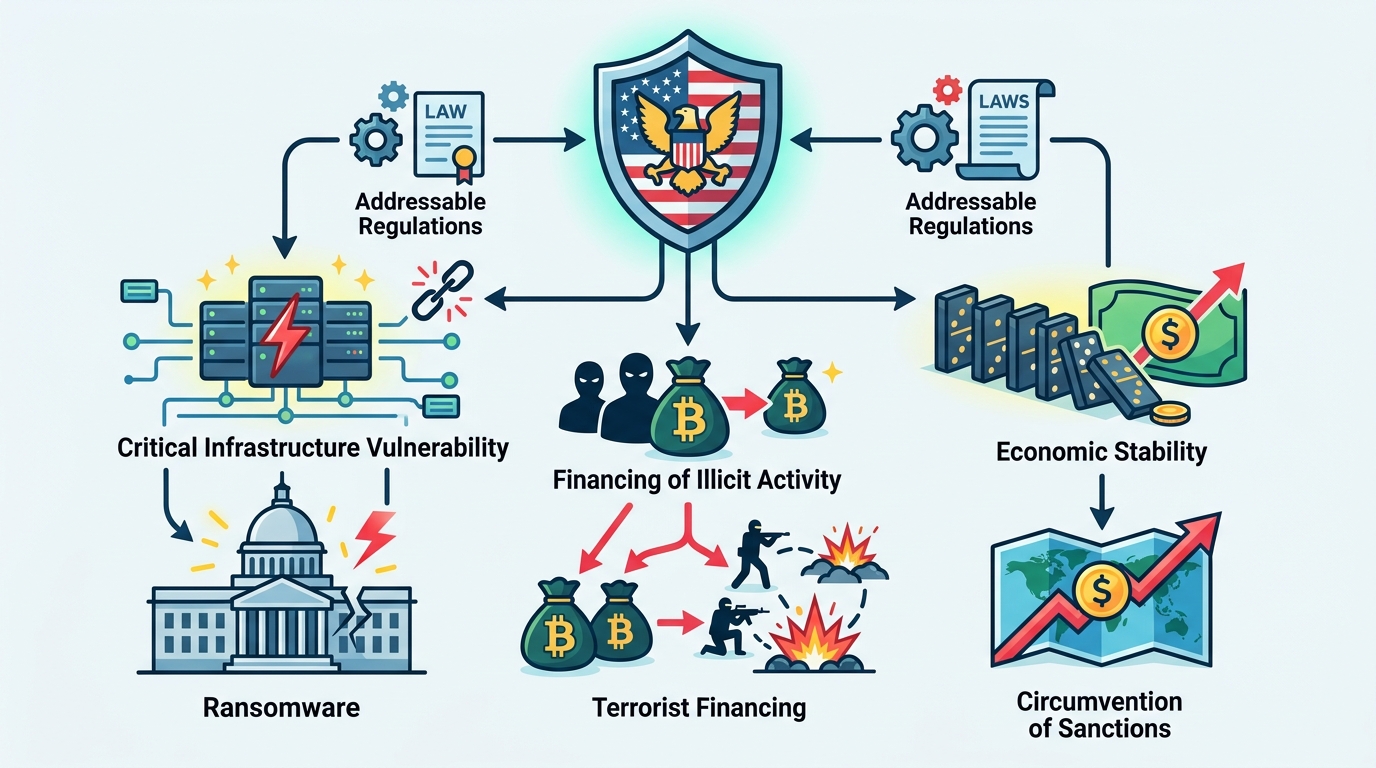
Bitcoin regulation belongs in the national security conversation because the U.S. is already competing with China for control over the rails of digital finance, and ambiguity is a policy failure that hands leverage to rivals. The panel at the Bitcoin 2026 Conference made that point bluntly: Reps. Mariannette Miller-Meeks, Zach Nunn, and Mike Lawler all argued that America needs a clear federal framework if it wants to keep talent, capital, and infrastructure inside its borders. That is not crypto hype. It is a recognition that the next financial stack will be shaped by jurisdictions that move fastest, and the U.S. cannot afford to regulate as if Bitcoin were a niche hobby instead of a strategic technology.
First argument: unclear rules are a competitive liability
Get the latest AI news in your inbox
Weekly picks of model releases, tools, and deep dives — no spam, unsubscribe anytime.
No spam. Unsubscribe at any time.
The strongest case for treating Bitcoin policy as strategic is that regulatory uncertainty drives companies to build elsewhere. Lawler’s call for a comprehensive federal framework matters because the current patchwork already forces firms to navigate different state rules, uneven enforcement, and shifting tax treatment. When founders and miners cannot predict the rules, they do what every rational business does: they look for friendlier jurisdictions. That does not just affect one sector. It affects the location of engineers, compliance teams, capital formation, and the supporting services that cluster around them.

The mining tax issue is a good example. Nunn criticized what he called double taxation for mining operations, and whether one agrees with his framing or not, the underlying point is real: if the U.S. makes productive activity more expensive than competing countries do, that activity moves. Mining is especially mobile. Power costs, tax treatment, and permitting rules can shift a site decision quickly, which means the policy signal matters more than the press release. If Washington wants domestic infrastructure, it has to make domestic operation viable, not merely patriotic.
Second argument: Bitcoin policy now has geopolitical consequences
Republicans on the panel were right to connect Bitcoin policy to China because digital assets are part of a broader contest over financial infrastructure. If adversaries can develop deeper expertise, more mining capacity, or more influence over digital settlement systems while the U.S. dithers, America will be reacting from behind. Nunn’s warning about national security risk is not abstract. Strategic sectors often begin as commercial markets before they become geopolitical assets, and digital finance is following that pattern fast.
Miller-Meeks’ emphasis on financial democracy is also politically useful because it reminds policymakers that Bitcoin is not only about speculation. For people in fragile situations, access to assets outside centralized control can be practical, not ideological. She referenced women facing domestic abuse and the need for financial autonomy, and that example matters because security policy is not only about tanks and satellites. It is also about whether citizens can store value and transact without unnecessary gatekeepers. A country that understands that reality will design stronger systems than one that only sees crypto as a threat to be contained.
The counter-argument
The best objection is that national security rhetoric can become a cover for loose regulation. Bitcoin is volatile, scams remain common, and consumer harm is real. A rushed federal framework could legitimize weak standards, invite lobbying from entrenched players, and create the illusion of safety without addressing fraud, custody risk, or market manipulation. Critics are right to worry that framing every crypto policy choice as a race against China can flatten important distinctions between useful innovation and reckless speculation.
There is also a legitimate concern that lawmakers may overcorrect and turn Bitcoin policy into industrial policy by another name. If the goal becomes “win against China” at all costs, Congress may excuse bad economics, weak disclosures, or tax carveouts that benefit incumbents more than the public. That is a real danger, and it should not be dismissed.
Still, the counter-argument stops short of disproving the national security case. The answer is not to pretend Bitcoin is irrelevant to strategy. The answer is to write rules that are clear, enforceable, and limited in scope: protect consumers, define tax treatment, set custody standards, and give firms a stable federal baseline. That approach accepts the risk of overreach while rejecting the bigger mistake of regulatory paralysis. Ambiguity does not protect the public. It protects the status quo and sends innovation abroad.
What to do with this
If you are an engineer, founder, or PM building in crypto or adjacent infrastructure, plan for regulation as a design constraint, not a later-stage annoyance. Build compliance into product architecture, document custody and risk controls early, and assume that federal clarity will arrive unevenly before it arrives cleanly. If you are a founder, choose jurisdictions and partners with stable power, predictable tax treatment, and serious legal support. If you are a product leader, treat policy literacy as part of the roadmap. The companies that survive the next phase will be the ones that can ship fast without pretending regulation is someone else’s problem.
// Related Articles
- [IND]
WebX 2026 turns speaker hype into a conference brief
- [IND]
AI Weekly: 2026-07-06 ~ 2026-07-13
- [IND]
The AI Act should be treated as Europe’s operating system for AI
- [IND]
Booz Allen’s OpenAI Deal Is Real Advantage, Not Hype
- [IND]
OpenSearch’s vector search benchmark in 5 parts
- [IND]
Vector Databases That Work in Production