Why Geminigen AI Is Just Another Generative AI Wrapper
Geminigen AI is presented as a broad generative AI concept, but it adds no clear technical edge or product identity.

Geminigen AI is a vague generative AI label, not a distinct platform with proven differentiation.
Geminigen AI is not a meaningful product category, and the Blockchain Council article proves it by describing a general generative AI stack rather than a specific, defensible system. The piece leans on familiar claims about text generation, automation, personalization, multimodal input, and continuous learning, but none of those traits are unique anymore. By the end, what remains is a marketing wrapper around capabilities that already define the broader AI market.
First argument: the name describes a category, not a product
Get the latest AI news in your inbox
Weekly picks of model releases, tools, and deep dives — no spam, unsubscribe anytime.
No spam. Unsubscribe at any time.
The article admits that Geminigen AI “may not refer to a single globally standardized product,” which is the core problem. If a term cannot identify one system, one vendor, or one technical architecture, then it is not a product people can evaluate. It is a label stretched over the entire generative AI field, and that makes every feature claim slippery from the start.

That vagueness matters because serious buyers need something concrete: model family, deployment model, data controls, latency, pricing, and failure modes. Instead, the article gives a tour of generic AI ideas, from NLP to cloud computing to “real-time insights,” as if listing common ingredients were the same as explaining the dish. It is not. The result is a brand-shaped cloud of buzzwords with no hard edges.
Second argument: the feature list is table stakes
Text generation, image generation, workflow automation, and personalization are no longer differentiators. They are baseline expectations for any modern AI assistant or generative platform. Even the article’s “key features” section reads like a copy-paste checklist from 2023, when these capabilities were novel enough to impress readers. Today, they are the minimum bar.
The same weakness shows up in the article’s examples. Content creation, software development, digital marketing, education, and business automation are all valid use cases, but they are also the most common use cases for every general-purpose AI tool on the market. Without a specific strength, such as better retrieval, stronger guardrails, lower cost, or a domain-specific model, Geminigen AI is interchangeable with dozens of other products.
The counter-argument
To be fair, the article is trying to do something broader than review a single app. It frames Geminigen AI as a shorthand for the next phase of generative AI, where systems combine machine learning, NLP, deep learning, and cloud infrastructure into one usable layer. That framing has value for beginners, because it lowers the barrier to understanding how modern AI products are assembled and why they matter in business contexts.
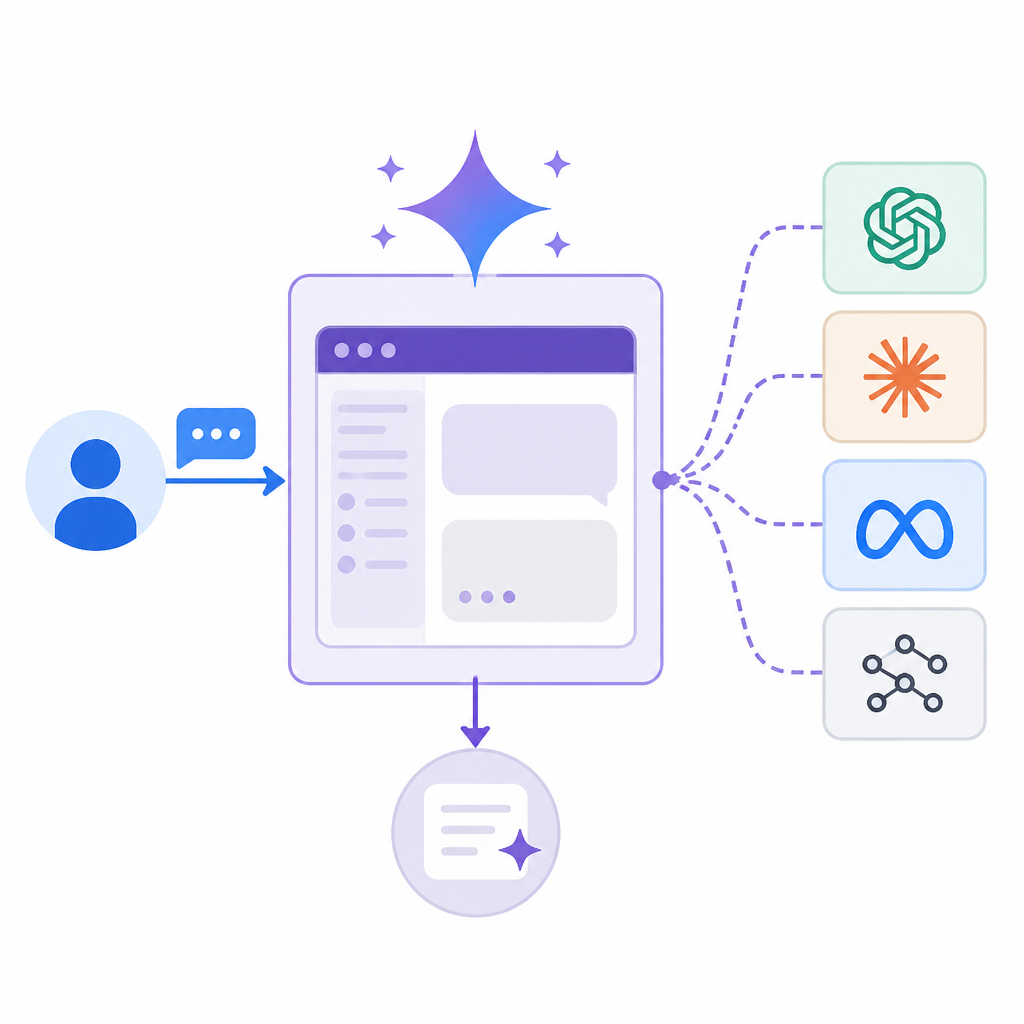
There is also a practical argument for loose naming. In a fast-moving market, many teams use umbrella terms before a brand or standard crystallizes. A broad label can help nontechnical readers talk about a class of tools without getting lost in vendor specifics. For an educational publisher, that is a defensible editorial choice.
But that defense only goes so far. Once a term is used in a way that implies a product, the article has a duty to separate concept from implementation. This piece does not do that. It blurs the line between a category and a platform, then piles on generic benefits, generic risks, and generic future trends. That is not clarity. It is ambiguity dressed up as explanation.
What to do with this
If you are an engineer, PM, or founder, treat articles like this as top-of-funnel education, not procurement guidance. Use them to map the vocabulary of the market, then immediately replace the label with hard questions: What model powers it? What data does it use? How is output evaluated? What is the failure rate by language? What is actually proprietary? If those answers are missing, the product is not differentiated, no matter how polished the content sounds.
// Related Articles
- [IND]
OpenAI updates its Europe privacy policy
- [IND]
OpenAI is right to keep ads out of sensitive chats
- [IND]
AI bootlegs are already draining streaming royalties
- [IND]
AMD and Microsoft push Windows ML on GPU and NPU
- [IND]
OpenAI’s IPO filing turns hype into scrutiny
- [IND]
Skatteetaten proves public sector AI should be judged by outcomes