Why TinyGo 0.41 Proves TinyGo Is Ready for Real Hardware Work
TinyGo 0.41 is not a novelty release; it is a serious signal that TinyGo belongs in real embedded and WebAssembly workflows.
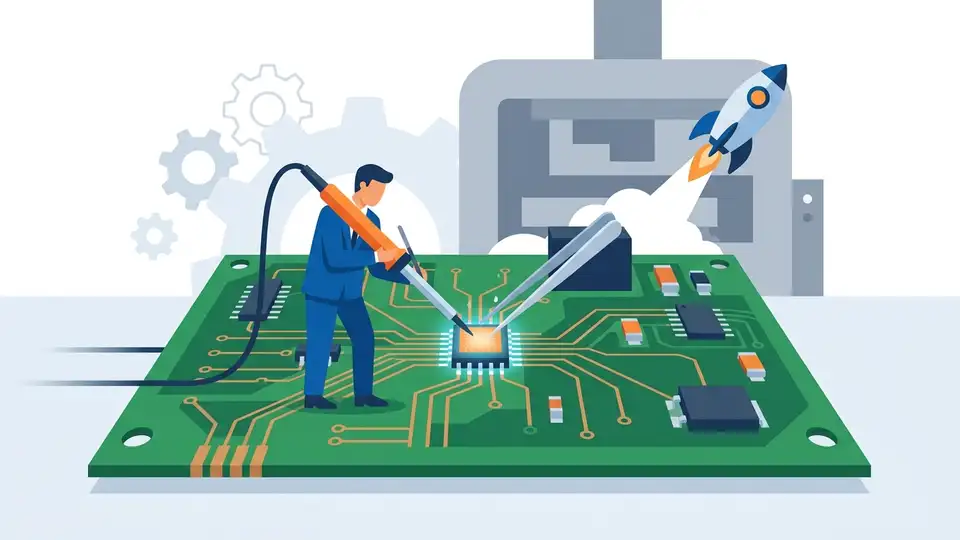
TinyGo 0.41 proves that TinyGo is ready for real hardware work, not just demos and hobby projects.
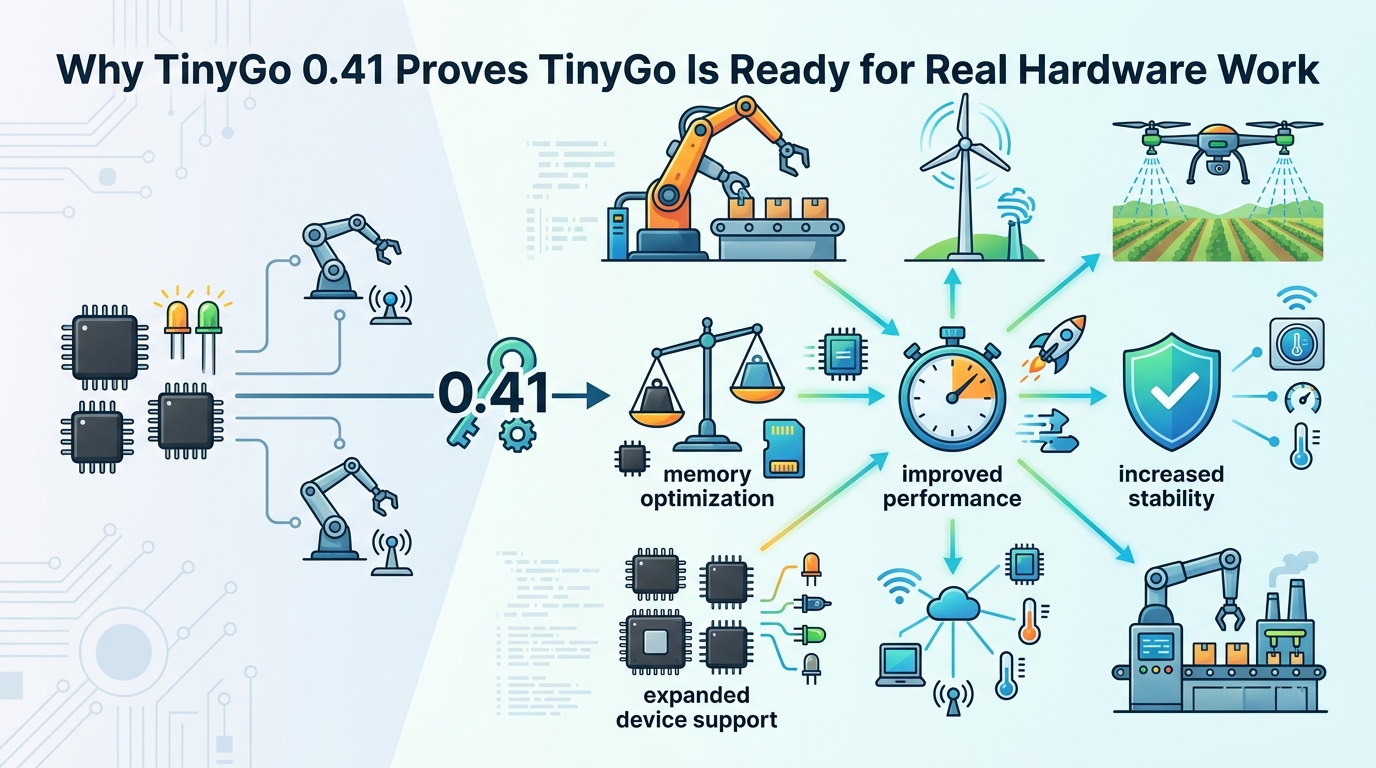
This release is not being sold on one flashy feature. It ships Go 1.26 support, wireless on ESP32-C3 and ESP32-S3, direct flashing for ESP32 boards, Arduino UNO Q support, stronger WebAssembly compatibility, and a better allocation-profiling workflow. That combination matters because it addresses the exact reasons engineers hesitate to trust a smaller toolchain: language drift, device access, debugging friction, and runtime gaps. A project that can compile the TypeScript-Go compiler, run more stdlib packages, and talk to modern boards over WiFi is no longer asking to be taken seriously. It is already operating in serious territory.
First argument: TinyGo is closing the gap between “works in theory” and “works on the board”
Get the latest AI news in your inbox
Weekly picks of model releases, tools, and deep dives — no spam, unsubscribe anytime.
No spam. Unsubscribe at any time.
The strongest evidence is the ESP32 work. TinyGo 0.41 adds wireless support for the ESP32-C3 and ESP32-S3, and that is not a cosmetic upgrade. It means a TinyGo program can now do the most important thing an embedded networked device must do: communicate without a pile of external tooling or hand-waving. The release also adds direct flashing through the new espflasher package, which removes one more layer of setup between a developer and a running device.
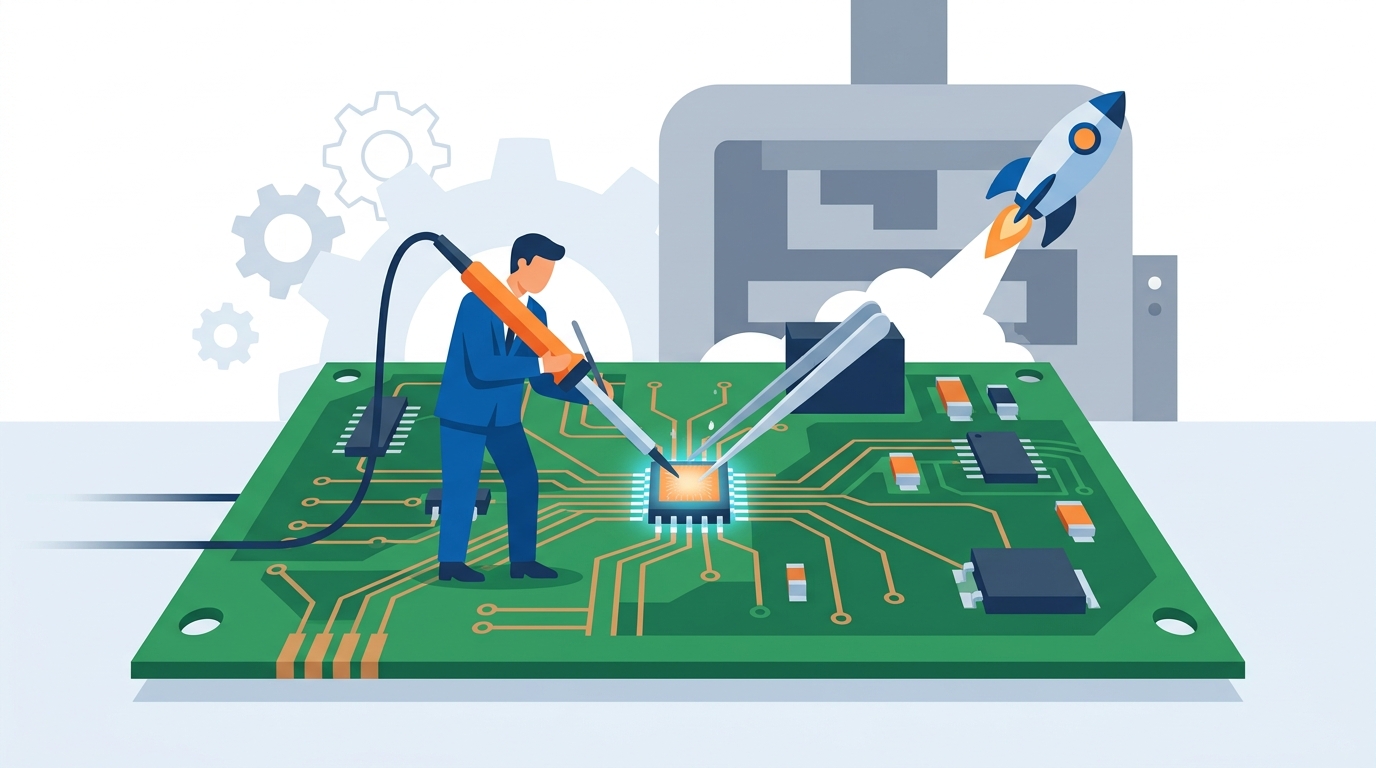
That matters because embedded adoption dies in the details. When a board needs a separate flashing path, a separate radio stack, and a separate debugging story, teams stop experimenting and start avoiding risk. TinyGo 0.41 attacks that friction directly. The release examples for the Seeed Studio XIAO-ESP32C3 and XIAO-ESP32S3 are important not because they are cute sample apps, but because they show a path from blinking LED to WiFi on the same platform. That is the difference between a language feature and a workflow.
Second argument: TinyGo is becoming a credible bridge across MCU and WebAssembly use cases
Arduino UNO Q support is the clearest sign that TinyGo is thinking beyond one class of device. The UNO Q is a hybrid board with both a Qualcomm Dragonwing QRB2210 MPU and an STM32U585 MCU, and TinyGo now supports enough of that setup to flash the STM32 side directly over USB-C with adb or over the network with ssh. It also covers GPIO, ADC, PWM, SPI, and I2C, plus the onboard LED matrix. That is not a toy feature set. That is practical control over a modern mixed-silicon board.
The WebAssembly side is just as telling. TinyGo can now compile and run the TypeScript-Go compiler, which is a strong proof point because compilers are one of the least forgiving workloads you can throw at a toolchain. The release also says more stdlib packages are functioning thanks to improved reflection support, with better WASI compatibility and browser networking. In plain terms, TinyGo is no longer only about shrinking Go for constrained devices. It is becoming a usable runtime and compilation target for serious code paths that need to move between embedded, server-adjacent, and browser environments.
The counter-argument
The skeptical view is straightforward: TinyGo 0.41 still is not full Go, and it does not pretend otherwise. The release itself admits that not all unit tests from “Big” Go are passing yet. For teams that depend on the entire standard library, heavy reflection, or exact runtime behavior, that is a real limitation. If your application needs every package, every edge case, and every compatibility guarantee from upstream Go, TinyGo is still a narrower platform.
That critique is fair, but it does not defeat the release. It actually clarifies the use case. TinyGo is not trying to replace standard Go for every workload. It is trying to make Go viable where size, hardware access, and deployment simplicity matter more than perfect parity. The important question is not whether TinyGo matches every test in upstream Go. The important question is whether it now solves enough real problems to justify adoption. On that score, 0.41 answers yes.
The improved -print-allocs output is a good example of why the gap is shrinking in the right direction. Embedded engineers spend time hunting heap use because memory pressure is not theoretical on microcontrollers. By making allocation reports easier to inspect with standard Go tooling, TinyGo reduces the cost of optimization instead of asking developers to invent their own observability. That is the kind of ergonomics improvement that turns a promising compiler into a practical one.
What to do with this
If you are an engineer, use TinyGo 0.41 for the parts of your stack where hardware access, memory discipline, and small binaries matter most, especially on ESP32 and hybrid boards like the UNO Q. If you are a PM, stop treating TinyGo as an experimental side bet and evaluate it as a production-enabling option for edge and browser-adjacent workloads. If you are a founder, the message is simple: TinyGo is now mature enough to reduce platform cost and broaden where Go can run, so build pilots around that advantage instead of waiting for perfect parity that will never be the point.
// Related Articles
- [IND]
WebX 2026 turns speaker hype into a conference brief
- [IND]
AI Weekly: 2026-07-06 ~ 2026-07-13
- [IND]
The AI Act should be treated as Europe’s operating system for AI
- [IND]
Booz Allen’s OpenAI Deal Is Real Advantage, Not Hype
- [IND]
OpenSearch’s vector search benchmark in 5 parts
- [IND]
Vector Databases That Work in Production