Pi Node V24 lets you upgrade nodes manually
Pi Network Node V24 adds manual community upgrades, giving node operators more control over syncing with official images.

Pi Node V24 lets community operators upgrade nodes manually from the official image.
I've been watching Pi Network’s node story for a while, and honestly, it’s been one of those updates that sounds small until you’ve lived through the mess it fixes. Automatic updates are nice in theory. In practice, they’re the kind of thing you only stop thinking about when they fail at the worst time. A node drifts. A version lags. Someone in the community swears their box is “running fine” while the rest of the network has moved on. Then you spend half a day figuring out whether the problem is your machine, the release channel, or the project’s own rollout process.
That’s why this Pi Network Node V24 update caught my attention. It isn’t flashy. It doesn’t pretend to be. But giving community node operators a manual path to the official image is the sort of change that makes infrastructure feel less like a black box and more like something you can actually manage. I care about that because distributed systems live or die on boring operational details. If you can’t control when a node updates, you’re not really operating it. You’re just waiting around for it to cooperate.
What Pi appears to be doing here is tightening the loop between the project’s official node release and the people running the hardware. That’s a practical move, and it tells me the team is thinking less about announcement copy and more about how real operators keep a network synchronized.
I’m breaking this down from HOKANEWS.com’s report on the Node V24 release, which says Pi Network introduced the community-v1.0-p24.1.0 image and enabled manual upgrades for community nodes. The article doesn’t give hard rollout stats, and I’m not going to invent any. What matters here is the operational change, not fake hype numbers.
Manual upgrades are boring, and that’s the point
Get the latest AI news in your inbox
Weekly picks of model releases, tools, and deep dives — no spam, unsubscribe anytime.
No spam. Unsubscribe at any time.
“The latest announcement introduces Node V24 with a new official image version labeled community-v1.0-p24.1.0, allowing community members to manually upgrade their nodes.”
What this actually means is simple: Pi Network is giving node operators a direct way to apply the latest official node image instead of waiting around for the software to update itself. That sounds mundane because it is mundane. And in infrastructure work, mundane is often the part that saves you from chaos.
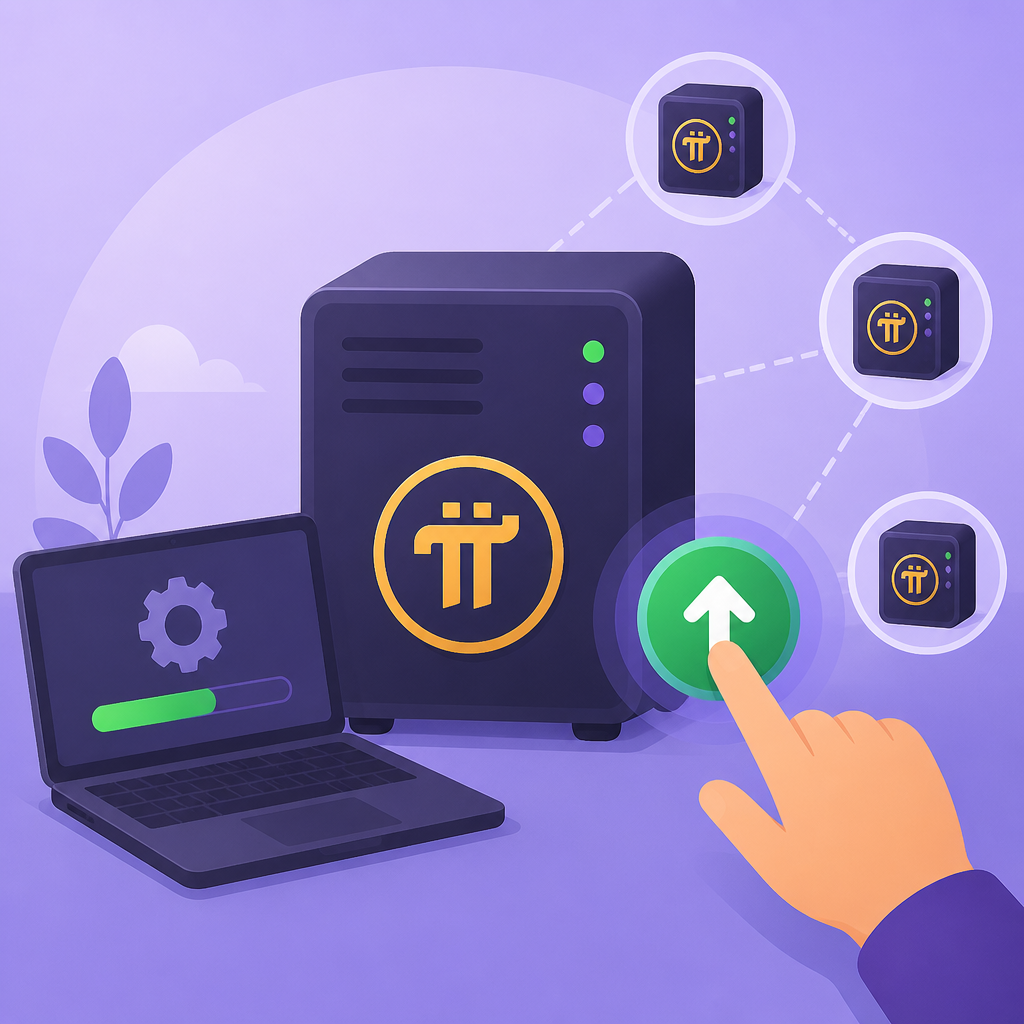
I’ve run enough distributed systems to know that automatic update paths are great until they aren’t. They can stall, they can fail silently, and they can leave a subset of nodes stuck on old builds while everyone assumes the cluster is healthy. Manual upgrade support changes the operator experience from “hope it updated” to “I can confirm what’s running.”
That matters for community nodes because the whole point of a node network is consistency. If one operator is on V23, another is on V24, and nobody can tell who’s out of sync, you get fragmentation. Not dramatic movie-fragmentation. The annoying kind where troubleshooting becomes guesswork.
How to apply it: if you’re building a node platform, make the update path explicit. Give operators a versioned image, a clear upgrade step, and a way to verify the result. If you’re running nodes, stop trusting “it should have updated by now.” Check the version, record it, and make the upgrade process something you can repeat on purpose.
Pi is treating node operators like operators
The article frames community participation as central to Pi’s approach, and I think that’s the right way to read this update. A decentralized network only feels decentralized when the people running infrastructure have real control over the thing they’re maintaining. If every important change is hidden behind automatic behavior, the operator role gets watered down fast.
Pi’s move toward manual upgrades tells me the team wants node operators to be more active participants, not passive recipients of software pushes. That’s a small philosophical shift, but it’s one that shows up in day-to-day operations. People who run nodes need to know what changed, why it changed, and how to move their systems forward without waiting for a mystery process to do it for them.
I’ve seen this in internal tooling too. Teams say they want ownership, then bury updates behind automation that nobody can inspect. The result is always the same: when something breaks, nobody feels responsible enough to fix it quickly. Manual upgrade flows are a little less comfortable, but they make ownership real.
- Versioned images reduce ambiguity.
- Manual control makes troubleshooting easier.
- Operators can align upgrades with maintenance windows.
How to apply it: if you build developer infrastructure, don’t confuse automation with control. Offer both. Let the system update itself when that’s safe, but keep a manual path for operators who need to inspect, stage, or delay changes. That’s how you avoid turning “decentralized” into “unmanageable.”
Synchronization is the real story hiding under the update
HOKANEWS says the update is important because synchronization across nodes is essential for consistency and for avoiding network fragmentation. That’s the part I care about most. Version drift is one of those infrastructure problems that looks harmless right up until it isn’t. By the time you notice it, you’ve already got a split between what the network thinks it’s doing and what parts of the network are actually running.

Manual upgrades help because they let operators pull their nodes back into alignment with the official release. That matters in any blockchain system, but especially in a community-run one where the operator base is broad and technical maturity varies. Some people will update immediately. Some will wait. Some will forget. A clear manual path gives everyone the same target.
I ran into this exact pattern years ago with self-hosted services. The team had “automatic patching,” which sounded responsible until we discovered half the fleet had missed a dependency update and nobody noticed until a feature flag rollout failed. The fix wasn’t more automation. It was better version control and a cleaner upgrade playbook.
How to apply it: treat node versioning like production deployment, not like consumer app updates. Publish the exact image tag. Tell operators what changed. Provide a verification step. If you’re on the receiving end, keep a simple checklist: pull the official release, apply it, confirm the version, and test connectivity before you assume you’re done.
- Keep a running inventory of node versions.
- Compare local version against the official image tag.
- Confirm sync status after every upgrade.
This is infrastructure work, not marketing work
The HOKANEWS article spends a lot of time talking about blockchain infrastructure, security, performance, and long-term scalability. Fine. That’s the standard language. But underneath it, the actual move is about operational maturity. Pi Network is showing that it understands node software is not a static product. It’s a living system that needs maintenance, version management, and clear release discipline.
That’s also why I don’t overread the “Web3” framing here. Web3 only matters if the underlying nodes are dependable. A lot of projects love the decentralized branding and then act surprised when distributed systems require distributed responsibility. Nodes are the backbone, not the decoration.
Pi’s update also hints at a broader lesson for any team building on top of a network: your release process is part of your product. If operators can’t tell what version they should be on, your infrastructure story is already weak. If they can manually upgrade from an official image, you’ve at least given them a way to stay current without guessing.
How to apply it: write your release notes like an operator will actually use them, because one will. Name the image. Name the version. Say whether the update is required, optional, or timing-sensitive. Don’t bury the important part in a paragraph about ecosystem growth. Nobody wants to hunt for the one line that tells them what to do.
Official guidance matters more than community rumor
The article says Pi advised users to follow official announcements so they use accurate and verified information when upgrading. That sounds obvious until you’ve watched a crypto community try to coordinate around screenshots, reposts, and half-translated summaries. Then it stops being obvious and starts being necessary.
Manual upgrades increase flexibility, but they also increase the need for clean source-of-truth behavior. If people are pulling the wrong image tag, using stale instructions, or trusting random posts, the whole point of the upgrade path gets undermined. Infrastructure only stays sane when the official channel is actually the official channel.
I’ve had to clean up after teams who relied on chat-room instructions for deploys. It’s a mess every time. One person copies the command wrong, another uses an outdated tag, and suddenly everyone is debugging a problem that was created by bad communication, not bad code.
How to apply it: if you run a network, make the official node release page impossible to miss. If you operate nodes, ignore third-party summaries when it’s time to upgrade. Use the source, verify the tag, and keep your own notes. In decentralized systems, rumor is not a deployment strategy.
What Pi is really building with V24
This update doesn’t prove Pi Network has solved anything big on its own. I’m not going to pretend a manual upgrade path is the same as a fully mature node ecosystem. It isn’t. But it does tell me the project is paying attention to the stuff that actually makes networks stable: version alignment, operator control, and clear release handling.
That’s the kind of progress I trust more than big promises. A network becomes credible when it reduces friction for the people maintaining it. Not when it posts a glossy thread about the next phase of the ecosystem. The boring operational fixes are the real signal.
If Pi keeps moving in this direction, the important question won’t be whether the network can announce new features. It’ll be whether operators can keep their nodes current without friction, confusion, or hidden failure points. That’s the metric I’d watch.
How to apply it: when you evaluate any blockchain or node platform, ignore the noise and ask three questions. Can operators upgrade cleanly? Can they verify what version they’re on? Can the network stay synchronized without drama? If the answer is yes, you’re looking at infrastructure that’s being taken seriously.
The template you can copy
# Node upgrade playbook for community operators

## Release
- Product: [Network or platform name]
- Node version: [Exact version]
- Image tag: [Exact official image tag]
- Release date: [YYYY-MM-DD]

## What changed
- [Short description of the update]
- [Compatibility note]
- [Security or performance note]

## Who should upgrade
- [All operators / only specific node types / optional]
- [Any prerequisites]

## Manual upgrade steps
1. Confirm your current node version.
2. Pull the official image from the project’s source.
3. Stop the existing node service if required.
4. Apply the new image or package.
5. Restart the node.
6. Verify the running version matches the release tag.
7. Check sync status and logs for errors.

## Verification checklist
- [ ] Current version recorded
- [ ] Official image tag confirmed
- [ ] Upgrade completed successfully
- [ ] Node is synchronized
- [ ] Logs are clean

## Operator note
Use official announcements only. Do not rely on reposts, screenshots, or community summaries for upgrade commands.

## Rollback plan
- [Rollback version or image tag]
- [How to restore the previous build]
- [When to stop and escalate]

## Support link
- Official release page: [URL]
- Official docs: [URL]
- Status page: [URL]
That’s the part I’d actually reuse. It’s the difference between “we released an update” and “operators can run the update without guessing.”
Source attribution: I based this breakdown on HOKANEWS.com’s article about Pi Network Node V24. The interpretation, operator guidance, and template are mine, built from the source text and general infrastructure practice.
// Related Articles
- [CHAIN]
7 Solana APIs that cut weeks off integration
- [CHAIN]
Solana Unchained token sale nears Phase 1 close at $0.05
- [CHAIN]
June 2026 Web3 Signals Founders Should Use Now
- [CHAIN]
Bitcoin DeFi will grow, but not by copying Ethereum
- [CHAIN]
AI-blockchain projects need real utility, not token theater
- [CHAIN]
DMG’s 50 MW AI LOI is a better use of miners’ power assets