ADK Go 1.0 Brings Agents to Production
Google’s ADK Go 1.0 adds OpenTelemetry, plugins, HITL approvals, YAML config, and A2A support for production agent systems.
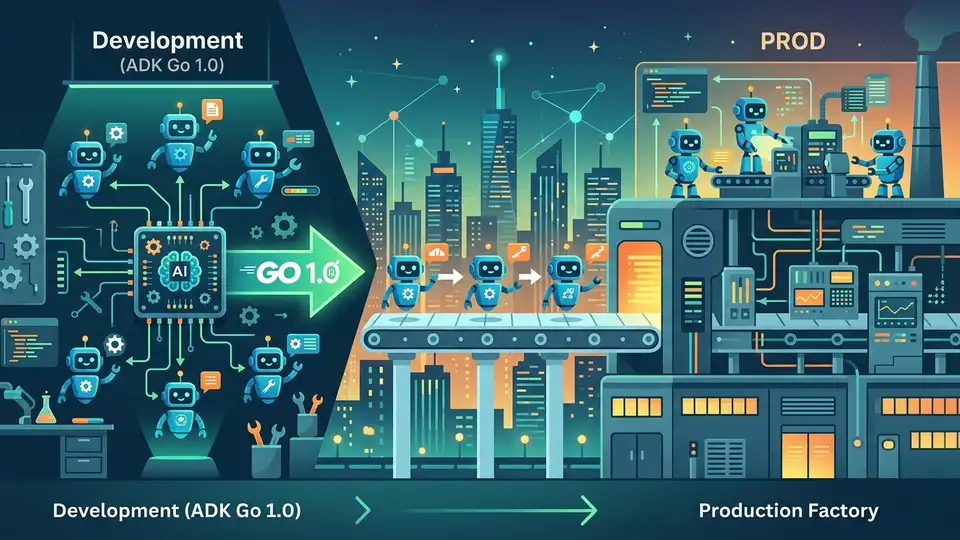
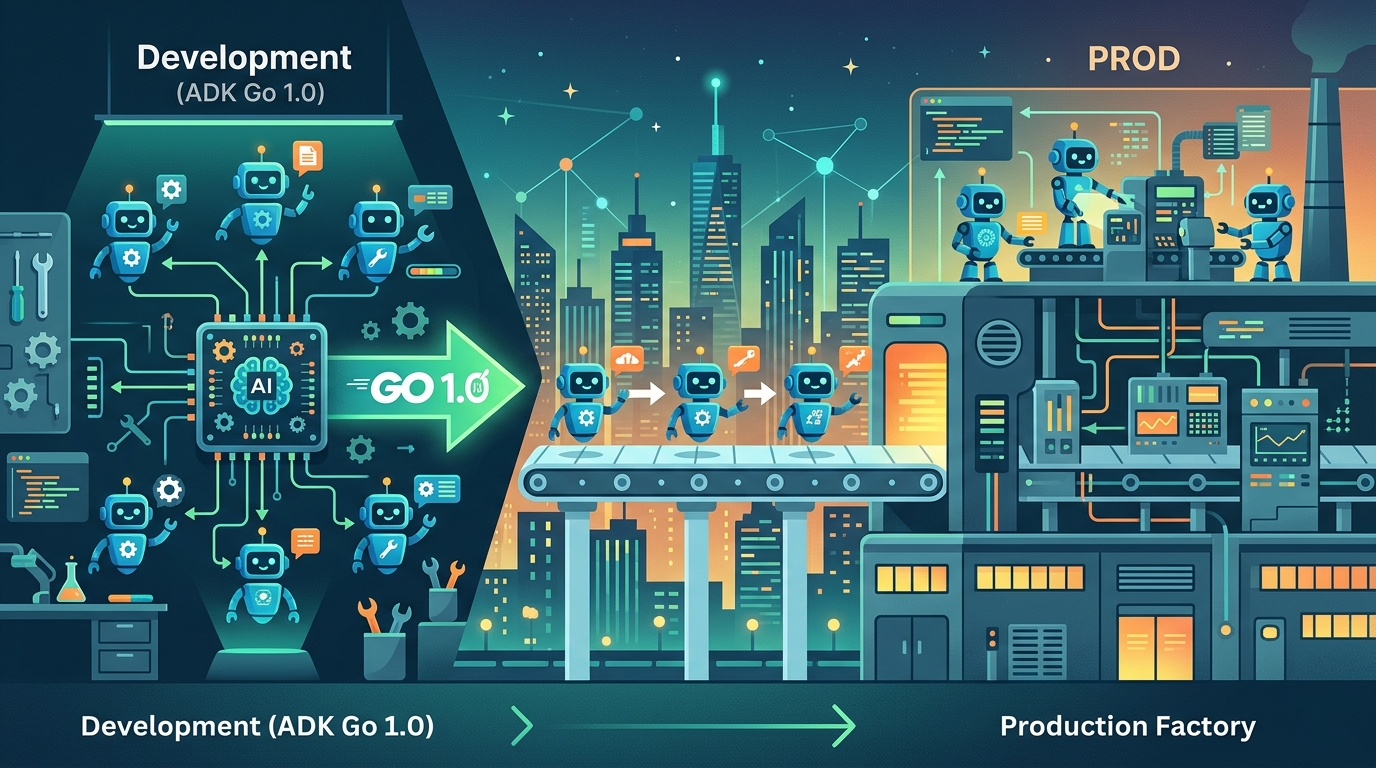
Google has shipped Agent Development Kit for Go 1.0, and the timing says a lot: the company is framing AI agents as production software, not side projects. The release lands 19 years after Go first appeared at Google, and it brings tracing, plugins, human approvals, YAML config, and cross-language agent coordination into one package.
That matters because agent systems fail in messy ways. A tool call can break, a model can hallucinate, a remote service can stall, or a chain of actions can drift from the original plan. ADK Go 1.0 is Google’s answer to that mess, and it is aimed squarely at teams that want agents they can inspect, control, and ship.
What Google added in ADK Go 1.0
Get the latest AI news in your inbox
Weekly picks of model releases, tools, and deep dives — no spam, unsubscribe anytime.
No spam. Unsubscribe at any time.
The headline features are easy to list, but the real story is how they fit together. Google is trying to make Go a serious language for operational AI agents, especially in systems where reliability matters more than demos.
At the center is the ADK Go GitHub repository, which now includes production-oriented building blocks for observability, recovery, and policy enforcement. The release notes call out support for step-by-step SequentialAgents, concurrent ParallelAgents, and iterative LoopAgents, which gives developers multiple control-flow styles for different workloads.
- Native OpenTelemetry integration for traces and spans
- A plugin system for logging, security filters, and retry logic
- Human-in-the-loop confirmations for sensitive tools
- YAML-based agent definitions for configuration-first workflows
- Refined Agent2Agent protocol support for Go, Java, and Python
That mix is telling. Google is not just adding more agent features. It is trying to make the boring parts of agent operations easier: debugging, approvals, config management, and orchestration across services.
OpenTelemetry gives agents a paper trail
The strongest addition in this release is the built-in OpenTelemetry integration. Agent systems are hard to debug because they are not fully deterministic. If something goes wrong, developers need to know whether the failure came from a prompt, a tool, a network call, or a model decision.
ADK Go 1.0 lets teams attach a trace provider and capture structured spans for model calls and tool execution loops. That means an agent’s behavior can be inspected in the same observability stack as the rest of an application, including systems like Cloud Trace.
"We are thrilled to continue that legacy of high-performance engineering with the launch of Agent Development Kit for Go 1.0." — Google Developers Blog
The practical upside is simple: when an agent makes a weird decision, you can trace the path instead of staring at logs and guessing. That is a big deal for teams trying to move from prototypes to services that handle real user traffic.
Google also published code showing how telemetry is wired into the runner, which lowers the friction for teams that already use OTel in their backend stack. If your infrastructure team already speaks traces and spans, ADK Go now speaks that language too.
Plugins and approvals make agents easier to trust
Google’s new plugin system is the kind of feature that sounds small until you actually build with it. Instead of stuffing retry logic, logging, or policy checks into the agent’s main instructions, developers can inject those concerns as plugins. That keeps the agent definition cleaner and makes behavior easier to reason about.
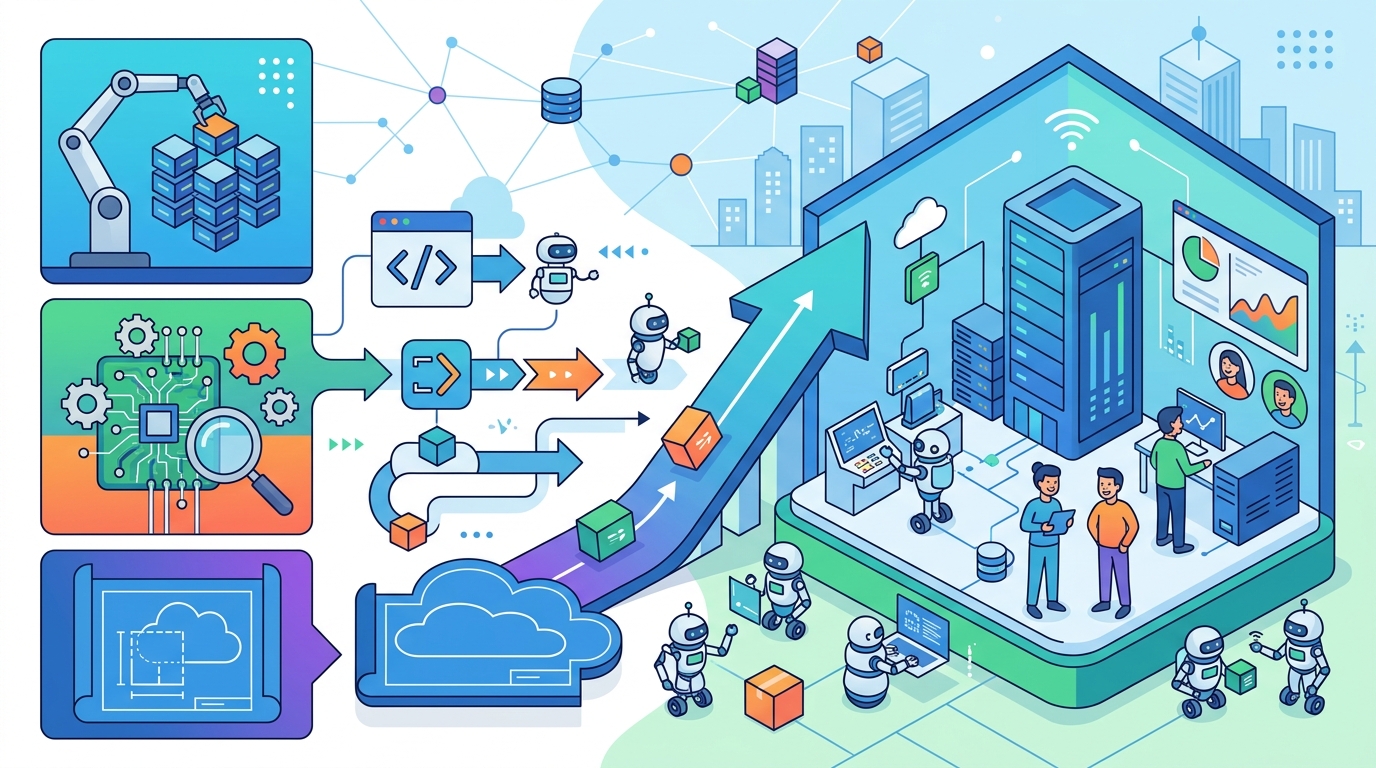
One plugin Google highlights is Retry and Reflect, which catches tool errors, feeds them back into the model, and lets the agent try again with adjusted parameters. That is a practical form of self-correction, especially for agents that call APIs with brittle inputs.
Security gets its own treatment through human-in-the-loop confirmation flows. For tools marked RequireConfirmation, the agent pauses and waits for a human signal before it proceeds. Google ties this to its Safe AI Framework, and the use case is obvious: database changes, money movement, and other actions you do not want an agent to perform on its own.
- Retry logic reduces manual intervention after tool failures
- Logging plugins centralize turn-by-turn visibility
- Confirmation gates add a human checkpoint for risky actions
- Policy code stays outside the core agent instructions
That separation matters. A lot of agent frameworks make it too easy to mix business logic, prompts, and guardrails into one blob. Google is clearly trying to keep those layers apart.
YAML config and A2A make ADK Go easier to scale
Another notable change is YAML-based agent configuration. Instead of writing Go code for every tweak, teams can define agents in a config file and run them through the adk command-line tool. That helps when product teams want to adjust instructions, tools, or sub-agent structure without waiting on a code release.
Google also says ADK Go now keeps feature parity and cross-language consistency through these YAML definitions. In practice, that should help teams that want the same agent behavior in Go, Java, or Python without maintaining separate mental models for each runtime.
The other big piece is A2A, Google’s Agent2Agent protocol. The company says the protocol has been refined so Go, Java, and Python agents can communicate more reliably, with event ordering and response aggregation handled automatically. That sounds dry, but it matters a lot once you have one agent delegating work to another and waiting on partial responses.
- YAML reduces boilerplate for persona and tool changes
- Sub-agents can be defined without rewriting the core binary
- A2A helps mixed-language systems exchange events more reliably
- Response aggregation is handled inside the framework instead of custom glue code
For teams building internal copilots, support bots, or workflow agents, this is the kind of plumbing that decides whether a project gets adopted or abandoned. Developers want less custom orchestration code, not more.
Why this release matters for Go developers
Go already has a strong reputation in backend infrastructure because it compiles fast, runs efficiently, and keeps concurrency approachable. ADK Go 1.0 extends that reputation into AI agents, which is a smart move by Google. If agents are going to sit inside production services, Go is a sensible place to put them.
There is also a strategic angle here. Python still dominates AI prototyping, but production teams often want stricter deployment patterns, clearer observability, and easier integration with existing services. Go fits that world well, especially when the agent is one part of a larger distributed system.
Google’s launch also arrives alongside related work in its developer ecosystem, including Google Developers Blog coverage of agent tooling and the broader push around interoperable AI systems. If you are already building with cloud traces, service boundaries, and policy checks, ADK Go 1.0 looks less like a toy framework and more like a practical extension of your stack.
My read: this release is Google telling developers that agent software now needs the same discipline as any other production service. The model can be smart, but the system around it still has to be observable, testable, and controlled.
If ADK Go gets traction, expect more teams to split agents into smaller roles, define behavior in YAML, and route risky actions through human approval. The next question is whether the ecosystem around Go agents grows fast enough for that pattern to become standard, or whether teams keep defaulting to Python for everything except the hardest backend jobs.
// Related Articles
- [MODEL]
GPT-5.6 turns OpenAI into a model menu
- [MODEL]
Seedream 5.0 Pro Is the Right Choice for Editable AI Images
- [MODEL]
Midjourney v8.2 release is close
- [MODEL]
Rust KRAID enters Mesa for Arm Mali GPUs
- [MODEL]
OpenAI Opens GPT-5.6 and Launches Live Voice AI
- [MODEL]
Mistral is right to push Leanstral into proof engineering