AI's Role in Evolving Nuclear Energy Efficiency
Microsoft and NVIDIA join forces to tackle nuclear energy bottlenecks with AI, aiming to streamline processes and enhance operational efficiency.

The demand for reliable and carbon-free energy is surging, with nuclear energy poised to play a critical role. However, the industry faces significant bottlenecks due to complex permitting, fragmented data, and manual regulatory processes. Microsoft and NVIDIA are tackling these challenges head-on by leveraging AI to streamline nuclear project workflows, improve design processes, and enhance operational efficiency.
AI's Impact on Nuclear Project Workflows
Get the latest AI news in your inbox
Weekly picks of model releases, tools, and deep dives — no spam, unsubscribe anytime.
No spam. Unsubscribe at any time.
Traditional nuclear energy projects often encounter delays due to the intricate and customized nature of engineering and permitting processes. AI technology can mitigate these issues by offering end-to-end solutions to streamline these workflows. The collaboration between Microsoft and NVIDIA aims to simplify site permitting, design, construction, and operations.
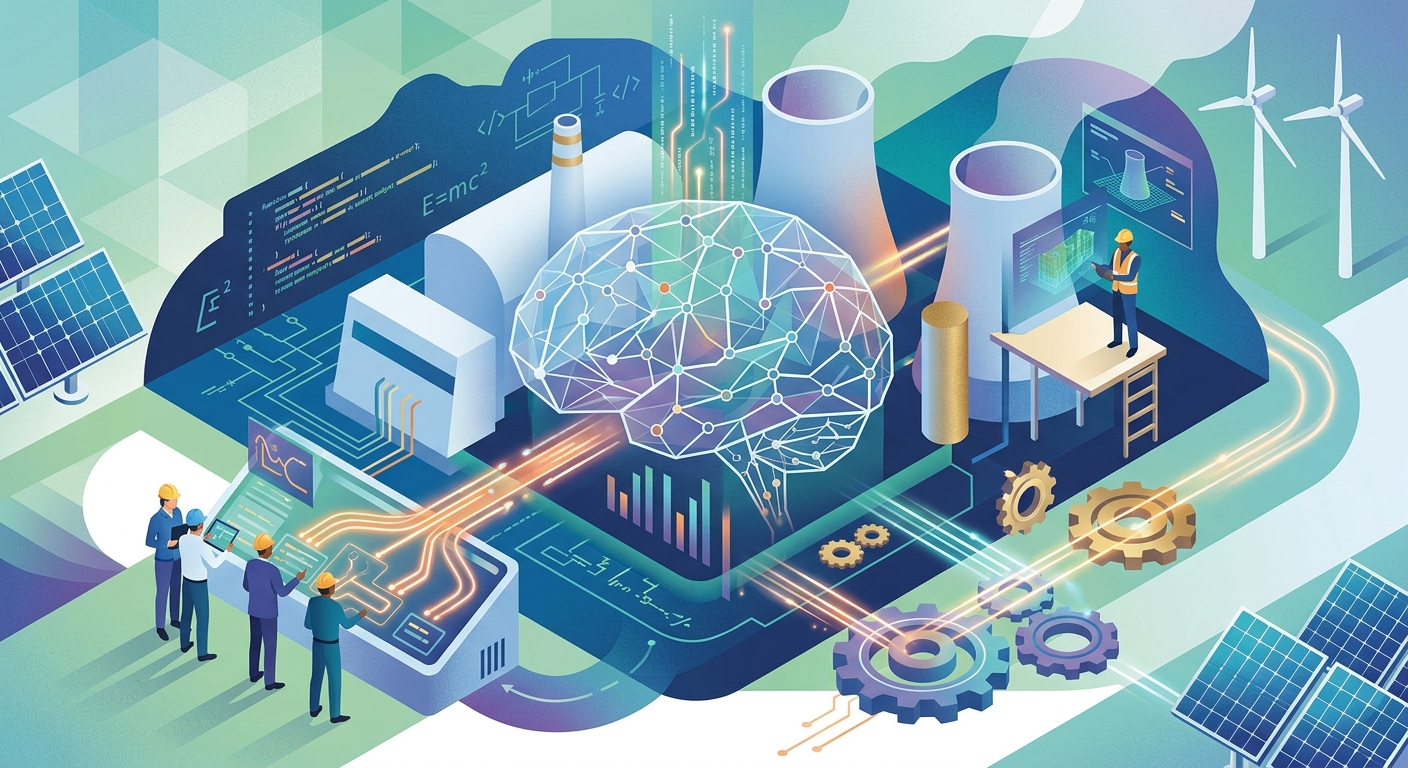
- Permitting: AI reduces the time and cost associated with permitting by automating documentation and data analysis.
- Design: Digital Twins and high-fidelity simulations enable efficient design iterations and validation.
- Construction: 4D and 5D simulations improve project scheduling and cost tracking.
- Operations: AI sensors and digital twins ensure predictive maintenance and operational stability.
Expert Insights on AI and Nuclear Energy
Industry leaders are optimistic about AI's potential to redefine nuclear energy processes. Yasir Arafat, CTO of Aalo Atomics, highlights the importance of reliability and complexity management in deploying AI at scale. Aalo Atomics has successfully reduced permitting process time by 92%, saving approximately $80 million annually.
"Two things matter most: enterprise-scale complexity and mission-critical reliability. We’re deploying something complex at a scale only a company like Microsoft really understands." — Yasir Arafat, CTO, Aalo Atomics
Current Implementations and Comparisons
The benefits of AI in nuclear energy are evident in several ongoing projects. Aalo Atomics, Southern Nuclear, and Idaho National Laboratory (INL) are leading examples of AI integration in nuclear operations.
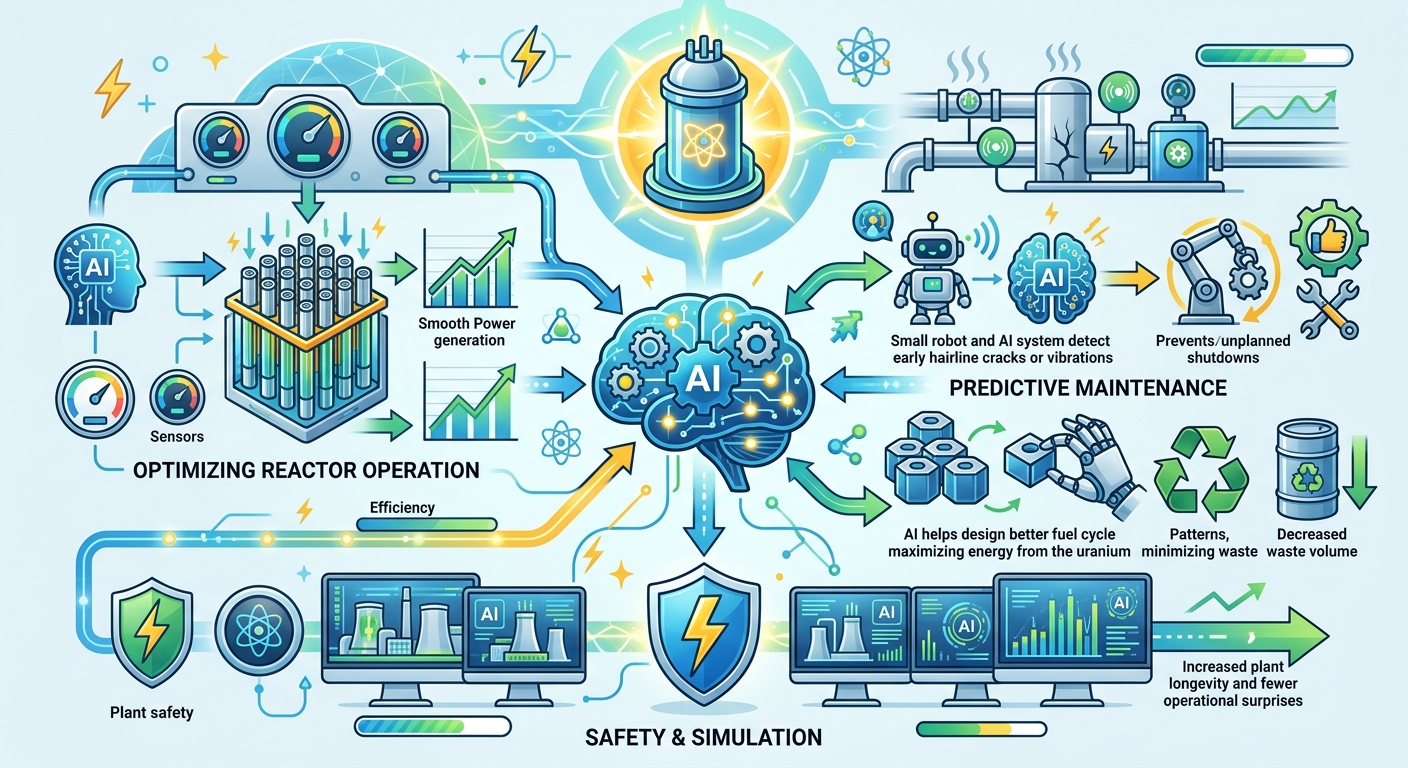
- Aalo Atomics: Reduced permitting times by 92%, saving $80 million annually.
- Southern Nuclear: Utilizes Microsoft Copilot for engineering and licensing, improving decision-making.
- Idaho National Laboratory: Automates complex engineering and safety analysis reports for streamlined reviews.
Looking Ahead: The Future of AI in Nuclear Energy
The collaboration between Microsoft and NVIDIA sets a new standard for AI application in the nuclear industry. By transforming fragmented workflows into cohesive systems, AI accelerates project timelines while maintaining regulatory rigor. As AI technology continues to evolve, its role in nuclear energy is expected to expand, offering more efficient and reliable solutions for the energy sector.
// Related Articles
- [IND]
WebX 2026 turns speaker hype into a conference brief
- [IND]
AI Weekly: 2026-07-06 ~ 2026-07-13
- [IND]
The AI Act should be treated as Europe’s operating system for AI
- [IND]
Booz Allen’s OpenAI Deal Is Real Advantage, Not Hype
- [IND]
OpenSearch’s vector search benchmark in 5 parts
- [IND]
Vector Databases That Work in Production