Alibaba’s RISC-V AI CPU Pushes Into Server Chips
Alibaba’s 64-bit RISC-V CPU hits 3.2 GHz on TSMC 5nm, targets agentic AI, and challenges Arm and Apple-style server silicon.
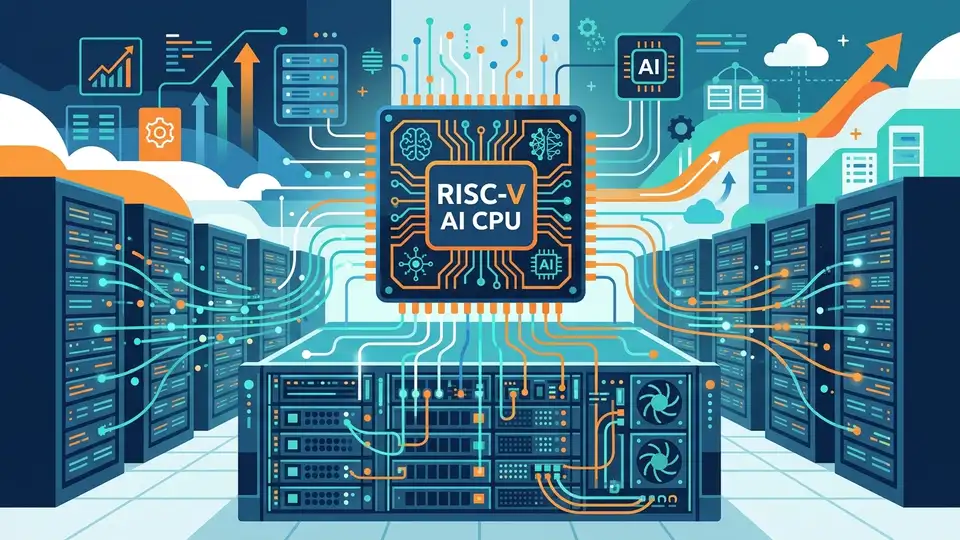
Alibaba’s DAMO Academy just put a new number on the board: a 64-bit, multi-core RISC-V CPU that tops out at 3.2 GHz and is built on TSMC’s 5-nanometer process. The chip is aimed at agentic AI workloads, which means Alibaba is trying to make its own silicon useful for the kind of software that plans, calls tools, and keeps state across long tasks.
That matters because the company is not pitching this as a science project. Alibaba says the processor is part of a multi-year push into server-grade RISC-V, after a cloud-focused model in 2024 and an industry-first server chip in 2025. This new part is the clearest sign yet that Alibaba wants control over both the AI software stack and the hardware underneath it.
What Alibaba actually built
Get the latest AI news in your inbox
Weekly picks of model releases, tools, and deep dives — no spam, unsubscribe anytime.
No spam. Unsubscribe at any time.
The new processor is a 64-bit multi-core CPU with a proprietary tensor engine tied directly into the core complex through a RISC-V extension. In plain English, Alibaba is baking some AI math into the chip itself instead of sending every matrix operation to a separate accelerator.
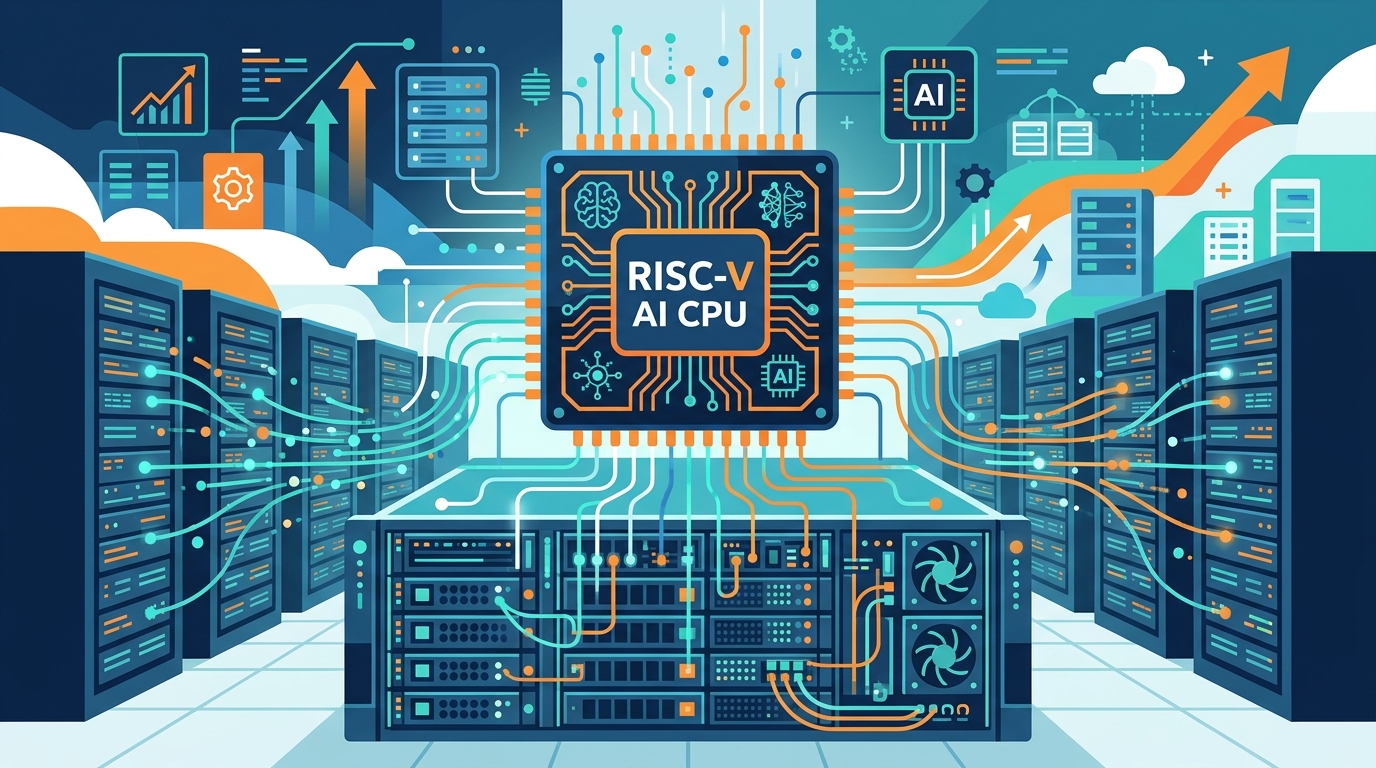
The company says that design cuts memory traffic, improves data reuse, and reduces power use. That combination is especially important for agentic systems, where the workload is less about one giant inference pass and more about repeated reasoning steps, tool calls, and structured memory access.
Alibaba also says the chip can run large foundation models with hundreds of billions of parameters natively. That is a bold claim, and the real test will be how well it performs in production cloud systems rather than in a lab slide deck.
- Architecture: RISC-V, not Arm or x86
- Process node: 5nm from TSMC
- Peak clock speed: 3.2 GHz
- Reported integer benchmark: above 70 points
- Target use case: agentic AI and cloud inference
Why RISC-V matters more than the logo on the chip
RISC-V has become attractive because it is open. Companies can customize the instruction set without paying the licensing fees that come with proprietary architectures. That makes it appealing for firms that want to tune silicon for specific workloads, especially in China, where supply-chain pressure has pushed a lot of companies to build more of their own stack.
Alibaba’s move also puts pressure on the old assumption that only Arm and x86 can power serious server CPUs. The company is not trying to beat those architectures at their own general-purpose game. It is trying to win on workload fit, cost control, and integration with its own AI services.
There is also a strategic angle here. Alibaba’s cloud business needs chips that it can source, shape, and scale without depending entirely on foreign vendors. In a market where compute shortages can slow product launches, that kind of control is worth a lot.
“We are looking at ways to make it easier for customers to create, deploy, and manage AI models.” — Alibaba Cloud CEO Eddie Wu, quoted in Alibaba Cloud’s 2024 communication on AI strategy.
That quote matters because it shows the business logic behind the silicon. Alibaba is not building chips for bragging rights. It wants to lower the cost of running AI inside its own cloud and collaboration products.
How Alibaba stacks up against Apple, Huawei, and Nvidia
IndexBox’s source material says Alibaba’s latest CPU reaches performance and efficiency levels comparable to an Apple consumer-grade chip. That comparison is useful, but it needs context. Apple’s silicon is famous for high single-thread performance and energy efficiency in consumer devices, while Alibaba is optimizing for server workloads and AI inference.
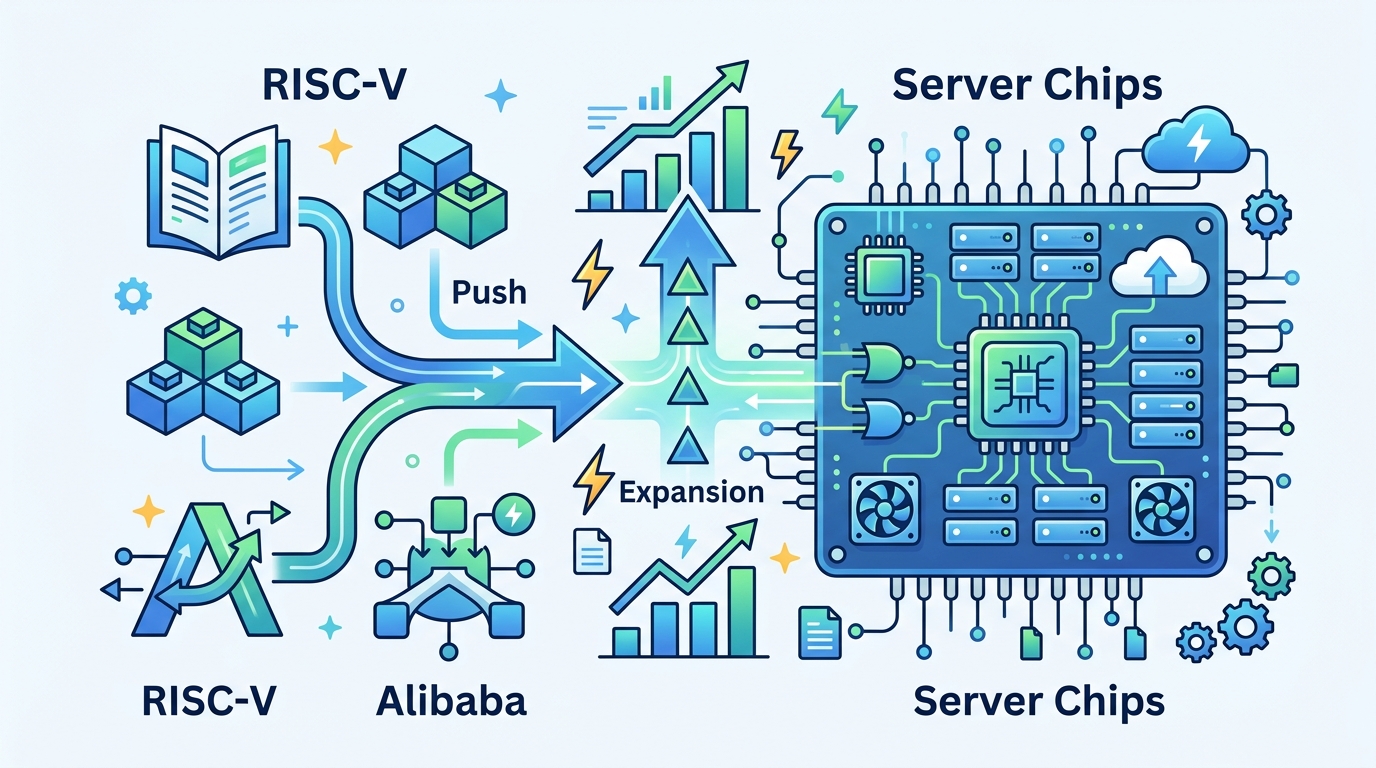
Alibaba also claims the new CPU delivers more than twice the instructions per clock cycle in single-thread integer performance compared with Huawei’s current server CPU. That is a strong signal that Alibaba is trying to compete inside China’s own server market, not just against Western chip vendors.
On the accelerator side, the company is still hedging. Alibaba has launched a parallel processing unit to compete with selected Nvidia chips, but it is also planning to buy Huawei’s latest inference accelerator for near-term cloud demand. That tells you the company sees a long transition period ahead, not an overnight switch to homegrown silicon.
- Alibaba latest CPU: 5nm, 3.2 GHz, 64-bit multi-core
- Reported benchmark: above 70 integer points
- Huawei comparison: more than 2x instructions per clock in single-thread integer performance
- Alibaba AI chip shipments: over 470,000 cumulative units from T-Head
- T-Head annual revenue: approaching 10 billion yuan in recent years
Those numbers suggest a company that is moving from experimentation into scale. T-Head’s shipment count is still tiny compared with the global volume of mainstream x86 and Arm server chips, but it is large enough to matter inside Alibaba’s own cloud footprint.
The bigger bet: full-stack AI from silicon to software
Alibaba’s chip work is part of a wider plan to become a full-stack AI provider. That includes its cloud infrastructure, its collaboration suite, and its international agent tools for cross-border operations. The company has already launched AI-native products that depend on inference efficiency, so every watt saved at the silicon layer helps the software layer make money.
The timing is also shaped by China’s broader push for compute independence. Export controls from the U.S. have made advanced AI accelerators harder to rely on, which has pushed Chinese firms to diversify their hardware bets. Alibaba is responding by building domestic alternatives while still buying what it needs in the short term.
There is a practical tension here. Alibaba cannot wait years for every internal chip project to mature, so it keeps purchasing outside hardware where necessary. At the same time, it is funding its semiconductor subsidiary and working with state-backed research groups, including the Chinese Academy of Sciences, to keep the long-term roadmap moving.
Here is the part that matters for developers and infrastructure teams: if Alibaba can make RISC-V CPUs good enough for AI-heavy cloud services, the company can reduce its dependence on expensive external accelerators for certain classes of tasks. That could change pricing, instance availability, and how quickly new AI features reach customers.
What to watch next
The most important question is not whether this chip exists. It is whether Alibaba can turn a custom CPU into a repeatable cloud advantage. If the company proves that its RISC-V parts can lower inference costs while holding performance steady, then the next step is obvious: more internal workloads move onto Alibaba-designed silicon.
For the rest of the market, the signal is equally clear. RISC-V is no longer just a hobbyist architecture or a research topic. It is now part of a serious server strategy from one of China’s biggest tech companies, and that puts pressure on Arm vendors, accelerator suppliers, and cloud buyers who care about cost per token.
My read: the next 12 to 18 months will show whether Alibaba’s chip program is a niche internal optimization or the beginning of a broader shift in how Chinese cloud providers buy compute. If benchmark gains hold up in production, expect more cloud contracts to start asking a new question: how much of this workload can run on custom RISC-V silicon instead of general-purpose accelerators?
That is the metric worth watching, because it will tell us whether Alibaba’s CPU is a headline or a procurement policy.
// Related Articles
- [IND]
WebX 2026 turns speaker hype into a conference brief
- [IND]
AI Weekly: 2026-07-06 ~ 2026-07-13
- [IND]
The AI Act should be treated as Europe’s operating system for AI
- [IND]
Booz Allen’s OpenAI Deal Is Real Advantage, Not Hype
- [IND]
OpenSearch’s vector search benchmark in 5 parts
- [IND]
Vector Databases That Work in Production