Anthropic’s Fable shutdown pushes teams to own models
Anthropic’s model pullback shows why teams are moving from vendor dependence to downloadable models they can run themselves.

Anthropic’s model pullback shows why teams are moving from vendor dependence to downloadable models they can run themselves.
I’ve been building around hosted models for a while now, and honestly, it’s been fine right up until it isn’t. You wire up a workflow, tune the prompts, get the evals looking decent, and then you start trusting the provider a little too much. That’s the part that always makes me uneasy. Not the model quality. Not the latency. It’s the quiet assumption that the thing you built on will still be there tomorrow, with the same behavior, the same pricing, and the same permissions.
That’s why the Anthropic Fable shutdown hit me as more than a policy footnote. It’s the kind of event that forces developers to admit something we usually ignore while shipping: if you don’t control model access, you don’t really control the system. I’ve watched teams build real product logic on top of a vendor API like it’s just another internal dependency. Then one compliance move, one pricing change, one product decision, and suddenly the app’s core behavior is wobbling. It’s annoying in the abstract. It’s expensive in production.
The part that stuck with me here is not just that Anthropic pulled access. It’s that the whole industry had to stop and look at the risk model. If closed access can be cut off, then owning the runtime starts looking less like an optimization and more like insurance. And yeah, I know that sounds boring. Boring is good when your product depends on the model still being there next quarter.
Anthropic’s own report on the shutdown is the trigger here, but the real story is what developers do next. I’m reading this against CNBC’s write-up, Anthropic’s Fable shutdown is a big moment for open-source AI, which lays out the compliance angle and the market reaction. The article also points to Satya Nadella’s warning on X, Yash Patel’s comments about owning your own model, and the growing pull toward downloadable systems. That’s the part worth unpacking, because it changes how I’d design the next AI stack.
When a model can disappear, your app is rented
Get the latest AI news in your inbox
Weekly picks of model releases, tools, and deep dives — no spam, unsubscribe anytime.
No spam. Unsubscribe at any time.
Anthropic announced it had pulled access to its Fable 5 and Mythos 5 models to comply with an export control directive from the U.S. government that cited “national security authorities.”
What this actually means is simple and kind of irritating: if your product depends on a closed model, your product depends on someone else’s policy decisions. Not just uptime. Not just billing. Policy. I’ve seen teams treat model access like a stable utility, but this is closer to a leased office than a building you own.
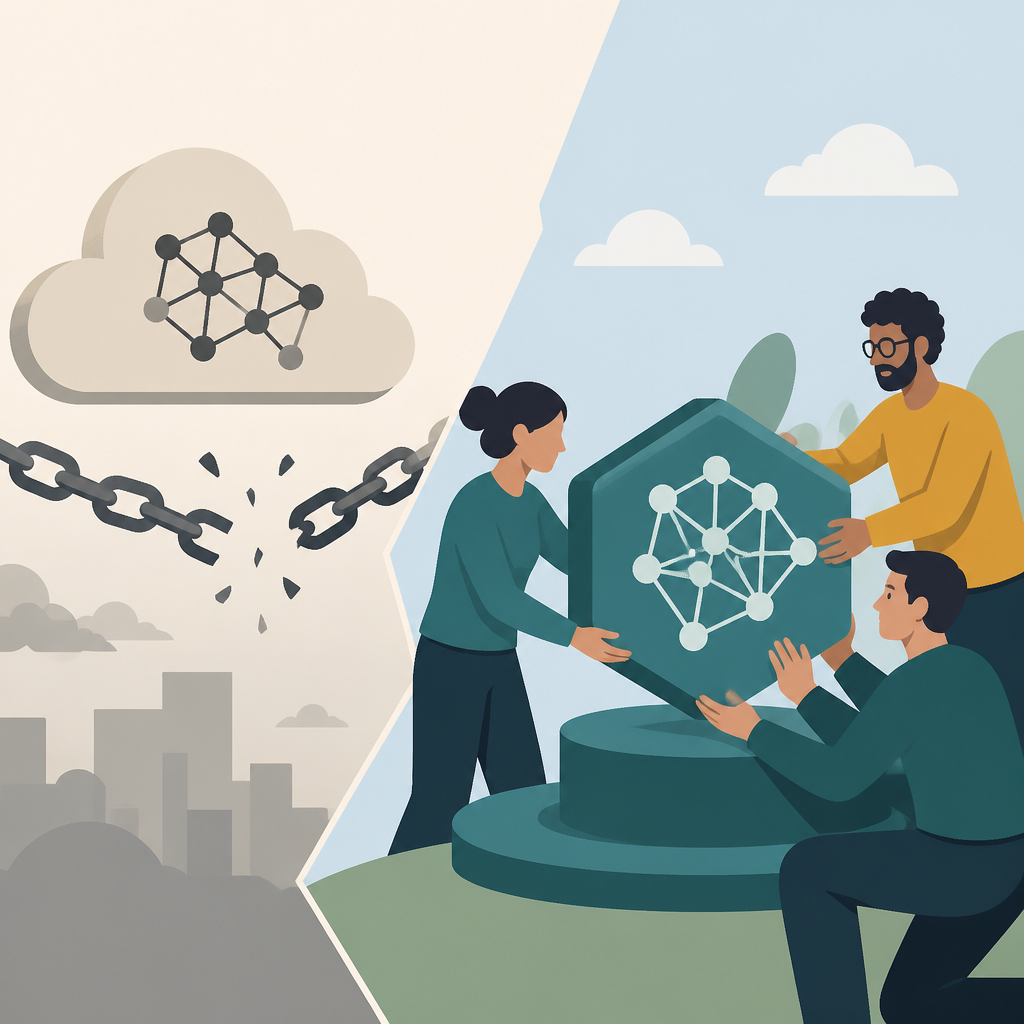
The CNBC piece makes the point bluntly. Anthropic disabled the models for all customers, and the rest of its lineup stayed up. That distinction matters. It tells me the failure mode isn’t “the whole vendor is gone.” It’s “the part you built around can vanish while the rest of the platform keeps humming.” That’s much harder to notice during architecture reviews because the system still looks healthy until one specific capability is missing.
I ran into a version of this with a customer support agent stack. Everything was fine until the model tier we used for summarization got repriced. We didn’t lose access, but we lost the economics that made the workflow sane. Same problem shape. The dependency wasn’t just technical. It was contractual.
How to apply it:
- Map every model call to a business dependency, not just a code path.
- Mark which workflows break if the provider changes policy, region, or pricing.
- Separate “nice to have” AI features from core product logic.
If a model outage would stop revenue, you need a fallback before you need a prettier prompt.
Open-source is not ideology, it’s an exit ramp
An open-source model can be downloaded, run on a company’s own infrastructure, and customized for its data and needs.
That’s the whole ballgame. What this actually means is you get an escape hatch. You can keep the model in your own environment, wrap it in your own controls, and stop hoping the vendor’s incentives stay aligned with yours. I’m not romantic about open source for its own sake. I care because it gives me options when the hosted path gets weird.
And yes, there’s a tradeoff. Running models yourself means infra work, ops overhead, and probably some quality compromises if you’re not choosing carefully. But the alternative is pretending vendor dependence doesn’t exist. That’s the mistake I see most often. Teams assume “we can always switch later,” and then later arrives with prompt drift, eval debt, and a dozen hidden edge cases nobody documented.
The CNBC piece frames this well by contrasting closed models with downloadable ones. If the model lives on your servers, no political fight can switch it off. That’s not a slogan. That’s a design constraint. It changes how I think about procurement, compliance, and even product roadmaps.
I’d use this rule: if the AI feature touches regulated data, customer-facing workflows, or anything the business would call mission-critical, make sure you have a self-hostable option on the table. It doesn’t have to be your first choice. It just has to exist.
- Pick a model family with weights or deployment options you can actually run.
- Prototype the same workflow on hosted and self-hosted paths.
- Measure where you lose quality and where you gain control.
That trade looks a lot better when the alternative is a surprise shutdown notice.
The real vendor lock-in is behavioral
“The last thing any of us want is a world where every company across every sector is ceding value to a few models that eat everything they see,” Satya Nadella wrote on X.
Nadella’s line is a little dramatic, but I get why he said it. The real lock-in isn’t just API access. It’s that your product logic slowly starts to mirror the vendor’s model behavior. Your prompts adapt. Your guardrails adapt. Your team’s intuition adapts. Before long, the model’s quirks are baked into the app.
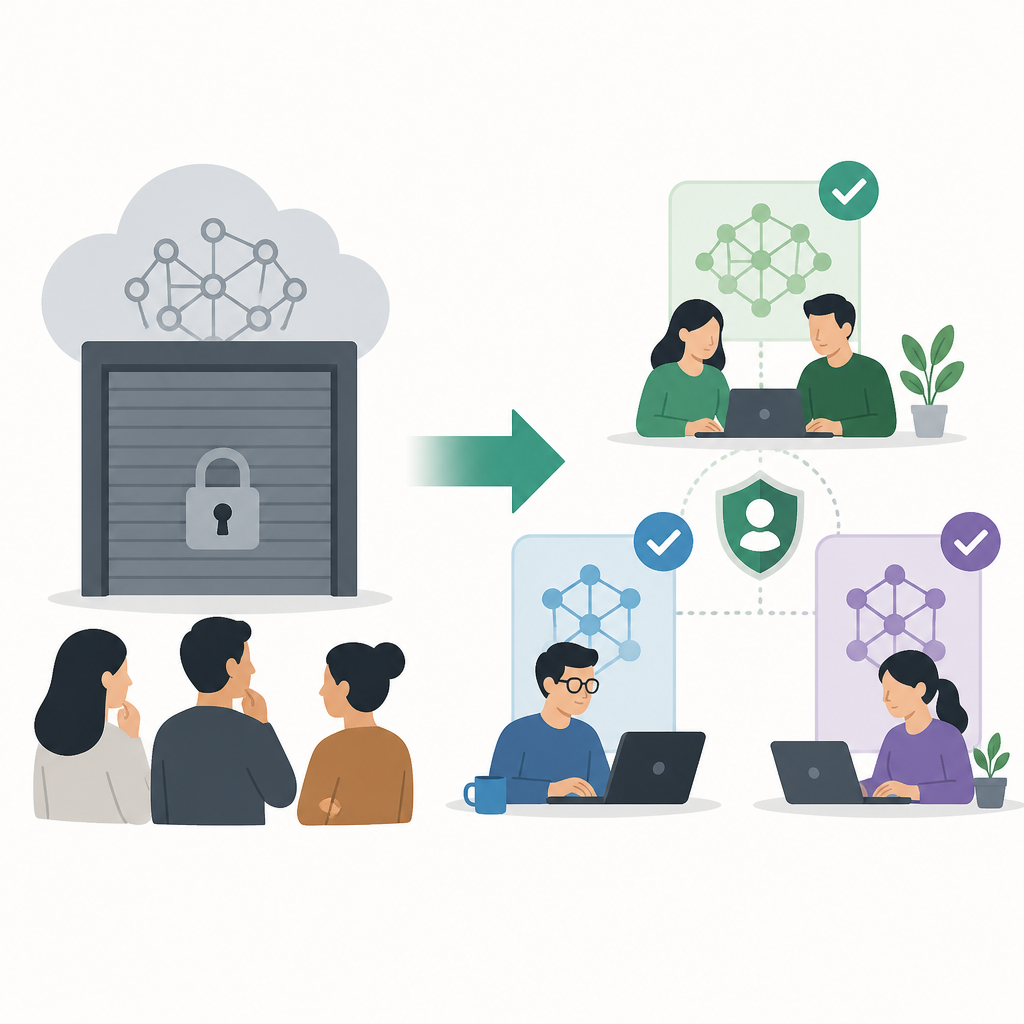
What this actually means is that switching costs become psychological as much as technical. Developers stop asking, “What’s the best model for this task?” and start asking, “How do I avoid breaking the thing we already built?” That’s how dependency hardens. Not with a contract. With habit.
I’ve seen this in agent workflows especially. Once you’ve tuned a tool-using agent to a specific model’s function-calling style, you’re not just changing an endpoint if you swap vendors. You’re changing the behavior envelope of the whole system. That’s why open models are getting more attention now. They let teams standardize behavior around something they can inspect, version, and pin.
How to apply it:
- Version your prompts and tool schemas like code, not like notes.
- Keep model-specific assumptions isolated in adapters.
- Don’t let the rest of your product depend on one provider’s quirks.
If you can swap the model without rewriting the app, you’re in a much better place than most teams.
Cost pressure is forcing people to get less sentimental
“The era of token maxing is over,” Yash Patel said.
That line made me laugh because it’s crude and accurate. What this actually means is that teams are done paying premium prices for every little inference when cheaper models can do the routine work. The market is maturing, and the budget owners have finally noticed.
Patel’s point in the CNBC story is that companies are now looking for “better, cheaper, faster models.” That’s not just procurement chatter. It changes architecture. Once you accept that not every task deserves the top-tier model, you can split your stack into tiers: cheap models for classification, mid-tier models for drafting, expensive models for the messy reasoning jobs.
I’ve had to redesign systems this way more than once. The first version of an AI feature is usually stupidly expensive because everything routes to the best model “just to be safe.” Then the bill shows up and everyone suddenly becomes a fan of routing logic. Funny how that works.
How to apply it:
- Build a task router before you scale usage.
- Use smaller or open models for high-volume, low-risk steps.
- Reserve the expensive model for the parts that actually need it.
If your stack can’t degrade gracefully on cost, it’s not production-ready. It’s a demo with invoices.
China’s open models are winning mindshare for a reason
Models from DeepSeek, Tencent, Xiaomi, and MiniMax all rank among OpenRouter’s most-used this month, even against closed competitors.
This is the part U.S. teams need to take seriously instead of hand-waving away. The CNBC article notes that Chinese open-source names surged as investors bet the shutdown could boost demand for open models. That’s not just a market reaction. It’s a signal that adoption follows usefulness, availability, and price more than branding.
What this actually means is that if a model is good enough, cheap enough, and easy to run, teams will use it even if they were skeptical a few months ago. I’ve seen that pattern with infrastructure tools too. People love to posture about standards until the practical option wins.
The geopolitical angle matters, but I’d keep my focus on engineering reality. If your company wants optionality, you need a shortlist of models that can be evaluated on your own workloads, not on social media arguments. OpenRouter’s usage data is useful here because it reflects what people are actually calling, not what they say they admire.
How to apply it:
- Maintain a benchmark set that includes open and closed models.
- Test multilingual, multimodal, and domain-specific tasks separately.
- Don’t dismiss a model until it has failed your own evals.
The strongest model is the one that passes your workload, not the one with the best branding.
What I’d change in a team’s AI architecture tomorrow
If I were reviewing an AI stack after this shutdown, I’d stop asking first about prompt quality and start asking about exit strategy. That’s a different conversation, and it’s a healthier one. You still want good outputs, obviously. But you also want to know what happens if the provider changes the rules, the region, the price, or the model itself.
That means designing for portability from day one. I’d keep the model behind an internal interface, store prompts and evals in version control, and make sure there’s at least one self-hosted candidate in the pipeline. I’d also separate product logic from provider-specific features so the whole app doesn’t get welded to one vendor’s API shape.
And I’d be honest with the team about the tradeoff. Owning the model is more work. No question. But so is rebuilding a product when access disappears. I’d rather pay the infra tax than the emergency rewrite tax.
Here’s the checklist I’d actually use:
- Can we run a fallback model on our own infra?
- Can we switch providers without rewriting the product?
- Do we know which workflows are most exposed to policy changes?
- Do we have evals that compare hosted, open, and self-hosted options?
If the answer is no to most of that, the stack is more fragile than it looks.
The template you can copy
# AI model dependency review template

## 1) Model inventory
- Provider:
- Model name:
- Purpose:
- Data sensitivity:
- Business criticality:
- Fallback model:
- Self-hostable option: yes/no

## 2) Dependency risk
- What breaks if access is revoked?
- What breaks if pricing doubles?
- What breaks if the model behavior changes?
- What regions or policies could affect access?

## 3) Architecture rules
- Put the model behind an internal interface.
- Keep prompts in version control.
- Keep tool schemas versioned.
- Isolate provider-specific code in adapters.
- Route cheap tasks to cheaper models.
- Reserve premium models for hard tasks only.

## 4) Evaluation plan
- Hosted model benchmark:
- Open model benchmark:
- Self-hosted benchmark:
- Accuracy target:
- Latency target:
- Cost target:
- Safety/quality failures to watch:

## 5) Exit strategy
- Primary provider:
- Backup provider:
- Self-hosted deployment plan:
- RTO for model replacement:
- RPO for prompt/eval artifacts:
- Owner:

## 6) Decision
- Keep hosted:
- Add fallback:
- Migrate to open/self-hosted:
- Revisit date:

## 7) Copy-ready policy
We do not treat any external model as a single point of failure.
Every production AI workflow must have a documented fallback.
Any workflow using sensitive or mission-critical data must have a self-hostable path or an approved exception.
The point of this template is not to make you anti-vendor. It’s to make you less surprised. I’d use it in architecture reviews, procurement reviews, and incident postmortems. It turns a vague “we should think about resilience” conversation into a concrete checklist people can actually answer.
And that’s really what the Anthropic Fable shutdown exposed. Not that open source is morally superior. Not that closed models are doomed. Just that control matters, and most teams have been underestimating how much.
Source attribution: This breakdown is based on CNBC’s Anthropic’s Fable shutdown is a big moment for open-source AI. I’ve added the developer framing, the architecture advice, and the copy-ready template; the quoted facts and names come from the CNBC article.
// Related Articles
- [IND]
Managed ChatGPT access is governed by 4 policy layers
- [IND]
OpenAI service terms put app risk on users
- [IND]
DARA shows how think tanks can use AI with trust
- [IND]
Chrome V8 zero-day needs an immediate browser restart
- [IND]
WASI 0.3正式版でWebAssembly連携が楽になる
- [IND]
Qualcomm is right to bet on AI devices, not just AI apps