Qualcomm is right to bet on AI devices, not just AI apps
Qualcomm’s 40-device push is a rational bet that AI agents will move computing beyond the smartphone app model.

Qualcomm is building 40 AI device designs because agent-driven computing will spread beyond phones.
Qualcomm is right to treat AI agents as the next consumer interface, and to build hardware for them before the market fully forms. CEO Cristiano Amon said the company is already working on more than 40 device designs, from jewelry to earbuds with cameras, pins, and watches. That is not hype for its own sake. It is a signal that the old app-first model is breaking down, and that the next wave of consumer computing will be defined by context, always-on sensing, and devices that sit closer to the body than the pocket.
The smartphone is no longer the only center of gravity
Get the latest AI news in your inbox
Weekly picks of model releases, tools, and deep dives — no spam, unsubscribe anytime.
No spam. Unsubscribe at any time.
For the last 15 years, the phone has been the default gateway to digital life. That model is now too narrow for what AI agents are becoming. Amon’s core point is simple: if an agent can understand intent and act across services, then the user no longer needs to open an app for every task. Booking a trip, checking a bank transaction, or summarizing a message becomes a conversation, not a tap sequence. Once that shift takes hold, the device that matters most is the one that can stay present, observe context, and respond instantly.
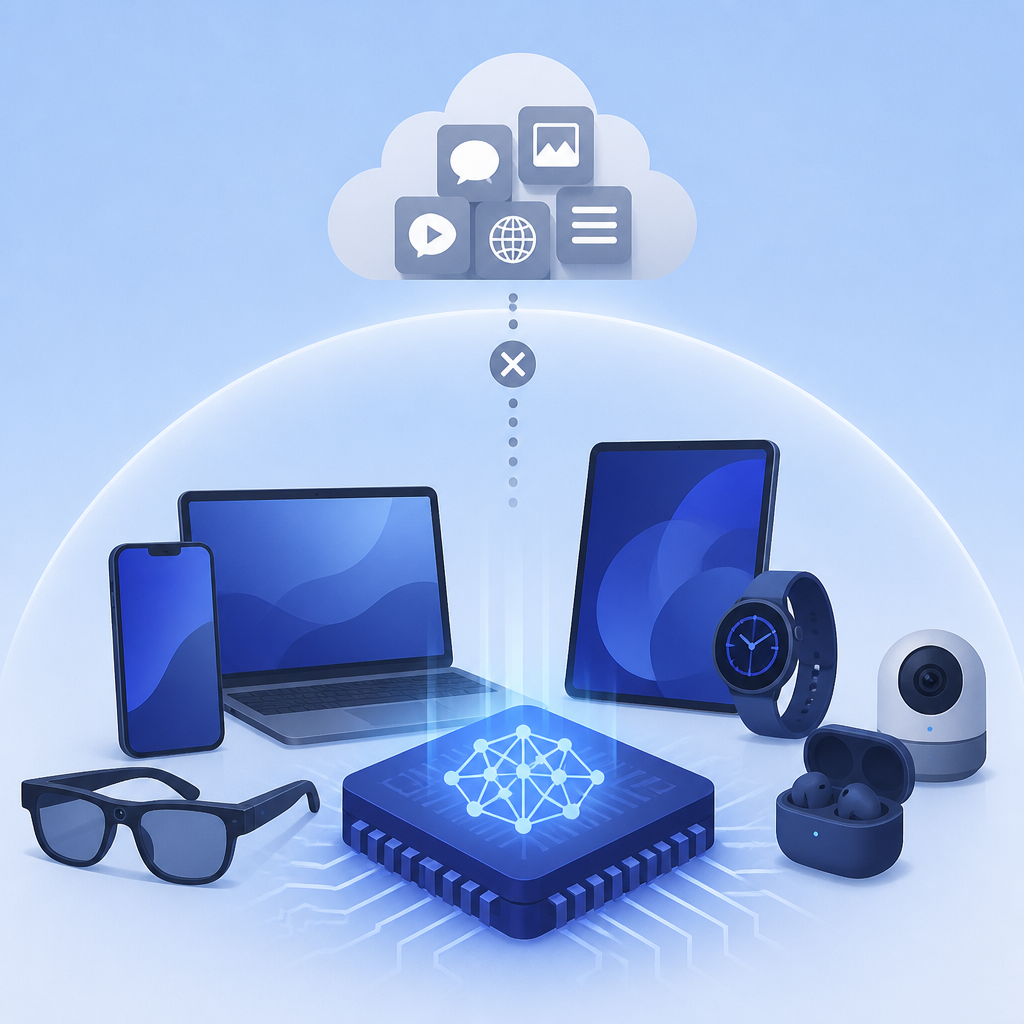
The market evidence already points in that direction. Smart glasses shipments are in the tens of millions today, and Amon says they could reach hundreds of millions within a couple of years. That is still below smartphones, but it is enough to prove the category is moving from novelty to scale. The lesson is not that phones disappear. It is that the phone stops being the only serious endpoint, and new wearables become the front door for agentic computing.
Form factor experimentation is the right strategy, not a distraction
Qualcomm’s decision to pursue over 40 designs is smart because the winning AI device has not been invented yet. A single form factor will not define this market. Some users will want glasses, others will want a pin, a watch, or earbuds with cameras. The common thread is not the shell but the function: a device that is always available, can see or hear the world, and can hand off intent to an agent. In a market this early, breadth beats certainty.
That is especially true because the first killer use case may not look glamorous at all. Amon’s banking example is telling: if a device can surface transaction details instantly, it removes friction without forcing the user into a traditional app flow. Those small wins matter. Consumer hardware succeeds when it solves repeated annoyances, not when it promises a grand reinvention. Qualcomm is positioning itself for that kind of incremental adoption across many shapes, rather than betting the company on one speculative gadget.
Chips, not just apps, will decide who wins
Qualcomm also understands that this transition is a silicon problem as much as a software problem. Smaller AI devices need more performance, lower power draw, and enough local intelligence to support constant sensing without draining a battery in an hour. That is why Amon said the company’s roadmap is being upgraded across the board. If the device layer changes, the chip layer must change with it. This is where Qualcomm has real leverage: it already sits at the intersection of mobile compute, connectivity, and power efficiency.
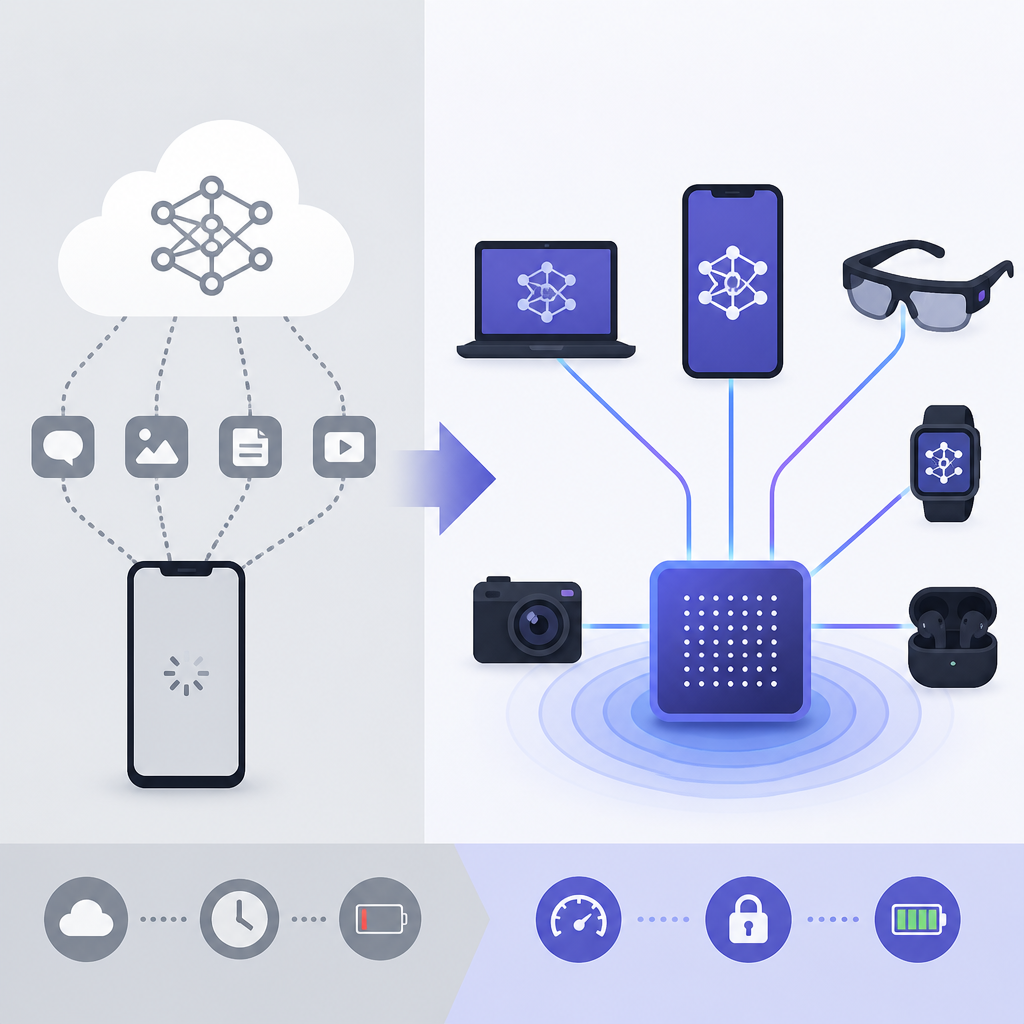
There is also a strategic opening here for Qualcomm against the software giants. Amon noted that AI companies want access to endpoints because those devices collect data that can be used to train future models and create bespoke experiences. That means the hardware layer becomes more valuable, not less. Whoever controls the endpoint controls the context, the data, and the user relationship. Qualcomm is not pretending to be an app company. It is trying to own the infrastructure that makes the app era obsolete.
The counter-argument
The skeptical view is strong: most new hardware categories fail, and consumers do not buy devices just because they are technically interesting. Smart glasses have been discussed for years without becoming mainstream. Wearables also face hard limits on battery life, privacy, comfort, and social acceptance. A camera pin or always-on headset can feel intrusive, and many users will not trade the familiarity of a phone for a device that is harder to trust.
There is also a platform risk. Apple, Google, and Samsung control the ecosystems that matter, and they can absorb or outcompete smaller hardware bets. If agents remain mostly software features inside existing phones, then Qualcomm’s 40 designs become a hedge rather than a breakthrough. The counter-argument says the company is spreading itself across too many form factors before the market has even chosen one.
That criticism is valid on one point: not all 40 designs will matter. But that does not weaken the strategy. It strengthens it. In a category where the interface, use case, and social norms are still unsettled, the right move is to explore widely and let usage decide. Qualcomm does not need every device to win. It needs one or two categories to break out, and it needs to be ready with chips when that happens. Waiting for certainty would hand the market to competitors who are willing to experiment first.
What to do with this
If you are an engineer, PM, or founder, treat AI devices as a systems problem, not a gadget trend. Build for context, power efficiency, and agent handoff rather than for isolated app screens. Design for one job that is done faster, with less friction, and with a clear privacy story. The winners in this market will not be the loudest demos. They will be the products that make the agent feel useful, trusted, and always within reach.
// Related Articles
- [IND]
Managed ChatGPT access is governed by 4 policy layers
- [IND]
OpenAI service terms put app risk on users
- [IND]
Anthropic’s Fable shutdown pushes teams to own models
- [IND]
DARA shows how think tanks can use AI with trust
- [IND]
Chrome V8 zero-day needs an immediate browser restart
- [IND]
WASI 0.3正式版でWebAssembly連携が楽になる