Anthropic Leak Exposes Mythos Model Details
Anthropic exposed draft assets and Mythos model details in a public cache, showing how one CMS setting can spill thousands of files.
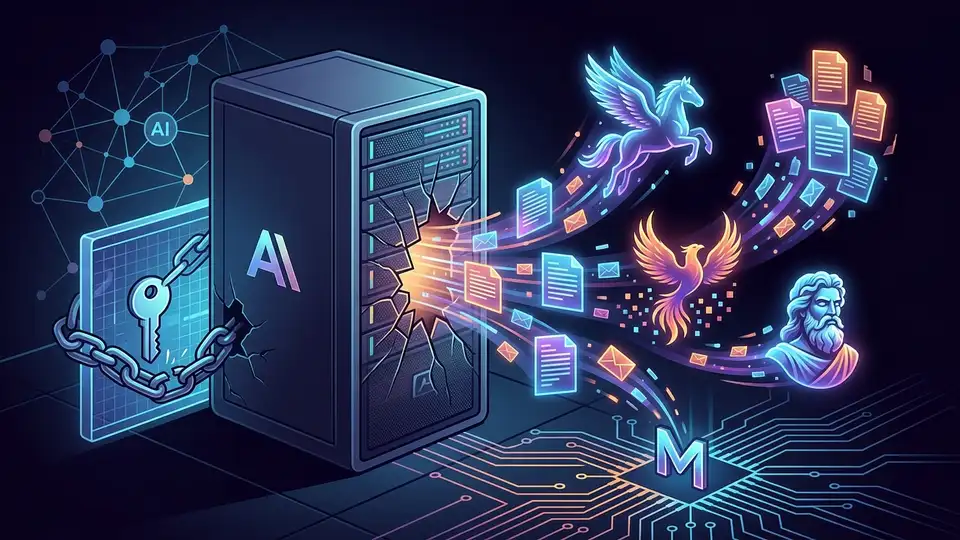
Anthropic accidentally left about 3,000 unpublished assets in a publicly accessible cache, and the spill included draft posts, images, and documents tied to an unreleased model called Anthropic Mythos. The leak matters because the exposed material pointed to improved reasoning, coding, and cybersecurity performance in a model that had not been announced.
This is a reminder that a modern AI company can lose sensitive information without a dramatic hack. One misconfigured content management system was enough to expose internal files, including a CEO retreat in the U.K. and an image marked parental leave.
What was exposed in the cache
Get the latest AI news in your inbox
Weekly picks of model releases, tools, and deep dives — no spam, unsubscribe anytime.
No spam. Unsubscribe at any time.
The exposed trove was not a single document or a stray screenshot. It was a public data cache that held roughly 3,000 unpublished assets, which makes the incident more like an internal filing cabinet left on the sidewalk than a one-off mistake.
Among the files were draft blog posts, internal documents, and images that were never meant to leave the company. The most sensitive item was the set of details about Mythos, an upcoming Anthropic model described in internal material as a step up in capability.
That matters because model rumors are cheap, but concrete capability claims are valuable. If an internal draft says a new model improves reasoning, coding, and cybersecurity work, that gives competitors and customers a clearer picture of where the company is placing its bets.
- About 3,000 unpublished assets were exposed
- Files included draft posts, images, and internal documents
- One internal image was marked parental leave
- Mythos was described as a step change in capabilities
- The disclosed focus areas were reasoning, coding, and cybersecurity
How a CMS setting opened the door
The root cause was not a sophisticated exploit. Anthropic’s CMS defaulted uploaded assets to public unless someone explicitly marked them private. That is the kind of setting that can sit unnoticed until a cache gets indexed or discovered by someone looking in the right place.
Anthropic later secured the data after Fortune alerted the company on Thursday, and a spokesperson said the problem came from human error in CMS configuration. The company also said the incident had nothing to do with Claude or other AI tools.
“The issue was due to human error in the configuration of a content management system and was unrelated to Claude or other AI tools,” an Anthropic spokesperson told Fortune.
That distinction matters. A lot of people will read this as an AI security story, but the immediate failure was old-fashioned ops hygiene. If a CMS defaults to public, the company needs guardrails, review steps, and access controls that make the safe choice the easy one.
Anthropic is not alone here. Apple and Nintendo have had similar exposure problems in the past, which tells you this is a recurring enterprise security issue, not a one-company blunder. The difference now is that AI tools can help outsiders sift through exposed content faster, spot patterns, and connect dots across large data sets.
Why this leak matters for AI companies
For an AI lab, leaked draft material can reveal more than product names. It can expose release timing, internal priorities, talent signals, and the specific capability gaps a company is trying to close before launch.
In this case, the Mythos notes suggest Anthropic wants stronger performance in exactly the areas that matter most to enterprise buyers: reasoning, coding, and cybersecurity. Those are also the areas where model comparisons get ugly fast, because even small gains can change procurement decisions.
Security teams should also pay attention to the wider lesson. AI companies often run on a mix of research systems, product systems, marketing tools, and internal docs. If any one of those defaults to public, the blast radius can be much larger than the team expects.
- Draft model notes can reveal product strategy before launch
- Internal docs can expose hiring, events, and leadership plans
- Public caches are easy to index and search at scale
- AI-assisted scanning makes exposed data easier to find
How this compares with other tech leaks
This incident fits a familiar pattern in tech: the leak is often mundane, but the consequences are not. A misconfigured store, an exposed bucket, or a public cache can spill enough material to create legal, competitive, and reputational pain.
What makes the Anthropic case interesting is the mix of content. The cache included model details, executive event planning, and personal human-resources material. That combination shows how one access-control mistake can cross product, operations, and employee privacy in a single shot.
Here is the useful comparison: the vulnerability was simple, but the exposure was broad. That is the same math security teams keep seeing when cloud defaults and content tools are left to drift without strict review.
- Anthropic exposed about 3,000 assets through a public cache
- Apple and Nintendo have also dealt with public data exposures
- AI tools now make large-scale leak discovery faster than manual review
- Internal model notes can be more sensitive than marketing copy
What teams should do now
If your company uses a CMS, doc store, or asset pipeline, treat public-by-default settings as a bug, not a convenience. The safest setup is the one that assumes every uploaded file is private until a human approves release.
Teams should also audit old caches and unpublished folders, especially if they contain model names, roadmap notes, executive plans, or employee data. If a tool can index it, an outsider can probably find it.
My take: the next big AI leak will probably not come from a dramatic breach at all. It will come from a boring default, a forgotten cache, and a file that never should have been public in the first place. The question for AI companies is simple: how many internal systems still assume public access unless someone remembers to turn it off?
For more on AI security and model releases, see our coverage of Claude Code security concerns and recent model release tracking.
// Related Articles
- [MODEL]
GPT-5.6 turns OpenAI into a model menu
- [MODEL]
Seedream 5.0 Pro Is the Right Choice for Editable AI Images
- [MODEL]
Midjourney v8.2 release is close
- [MODEL]
Rust KRAID enters Mesa for Arm Mali GPUs
- [MODEL]
OpenAI Opens GPT-5.6 and Launches Live Voice AI
- [MODEL]
Mistral is right to push Leanstral into proof engineering