Apple’s Gemini Siri Deal Changes iPhone AI
Apple confirmed a Gemini-based Siri rollout, with Google Cloud powering Apple Foundation Models and a more personal Siri later in 2026.
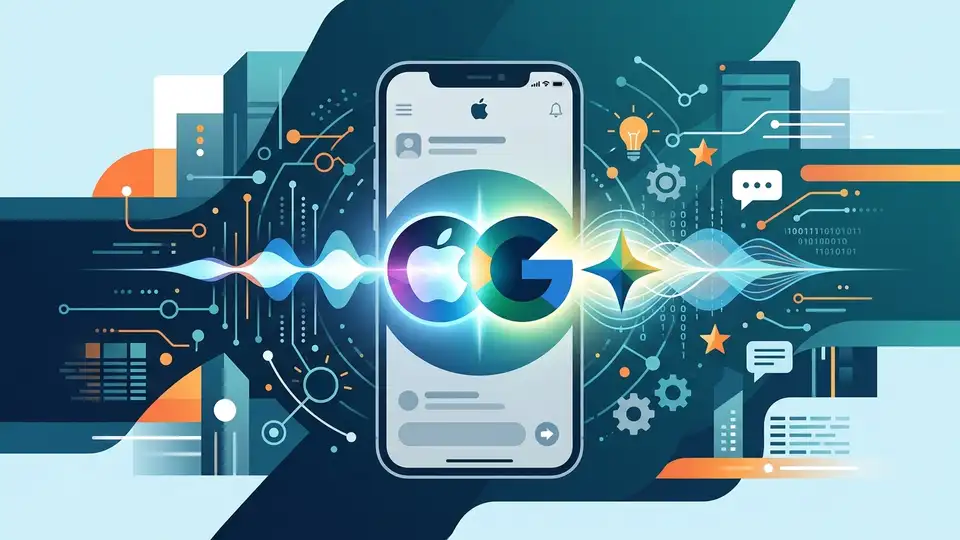
Apple confirmed that Siri will use Gemini-based models and Google Cloud infrastructure.
Apple and Google turned months of rumor into something much harder to ignore on April 22, 2026. Google Cloud CEO Thomas Kurian said Apple is a strategic Google Cloud customer and that a more personalized Siri will arrive later this year.
That matters because this is not a small feature tweak. Bloomberg previously reported that Apple is paying about $1 billion a year for a custom 1.2-trillion-parameter Gemini variant, and Apple and Google had already issued a joint statement in January about a multi-year collaboration.
| Fact | What was reported | Why it matters |
|---|---|---|
| Announcement date | April 22, 2026 | Cloud Next is when the partnership became public |
| Reported annual payment | About $1 billion | Shows Apple is buying serious cloud AI capacity |
| Model size | 1.2 trillion parameters | Signals a very large custom Gemini variant |
| Joint statement date | January 11-12, 2026 | Confirms the deal predated Cloud Next |
What Apple actually confirmed
Get the latest AI news in your inbox
Weekly picks of model releases, tools, and deep dives — no spam, unsubscribe anytime.
No spam. Unsubscribe at any time.
The cleanest read is simple: Apple’s next Siri upgrade is tied to Google’s Gemini stack, and Google Cloud is part of the plumbing. Kurian did not publish a full technical spec, a launch date down to the day, or a parameter count from the stage. He did confirm enough to make the direction of travel obvious.
That distinction matters because the internet tends to flatten “confirmed” into “fully explained.” This one is confirmed in the broad sense, but the important implementation details are still cloudy. Apple has said more in private and in legal filings than it has in a public engineering write-up.
Apple and Google also had a head start here. Their January joint statement said the next generation of Apple Foundation Models would be based on Google’s Gemini models and cloud infrastructure. So Cloud Next was less a surprise announcement than a public receipt.
- Apple is shifting Siri’s cloud intelligence layer.
- Google Cloud is part of the backend story.
- Gemini is the model family Apple is building on.
- Apple Newsroom is where the company’s official statements live.
How Siri likely routes requests
The best way to think about the new Siri is as a three-layer system. Small tasks stay on the iPhone. Bigger tasks move into Apple’s cloud stack. Optional third-party providers still exist for users who want to send a query elsewhere.
On-device tasks are the boring ones, and that is a compliment. Setting timers, opening apps, toggling Wi-Fi, and basic playback control can stay local on Apple silicon. That keeps latency low and avoids unnecessary data transfer.
The interesting part is the middle layer. Queries like summarizing email, planning a trip, analyzing a photo, or pulling together context from multiple apps are the kinds of requests that need more compute than a phone can comfortably provide. That is where Gemini-based Apple Foundation Models enter the picture.
Apple’s opt-in integrations are a separate path. If you ask Siri to use ChatGPT, Apple asks before sending the request. Gemini may get the same treatment later, which would make Siri a traffic cop for multiple model providers rather than a single assistant with one brain.
“The next generation of Apple Foundation Models will be based on Google’s Gemini models and cloud infrastructure.” — Apple and Google joint statement, January 2026
The important detail is that the user experience may look familiar even when the model stack changes underneath it. Siri can feel like Siri while the actual intelligence behind it becomes much more capable.
Privacy is still the real question
Apple’s Private Cloud Compute system is one of the most serious privacy architectures any big tech company has published. Apple says PCC uses Apple-controlled servers, encrypted requests, stateless processing, cryptographic attestation, and public binaries that researchers can inspect in a virtual environment.
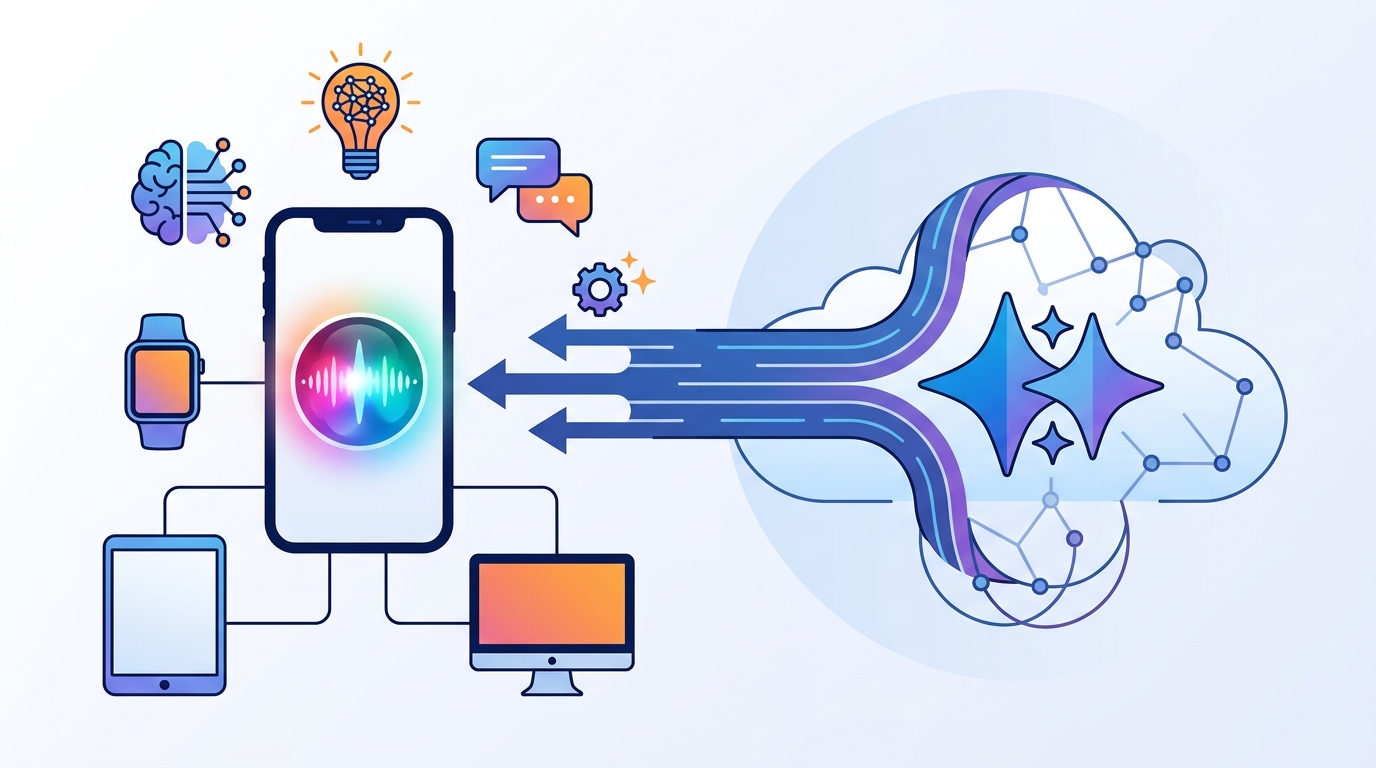
That is the theory. The open question is how Gemini fits into that design in practice. One reading says Gemini runs inside PCC on Apple-controlled hardware. Another says some of the workload may run in Google data centers if Apple needed more capacity for heavy Siri traffic.
Those are very different privacy stories. If Gemini inference stays inside PCC, Apple keeps a tight grip on the request path. If some requests leave Apple-controlled infrastructure, then Apple is depending on contractual privacy terms and de-identification rules that the public has not fully audited.
- Apple Privacy explains the company’s public position.
- Private Cloud Compute is Apple’s technical framework for cloud AI.
- MacRumors has tracked the rollout details closely.
- Bloomberg reported the $1 billion and 1.2T-parameter details first.
For most people, the difference may be academic. For journalists, lawyers, activists, and anyone with a high threat model, it is the whole story. If Apple does not publish an audited end-to-end architecture, the safest assumption is that the cloud path is better than many AI services, but not identical to pure on-device processing.
What this means for the iPhone owner
Apple is trying to solve a problem it created for itself: Siri has lagged behind the best AI assistants, and users know it. By building on Gemini rather than pretending Apple could catch up alone, Apple is buying time and capability at the same time.
That also changes the competitive picture. If Siri becomes genuinely useful for multi-step tasks, a lot of people will stop reaching for ChatGPT first. The assistant baked into the phone may become good enough for everyday work, which is a bigger shift than a lot of Apple commentary gives it credit for.
There is also a business angle. Apple keeps the front door, the interface, and the user relationship. Google gets model and cloud revenue. OpenAI still has a place in Siri for opt-in tasks, but Apple is no longer dependent on one external AI partner.
Here is the practical comparison that matters:
- Old Siri: fast for simple commands, weak for complex requests.
- New Siri: local for small tasks, Gemini-backed for heavier ones.
- ChatGPT-on-Siri: still opt-in, still separate from the default assistant.
- Privacy-sensitive mode: likely still the safest path for users who want minimal cloud exposure.
If Apple ships this the way the reporting suggests, the biggest change will not be a flashy demo. It will be the first time a mainstream phone assistant can handle real context without forcing users into a separate app or a separate workflow.
What to watch next
The next checkpoint is simple: Apple needs to explain where Siri runs, what leaves the device, and which parts of the stack are optional. Until then, the deal is real, the hardware and cloud implications are real, and the privacy story is still only partly visible.
My bet is that Apple will keep the public messaging narrow and the default behavior broad. If that happens, most iPhone owners will just notice that Siri finally answers more useful questions. The people who care about data flow will keep asking the same question Apple has not fully answered yet: exactly where does the request go?
When Apple publishes that architecture, we will know whether Gemini-on-Siri is a clever backend swap or the start of a much deeper dependence on Google infrastructure.
// Related Articles
- [IND]
WebX 2026 turns speaker hype into a conference brief
- [IND]
AI Weekly: 2026-07-06 ~ 2026-07-13
- [IND]
The AI Act should be treated as Europe’s operating system for AI
- [IND]
Booz Allen’s OpenAI Deal Is Real Advantage, Not Hype
- [IND]
OpenSearch’s vector search benchmark in 5 parts
- [IND]
Vector Databases That Work in Production