Claude Fable 5 could speed up crypto attacks
4 ways Claude Fable 5 could change crypto security, from faster recon to sharper social engineering, as DeFi losses top $840M.

Claude Fable 5 may speed up crypto attacks more than it invents new ones.
Anthropic’s new model matters because DeFi has already lost more than $840 million this year, mostly to human error and operational failures.
| Item | What it changes | Risk or defense focus |
|---|---|---|
| Claude Fable 5 | Stronger reasoning and coding | Faster attack scouting and faster defense work |
| Claude Mythos 5 | Restricted, more capable variant | Security vetting and misuse controls |
| DeFi protocols | Large financial exposure | Keys, signing flows, admin access |
| Pendle-style defensive use | AI-assisted code review | Bug finding and contract testing |
1. Faster reconnaissance, not magic exploits
Get the latest AI news in your inbox
Weekly picks of model releases, tools, and deep dives — no spam, unsubscribe anytime.
No spam. Unsubscribe at any time.
The biggest shift is speed. Security experts quoted in the story say advanced AI is unlikely to invent totally new crypto attacks, but it can compress the time needed to find weak points, compare code versions, and spot bad settings.
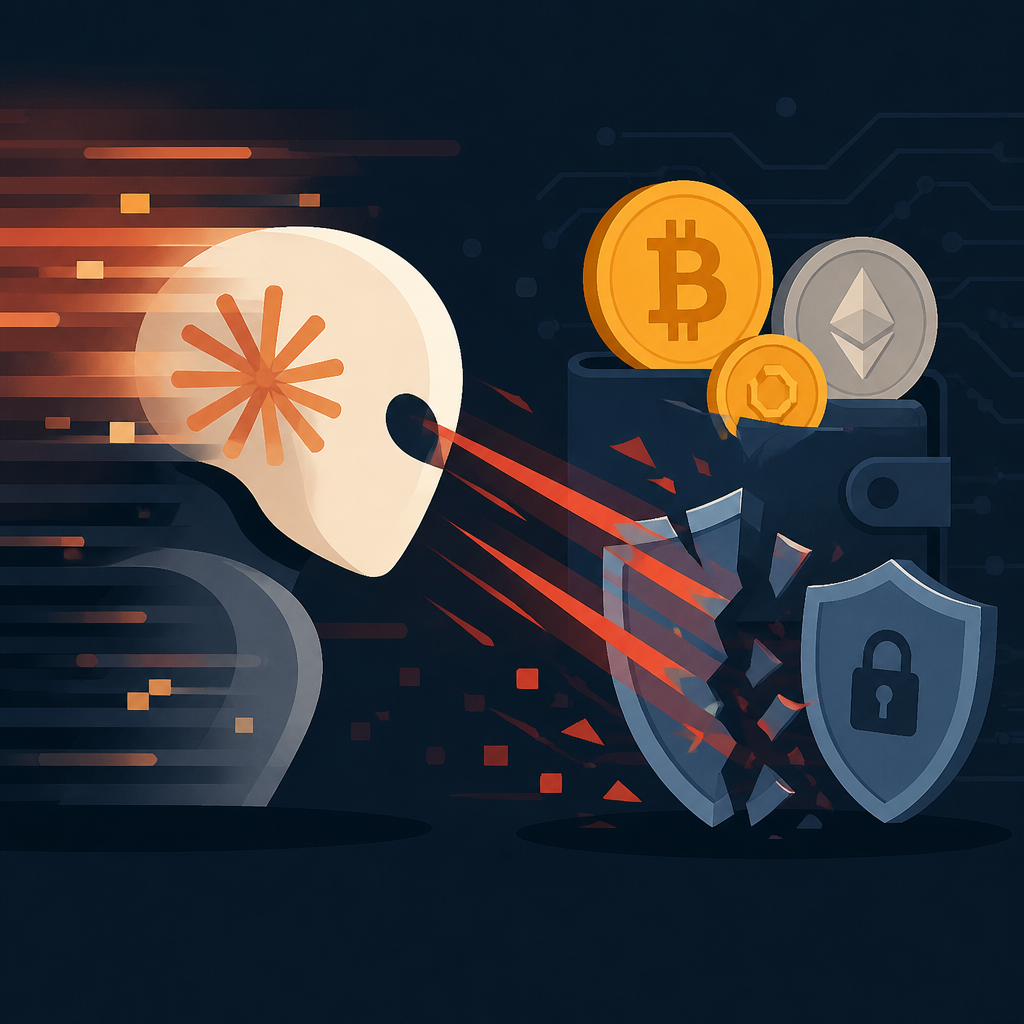
That matters in crypto because many failures are already visible in public code, configs, and audit reports. A model like Claude Fable 5 can scan far more material than a human team in the same time, which makes the scouting phase cheaper for attackers and the review phase faster for defenders.
- Diff every commit in a repo
- Search config files for exposed secrets
- Summarize audit findings into attack ideas
- Map admin paths and privileged roles
2. Social engineering gets a larger boost
The article’s clearest warning is that the biggest DeFi losses have not come from fancy smart-contract bugs. They have come from social engineering, exposed keys, and flawed signing flows. AI helps here by making convincing messages, fake support threads, and tailored phishing attempts much easier to produce at scale.
That is especially dangerous because one successful impersonation can unlock admin access or private keys. The Drift Protocol incident, tied to a long social-engineering campaign, is a reminder that the weakest link is often a person, not a contract.
- Convincing phishing emails and DMs
- Fake upgrade or signing requests
- Targeted messages based on public repo history
- Impersonation of auditors, founders, or support staff
3. Private keys and signing flows become the real battleground
CoinDesk highlights a recent loss at Humanity Protocol tied to private-key compromise, including access to multiple keys on an employee laptop. That example shows why AI-driven attacks do not need a novel exploit if they can reach a laptop, a browser wallet, or a sloppy approval step.
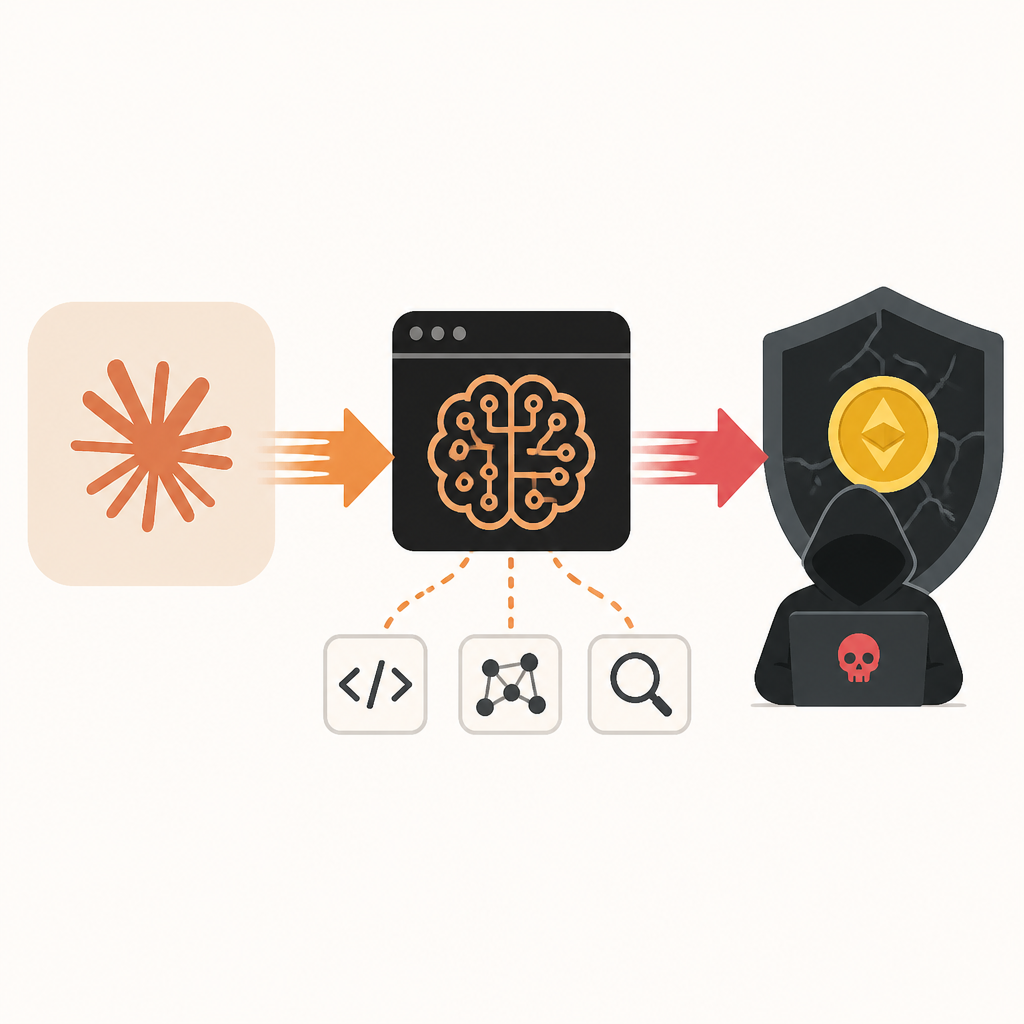
For defenders, this pushes attention toward hardware roots of trust, secure elements, and Clear Signing. If users cannot verify what they are approving on a trusted screen, an AI-assisted attacker can hide a bad action inside an ordinary-looking request.
Defensive checklist:
- Keep private keys off general-purpose laptops
- Use certified secure elements
- Require trusted display verification
- Review every privileged signing flow
- Separate admin access from daily work devices
4. Restricted frontier models are not a full shield
Anthropic says Claude Fable 5 routes high-risk requests to a weaker fallback model and that more than 1,000 hours of external bug-bounty work found no universal way to break the system. Even so, the company also admits the controls are not a reliable defense against a determined attacker.
That means safety filters raise friction, but they do not remove risk. A well-funded adversary can keep probing, and the value of faster cyber reasoning gives them a strong incentive to try. The existence of a restricted sibling model, Claude Mythos 5, shows how powerful the capability is, not how solved the problem is.
- Fallback routing can reduce obvious abuse
- Vetted access narrows distribution
- Determined attackers can still probe for gaps
- Security teams need monitoring outside the model itself
5. The same tools also help defenders move earlier
Not every effect is negative. Pendle told CoinDesk it has used Anthropic models defensively to map codebases, test contracts, and catch bugs before deployment. That use case fits crypto well, because smart contracts are usually compact enough for good auditors and AI tools to inspect quickly.
For teams that already write and review code well, the model can act like a fast assistant for repetitive review work. It can help trace dependencies, check fresh deployments, and flag mistakes before they become expensive incidents.
- Map a new codebase faster
- Stress-test contract edge cases
- Review fresh deployments before funds arrive
- Draft cleaner code and notes for auditors
How to decide
If you run a DeFi protocol, the priority is not only contract auditing. It is key custody, signing discipline, access control, and phishing resistance. Claude Fable 5 makes those human and operational weak points more attractive to attackers because it speeds up the search for mistakes.
If you are a builder or security team, the same model can help with code review and testing, but only if you keep private keys, admin actions, and approval flows outside everyday devices. In this story, the winner is not the model with the best chatbot reply. It is the team that removes the easiest path from prompt to loss.
// Related Articles
- [CHAIN]
MetaBot’s 8-module stack turns METAKPK into a closed loop
- [CHAIN]
Bitcoin Clarity Act Lets Banks Lose Control
- [CHAIN]
The CLARITY Act Will Reshape Crypto Before It Becomes Law
- [CHAIN]
Ethereum’s 66% drop leaves ETH at a buy zone test
- [CHAIN]
SEC NMS rescission could unlock tokenized stock DeFi
- [CHAIN]
AI tokens are trading as a crypto sector now