Deezer says 44% of new uploads are AI music
Deezer says AI tracks now make up 44% of new uploads, with 75,000 arriving daily and most detected fraud streams demonetized.
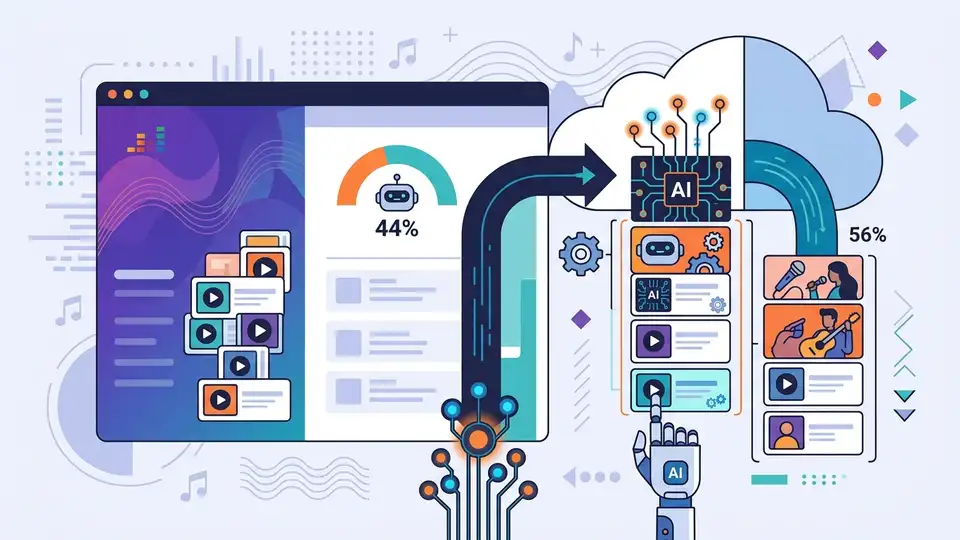
Deezer says AI-generated music now makes up 44% of its new uploads.
Deezer says nearly 75,000 fully AI-generated tracks are uploaded to its service every day, and that figure now equals 44% of all daily uploads. The company also says it has already detected and tagged more than 13.4 million AI tracks in 2025, which gives a sense of how fast synthetic music is piling up.
| Metric | Deezer figure | What it means |
|---|---|---|
| Daily AI uploads | ~75,000 | AI tracks are now a major share of incoming content |
| Share of daily uploads | 44% | Almost half of new deliveries are synthetic |
| Monthly AI uploads | 2M+ | Volume is high enough to reshape moderation |
| AI share of streams | 1-3% | Uploads are rising much faster than listening |
| Fraudulent AI streams | 85% | Most plays on these tracks look artificial |
| Detected and tagged in 2025 | 13.4M+ | Deezer has built a large detection dataset |
AI uploads are exploding faster than listening
Get the latest AI news in your inbox
Weekly picks of model releases, tools, and deep dives — no spam, unsubscribe anytime.
No spam. Unsubscribe at any time.
The most important detail in Deezer’s update is the gap between uploads and actual listening. AI-generated tracks now account for 44% of daily deliveries, but they still make up only 1% to 3% of total streams on the platform. That tells you these uploads are flooding the catalog far faster than listeners are choosing them.
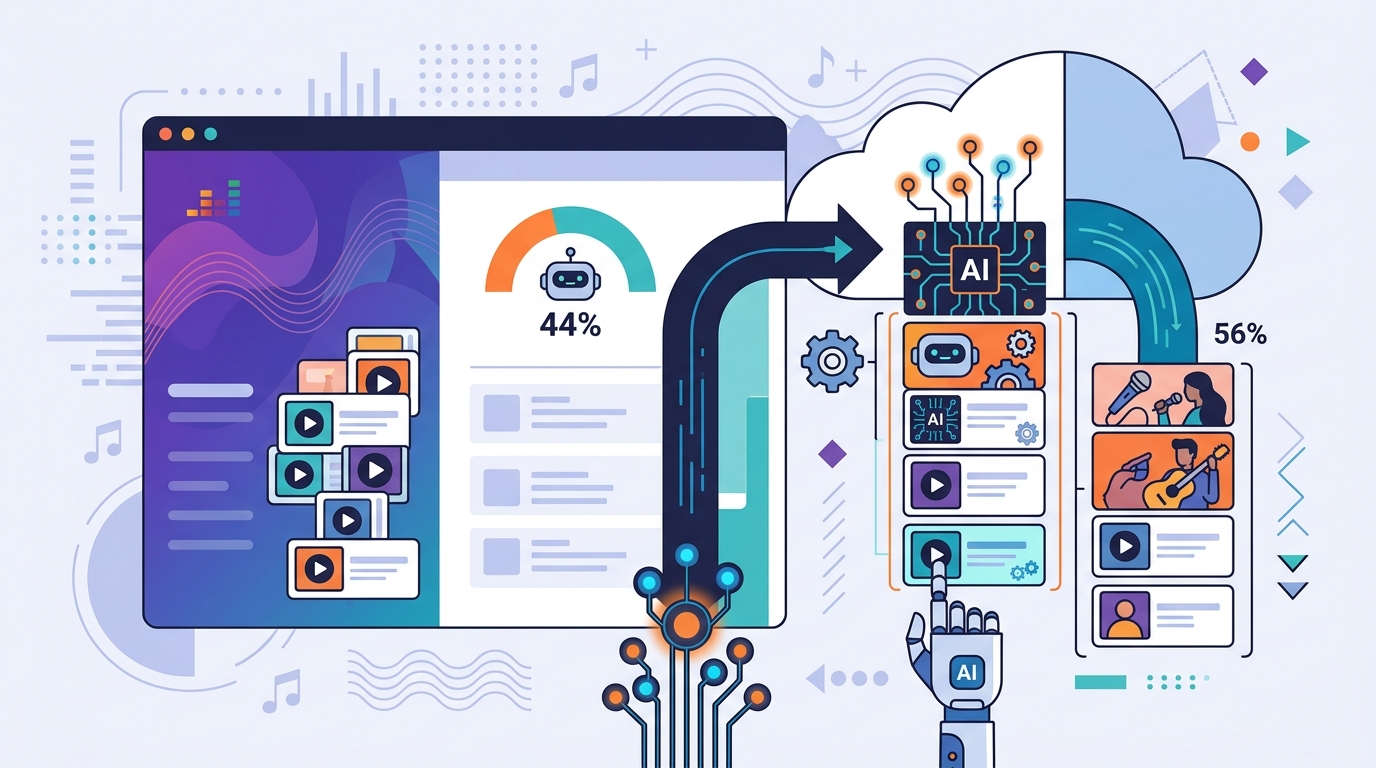
That gap matters because streaming services pay royalties based on consumption. If huge volumes of synthetic tracks are uploaded with the goal of gaming the system, the economics get distorted fast. Deezer says it uses detection to exclude manipulated streams from royalty payments, which is a direct response to that incentive.
- Daily AI uploads: nearly 75,000
- Share of uploads: 44%
- Share of streams: 1% to 3%
- Fraud rate on AI streams: 85%
- AI tracks tagged in 2025: more than 13.4 million
Deezer is taking a harder line than most platforms
Deezer has been unusually public about this problem. It says it was the first music streaming platform to explicitly tag AI-generated music, and it began using its patent-pending detection system in early 2025. Since then, the company has also stopped storing hi-res versions of AI tracks, which is a small but telling policy choice: if a track is synthetic, Deezer does not want to spend premium storage or quality treatment on it.
Alexis Lanternier, Deezer’s CEO, put the company’s position plainly in the newsroom post:
“AI-generated music is now far from a marginal phenomenon and as daily deliveries keep increasing, we hope the whole music ecosystem will join us in taking action to help safeguard artist’s rights and promote transparency for fans.”
He added that Deezer made its detection tech available for licensing in January, which means the company is trying to turn a moderation problem into a product. That is a smart move. If the industry wants consistent labeling and fraud control, the tools cannot live inside one platform forever.
The bigger issue is fraud, not just AI itself
It is easy to frame this as a debate about machine-made songs versus human-made songs. Deezer’s data says the more immediate problem is fraud. The company says 85% of streams on fully AI-generated tracks were fraudulent in 2025, and that is why it demonetizes those plays.
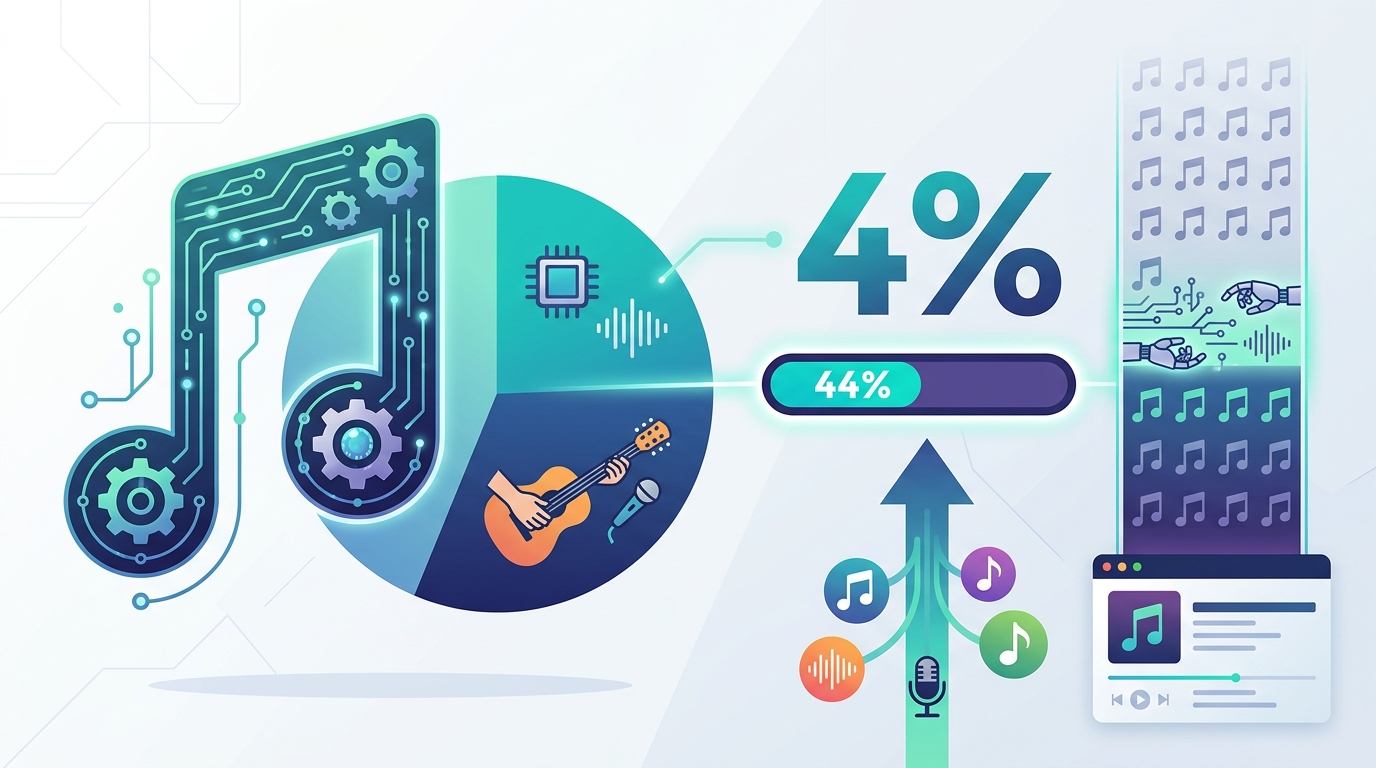
That matters because AI music is not automatically bad. The issue is when synthetic output is used to flood catalogs, trigger recommendation systems, and siphon money away from actual artists. Deezer’s own survey data reinforces that point: the company says 97% of respondents could not tell the difference between AI and human music in a blind test, and 80% wanted 100% AI-generated music clearly labeled.
- 97% could not tell AI and human music apart in Deezer’s survey
- 80% wanted 100% AI music labeled
- 73% of streaming users wanted to know if a service recommends AI music
- 52% said AI songs should not sit in the main charts with human songs
What this means for the rest of the music industry
Deezer’s numbers create pressure on every other streaming platform. If one service can detect, tag, and filter synthetic music at this scale, then the argument that the problem is too hard starts to look weak. The harder question is whether competitors want to absorb the operational cost and the political heat that come with stricter labeling.
The company also points to a broader risk. In a study with CISAC and PMP Strategy, Deezer says nearly 25% of creators’ revenues could be at risk by 2028, equal to as much as €4 billion. That is the kind of number labels, publishers, and rights groups cannot ignore.
Deezer’s own detection stack also matters because it is not limited to one model family. The company says it can detect tracks from systems such as Suno and Udio, and can extend to other tools if it has enough training examples. That flexibility is important because the model churn in generative audio is moving quickly.
For readers tracking music-tech policy, this is one of the clearest signs yet that AI audio is becoming a catalog management problem, a fraud problem, and a rights problem at the same time. Deezer is treating all three as one issue.
Deezer’s next move will matter more than the headline
The headline number is striking, but the real story is what happens after detection. If Deezer keeps tightening labels, filtering recommendations, and licensing its detector, it could become a reference point for how streaming services handle synthetic media in practice.
The open question is whether the rest of the industry follows with similar rules or keeps treating AI uploads as a moderation edge case. If upload volumes keep rising from 10,000 a day to 75,000 in a little over a year, platform policy will matter more than ever. The next test is simple: will other services copy Deezer’s labeling and fraud controls, or wait until synthetic catalogs overwhelm them too?
// Related Articles
- [IND]
WebX 2026 turns speaker hype into a conference brief
- [IND]
AI Weekly: 2026-07-06 ~ 2026-07-13
- [IND]
The AI Act should be treated as Europe’s operating system for AI
- [IND]
Booz Allen’s OpenAI Deal Is Real Advantage, Not Hype
- [IND]
OpenSearch’s vector search benchmark in 5 parts
- [IND]
Vector Databases That Work in Production