Kimi K2.5 Pricing in 2026: Plans and API Costs
Kimi K2.5 launched on Jan. 27, 2026 with free chat access, $0.60/M input tokens, and a 256K context window.
Moonshot AI launched Kimi K2.5 on January 27, 2026, and the pricing immediately got attention: free chat access, roughly $19/month for paid chat in some markets, and API input pricing at $0.60 per million tokens. That is the kind of math that makes teams pause before renewing a much pricier model subscription.
What makes Kimi K2.5 interesting is not just the sticker price. It ships with a 256K context window, multimodal input, and OpenAI-compatible API calls through platform.moonshot.ai, which lowers the switching cost for developers who already built around the OpenAI SDK.
If you are choosing between chat plans, API usage, or a third-party route like OpenRouter or Together AI, the real question is simple: where does Kimi K2.5 save money without creating a new headache?
What Kimi K2.5 actually costs
Get the latest AI news in your inbox
Weekly picks of model releases, tools, and deep dives — no spam, unsubscribe anytime.
No spam. Unsubscribe at any time.
Moonshot AI splits Kimi K2.5 pricing into two very different paths. One is the consumer chat product at Kimi, and the other is the API for builders. That distinction matters because the chat tier is meant for people, while the API is meant for software.
The free chat tier is generous by current standards. You get access to Kimi K2.5, multimodal input, web search, file upload, and a daily cap of about 30 to 50 messages. The paid chat plan varies by region, but the guide data puts it around $19/month internationally and about 49 CNY/month in China for the basic paid membership.
The API pricing is where Kimi starts to look aggressive. Moonshot AI lists Kimi K2.5 at $0.60 per million input tokens and $2.50 to $3.00 per million output tokens. For teams with heavy token usage, that difference adds up fast.
- Free chat: $0, with around 30 to 50 messages per day
- Paid chat: about $19/month internationally, lower in China
- Direct API: $0.60/M input tokens, $2.50 to $3.00/M output tokens
- Third-party API: OpenRouter at about $0.45/M input and $2.20/M output
- Model context: 256K tokens
Why the free tier matters for developers and power users
The free tier is useful in a way many AI products are not. It is not a tiny demo with a few prompts and a paywall after lunch. You can actually test long-context work, image analysis, file uploads, and web search without paying anything up front.
That matters because context windows are often where free plans get stingy. Kimi K2.5 gives you 256K tokens even on the free chat tier, which is far larger than what many competitors include for casual users. For researchers, students, and founders testing a product idea, that alone can justify trying Kimi before touching a credit card.
There is a catch, though. The interface is Chinese-first, peak-time access is limited, and the free tier is capped daily. If you are using Kimi as a serious daily tool, the free plan is a test drive, not a permanent home.
“The best way to have a good idea is to have lots of ideas.” — Linus Pauling
That quote fits Kimi’s free tier well. Moonshot AI is letting a lot of people experiment with a capable model before they decide whether it deserves a paid seat in their workflow.
How Kimi compares with ChatGPT, Claude, and Gemini
Pricing comparisons are where Kimi K2.5 gets hard to ignore. The model is not the cheapest on the market, but it undercuts the big Western providers by a wide margin while keeping a strong feature set. For teams watching margins, that is enough to change the shortlist.
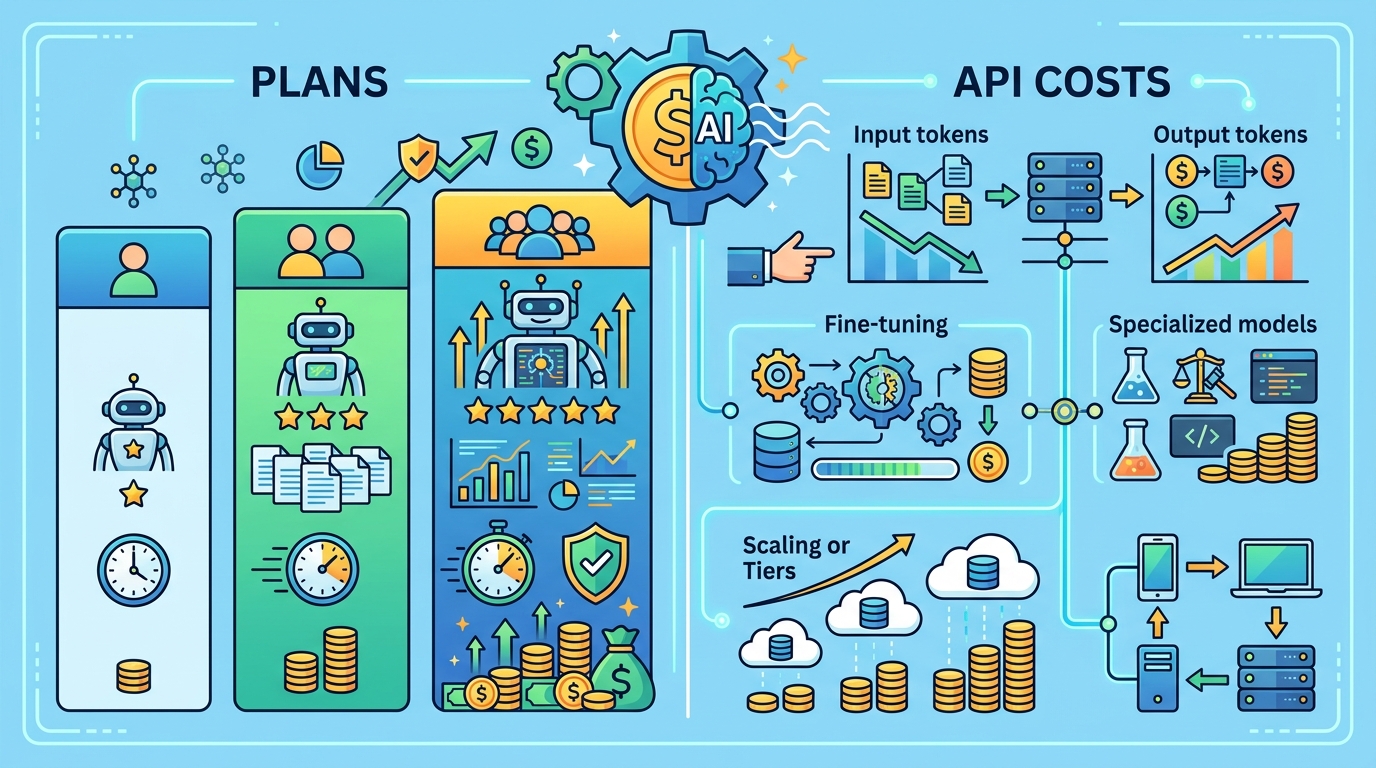
On the subscription side, the usual benchmark is still $20/month for ChatGPT, Claude, and Gemini paid plans. Kimi’s paid chat pricing can land below that, especially in China, while its free tier offers a larger context window than the free access most people get elsewhere.
On the API side, the gap is even clearer. The guide’s comparison puts Kimi K2.5 at about 4x to 17x cheaper than GPT-5.4 on token pricing, and about 5x to 6x cheaper than Claude Sonnet 4.6. DeepSeek V4 is cheaper on raw token cost, but Kimi keeps the edge in multimodal support and long-context work.
- Kimi K2.5: $0.60/M input, $2.50/M output
- GPT-5.4: about $2.50 to $10.00/M input, $10.00 to $30.00/M output
- Claude Sonnet 4.6: about $3.00/M input, $15.00/M output
- Gemini 3.1 Pro: about $1.25/M input, $5.00/M output
- DeepSeek V4: about $0.27/M input, $1.10/M output
If you are building a product that burns millions of tokens each month, this is not a small difference. A workload that costs thousands of dollars on one provider can drop into the low hundreds on Kimi, especially if automatic context caching trims repeated input by up to 75%.
Where the hidden costs show up
Kimi K2.5 looks cheap until you ignore the fine print. The API free tier requires a $1 recharge to activate, and higher rate limits depend on cumulative recharge amounts. That is normal for many API businesses, but it matters if you are trying to pilot a tool with a tiny budget.
Moonshot AI ties rate limits to recharge tiers. The starter tier sits around 3 requests per minute, Tier 1 rises to 200 RPM after $10 cumulative recharge, and Tier 5 reaches 10,000 RPM after $3,000. If you are shipping a real product, those thresholds can affect launch timing as much as token pricing does.
There is also the ecosystem question. OpenAI and Anthropic have deeper enterprise tooling, larger partner ecosystems, and more mature docs in English. Kimi gives you lower costs and a strong model, but the surrounding product experience is still catching up.
- API activation: $1 minimum recharge
- Voucher bonus: $5 after reaching $5 cumulative recharge
- Starter API limit: about 3 RPM
- Tier 1 API limit: 200 RPM after $10 cumulative recharge
- Tier 5 API limit: 10,000 RPM after $3,000 cumulative recharge
One more practical detail: Kimi’s API is OpenAI SDK compatible. If your app already talks to an OpenAI-style endpoint, switching often means changing the base URL and API key, not rewriting your whole integration.
Should you pay for Kimi K2.5?
For solo developers, budget-conscious startups, and teams shipping token-heavy products, Kimi K2.5 is easy to justify. The free tier is good enough for evaluation, the paid chat plan is cheaper than the standard $20/month benchmark in some regions, and the API pricing can cut monthly spend dramatically.
The trade-off is polish, not capability. If your team needs a deeply mature English-language interface, long-standing enterprise support, or a vendor with a bigger global footprint, the usual Western options may still fit better. If your priority is cost per useful token, Kimi deserves a serious look.
My read is straightforward: if you are running an app that processes long documents, codebases, or chat histories, test Kimi K2.5 on a real workload this week. If the token bill drops the way Moonshot AI claims, you will know quickly whether the savings are worth the smaller ecosystem around it.
For a related pricing comparison, see our AI model pricing comparison. The next move is simple: run your own token math before you commit to another monthly AI bill.
// Related Articles
- [MODEL]
GPT-5.6 turns OpenAI into a model menu
- [MODEL]
Seedream 5.0 Pro Is the Right Choice for Editable AI Images
- [MODEL]
Midjourney v8.2 release is close
- [MODEL]
Rust KRAID enters Mesa for Arm Mali GPUs
- [MODEL]
OpenAI Opens GPT-5.6 and Launches Live Voice AI
- [MODEL]
Mistral is right to push Leanstral into proof engineering