Midwest Faces Hail, Wind, and Tornado Risk Monday
Severe storms may hit the Midwest Monday, with hail, 75 mph winds, and possible tornadoes across several states.
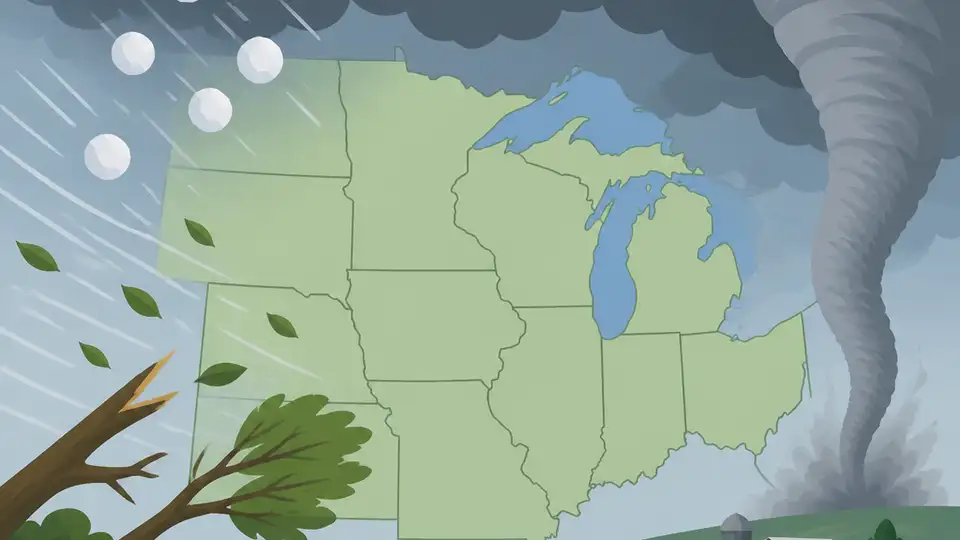
Severe storms may hit the Midwest Monday, bringing hail, 75 mph winds, and possible tornadoes.
Forecasters say Monday afternoon and evening could turn rough across a wide stretch of the Midwest. The storm threat includes Kentucky, Iowa, Illinois, Indiana, Wisconsin, and Michigan, with hail and damaging wind gusts up to 75 miles an hour.
| State | Main threat | Timing | Peak wind risk |
|---|---|---|---|
| Kentucky | Severe thunderstorms | Monday afternoon and evening | Up to 75 mph |
| Iowa | Severe thunderstorms | Monday afternoon and evening | Up to 75 mph |
| Illinois | Severe thunderstorms | Monday afternoon and evening | Up to 75 mph |
| Indiana | Severe thunderstorms | Monday afternoon and evening | Up to 75 mph |
| Wisconsin | Severe thunderstorms | Monday afternoon and evening | Up to 75 mph |
| Michigan | Severe thunderstorms | Monday afternoon and evening | Up to 75 mph |
What the forecast is warning about
Get the latest AI news in your inbox
Weekly picks of model releases, tools, and deep dives — no spam, unsubscribe anytime.
No spam. Unsubscribe at any time.
The immediate concern is a classic severe-weather setup: fast-moving thunderstorms with large hail and strong straight-line winds. A 75 mph gust is strong enough to damage roofs, bring down tree limbs, and knock out power in scattered areas.
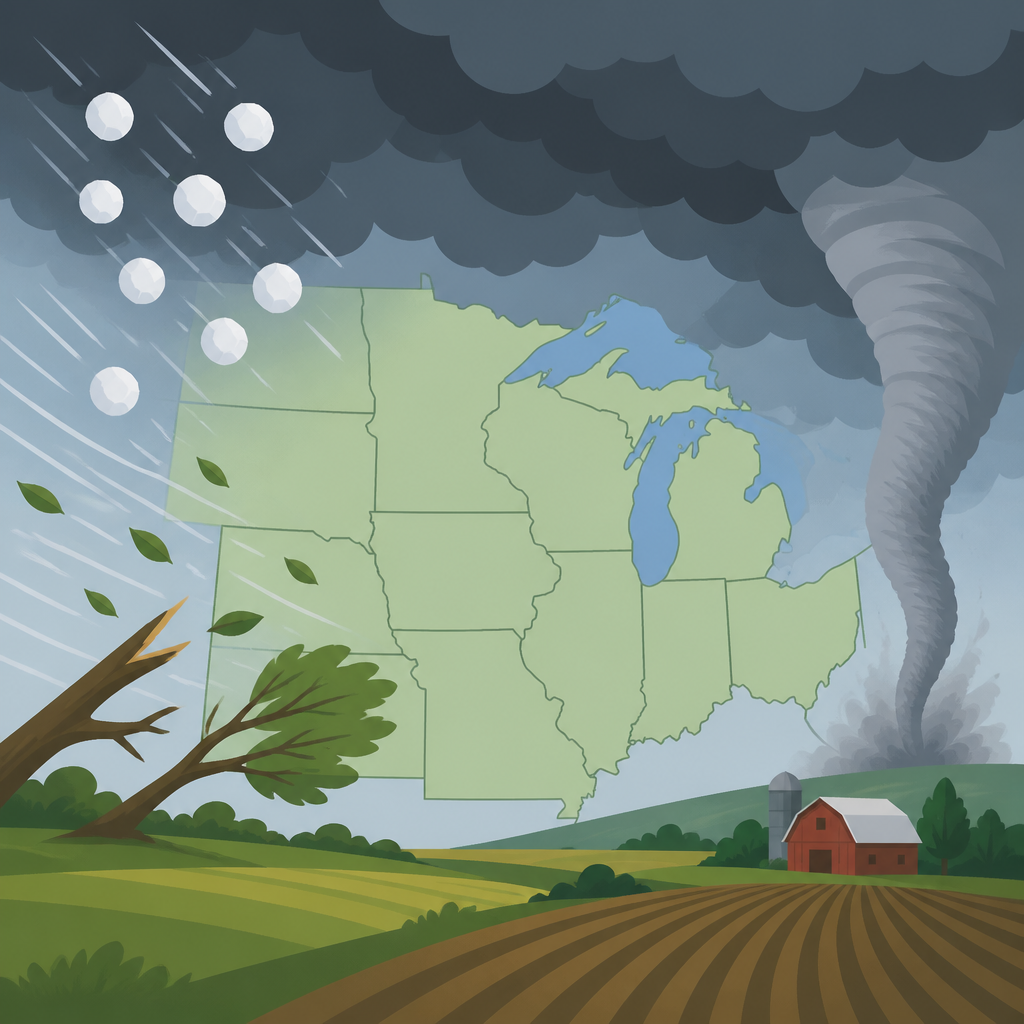
National Weather Service warnings matter here because the difference between a normal thunderstorm and a severe one is often measured in minutes, not hours. If the storm line forms as expected, the worst conditions could arrive quickly in the late afternoon and evening.
People in the affected states should pay attention to watches and warnings, especially if they will be driving, working outdoors, or attending evening events. Hail can damage cars and windows, while wind gusts can turn loose objects into hazards.
- Hail is one of the main risks in this forecast.
- Wind gusts may reach 75 miles an hour.
- Storms are most likely Monday afternoon and evening.
- The threat zone stretches from Kentucky to Michigan.
Why this kind of setup gets attention fast
Severe thunderstorm forecasts get serious when multiple hazards line up at once. In this case, the combination of hail, damaging winds, and possible tornadoes means the storm system could affect travel, power grids, and outdoor safety across several states in a single day.
That is why weather alerts often arrive before the worst rain starts. A warning gives people time to move cars under cover, bring in patio furniture, and avoid being caught on open roads when visibility drops.
“If you hear thunder, you are close enough to the storm to be struck by lightning,” the National Weather Service lightning safety guidance says.
Even though lightning is not the main headline here, it is part of the same storm system and adds another reason to take the forecast seriously. Thunderstorms that produce hail and strong winds can also bring dangerous lightning bursts before, during, and after the most intense rain bands pass through.
How this compares with a typical May storm day
May is already a busy month for severe weather in the central United States, but this forecast is more concerning than a standard spring shower pattern because it includes multiple severe hazards. The mention of possible tornadoes also raises the stakes, since tornado risk changes how people should respond to alerts.
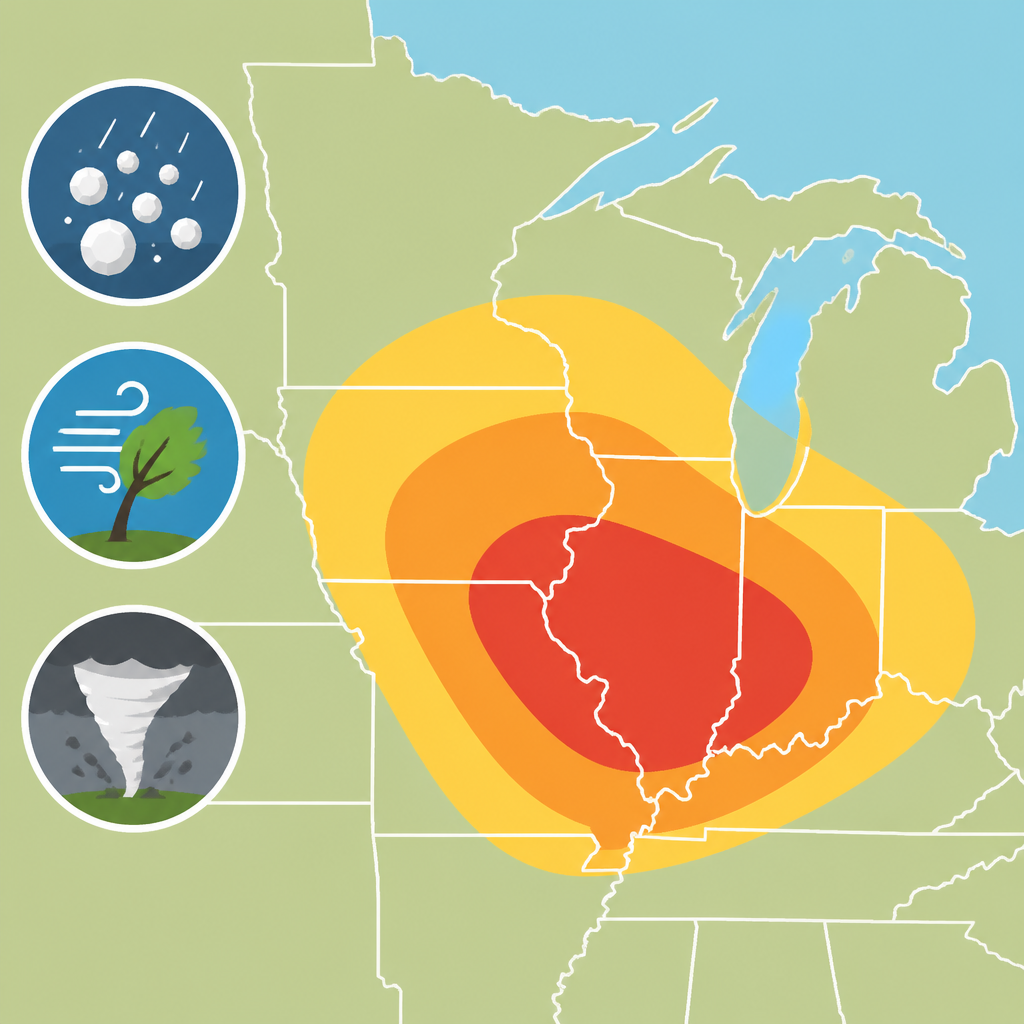
Here is the practical comparison:
- A normal thunderstorm may bring rain and thunder.
- This forecast includes hail, damaging wind, and possible tornadoes.
- 75 mph gusts can cause real property damage, not just nuisance flooding.
- The threat covers several states, which makes it harder to ignore.
For people in the path of the system, the smartest move is to treat Monday as a day for close weather monitoring rather than a day to assume the forecast will stay mild. A charged phone, a weather app with alerts, and a plan for shelter can make a real difference if warnings are issued.
What to watch next
The key question is whether the storm line intensifies as it moves through the region or stays scattered. If the stronger cells organize, the hail and wind threat could expand quickly, and any tornado watch would mean conditions are favorable for rotation.
For now, the forecast points to a clear risk window on Monday afternoon and evening. If you live in the affected states, check local alerts before heading out, and be ready to move indoors fast if the sky turns dark or warnings appear on your phone.
// Related Articles
- [IND]
Kubernetes 1.36.1 lands with fresh patch releases
- [IND]
5 signs Solana AI agents are producing output
- [IND]
Mistral buys Emmi AI for industrial simulation
- [IND]
Vibe coding turns app ideas into crowded markets
- [IND]
Why Amazon Q Developer is wrong about the future of coding
- [IND]
8 AI coding assistants for enterprise teams