Mistral buys Emmi AI for industrial simulation
Mistral AI bought Emmi AI to push physics-aware simulation into industrial models, targeting faster engineering workflows.
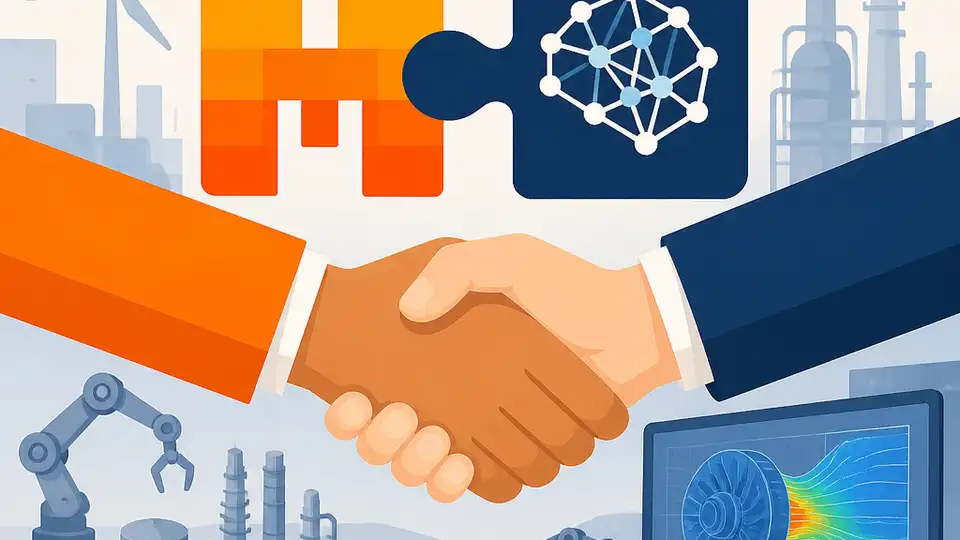
Mistral AI acquired Emmi AI to add physics-aware simulation to its industrial model stack.
Mistral AI has bought Emmi AI, a Vienna startup focused on physics-based industrial simulation, according to Reuters and Sifted. The price was not disclosed, but the deal comes after Emmi’s €15 million seed round and after Mistral’s earlier acquisition of a cloud deployment company in February.
| Metric | Value | Why it matters |
|---|---|---|
| Emmi founding year | 2024 | The startup is very young, so Mistral is buying early technical talent and IP. |
| Emmi seed funding | €15 million | Shows investor interest in physics-aware industrial AI before the acquisition. |
| Acquisition timing | May 19, 2026 | Marks Mistral’s second reported deal in roughly three months. |
| Earlier Mistral acquisition | February 2026 | Points to a broader buy-to-build strategy around enterprise infrastructure. |
What Mistral is buying
Get the latest AI news in your inbox
Weekly picks of model releases, tools, and deep dives — no spam, unsubscribe anytime.
No spam. Unsubscribe at any time.
Emmi AI builds what it calls large engineering models, or LEMs, which are trained with physical laws rather than only text patterns. The company says these models can simulate fluid flow, structural deformation, heat transfer, and material strength in real time.
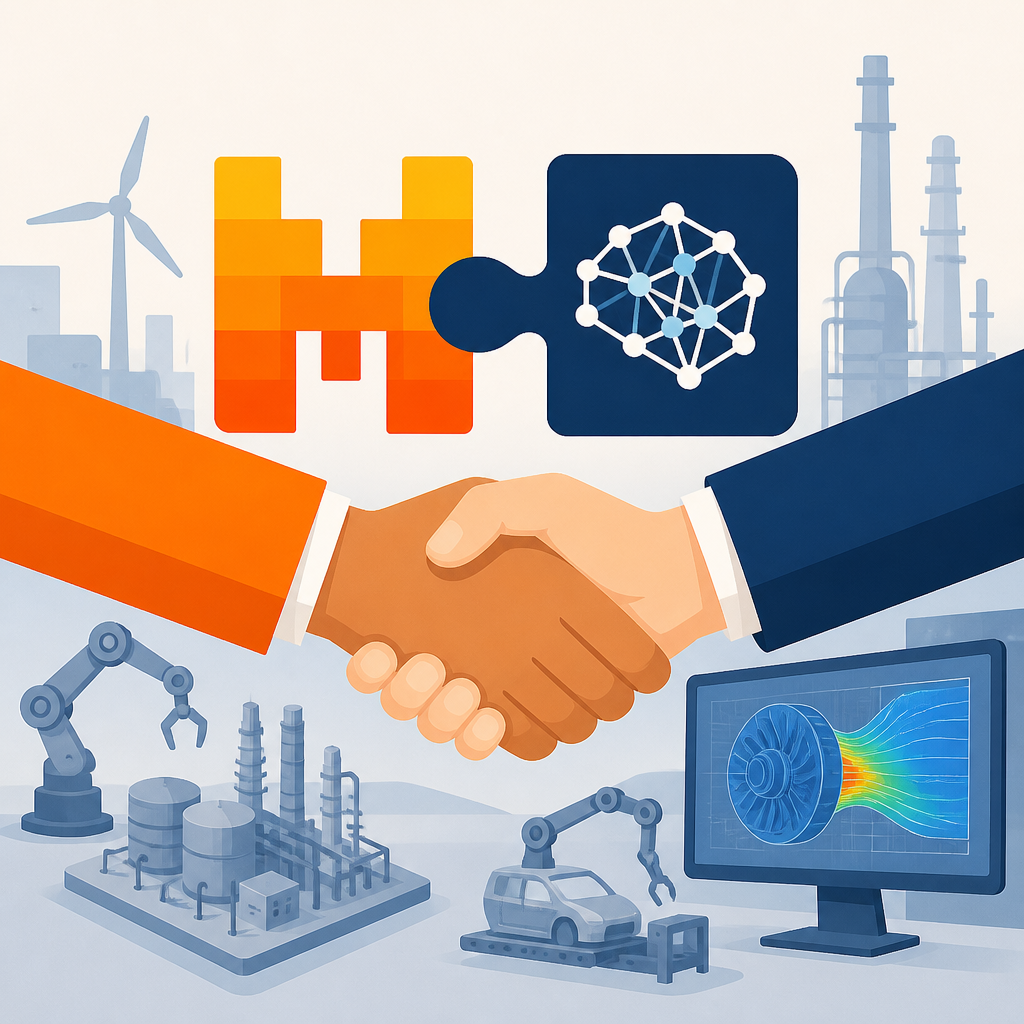
That matters because traditional solvers used in engineering can take hours or days to run. If Emmi’s claims hold up in production, the appeal is obvious for teams that need faster design cycles, cheaper iteration, and fewer bottlenecks in simulation-heavy workflows.
Emmi was founded in 2024, which makes this acquisition feel less like a mature consolidation play and more like an early bet on a technical direction Mistral wants to own before competitors do.
- Physics-aware modeling for industrial simulation
- Real-time output for engineering scenarios
- Use cases tied to aerospace, automotive, and semiconductors
Why Mistral wants it now
Mistral has spent the last two years building a reputation around strong general-purpose models, but the market is moving toward specialized systems for enterprise buyers. Industrial customers do not care much about benchmark theater. They care about whether a model can help them design a wing, test a crash scenario, or estimate heat behavior without breaking engineering assumptions.
That is why this acquisition makes strategic sense. Mistral gets a team that already works on simulation-aware models, while Emmi gets access to a larger distribution channel and a company with existing enterprise relationships.
“This strategic acquisition cements Mistral’s leadership in industrial AI and positions us as the partner of choice for manufacturers in high-stakes sectors like aerospace, automotive, or semiconductors.” — Arthur Mensch, CEO of Mistral AI, as quoted by Sifted
The quote is doing a lot of work here. Mistral is not just buying a startup with interesting science. It is signaling that industrial AI is a real commercial lane, and that vertical products may matter more than one universal model that tries to do everything.
That fits the broader pattern in enterprise AI: the winners are increasingly the companies that can adapt foundation-model capabilities to specific workflows, compliance needs, and failure modes.
How Emmi compares with traditional simulation
Simulation software has long depended on numerical methods that are precise but slow. Emmi’s pitch is that a physics-aware model can approximate those systems much faster while preserving enough fidelity for useful engineering work.

That is a big claim, and it deserves skepticism. In industrial settings, speed is valuable only if the model remains trustworthy under real constraints. A flashy demo is one thing; a tool that survives validation, edge cases, and regulatory scrutiny is another.
Here is the practical comparison that matters to engineers and product teams:
- Traditional solvers: higher fidelity, slower runtimes, heavier compute costs
- Physics-aware LEMs: faster outputs, more flexible interaction, validation still matters
- Industrial deployment: needs traceability, test coverage, and domain-specific benchmarks
- Vendor adoption: depends on integration with existing CAD, simulation, and control stacks
The reporting also names customers already tied to Mistral, including ASML, Stellantis, and CMA CGM. Those names matter because they show Mistral is not starting from zero in industrial accounts.
For a company like Mistral, the deal also reduces a classic build-versus-buy problem. Building physics-aware simulation from scratch would take time, and time matters when rivals are trying to own the same enterprise budgets.
What to watch next
The real test is not the acquisition announcement. It is whether Mistral publishes technical proof that Emmi’s models can hold up against established engineering tools on real workloads. Watch for benchmark data, partner pilots, and documentation that explains how these models fit into existing industrial pipelines.
Also watch the talent side. If Mistral keeps Emmi’s researchers, product people, and domain expertise intact, the acquisition could become a meaningful step toward a stronger industrial AI portfolio. If the team thins out or the product gets absorbed without clear technical progress, the deal will look more like a talent grab.
For developers and ML teams in manufacturing, aerospace, and simulation-heavy industries, the takeaway is simple: vendor AI is moving closer to physical systems, and validation will matter more than ever. The next question is whether Mistral can turn Emmi’s physics-aware approach into something engineers actually trust on expensive real-world jobs.
// Related Articles
- [IND]
WebX 2026 turns speaker hype into a conference brief
- [IND]
AI Weekly: 2026-07-06 ~ 2026-07-13
- [IND]
The AI Act should be treated as Europe’s operating system for AI
- [IND]
Booz Allen’s OpenAI Deal Is Real Advantage, Not Hype
- [IND]
OpenSearch’s vector search benchmark in 5 parts
- [IND]
Vector Databases That Work in Production