Musk’s Nvidia tie could speed Tesla AI
Musk’s latest Nvidia hint points to deeper ties across Tesla, xAI, and SpaceX as GPU demand keeps rising.

Musk’s latest Nvidia hint points to deeper ties across Tesla, xAI, and SpaceX as GPU demand keeps rising.
Elon Musk posted on June 12, 2026 that he was “looking forward to taking our exciting partnership with Nvidia to the next-level.” That sounds casual, but the numbers behind his companies tell a bigger story: Tesla has reportedly spent about $10 billion on Nvidia hardware, xAI is planning a Memphis data center with more than 500,000 GPUs, and a Saudi project starts at 50 megawatts before scaling to 500 megawatts.
| Project | Number | Why it matters |
|---|---|---|
| Tesla Nvidia spend | ~$10 billion | Shows long-running dependence on Nvidia for AI training |
| xAI Colossus 2 | 500,000+ GPUs | One of the largest compute clusters planned anywhere |
| Initial Colossus 2 target | 200,000 Blackwell GPUs | Signals immediate demand for Nvidia’s newest chips |
| Saudi data center | 500 MW total, 50 MW initial | Extends Musk’s AI buildout beyond the U.S. |
| Google-SpaceX deal | $920 million per month | Turns Nvidia access into a recurring revenue stream |
Musk’s post matters because the spending is already real
Get the latest AI news in your inbox
Weekly picks of model releases, tools, and deep dives — no spam, unsubscribe anytime.
No spam. Unsubscribe at any time.
The key detail in Musk’s message is that it lands after years of hard infrastructure spending, not before it. Tesla, Tesla, xAI, and SpaceX are no longer buying compute in small batches for isolated teams. They are building a shared appetite for GPUs that touches self-driving, robotics, and large-scale model training.
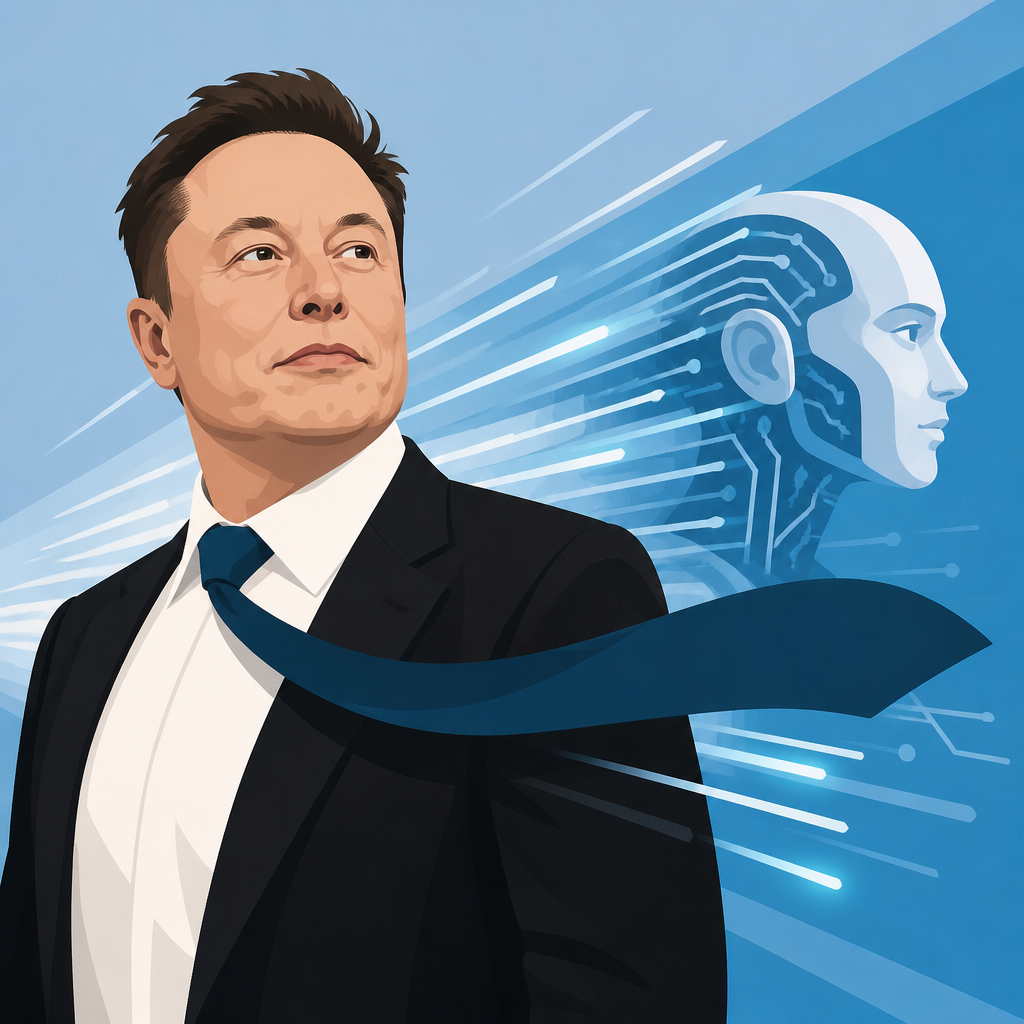
That matters because Nvidia is not just a supplier in this picture. It is the common hardware layer across Musk’s AI stack. If one company gets a better allocation of Blackwell chips or future architectures, the benefits can ripple into Tesla’s Full Self-Driving work, xAI’s model training, and SpaceX’s compute-heavy services.
The timing also matters. Musk’s public comment came after Nvidia CEO Jensen Huang confirmed up to $2 billion in equity investment in xAI as part of a roughly $20 billion funding round. That is a financial relationship, not a simple vendor deal, and it makes the partnership harder to read as a one-off procurement story.
- Tesla’s AI training needs keep growing as FSD gets more ambitious.
- xAI’s model training depends on very large GPU clusters.
- SpaceX is now part of the same compute story through commercial deals.
- Nvidia gets a deeper foothold inside Musk’s expanding AI empire.
Tesla owners should care about the training pipeline
For Tesla drivers, the most practical impact is on Full Self-Driving. Training driving models takes huge GPU clusters, and Nvidia hardware remains central to that work. If Tesla gets earlier access to newer chips, model training cycles can shorten, which can translate into faster software iteration.
That does not mean every improvement becomes a visible feature overnight. It does mean Tesla’s ability to train more data, test more edge cases, and push updates faster depends on the same compute supply chain that powers the rest of Musk’s AI portfolio.
“I’m looking forward to taking our exciting partnership with Nvidia to the next-level.” — Elon Musk, X post, June 12, 2026
There is also a strategic shift hiding in plain sight. Tesla has been developing its own AI5 chip for Optimus and the robotaxi network, while Dojo appears to be losing priority in favor of external GPU providers. That is a practical decision, not a philosophical one. Tesla can keep its own silicon for some inference tasks while still relying on Nvidia for training.
That split makes sense if the real bottleneck is time. Building custom chips is slow. Buying access to Nvidia’s latest hardware is faster. For a company trying to ship autonomy and robotics on an aggressive schedule, speed often beats purity.
- AI5 is aimed at Tesla’s own inference workloads.
- Nvidia GPUs handle the heavy training side.
- Dojo is no longer the obvious center of Tesla’s AI plan.
- Optimus development depends on the same training stack as FSD.
xAI and SpaceX widen the financial loop
The xAI side is where the scale gets hard to ignore. Colossus 2 in Memphis is planned to house more than half a million Nvidia GPUs, with an initial target of 200,000 Blackwell chips. That is not a lab project. It is industrial-grade AI infrastructure, and it puts xAI into a class of its own for compute appetite.
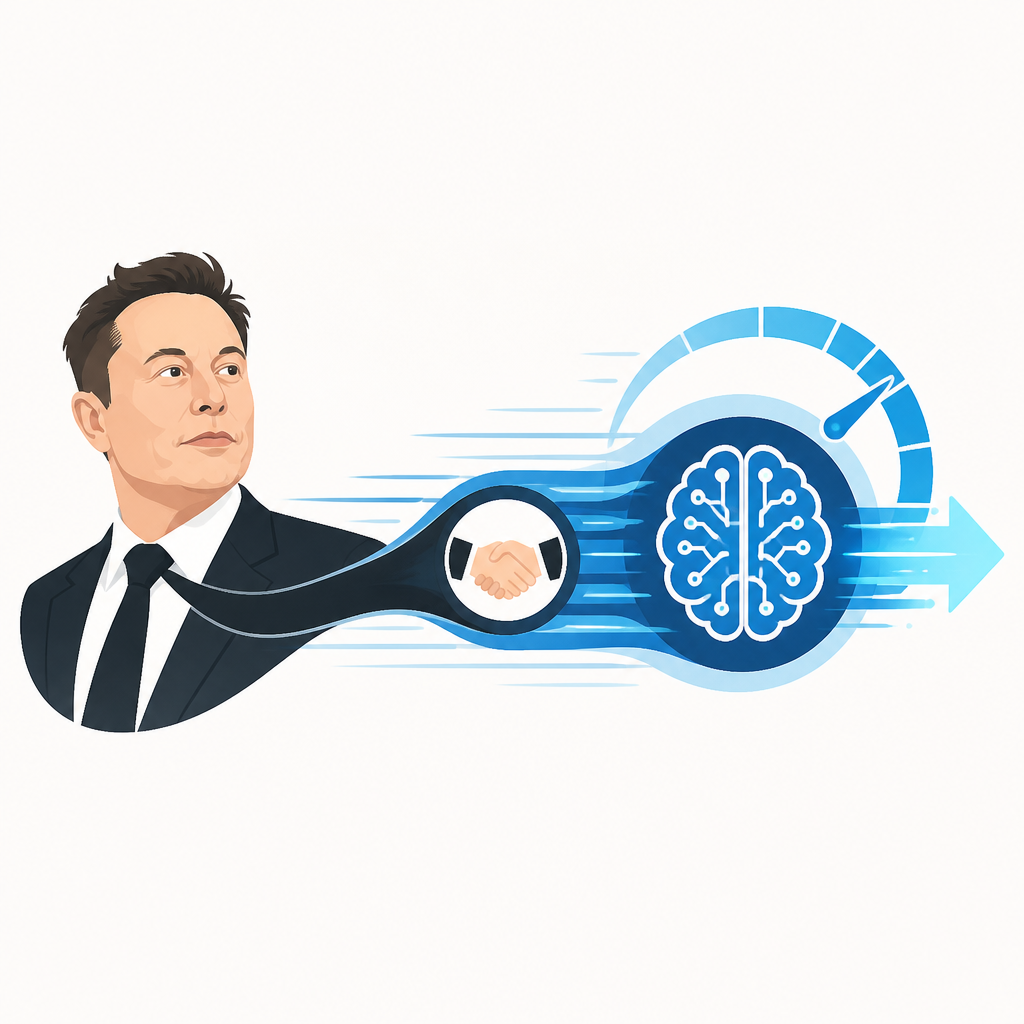
Then there is the Saudi Arabia deal announced in March 2026 with Humain and Nvidia. It starts at 50 megawatts and grows to 500 megawatts, which tells you this is a phased buildout, not a single purchase order. Nvidia supplies the chips throughout, so the company is embedded in the project from day one.
SpaceX adds another layer. A separate arrangement gives Google access to about 110,000 Nvidia GPUs through SpaceX for $920 million per month through June 2029. Anthropic also has access to Colossus 1, a cluster with more than 220,000 Nvidia GPUs. That means Musk’s companies are no longer just end users of compute. They are part of the distribution chain for it.
Here’s the simplest way to think about it: Tesla needs GPUs to train driving models, xAI needs them to train frontier models, and SpaceX now sits close to a large-scale compute business. Nvidia is the one company that touches all three.
The real question is whether Tesla gets priority
The open issue is not whether Musk and Nvidia are closer. They clearly are. The real question is which of Musk’s businesses gets first call on scarce hardware when demand spikes. Tesla has the most visible consumer impact, xAI has the biggest direct appetite for model training, and SpaceX is turning compute access into revenue.
If Nvidia keeps expanding its role inside this group, Tesla could benefit from faster chip access, tighter integration with AI training workflows, and a cleaner path to pushing FSD and Optimus forward. If the supply gets tight, Tesla may also find itself competing with xAI for the same silicon.
That tension is the story to watch over the next few quarters. The partnership is already deep enough to affect product timelines, and any new announcement will probably show up first in infrastructure numbers before it shows up in a car, a robot, or a launch pad.
For Tesla watchers, the useful question is simple: does the next Nvidia update help Tesla train faster, or does it mostly feed xAI’s bigger compute machine?
// Related Articles
- [IND]
Anthropic buys carbon removal, skips clean power
- [IND]
Government should be able to pull unsafe AI models offline
- [IND]
Claude 5越狱与暗箱降智的两张脸
- [IND]
Kubernetes release support windows explained clearly
- [IND]
A 90-minute takedown turns AI ops into crisis
- [IND]
GPT-5.6 looks like a fix-and-upgrade release