Anthropic buys carbon removal, skips clean power
Anthropic joined Frontier’s $915 million carbon removal fund while still lacking a public clean power plan.

Anthropic joined Frontier’s $915 million carbon removal fund without a public clean power deal.
Anthropic just signed on to buy carbon removal through Frontier, even though it still has not announced a clean power purchase of its own. The move puts one of AI’s most closely watched companies into the carbon removal market while leaving a bigger question untouched: how it will cover the electricity demand from its growing model training and data center footprint.
| Metric | Value | What it means |
|---|---|---|
| Frontier growth fund | $915 million | New advance market commitment for carbon removal |
| Anthropic valuation | $965 billion | Scale of the company now buying into the fund |
| Anthropic energy hires | 3 | New hires with clean power and grid backgrounds |
| New reporting hire | 1 | Head of non-financial reporting and strategy |
Anthropic is buying removals, not electricity
Get the latest AI news in your inbox
Weekly picks of model releases, tools, and deep dives — no spam, unsubscribe anytime.
No spam. Unsubscribe at any time.
The headline is simple: Anthropic joined a major carbon removal buyer group, but it has not published a matching clean energy procurement strategy. Frontier said the new fund will back larger carbon removal projects and move beyond the earlier phase of early-stage support. Anthropic is now in the same buyer pool as Google, Stripe, and Shopify.
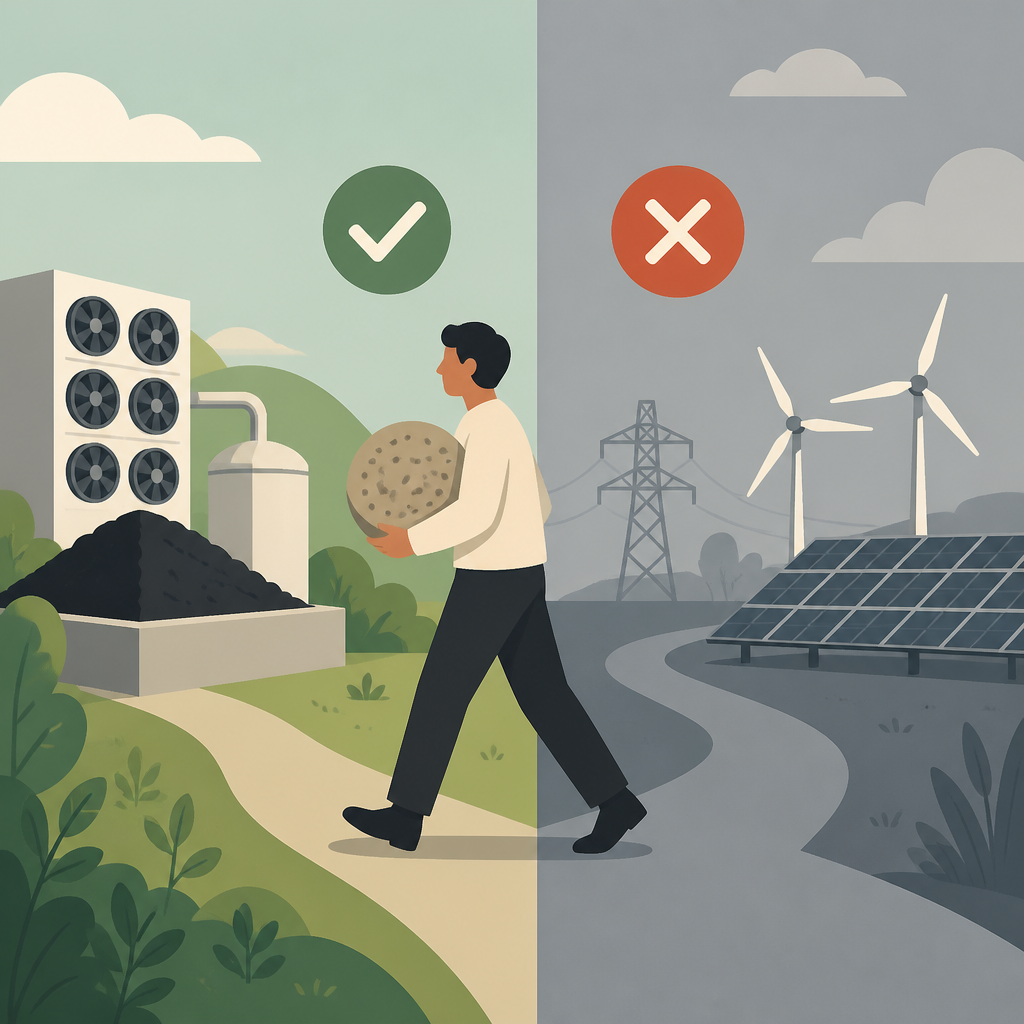
That matters because carbon removal and clean power solve different parts of the climate problem. Removal can counterbalance emissions later, but it does nothing to lower the coal and gas burning that AI systems can drive today. Anthropic’s choice says a lot about where the company is willing to spend climate capital right now.
- Frontier announced a $915 million growth fund.
- Anthropic is one of the buyers committing to offtake agreements.
- The company has no public clean power purchase agreement on record.
- Its data centers rank near the top for carbon intensity among peers, behind only xAI, according to data shared with Heatmap by Cleanview.
The company’s climate image is thinner than its reputation
Anthropic has built a reputation as the more careful AI lab, partly because of its safety-first origin story and CEO Dario Amodei’s public warnings about powerful AI. The company has also backed AI regulation efforts and restricted some model uses, including autonomous weapons and mass surveillance. That has helped it look different from the rest of the field.
But climate disclosure is a separate test, and here the record is sparse. Anthropic has not published an annual sustainability report, has not announced a public emissions target, and is not a member of the Corporate Energy Buyers Association. Its public transparency page mentions environmental benefits only in passing, through customer use cases for Claude.
“We should hold folks’ feet to the fire on this.” — Hannah Bebbington Valori, head of Frontier
That quote lands because it cuts through the easy story. Buying carbon removal is real climate spending, but it is not a substitute for making the electricity that powers AI cleaner. Frontier’s own head is blunt that buyers should still be thinking about decarbonizing their emissions.
Anthropic may be building the team it skipped before
There are signs Anthropic is finally staffing up for energy and reporting work. In March and April, the company hired three people with backgrounds in clean power and grid strategy. It also posted a role for infrastructure and energy accounting that mentions power purchase agreements, virtual PPAs, and renewable energy credits.
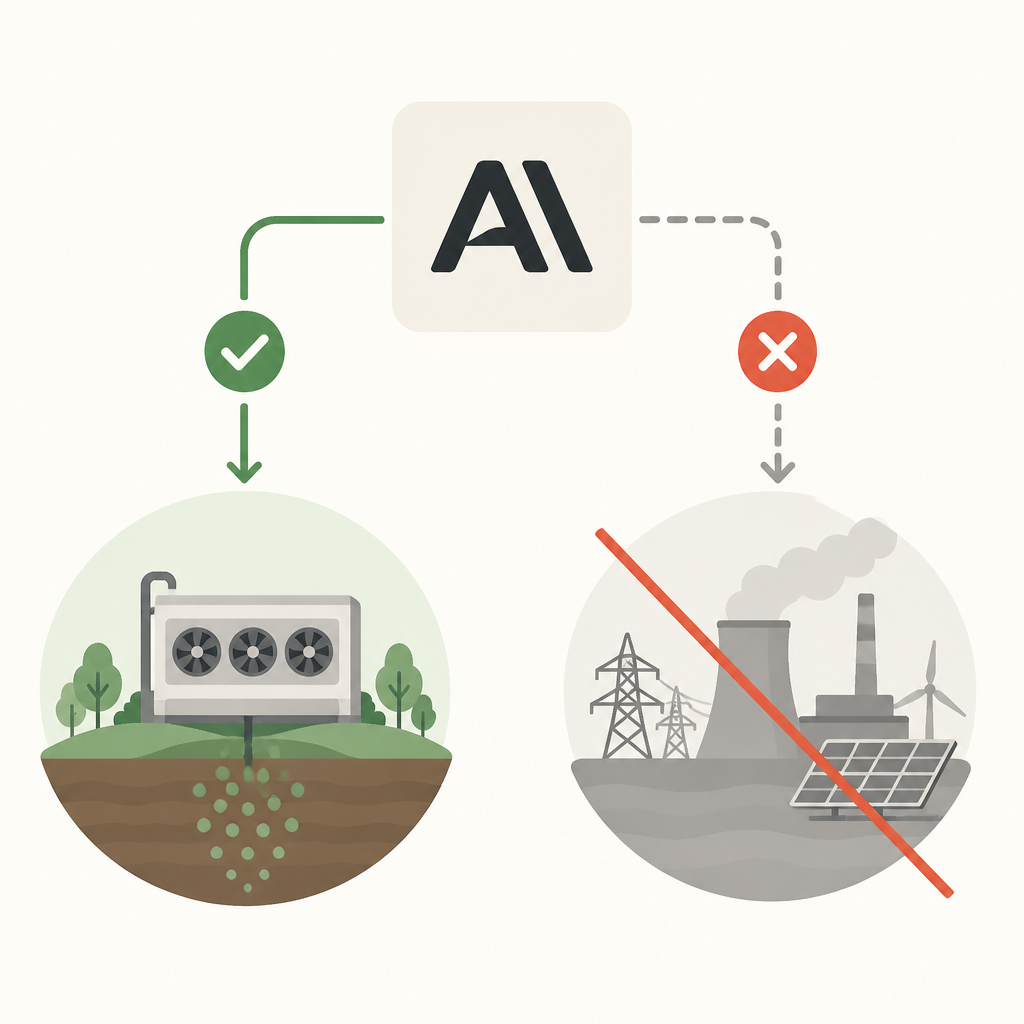
Those hires matter more than a press release because they suggest the company is preparing for a real operating burden, not just a reputational one. Anthropic is planning to build some of its own data centers and also rent capacity from xAI’s Colossus sites, which rely heavily on on-site gas turbines and are facing a lawsuit from the NAACP over air pollution.
- Anthropic hired Ariel Horowitz from the Massachusetts Clean Energy Center and the U.S. Department of Energy.
- Sana Ouiji spent six years at Google on data center clean energy strategy.
- Andrew Rudersdorf worked on energy sourcing for Meta’s data centers, including renewables.
- The company also hired Chris Power for non-financial reporting and strategy, according to LinkedIn.
Carbon removal is useful, but the order matters
Anthropic’s move fits a broader debate in climate tech: should companies spend first on removing carbon later, or on cutting emissions now? The strongest answer is both, but the sequence matters. Carbon removal credits can cost hundreds of dollars each, which makes them a poor excuse for delaying cleaner electricity contracts, grid upgrades, or better siting decisions.
Jane Flegal of the Searchlight Institute argues that companies should focus on the highest-impact climate investments, whether that means financing a geothermal plant, a transmission line, or a transformer upgrade. That framing fits AI better than the usual annual-footprint math, because these firms can shape the power system around them.
Anthropic’s own July 2025 report, Building AI in America, hinted at that thinking. The company backed an all-of-the-above power strategy, supported permitting reform, and said solar, batteries, and geothermal may be cheaper before advanced nuclear arrives.
That is why the Frontier deal feels incomplete rather than wrong. Anthropic is finally putting money into climate action, but the next test is whether it will fund the electricity side with the same urgency. If the company wants to keep the “responsible AI” label, the real question is whether its next announcement is a carbon removal purchase or a clean power contract.
// Related Articles