n8n 2.14 adds MCP workflow creation
n8n 2.14 adds official MCP workflow creation, and one Reddit user got Claude to build a 13-node workflow in about 2 minutes.
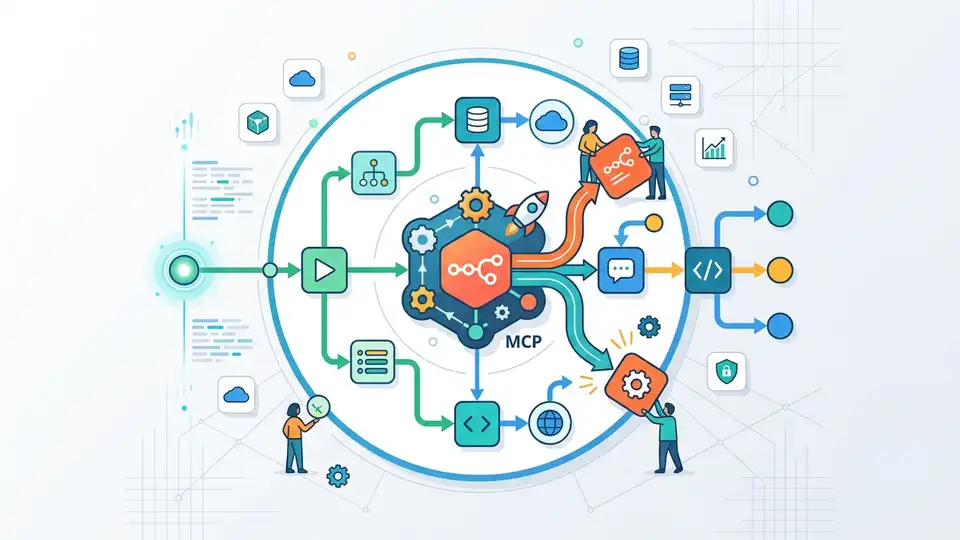
n8n 2.14 quietly changed what “automation by chat” can mean. In a Reddit post, one user said they connected Claude to n8n through the official MCP integration and asked it to build a workflow; the result was 13 nodes, fully wired, with correct expressions, in about 2 minutes.
That workflow was not a toy example. It combined dual triggers, four RSS feeds, a merge step, a code node for filtering and deduping, an AI Agent using an OpenAI chat model, file conversion to Markdown, and a webhook response that returned a downloadable file with the right headers.
If you build automation in public or ship internal ops tools, this matters because it moves n8n from “chat about workflows” to “chat that creates workflows with working structure.”
What the Reddit demo actually did
Get the latest AI news in your inbox
Weekly picks of model releases, tools, and deep dives — no spam, unsubscribe anytime.
No spam. Unsubscribe at any time.
The user’s post matters because it shows the official n8n MCP connection doing real work, not just generating a sketch. Claude created a workflow that pulled content from four RSS sources, merged the feeds, cleaned the output in a code node, and then handed the result to an AI Agent for summarization or transformation.
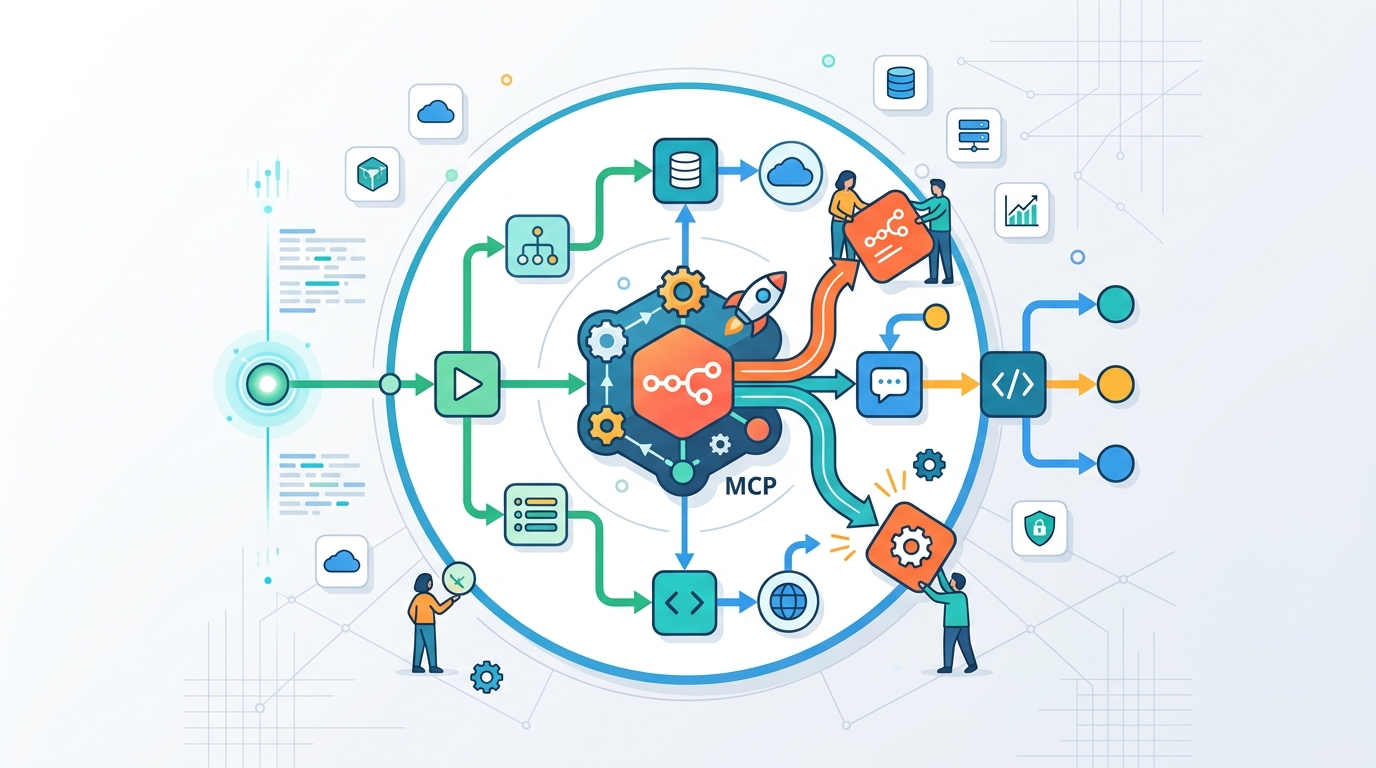
The workflow also included two entry points: a schedule trigger and a webhook trigger. That means the same automation could run on a timer or be called on demand, which is exactly the kind of setup teams use when they want both batch processing and manual control.
The output side was equally practical. The user described a Set node that prepared Markdown content and a filename, then a Convert to File step that produced a .md file, followed by Respond to Webhook so the browser could download it directly. That is a complete end-to-end path, not a half-finished diagram.
- 13 nodes generated in one pass
- About 2 minutes from prompt to workflow
- 4 RSS feeds merged into one stream
- 2 triggers: schedule and webhook
- 1 downloadable Markdown file returned to the caller
Why official MCP support changes the workflow-building game
Model Context Protocol matters because it gives the model a structured way to inspect and act on tools. In plain English: Claude is no longer guessing what n8n can do from a prompt alone. It can query the connected system, understand node options, and assemble something that looks much closer to a hand-built workflow.
That is a big step up from the old “AI writes JSON and hopes for the best” era. Anyone who has tried to paste a complex workflow definition into an LLM knows the usual failure modes: wrong field names, broken expressions, missing connections, and nodes wired in the wrong order. The Reddit example suggests official MCP support reduces that friction enough to make first drafts genuinely useful.
“The future of software is going to be about systems that can understand your intent and help you build faster,” said Anthropic CEO Dario Amodei in a 2023 TED interview.
Amodei’s point fits this release well. n8n 2.14 is not just about speed. It is about making the interface between intent and implementation narrower, so a human can spend time on logic, data quality, and edge cases instead of dragging connectors around for the tenth time.
There is also a practical trust angle here. When a model can create a workflow that already includes expressions, file handling, and response headers, the output is easier to inspect and debug than a vague natural-language plan. That matters for teams that need reproducibility, not just inspiration.
How this compares with the old way of building automations
Before official MCP support, building a workflow in n8n often meant one of two things: manual assembly in the editor, or a rough AI-generated draft that still needed substantial repair. The new setup compresses that loop. You can describe the outcome, let the model draft the structure, then edit the result instead of starting from scratch.
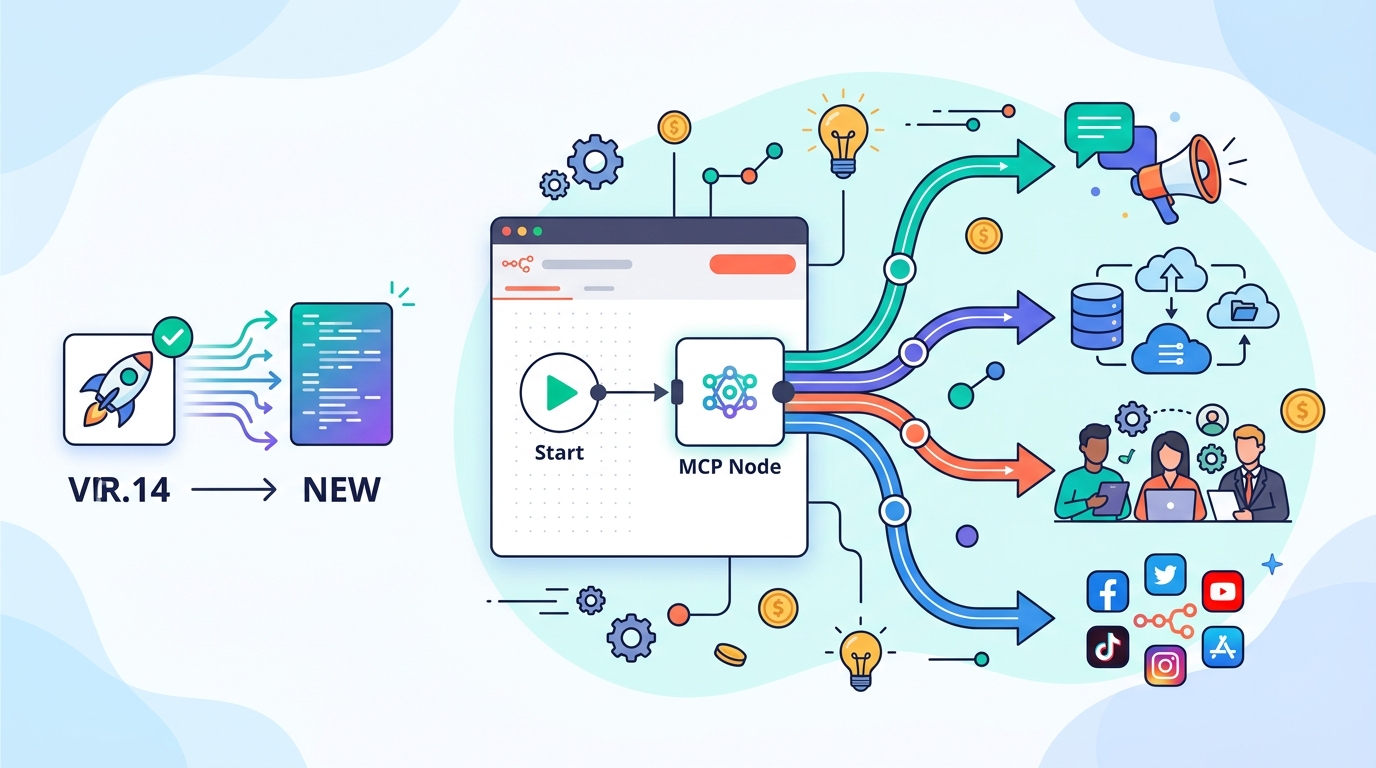
That difference shows up in both time and complexity. The Reddit user’s example involved multiple feed inputs, branching logic, content cleanup, AI processing, and file delivery. In a manual build, that can take a while even for someone who knows n8n well. With MCP in the loop, the first pass arrived in minutes.
- Manual build: drag nodes, wire connections, test expressions, fix edge cases
- Prompted build with MCP: describe goal, inspect generated workflow, refine logic
- Manual build: good for exact control from the start
- Prompted build with MCP: better for fast prototyping and repeatable scaffolding
The real comparison is not “AI versus humans.” It is “blank canvas versus editable draft.” For many automation tasks, the draft is the expensive part. Once the structure exists, the remaining work is usually about data shape, error handling, and deciding which steps deserve a human review.
That said, the Reddit example also hints at the limits. A generated workflow can look correct and still need validation against real data. RSS feeds break, APIs change, and AI nodes can produce output that is technically valid but operationally messy. The speed win is real, but it does not remove the need for testing.
For readers who want to follow the broader rollout, OraCore has been tracking agentic tooling updates in our Claude and MCP coverage and in our workflow automation coverage.
What developers should watch next
n8n’s official MCP support makes one thing clear: workflow builders are becoming easier to generate, but harder to ignore. If a model can create a 13-node automation with working expressions in minutes, the bottleneck shifts from construction to verification, governance, and maintenance.
That shift will matter most for teams building internal tools, content pipelines, support automations, and data cleanup jobs. The people who benefit first are the ones who already know what a good workflow looks like and can spot bad assumptions quickly. For them, Claude plus n8n becomes a drafting tool that saves the boring part of the job.
My prediction is simple: the next wave of n8n usage will not be about replacing manual workflow design entirely. It will be about using MCP to generate 80% of the structure, then letting humans spend their time on the parts that break in production. If your team already uses n8n, the question is no longer whether AI can help build workflows. It is how quickly you can turn a generated draft into something you trust enough to run on real data.
// Related Articles
- [AGENT]
Perplexity should build Teammate as a coding agent, not a copilot
- [AGENT]
HP adopts OpenAI Frontier across global operations
- [AGENT]
Build a production vector DB for RAG
- [AGENT]
Ornith-1 turns agent coding into a server
- [AGENT]
Crypto AI agents are useful, but only for narrow workflows
- [AGENT]
AI Agents in Crypto: 2026 Protocol Guide