Web3 Development Costs in 2026: Real Price Ranges
Web3 app budgets in 2026 range from $25,000 MVPs to $350,000+ enterprise builds, driven by chain choice, audits, and scope.

Web3 app budgets in 2026 range from $25,000 MVPs to $350,000+ enterprise builds.
Web3 development costs in 2026 can jump from $25,000 to well over $500,000, depending on the chain, security work, and product scope. Octal Software’s pricing guide makes one thing clear: in blockchain projects, the biggest bill is usually not the UI, it is the contract logic and the audit trail behind it.
| Metric | 2026 figure | What it means |
|---|---|---|
| Web 3.0 blockchain market size in 2025 | $7.01 billion | Shows how quickly demand is growing |
| Projected market size in 2026 | $10.15 billion | Near-term expansion is already baked in |
| Projected market size in 2034 | $196.12 billion | Signals long-term investment pressure |
| Forecast CAGR | 44.8% | Explains why builders keep entering the market |
| Basic MVP dApp cost | $25,000–$50,000 | Entry point for simple products |
| Enterprise blockchain cost | $350,000+ | Large systems need much deeper engineering |
What actually drives the bill
Get the latest AI news in your inbox
Weekly picks of model releases, tools, and deep dives — no spam, unsubscribe anytime.
No spam. Unsubscribe at any time.
The price gap in Web3 is not random. A simple wallet-connected app and a financial protocol with audited smart contracts live in very different worlds, even if both get called “Web3.”
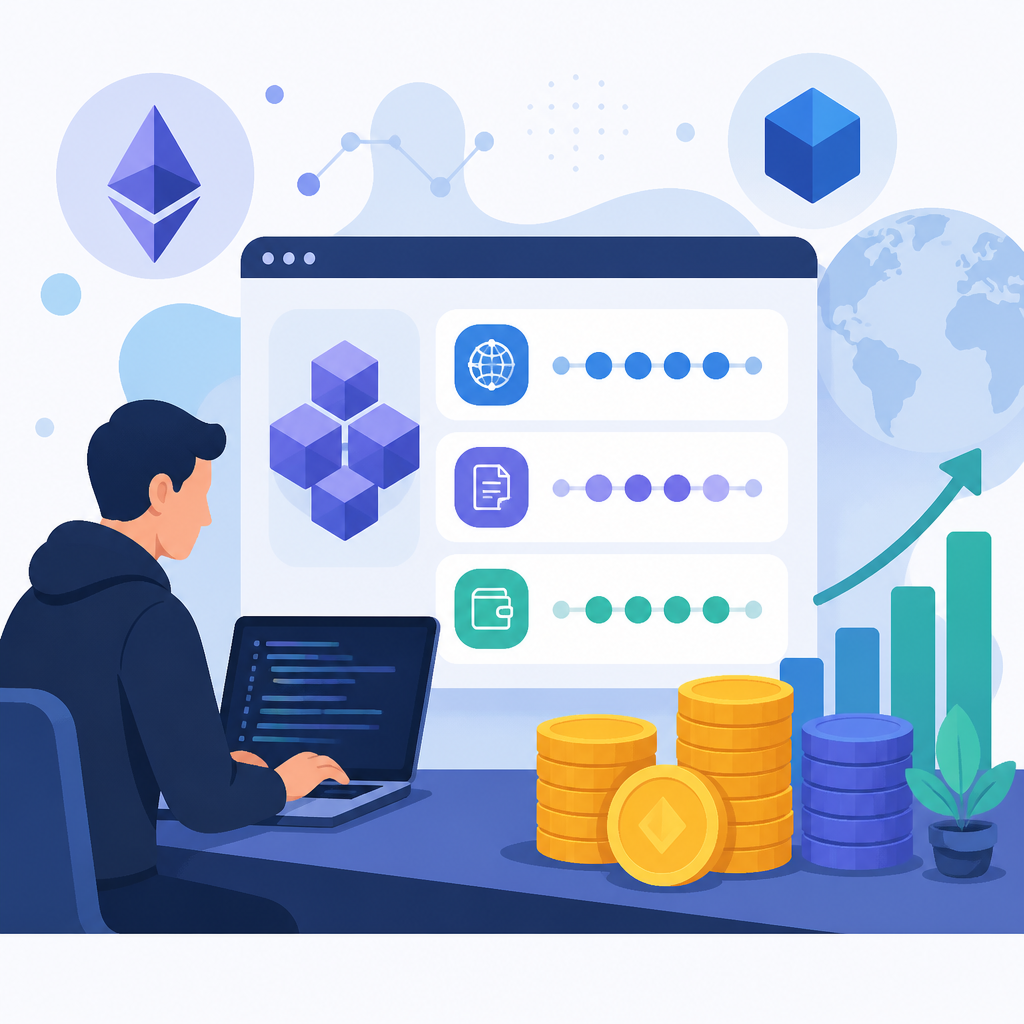
The biggest variables are the blockchain you pick, how much logic goes on-chain, and how much security review the code needs before launch. If a product touches funds, ownership, or governance, the cost rises fast because mistakes are permanent once deployed.
That is why two apps with similar screens can end up hundreds of thousands of dollars apart. The visible product may look small, but the invisible work behind it can be massive.
- Chain selection affects gas fees and developer tooling.
- Smart contract complexity affects build time and audit depth.
- Security review adds cost, but skipping it can be far more expensive later.
- On-chain data design changes infrastructure and indexing needs.
Blockchain choice changes the budget
Octal Software’s guide puts Ethereum, Polygon, Arbitrum, Optimism, Solana, Starknet, and Hyperledger Fabric in different cost buckets. That matches what most teams see in practice: the network you choose can move the budget by tens of percent before a single feature ships.
Ethereum remains the default for DeFi and NFT products, but the guide says it often adds a 20% to 30% premium because of gas fees and ecosystem expectations. Layer 2 networks such as Polygon, Arbitrum, and Optimism can cut costs by up to 60% versus Ethereum mainnet.
“The blockchain is the backbone of the web3 revolution,” said Vitalik Buterin in a 2022 interview with The New York Times.
That quote still fits the economics here. If the backbone is expensive, the whole product gets expensive. If the backbone is cheaper and your app does not need mainnet settlement for every action, you can save a lot of money without changing the user experience much.
Solana gets a mention for high-throughput apps and gaming, while Starknet matters for zk-focused systems. For enterprise deployments, Hyperledger Fabric gives companies permissioned infrastructure when public-chain transparency is not the goal.
Project type is the fastest way to estimate cost
The clearest pricing signal in the guide is project category. A basic dApp MVP sits around $25,000 to $50,000, while a standard feature-complete dApp lands between $50,000 and $120,000. Once you move into NFTs, DeFi, gaming, or enterprise use cases, the numbers climb quickly.
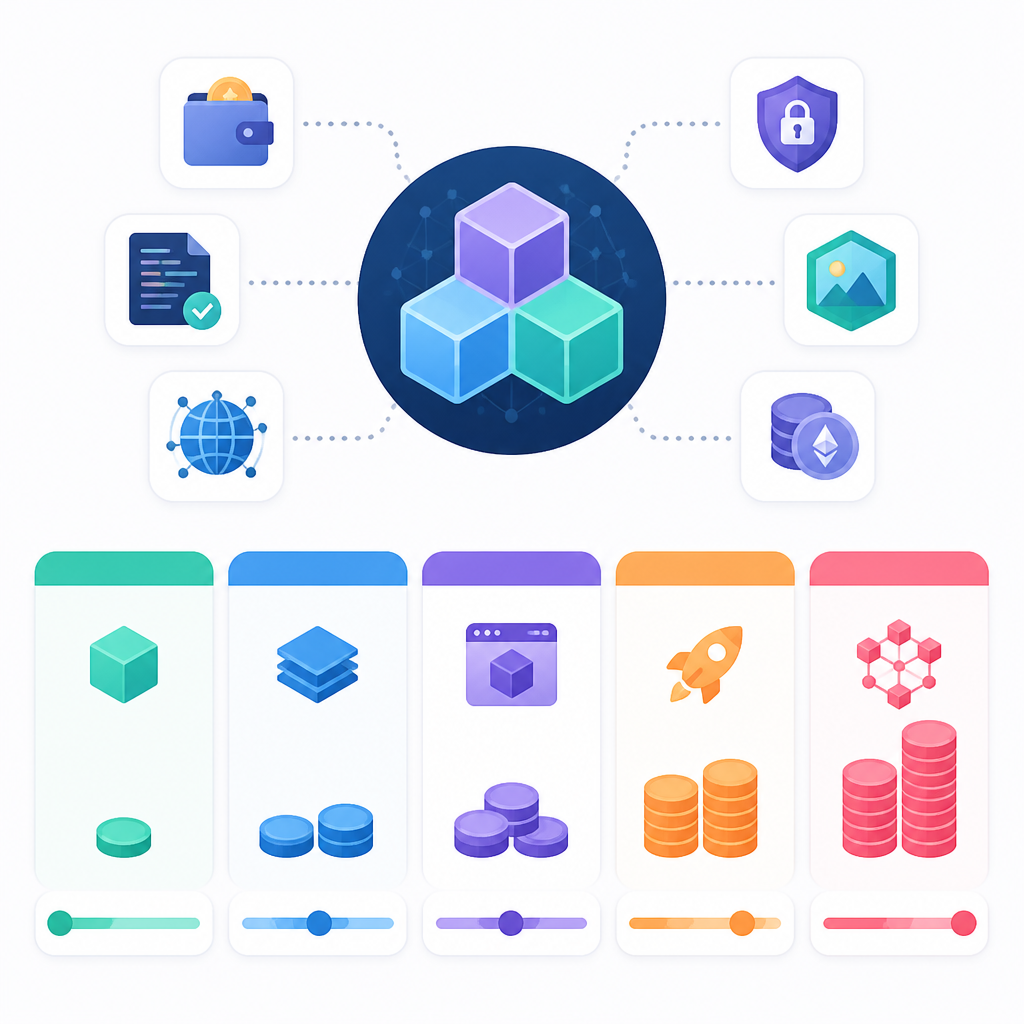
Here is the spread Octal Software outlines for 2026:
- Basic MVP dApp: $25,000 to $50,000, with a 1 to 3 month timeline.
- Standard dApp: $50,000 to $120,000, with a 3 to 6 month timeline.
- NFT marketplace: $80,000 to $200,000, with a 4 to 8 month timeline.
- DeFi platform: $120,000 to $250,000, with a 6 to 12 month timeline.
- Web3 game or metaverse app: $40,000 to $500,000+, with a 6 to 18 month timeline.
- Enterprise blockchain solution: $350,000+, with a 9 to 18 month timeline.
The wide range for gaming is telling. A simple NFT-linked game is a very different build from a multiplayer economy with tokenized assets, anti-cheat logic, and live transaction monitoring. The same is true for DeFi, where every extra feature tends to bring more security work, more testing, and more legal review.
For teams that want to keep risk down, MVP-first planning is the practical move. Build the smallest version that proves demand, then add features after the product has usage data.
Smart contracts are where budgets swell
Smart contracts are the part of Web3 that most clients underestimate. They are also the part that can punish bad assumptions, because once a contract is deployed, fixing it can mean migration work, user friction, and extra audit cycles.
Octal Software does not publish a line-by-line smart contract price sheet in the excerpt, but its cost logic is consistent with the rest of the guide: the more complex the contract, the more expensive the build and the audit. That includes token contracts, staking logic, DAO governance, and on-chain marketplaces.
Teams building with OpenZeppelin often save time because they start with audited libraries for tokens and access control. Tooling like Hardhat, Foundry, and thirdweb also reduces setup time, which matters when engineering hours are part of the budget.
That said, templates do not erase security work. They lower the amount of custom code, but they do not remove the need to test edge cases or review how value moves through the system.
What this means for buyers in 2026
If you are budgeting a Web3 product this year, start with the chain, then the contract scope, then the audit plan. That order matters more than design polish or front-end extras because those choices decide whether your estimate is in the tens of thousands or the six-figure range.
The best takeaway from the pricing guide is simple: Web3 is cheaper when you use fewer on-chain actions, choose a lower-cost network, and keep the first release narrow. It gets expensive when you treat every feature like it needs its own contract.
For founders, the smart question is not “How much does a Web3 app cost?” It is “Which parts of this product truly need to live on-chain?” Answer that honestly, and the budget becomes much easier to defend in front of investors, finance teams, and users.
For readers comparing vendors, a useful next step is to ask for separate estimates for UI, backend services, contract development, and audit work. That split will tell you quickly whether a quote is realistic or padded with vague blockchain jargon.
One more thing is likely in 2026: Layer 2-first builds will keep becoming the default for startups that want Ethereum compatibility without Ethereum mainnet costs. If your product does not need every transaction on mainnet, why pay for it?
// Related Articles
- [CHAIN]
Shiba Inu slips 6.99% after Shibarium breach
- [CHAIN]
State Street launches a stablecoin reserve fund
- [CHAIN]
Fast Solana Token Development for DeFi, NFTs, and Web3
- [CHAIN]
Solana’s developer slowdown is a healthy reset, not a warning sign
- [CHAIN]
Solana Developer Salary vs Ethereum Developer Salary
- [CHAIN]
2026 blockchain shifts that will shape business bets