Why AI will not automate all white-collar work in 18 months
AI will reshape office work fast, but it will not automate all white-collar jobs in 18 months.

AI will reshape office work fast, but it will not automate all white-collar jobs in 18 months.
Microsoft AI chief Mustafa Suleyman is wrong to say that most white-collar work will be fully automated within 18 months, because the current evidence shows AI is improving narrow tasks, not replacing whole jobs.
That distinction matters. Fortune cites a 2025 Thomson Reuters report showing lawyers, accountants, and auditors using AI for document review and routine analysis, but only seeing marginal productivity gains. A METR study on software developers went further and found AI made tasks take 20% longer. That is not the profile of a labor market on the verge of mass replacement; it is the profile of a tool that helps in some places and slows work in others.
First argument: task automation is not job automation
Get the latest AI news in your inbox
Weekly picks of model releases, tools, and deep dives — no spam, unsubscribe anytime.
No spam. Unsubscribe at any time.
White-collar jobs are bundles of judgment, context, trust, and coordination. AI is already good at fragments of those bundles, especially the repetitive parts. It can summarize a contract, draft a memo, or sort a inbox. It cannot own the consequences when a legal strategy fails, a forecast misses, or a project slips. That gap is why the same article can point to AI use in professional services and still admit the results are only marginal.
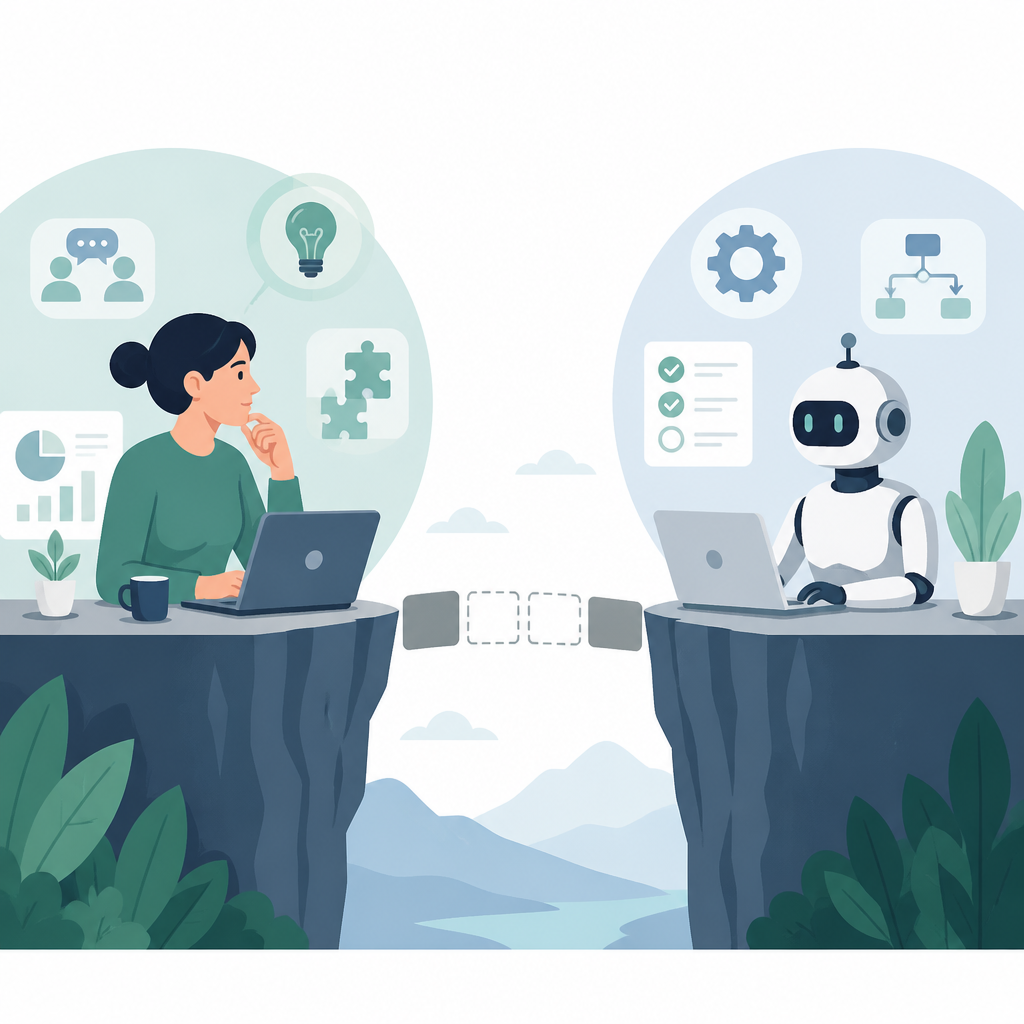
There is also a practical reason the 18-month claim fails: most firms do not run on model demos, they run on workflows, approvals, audits, and liability. When a lawyer checks an AI-generated clause, the lawyer is still doing the work that matters. When an accountant verifies an AI flag, the human is still the control layer. The machine may reduce keystrokes, but the organization still needs a person accountable for the output.
Second argument: the economic evidence does not show broad displacement
If AI were about to automate all office work, the gains would already show up outside the tech sector. They do not. Fortune points to Apollo chief economist Torsten Slok, who found Big Tech profit margins rose by more than 20% in the fourth quarter of 2025 while the broader Bloomberg 500 Index barely moved. That is the opposite of a universal productivity shock. It says AI value is still concentrated in the companies building and selling the tools, not across the whole economy.
Investors are reading the same signal. Slok noted that markets do not believe AI will raise earnings outside the tech sector, and that skepticism is rational. Even the layoff data in the Fortune piece does not support Suleyman’s scale of prediction. Challenger, Gray & Christmas counted about 49,135 AI-related job cuts so far this year, which is meaningful but nowhere near the wholesale disappearance of white-collar employment. This is disruption at the margin, not automated extinction.
The counter-argument
The strongest case for Suleyman is that technology adoption is nonlinear. Office work can change slowly for years and then flip quickly once models become reliable, cheap, and embedded in standard software. The article notes the pace of compute growth, the emergence of agentic AI systems, and the fear inside software and enterprise markets after the so-called SaaSpocalypse. If AI keeps improving, firms will have a powerful incentive to replace labor with software wherever the output is standardized and measurable.

That argument is serious because white-collar work contains more automatable surface area than factory labor ever did. Many tasks are digital, text-based, and repeatable. A model that can draft, classify, search, and execute routine steps across email, spreadsheets, and CRM systems can remove a lot of low-end office labor before executives fully notice the change.
But the counter still overreaches. The article itself shows the missing ingredient: real-world performance. When AI makes developers 20% slower, when professional services see only modest gains, and when broad market profits barely move, the burden of proof shifts hard against a claim of total automation in 18 months. I accept that some entry-level and routine roles will shrink fast. I reject the idea that all white-collar work disappears on that timetable, because the bottleneck is not model capability alone. It is integration, trust, regulation, and the stubborn fact that organizations still need humans to own decisions.
What to do with this
If you are an engineer, PM, or founder, stop planning for a future where AI replaces every office role and start planning for a future where AI compresses specific workflows, headcount, and margins in targeted functions. Map the tasks inside each role, identify which steps are low-risk and repeatable, and automate those first. Then redesign the human layer around review, escalation, and accountability. The winners will not be the teams that predict the most dramatic timeline; they will be the teams that turn narrow AI gains into durable operating advantage without pretending the whole org can disappear overnight.
// Related Articles
- [IND]
WebX 2026 turns speaker hype into a conference brief
- [IND]
AI Weekly: 2026-07-06 ~ 2026-07-13
- [IND]
The AI Act should be treated as Europe’s operating system for AI
- [IND]
Booz Allen’s OpenAI Deal Is Real Advantage, Not Hype
- [IND]
OpenSearch’s vector search benchmark in 5 parts
- [IND]
Vector Databases That Work in Production